
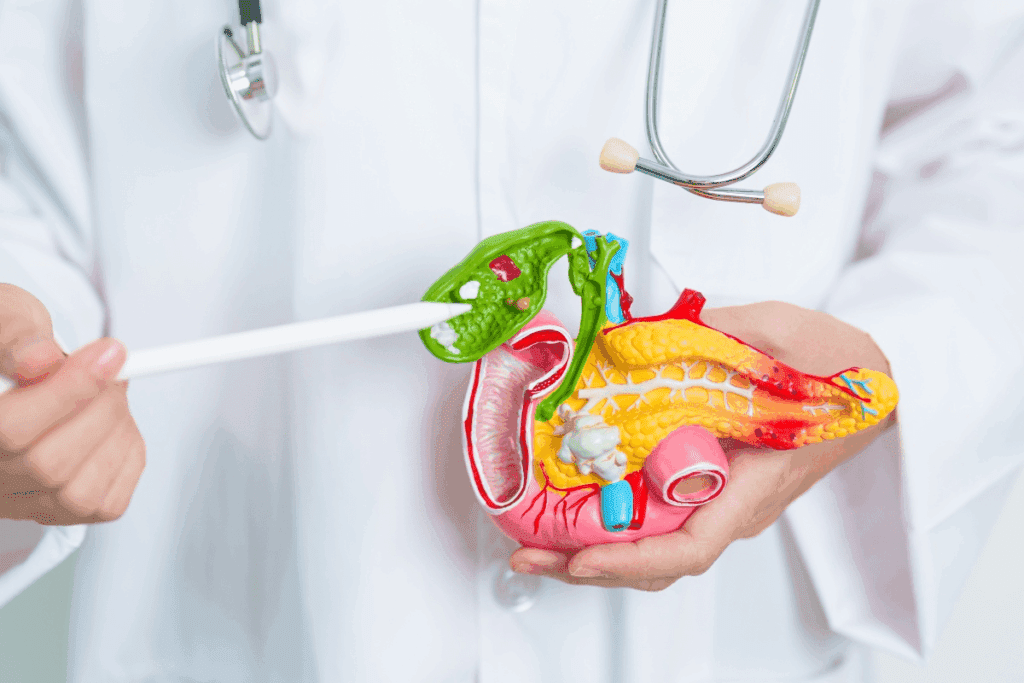
Every year, over 700,000 Americans have their gallbladders removed. You might wonder how this affects your liver health. The liver makes bile, which the gallbladder stores. Without a gallbladder, the liver keeps making bile, but it goes straight to the small intestine.
We look into how the liver adjusts without the gallbladder and its effects on digestion. Knowing these changes is key to staying healthy after gallbladder removal.
Key Takeaways
- The liver continues to produce bile after gallbladder removal.
- Bile is released directly into the small intestine.
- Liver function is affected by gallbladder removal.
- Digestive health may be impacted.
- Understanding these changes is vital for overall health.
- Liver health can be maintained with proper care.
The Liver-Gallbladder Partnership: Understanding Normal Function

The liver and gallbladder work together to help us digest and absorb nutrients. This partnership is key to our digestive health. Knowing how they work helps us see why these organs are so important.
How the Liver Produces Bile
The liver makes 800-1000 ml of bile every day. Bile is a mix of bile salts, cholesterol, bilirubin, and more. It helps break down fats in the small intestine.
Bile production never stops. It changes based on what we eat and our body’s needs. The liver’s job in making bile shows its role in many body functions.
The Gallbladder’s Role in Bile Storage and Concentration
The gallbladder stores and concentrates bile made by the liver. It holds bile until it’s needed in the small intestine. When food gets there, the gallbladder releases bile into the bile duct.
The gallbladder makes bile more effective by removing water and salts. This is key for digesting fats. Without the gallbladder, fat digestion changes.
Why Gallbladder Removal Becomes Necessary

When the gallbladder gets sick or damaged, surgery might be the best choice. The gallbladder helps with digestion. But, some problems can make it not work right or cause serious health issues.
Common Conditions Leading to Cholecystectomy
Many reasons can lead to gallbladder removal. Gallstones are a big one, causing blockages, pain, and swelling. Other issues include:
- Cholecystitis: This is inflammation of the gallbladder, often from gallstones.
- Gallbladder Dysfunction: When the gallbladder doesn’t work right, leading to chronic pain or digestive problems.
- Polyps or Tumors: Growths in the gallbladder that might be cancer or cause other issues.
These problems can lead to severe symptoms like stomach pain, nausea, and fever. They can really hurt a person’s quality of life. If other treatments don’t work, surgery is often the best option.
Surgical Approaches to Gallbladder Removal
There are several ways to remove the gallbladder, each with its own benefits. The most common is laparoscopic cholecystectomy, a less invasive method that involves:
- Small cuts in the belly.
- A laparoscope (a thin, lighted tube with a camera) to see the gallbladder.
- Special tools to carefully take out the gallbladder.
This method usually means less pain after surgery, faster recovery, and less scarring. Sometimes, an open cholecystectomy is needed, with a bigger cut to directly access the gallbladder. This is often for more complicated cases or if problems come up during the laparoscopic surgery.
Knowing why gallbladder removal is needed and the surgical options can help patients get ready for the surgery and recovery.
Immediate Changes After Gallbladder Removal
When the gallbladder is removed, the body’s digestive process changes right away. This change can cause different symptoms and needs the body to adapt.
The First Few Weeks: What to Expect
In the first weeks after gallbladder surgery, patients face several digestive changes. These can include:
- Diarrhea
- Fatty stools
- Abdominal pain
These symptoms happen because the body can’t store bile in the gallbladder anymore. Bile now flows straight from the liver into the small intestine. This can cause an imbalance in bile salts and lead to digestive problems.
How Your Body Begins to Adapt
As time goes on, the body starts to get used to not having a gallbladder. The liver keeps making bile, and the bile ducts might get bigger. This helps store a bit of bile, making up for the missing gallbladder. Patients usually see their symptoms get better as they adjust.
Important changes include:
- The bile ducts may expand to hold more bile.
- The body may adjust the amount of bile produced.
- Patients often change their diet to manage symptoms.
Knowing about these immediate changes and how the body adapts is key to managing symptoms and staying healthy after gallbladder removal surgery.
Liver Function Without Gallbladder: The New Normal
It’s important to know how the liver works without a gallbladder, for those who have had their gallbladder removed. The liver keeps making bile, but without the gallbladder, bile is released differently into the digestive system.
Bile Production and Release Changes
After the gallbladder is gone, the liver keeps making bile. But now, it goes straight into the small intestine. This change affects how fats are digested and absorbed. Some key changes include:
- A constant flow of bile into the small intestine, unlike the gallbladder’s periodic release.
- Potential changes in bile salt concentration, which might impact fat digestion.
- The body must adjust to always having bile in the intestine.
Compensatory Mechanisms Your Body Develops
The body is very adaptable, and after gallbladder removal, it finds ways to adjust. These include:
- The bile ducts might get bigger to hold bile, helping out without the gallbladder.
- The liver might change how much bile it makes, adapting to the gallbladder’s absence.
- The digestive system can get better at handling fats and fat-soluble vitamins over time.
These changes help the body adjust to the new way of digesting, even though some people might notice differences in bowel habits or fat digestion.
Does Your Liver Actually Work “Harder”?
When we talk about gallbladder removal and liver function, a big question comes up. Does the liver have to work harder? The liver and gallbladder work together in digestion. Removing the gallbladder might change how hard the liver works.
Examining the Increased Workload Theory
The idea that the liver works harder after gallbladder removal comes from its role in making bile. Bile helps break down fats. Normally, the gallbladder stores bile and releases it when needed. Without a gallbladder, the liver has to release bile directly, which might make it work harder.
Some studies say the liver does work harder after gallbladder removal because it always makes and releases bile. But other studies show the liver can adjust to this new task. This might mean the liver doesn’t have to work as hard as thought.
What Medical Research Reveals
Medical studies on this topic have given us mixed answers. Some research shows changes in how bile is made and released after gallbladder removal. For example, a study in a Journal of Clinical Gastroenterology found changes in bile acid flow and more bile acid made.
To understand how gallbladder removal affects liver workload, let’s look at some key findings:
Study | Findings | Implications |
Journal of Clinical Gastroenterology | Altered bile acid circulation and increased bile acid synthesis after cholecystectomy | Potential increase in liver workload due to continuous bile production |
Digestive Diseases and Sciences | Liver adapts to new demands; no significant long-term increase in liver workload | Liver’s compensatory mechanisms mitigate possible increased workload |
HPB Surgery | Changes in bile composition and flow after gallbladder removal | Potential for both short-term and long-term adaptations in liver function |
In conclusion, some studies suggest the liver might work harder after gallbladder removal. But other research shows the liver can adjust. The real effect on liver workload depends on many factors, including how well the liver can adapt.
Digestive Changes and Challenges
Removing the gallbladder can cause digestive issues. The body’s digestion changes a lot. This is because the liver’s role changes and the gallbladder is no longer there to store bile.
Common Digestive Symptoms After Gallbladder Removal
After gallbladder removal, patients face many digestive symptoms. These include:
- Diarrhea
- Fatty stools
- Abdominal pain
- Bloating and gas
- Nausea
These symptoms happen because bile flows constantly into the intestine. This can irritate the intestine and upset the balance of gut bacteria. Knowing these symptoms helps manage them better.
Symptom | Possible Cause | Management Strategy |
Diarrhea | Bile salts irritating the intestinal lining | Dietary adjustments, bile salt sequestrants |
Fatty stools | Inadequate bile salts for fat digestion | Fat-soluble vitamin supplements, dietary changes |
Abdominal pain | Irritation of the intestinal lining, bile duct issues | Pain management medications, dietary adjustments |
Understanding Post-Cholecystectomy Syndrome
Post-cholecystectomy syndrome is when digestive symptoms last after gallbladder removal. It can be due to bile duct stones, Oddi dysfunction, or other gut problems.
Managing Post-Cholecystectomy Syndrome needs a full plan. This includes:
- Dietary changes to lessen symptoms
- Medicines for pain and bile salt problems
- More tests to find the cause
If symptoms don’t go away or are very bad, see a doctor. They can give specific advice and treatment.
Nutritional Absorption Without a Gallbladder
Without a gallbladder, the body might have trouble absorbing nutrients. The gallbladder helps store and concentrate bile, which is key for digesting fats. After it’s gone, the body must find new ways to process bile and absorb nutrients.
Fat-Soluble Vitamins and Absorption Concerns
Removing the gallbladder can affect fat-soluble vitamins like A, D, E, and K. These vitamins need bile to be absorbed. Without a gallbladder, bile flow into the intestine might not be right, leading to poor fat absorption and vitamin deficiencies.
People who have had their gallbladder removed need to watch their intake of fat-soluble vitamins. Vitamin D, for example, is vital for bones and the immune system. It’s important to get enough of these vitamins through food or supplements to avoid shortages.
Potential Nutritional Deficiencies to Monitor
Other nutritional issues can also arise after gallbladder removal. The way bile flows can impact the absorption of many nutrients, leading to deficiencies. It’s key for those without a gallbladder to be aware of these risks and keep an eye on their nutrition.
Some nutrients to keep an eye on include:
- Bile salts: vital for fat digestion
- Vitamin B12: important for nerves and red blood cells
- Iron: essential for healthy red blood cells
- Fatty acids: needed for many bodily functions
Regular health check-ups can spot nutritional deficiencies early. This allows for quick action to address them.
Dietary Adjustments for Optimal Liver Health
After gallbladder removal, what we eat is key to keeping our liver healthy. The liver makes bile, but without the gallbladder, bile goes straight into our digestive system. This means we need to pay closer attention to our diet to help our liver and digestive system work well.
Foods That Support Liver Function
Some foods are great for liver health because they give us important nutrients and antioxidants. These include:
- Fruits and Vegetables: They’re full of antioxidants and fiber, helping with detox and keeping our digestive system healthy.
- Whole Grains: Foods like brown rice, quinoa, and whole-wheat bread are high in fiber, which is good for our digestive health.
- Lean Proteins: Foods like chicken, fish, and legumes are good sources of protein and have less saturated fat, which is good for our overall health.
Foods to Limit or Avoid
Some foods are not good for our liver health. It’s important to limit or avoid:
- High-Fat Foods: These can be hard for the liver to process without a gallbladder, leading to discomfort.
- Processed Foods: These are often full of unhealthy fats, sugars, and salts, which can be hard on our liver.
- Alcohol: Alcohol is bad for the liver, so we should drink it in moderation to keep our liver healthy.
Food Category | Recommended Foods | Foods to Limit/Avoid |
Fruits and Vegetables | Apples, Berries, Leafy Greens | High-Sugar Fruits like Mangoes |
Grains | Whole Wheat, Brown Rice, Quinoa | Refined Grains like White Bread |
Proteins | Lean Meats, Fish, Legumes | High-Fat Meats, Processed Meats |
Choosing the right foods is very important for liver health after gallbladder removal. Eating whole, nutrient-rich foods and avoiding processed and high-fat foods helps our liver work its best.
Long-Term Effects on Liver Health
The liver changes a lot after the gallbladder is removed. This is a complex process. While there are risks, the liver can get better over time. This leads to positive changes in liver health.
Potential Risks to Monitor
After the gallbladder is gone, some risks to liver health may appear. These include:
- Changes in bile production and flow, potentially leading to digestive issues.
- Increased risk of certain liver conditions due to altered bile chemistry.
- Potential for nutritional deficiencies if dietary adjustments are not made.
It’s important to watch out for these risks to keep the liver healthy after surgery. Regular visits to healthcare providers can help spot problems early.
Potential Risk | Description | Mitigation Strategy |
Changes in Bile Production | Altered bile flow and chemistry can affect digestion. | Dietary adjustments, such as a low-fat diet. |
Liver Conditions | Increased risk due to changes in bile composition. | Regular liver function tests. |
Nutritional Deficiencies | Risk of deficiencies in fat-soluble vitamins. | Supplementation and dietary counseling. |
Positive Adaptations Over Time
Despite risks, the liver can adapt well after gallbladder removal. Over time, patients may see:
- Improved digestive efficiency as the body compensates for the lack of a gallbladder.
- Enhanced liver function as it adapts to the new demands placed upon it.
- Better overall health outcomes with appropriate dietary and lifestyle changes.
Knowing both the risks and the positive changes helps patients after gallbladder removal. This knowledge lets them make smart health choices. It also helps them work closely with healthcare providers to keep their liver healthy.
Monitoring Your Liver Health After Gallbladder Removal
After having your gallbladder removed, it’s important to keep an eye on your liver health. Regular check-ups and tests are key. The liver is vital for digestion and overall health, and its function can change after gallbladder removal.
Regular monitoring helps catch any issues early. This allows for quick action. We’ll talk about the importance of lab tests and signs that need medical attention.
Important Lab Tests and What They Mean
Liver function tests (LFTs) are essential after gallbladder removal. These tests check enzymes and proteins in your blood. They show how well your liver is working.
- Alanine Transaminase (ALT): High ALT levels can mean liver damage.
- Aspartate Transaminase (AST): High AST levels might show liver injury or disease.
- Alkaline Phosphatase (ALP): High ALP can point to bile duct obstruction or liver disease.
- Bilirubin: High bilirubin levels can cause jaundice and show liver or bile duct problems.
Lab Test | Normal Range | What Elevated Levels May Indicate |
ALT | 0-40 U/L | Liver damage or inflammation |
AST | 0-40 U/L | Liver injury or disease |
ALP | 30-120 U/L | Bile duct obstruction or liver disease |
Bilirubin | 0.1-1.2 mg/dL | Liver or bile duct issues |
Signs and Symptoms That Warrant Medical Attention
Knowing the signs and symptoms that need medical attention is vital. This helps keep your liver healthy after gallbladder removal. Some important symptoms to watch for include:
- Jaundice (yellowing of the skin and eyes)
- Dark urine or pale stools
- Abdominal pain or swelling
- Fatigue or weakness
- Nausea or vomiting
“Monitoring liver health after gallbladder removal is not just about running tests; it’s about understanding your body’s changes and responding appropriately.”
A Gastroenterologist
If you notice any of these symptoms, see your healthcare provider right away. Early treatment can greatly improve your health.
Lifestyle Strategies to Support Your Liver
Healthy lifestyle choices can greatly help your liver after gallbladder removal. Your liver is key for digestion, metabolism, and health. Keeping it healthy is very important.
Regular exercise and managing stress are vital for a healthy lifestyle. They help your liver stay healthy. Adding physical activity and stress-reducing habits to your day can boost your overall health.
Stress Management and Its Impact on Digestive Health
Stress can harm your digestive system, affecting your liver and gut health. Chronic stress can cause inflammation and upset your gut’s balance.
Effective stress management includes:
- Meditation and mindfulness practices
- Yoga and tai chi exercises
- Deep breathing exercises
- Regular physical activity
These methods can lower stress, helping your digestive system and liver function better.
Exercise is also key for liver health. It improves insulin sensitivity, reduces inflammation, and boosts metabolic health.
Lifestyle Strategy | Benefits for Liver Health |
Regular Exercise | Improves insulin sensitivity, reduces inflammation |
Stress Management | Reduces stress-related inflammation, promotes gut health |
Balanced Diet | Provides essential nutrients, supports liver function |
By making these lifestyle choices part of your daily life, you can greatly support your liver health and overall well-being.
Supplements and Medications: Helpful or Harmful?
It’s important to know how supplements and medications affect the liver after a gallbladder removal. Without a gallbladder, digestion changes a lot. So, it’s key to think carefully about using extra substances.
Bile Salt Supplements and Their Role
Bile salt supplements are often used after gallbladder removal. They help with bile storage, which can ease digestive problems.
- Benefits: Better fat digestion, less diarrhea and bloating
- Potential Risks: Stomach issues, problems with other medicines
Talk to a doctor before starting bile salt supplements. They can help weigh the good and bad for your health.
Medications That May Impact Liver Function
Some medicines can harm the liver, more so without a gallbladder. Knowing which ones to watch out for is important.
- Acetaminophen: Safe in small doses, but high amounts can harm the liver.
- Statins: These lower cholesterol but can sometimes raise liver enzymes.
- Certain Antibiotics: Some can damage the liver, but it’s rare.
Always tell your doctor about all medicines you’re taking. They can help figure out the risks and benefits.
Managing supplements and medicines well can help support liver health and overall health without a gallbladder.
Communicating With Your Healthcare Provider
Talking well with your healthcare provider is key after gallbladder removal. This open talk makes sure you get care that fits your needs during recovery.
Sharing Important Information
When you see your healthcare provider, share all about your symptoms, medical history, and worries. This includes:
- Any digestive issues or changes in bowel movements
- Symptoms such as pain, nausea, or vomiting
- Any medications or supplements you’re currently taking
- Changes in your overall health or any new symptoms
Telling your healthcare provider everything helps them understand you better. They can then guide you on handling any problems.
Questions to Ask During Check-ups
Make a list of questions for your check-ups. This way, you can make sure you cover all your concerns. Think about asking about:
- The expected duration of your recovery period
- Dietary adjustments to support your liver health
- Potential long-term effects of gallbladder removal
- Any signs or symptoms that warrant immediate medical attention
Asking the right questions can ease your worries. It also helps you understand what to expect during your recovery.
Remember, your healthcare provider is there to support you. Don’t be shy to reach out if you have questions or concerns between visits.
Conclusion: Living Well Without a Gallbladder
We’ve looked into how the liver and gallbladder work together. We’ve seen how the body adjusts after losing the gallbladder. With the right care, people can live well without it.
Living well after losing the gallbladder means making smart food choices and lifestyle changes. It also means keeping an eye on your liver health. By paying attention to what you eat, managing stress, and talking to your doctor, you can do great after gallbladder surgery.
In the end, not having a gallbladder is a challenge, but it’s also a chance to grow and adapt. By focusing on your health, you can have a fulfilling life, even without this important organ.
FAQ
What happens to liver function after gallbladder removal?
After the gallbladder is removed, the liver keeps making bile. But it goes straight into the bile duct and then into the small intestine. This change can affect how we digest food and absorb nutrients.
Does the liver work harder after gallbladder removal?
Studies show the liver doesn’t work “harder” after the gallbladder is gone. But it does adjust to release bile directly into the bile duct. The liver’s job changes to handle this new way of working without the gallbladder.
What are the common digestive symptoms after gallbladder removal?
People often get diarrhea, fatty stools, and stomach pain after the gallbladder is removed. These symptoms come from how bile is released differently. Making diet changes and lifestyle adjustments can help manage these symptoms.
How can I support my liver health after gallbladder removal?
Eating well, drinking plenty of water, and managing stress are key to liver health. Also, avoid foods high in sugar and saturated fats to help your liver.
Are there any nutritional deficiencies I should be concerned about after gallbladder removal?
Yes, you might face problems with vitamins A, D, E, and K, and other nutrient absorption. Keep an eye on your nutrition and adjust your diet if needed to avoid these issues.
What dietary adjustments can I make to support optimal liver health?
Eating lots of fruits, veggies, and whole grains is good for your liver. Also, cut down on foods with a lot of sugar, saturated fats, and processed stuff.
How can I monitor my liver health after gallbladder removal?
Regular blood tests, like liver function tests, are important. Also, watch for signs like jaundice or ongoing stomach pain and seek medical help if you notice them.
Can supplements or medications impact my liver health after gallbladder removal?
Yes, some supplements and medicines can affect your liver. Always talk to your doctor before taking anything new to make sure it’s safe for you.
How often should I follow up with my healthcare provider after gallbladder removal?
How often you see your doctor will depend on your situation. But usually, it’s good to keep up with appointments to check on your liver health and talk about any issues.
What lifestyle strategies can I use to support my liver health?
Along with eating right, try stress-reducing activities like meditation or deep breathing. Regular exercise, enough sleep, and staying hydrated are also important for your liver.
References
National Center for Biotechnology Information. Evidence-Based Medical Insight. Retrieved from https://www.ncbi.nlm.nih.gov/pmc/articles/PMC7061184/[6