
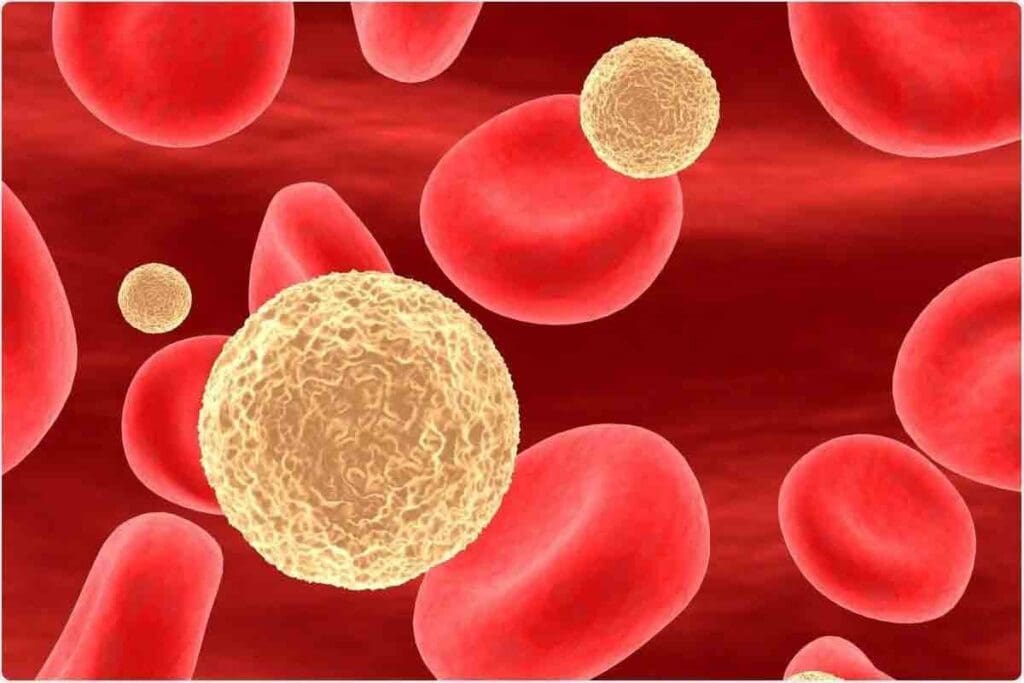
Lymphocytes are key to our immune system, helping us fight infections and diseases. Knowing the normal lymphocyte level is important for checking our immune health. For adults, the usual range is between 1,000 to 4,800 cells per microliter.
A normal lymphocyte count means our immune system is working well. But, if the levels are off, it could mean we have health problems. It’s key to know what a lymphocytes normal value is. For more info on lymphocyte counts and what they mean, check out Medical News Today.
Key Takeaways
- Understanding lymphocytes is key for our immune health.
- The normal range for lymphocytes in adults is 1,000 to 4,800 cells per microliter.
- Abnormal lymphocyte levels can show different health issues.
- Lymphocytes are vital in fighting infections and diseases.
- Knowing your lymphocyte count helps check your immune system’s health.

Understanding Lymphocytes and Their Role in Immunity
Lymphocytes are key to understanding how our immune system works. They are a type of white blood cell that fights infections and diseases. This makes them essential for our health.
What Are Lymphocytes?
Lymphocytes are a part of white blood cells that are vital to our immune system. They help defend our body against viruses, bacteria, and other harmful substances. There are different types of lymphocytes, each with its own role in keeping us healthy.
Lymphocytes include T cells, B cells, and natural killer cells. T cells kill infected cells or start the immune response. B cells make antibodies that mark pathogens for destruction.
Types of Lymphocytes and Their Functions
The main types of lymphocytes are T cells, B cells, and natural killer (NK) cells. Each type has a specific function that helps protect us.
- T cells: Kill infected cells or start the immune response.
- B cells: Make antibodies to fight specific pathogens.
- Natural Killer (NK) cells: Help fight viral infections and tumors.
Experts say lymphocytes are the heart of our immune system. They provide both quick and long-term defense against many pathogens.
The balance between different lymphocytes is key to a strong immune system.
| Type of Lymphocyte | Primary Function |
| T cells | Cell-mediated immunity, directly killing infected cells |
| B cells | Production of antibodies to recognize and bind pathogens |
| Natural Killer (NK) cells | Defense against viral infections and tumor cells |
How Lymphocytes Protect Your Body
Lymphocytes protect us by finding and getting rid of pathogens. T cells kill infected cells, while B cells make antibodies to neutralize pathogens. NK cells add extra defense, mainly against viruses and cancer cells.
Together, these lymphocytes create a strong immune response. They keep us safe from many infections and help us stay healthy.
Lymphocytes Normal Value: Standard Ranges Explained

Knowing the normal range for lymphocytes is key to understanding blood test results. Lymphocytes are white blood cells that help fight off infections. They can be measured in two ways: absolute count and percentage.
Absolute Count vs. Percentage Measurements
The absolute lymphocyte count is the number of lymphocytes per microliter of blood. For adults, this number is usually between 1,000 and 4,800 cells per microliter. The lymphocyte percentage shows how many lymphocytes are in relation to all white blood cells. It’s typically between 20% to 40%.
Standard Reference Ranges for Adults
Reference ranges for lymphocyte counts can vary but generally follow guidelines. For adults, the normal range is 1,000 to 4,800 lymphocytes per microliter or 20% to 40% of total white blood cells. Always check with your healthcare provider about the specific ranges used by your lab.
How Laboratory Results Are Reported
Lymphocyte count results are found in a complete blood count (CBC) report. The report shows both the absolute count and percentage of lymphocytes. Knowing these values helps check your immune system and diagnose health issues. If your results are not normal, your doctor will look at them with your health and history in mind.
What Is a Normal Lymphocyte Level?
Knowing your lymphocyte levels is key to checking your immune health. Lymphocytes are white blood cells that help fight off infections. If your lymphocyte count is normal, it means your immune system is working well. But, if it’s not, it could mean you have a health problem.
Normal Count for Lymphocytes in Healthy Adults
Adults usually have 1,000 to 4,800 lymphocytes per milliliter of blood. But, this number can change based on the lab. Always talk to a doctor to understand your results fully.
Normal Lymphocyte Count Range: 1,000 – 4,800 cells/mL
Typical Lymph Percent Normal Range
The blood also has a certain percentage of lymphocytes. This percentage is usually between 20% and 40% of all white blood cells. It can change due to age, health, and lab standards.
| Measurement | Normal Range |
| Absolute Lymphocyte Count | 1,000 – 4,800 cells/mL |
| Lymphocyte Percentage | 20% – 40% |
Interpreting Your Test Results
Understanding your lymphocyte test results is important. Doctors look at both the count and percentage of lymphocytes. They use this info to check your immune system and overall health.
It’s vital to talk to a healthcare provider about your test results. They can explain what they mean for your health.
Normal Percentage of Lymphocytes in Blood Tests
Knowing the normal percentage of lymphocytes is key to understanding blood test results. Lymphocytes are white blood cells that help fight off infections. The percentage of lymphocytes in a blood test shows how well the immune system is working.
What Is the Normal Percentage of Lymphocytes?
The normal range for lymphocytes in blood tests is 20% to 40% of total white blood cells. Medical studies show lymphocytes make up 18% to 42% of white blood cells. This can vary a bit depending on the lab.
Normal lymphocyte percentage is vital for a healthy immune system. It helps fight infections and diseases. A normal percentage means the immune system is working well.
How Percentages Relate to Overall White Blood Cell Count
The lymphocyte percentage is based on the total white blood cell count. A normal count is 4,500 to 11,000 cells per microliter. Lymphocytes are part of this count, showing how the immune system responds.
For example, if someone has 7,000 white blood cells and lymphocytes are 30%, the lymphocyte count is 2,100 cells per microliter. This is found by multiplying the total white blood cell count by the lymphocyte percentage.
| WBC Count (cells/μL) | Lymphocyte Percentage | Absolute Lymphocyte Count (cells/μL) |
| 7,000 | 30% | 2,100 |
| 5,000 | 25% | 1,250 |
| 10,000 | 40% | 4,000 |
Normal Lymph Percent Across Different Demographics
The normal lymphocyte percentage can change with age and gender. For example, children often have more lymphocytes than adults. A study found that children have more lymphocytes, which decreases as they grow up.
“The normal range for lymphocyte percentage in adults is generally between 20% to 40%, but this can vary slightly between laboratories.”
Gender differences in lymphocyte counts are small, but can change during pregnancy. It’s important to consider these factors when looking at blood test results.
Absolute Lymphocyte Count: Normal Ranges and Significance
The absolute lymphocyte count (ALC) is key in checking the body’s immune health. It counts the total lymphocytes in the blood. This gives important info on how well the immune system is working.
Understanding the Absolute Lymphs Normal Range
The normal range for ALC is usually between 1,000 to 4,800 cells per microliter (µL) of blood. But, this can vary a bit based on the lab’s standards. Knowing this range is important for understanding test results.
Normal Range: 1,000 to 4,800 cells/µL
What an Absolute Count of 3.2 Means
An ALC of 3.2 (or 3,200 cells/µL) is within the normal range. This means the immune system is likely healthy. It shows the body has enough lymphocytes to fight off infections.
When Absolute Counts Are More Important Than Percentages
In some cases, the absolute lymphocyte count is more important than the percentage. For example, during infections or when checking immune disorders, the absolute count gives a clearer view of the immune system’s strength.
| Condition | Absolute Lymphocyte Count Significance |
| Infections | Helps in assessing the severity and response to treatment |
| Immune Disorders | Essential for monitoring the immune system’s status |
| Post-Surgery or Treatment Recovery | Indicates the recovery of immune function |
Understanding the absolute lymphocyte count and its importance helps doctors make better decisions for patient care and treatment plans.
Gender Differences: Lymphocytes Normal Range in Females vs. Males
Research has looked into how gender affects lymphocyte counts. This is important for setting normal ranges. Lymphocytes are key to our immune system, and knowing their normal levels helps in diagnosing and treating health issues.
Comparing Reference Ranges Between Genders
Studies show that lymphocyte ranges are similar for both men and women. For adults, the normal range is between 1,000 to 4,800 lymphocytes per microliter of blood. This is about 20% to 40% of the total white blood cells. While some studies might show slight differences, most agree that gender doesn’t greatly affect lymphocyte counts.
Why Gender Typically Doesn’t Affect Lymphocyte Counts
Lymphocytes are vital for our immune system. Their production is mainly based on the body’s need to fight off infections, not hormonal differences between genders. So, both men and women usually have similar lymphocyte counts under normal conditions.
Special Considerations During Pregnancy
Pregnancy changes the immune system to support the growing fetus. Some studies suggest lymphocyte counts might change slightly during pregnancy. But these changes are usually not big enough to need a different normal range for pregnant women. Yet, doctors might keep a close eye on lymphocyte levels in pregnant women, if there’s a worry about infection or immune issues.
In summary, while there can be some variation, the normal range for lymphocytes is mostly the same for both genders. It’s important for healthcare providers to understand this. It helps them accurately read blood test results and make the best decisions for patient care.
Age-Related Variations in Normal Lymphocyte Levels
Lymphocyte counts change with age, and knowing these changes is important. The normal range for lymphocytes is not the same for everyone at all ages. It changes a lot from childhood to old age.
Lymphocyte Ranges in Children and Adolescents
In kids and teens, lymphocyte counts are usually higher than in adults. The normal range for them is between 3,000 cells/mL to 9,500 cells/mL. This is because their immune systems are more active and need to fight off new germs.
Children’s immune systems are more active, and their lymphocyte counts show this. As they grow, their counts slowly go down, getting closer to adult levels.
Adult Reference Ranges
For adults, the normal lymphocyte range is between 1,000 cells/mL to 4,800 cells/mL. This range can vary a bit depending on the lab. Adults have a more stable immune system, so their lymphocyte counts don’t change as much.
The absolute lymphocyte count is very important for adults. It helps doctors diagnose and keep track of different health issues. Knowing the normal range is key to spotting any problems.
Changes in Elderly Populations
In older people, lymphocyte counts can be affected by aging. This is called immunosenescence. It can make the immune system weaker and change lymphocyte counts.
Even though older adults usually have similar lymphocyte ranges as younger adults, some studies suggest there might be slight differences. It’s very important for doctors to think about these age-related changes when looking at test results.
It’s very important to understand these age-related changes for accurate diagnosis and treatment. Doctors need to take a patient’s age into account when looking at lymphocyte counts. This ensures the right care is given.
Elevated Lymphocytes: When 47-48% Is Detected
When lymphocytes reach 47% or 48%, it’s important to know what it means. A high lymphocyte count can show an infection or inflammation. Levels at 47% or 48% are a bit high and might mean mild lymphocytosis.
Is Having Lymphocytes at 47% or 48% Concerning?
Lymphocytes at 47% or 48% are a bit higher than usual. This might not be a big deal, but it could mean something’s off. It depends on your health, past illnesses, and any symptoms you have.
Looking at the absolute count, not just the percentage, is key. A high percentage doesn’t always mean an absolute count is high. So, understanding your health fully is important.
Common Causes of Mild Lymphocytosis
Mild lymphocytosis, seen at 47% or 48%, can come from many things. Some common reasons include:
- Infections: Viral or bacterial infections can raise lymphocyte counts.
- Inflammatory conditions: Long-term inflammation can also increase lymphocytes.
- Stress: Both physical and emotional stress can affect lymphocyte levels.
Knowing why your lymphocytes are high is important. Sometimes, the issue goes away once the cause is fixed.
When to Follow Up on Slightly Elevated Results
If your test shows lymphocytes at 47% or 48%, talk to your doctor. They’ll look at your health and might suggest:
- More tests to find out why your lymphocytes are high.
- Watching your lymphocyte levels over time.
- Treatment if they find a problem.
Staying in touch with your doctor and talking openly is important. It helps manage and understand mildly high lymphocyte counts.
What Level of Lymphocytes Is Concerning?
Knowing when lymphocyte levels are concerning is key. It helps decide if you need to see a doctor. High lymphocyte counts can mean different things, like infections or blood disorders.
Moderate vs. Severe Lymphocytosis
Lymphocytosis can vary from mild to severe. Moderate lymphocytosis often shows up in infections or inflammation. But severe lymphocytosis might point to serious diseases, like blood cancers.
| Lymphocyte Level | Classification | Possible Causes |
| Moderately Elevated (e.g., 4,000-10,000 cells/μL) | Moderate Lymphocytosis | Infections, Inflammatory Conditions |
| Significantly Elevated (e.g., >10,000 cells/μL) | Severe Lymphocytosis | Lymphoproliferative Disorders, Chronic Infections |
Clinical Significance of Elevated Lymphocytes
The importance of high lymphocytes depends on the cause and how high they are. Sometimes, they go back to normal once the problem is fixed. But, if they stay high or get really high, you need to check them out more.
When to Seek Medical Attention
If you have symptoms like constant tiredness, unexplained weight loss, or keep getting sick, get checked. Early treatment can make a big difference if you have a serious problem.
Key indicators for seeking medical attention include:
- Significantly elevated lymphocyte counts
- Persistence of lymphocytosis over time
- Presence of symptoms such as fever, night sweats, or weight loss
Knowing when your lymphocyte levels are a concern and when to see a doctor is vital. It helps you take care of your health better.
Dangerous Lymphocyte Levels: Critical Thresholds
Knowing when lymphocyte levels are dangerous is key to spotting health risks. Lymphocytes are important for our immune system. Abnormal levels can signal serious health issues.
What Level of Lymphocytes Is Dangerous?
Levels that are way off from normal can be risky. Severe lymphocytosis, or high lymphocyte counts, might mean infections, autoimmune diseases, or cancer. On the flip side, lymphopenia, or low counts, weakens the immune system, making us more prone to infections.
Acute vs. Chronic Dangerous Levels
It’s important to know the difference between acute and chronic dangerous lymphocyte levels. Acute conditions come on fast and need quick medical help. Chronic conditions last longer and might need ongoing care.
- Acute lymphocytosis can be caused by severe infections or acute leukemia.
- Chronic lymphocytosis is often linked to chronic lymphocytic leukemia (CLL) or long-term infections.
Medical Emergencies Related to Lymphocyte Abnormalities
Lymphocyte issues can turn into medical emergencies if not treated quickly. For example, severe lymphopenia can lead to deadly infections. Acute lymphoblastic leukemia (ALL) needs fast treatment to avoid serious problems.
“Prompt recognition and treatment of lymphocyte-related abnormalities are critical for preventing serious health outcomes.”
In summary, knowing the danger levels of lymphocytes is vital for spotting health risks and acting fast. By recognizing acute and chronic signs, people can get medical help on time. This can help avoid serious emergencies.
Low Lymphocyte Count: Causes and Implications
Lymphopenia is when you have too few lymphocytes in your blood. Lymphocytes are key to your immune system. They help fight off infections and diseases.
Many things can cause a low lymphocyte count. This includes some medicines, infections, and health issues. Knowing what causes lymphopenia helps us treat it better.
Understanding Lymphopenia
Lymphopenia means having less than 1,000 lymphocytes per milliliter of blood. This makes it harder for your body to fight off infections.
Common Causes of Low Lymphocyte Counts
Several things can lower your lymphocyte count. These include:
- Certain medicines, like corticosteroids and chemotherapy
- Infections, such as HIV/AIDS and tuberculosis
- Autoimmune diseases, like lupus and rheumatoid arthritis
- Cancer and its treatment
- Nutritional deficiencies, including lack of zinc or vitamin B12
Health Risks Associated with Lymphopenia
Lymphopenia makes you more likely to get sick. This is because your immune system is weaker. Here are some health risks:
| Health Risk | Description |
| Increased Infection Risk | Higher chance of getting bacterial, viral, and fungal infections |
| Severe Infections | Potential for serious and life-threatening infections |
| Impaired Immune Response | Less ability to fight off pathogens and recover from illnesses |
In conclusion, lymphopenia is a serious condition that needs quick attention. Knowing its causes and risks helps protect your health.
Conclusion: Monitoring Your Lymphocyte Levels for Optimal Health
It’s important to keep an eye on your lymphocyte levels for good health. This helps spot immune problems early. Regular checks can lead to early treatment and better health.
Knowing about lymphocyte counts is key to understanding your immune system. The normal value helps spot any health issues that might be hidden.
By watching your lymphocyte levels, you can help your immune system stay strong. It’s about knowing the normal ranges, understanding test results, and knowing when to see a doctor.
Keeping your lymphocyte levels in check is essential for your overall health. Regular health checks and a healthy lifestyle boost your immune system. This helps your body fight off sicknesses and diseases.
FAQ
What is the normal percentage of lymphocytes in a blood test?
Lymphocytes should make up 20% to 40% of your white blood cells.
What is considered a normal lymphocyte count in adults?
Adults should have 1,000 to 4,800 lymphocytes per microliter in their blood.
Are lymphocyte counts different in females and males?
Lymphocyte counts are usually the same for both men and women. But, pregnancy can change things a bit.
How do lymphocyte levels change with age?
Lymphocyte levels change as we get older. Kids, adults, and seniors have different normal ranges.
Is having lymphocytes at 47% or 48% concerning?
Having 47% or 48% lymphocytes might be a bit high. It’s important to look at the bigger picture and might need more tests.
What level of lymphocytes is considered dangerous?
Very high or low lymphocyte levels can mean serious health problems. The exact danger level depends on your health and situation.
What is lymphopenia, and what are its causes?
Lymphopenia is when you have too few lymphocytes. It can happen due to infections, autoimmune diseases, or some medicines.
How do absolute lymphocyte counts relate to overall health?
Absolute lymphocyte counts tell us about your immune system. For example, a count of 3.2 is important to look at with your total white blood cell count and other health signs.
When should I seek medical attention for abnormal lymphocyte levels?
You should see a doctor if your lymphocyte levels are way off. This could mean there’s a health issue that needs quick attention.
References
- Liu, W., et al. (2022). The reference ranges and characteristics of lymphocyte parameters in healthy adults: A multi-center study. Immunity & Ageing, [PMC9513899]. https://pmc.ncbi.nlm.nih.gov/articles/PMC9513899/