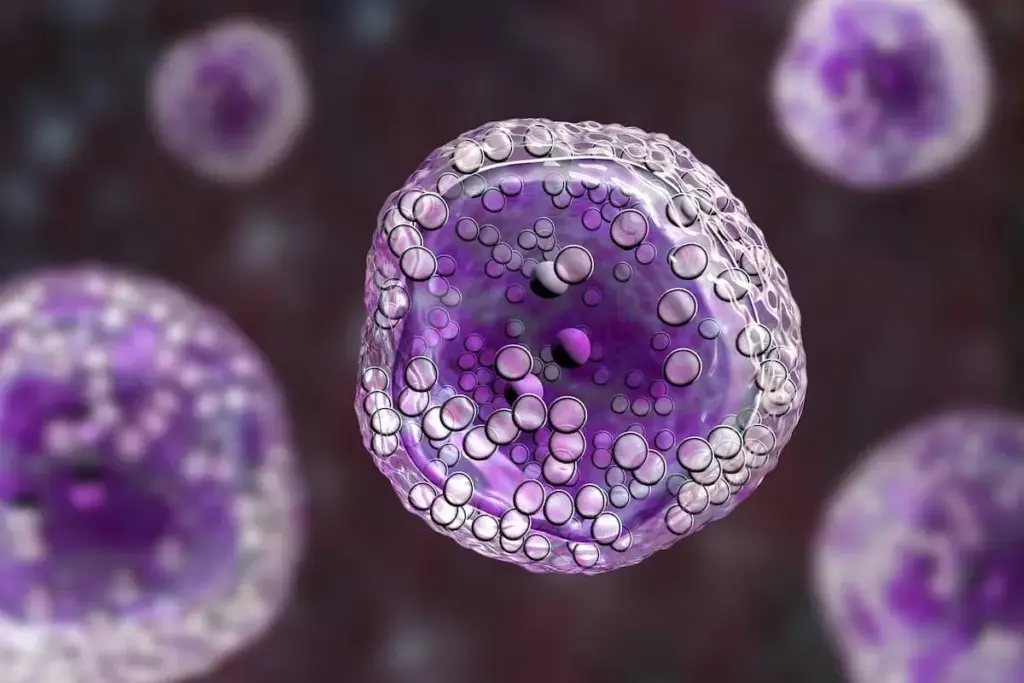
Many people wonder about the link between lymphoma and bone marrow infiltration. Lymphoma is a cancer that targets the immune system. Its effect on the bone marrow is key for diagnosis and treatment.
A 2022 retrospective study showed that lymphoma can deeply affect the bone marrow. It found a 100% bone marrow infiltration in 212 lymphoma cases. This study emphasizes the need to understand how bone marrow is involved in different types of lymphoma.
Key Takeaways
- Lymphoma can significantly affect the bone marrow, impacting diagnosis and treatment.
- A 2022 study observed 100% bone marrow infiltration in 212 lymphoma cases.
- Understanding bone marrow involvement is critical for effective patient care.
- The prevalence and patterns of bone marrow infiltration differ among lymphoma subtypes.
- Awareness of bone marrow infiltration supports better outcomes in cancer treatment.
The Relationship Between Lymphoma and Bone Marrow

Bone marrow is a spongy tissue inside bones that makes blood cells. Lymphoma, a cancer that affects the immune system, often impacts it. Knowing how these two are connected is key for diagnosis and treatment.
What is Lymphoma?
Lymphoma starts in the lymphatic system, which helps fight off infections. It happens when lymphocytes, a type of white blood cell, grow out of control. There are two main types: Hodgkin lymphoma and non-Hodgkin lymphoma, each needing different treatments.
- Hodgkin lymphoma is marked by Reed-Sternberg cells in lymph nodes.
- Non-Hodgkin lymphoma is a group of lymphomas that vary in how aggressive they are and how well they respond to treatment.
Bone Marrow Structure and Function
Bone marrow is essential for making blood cells, including red and white blood cells, and platelets. It’s filled with blood vessels, nerves, and different cell types that help make blood cells. The bone marrow’s environment is key for blood cell development.
The bone marrow’s structure includes:
- Blood vessels that bring nutrients and oxygen.
- Hematopoietic cells at different stages of development.
- Supportive stromal cells that give structural support.
Why Lymphoma Cells Target Bone Marrow
Lymphoma cells often go to bone marrow because it’s a good place for them to grow and survive. The bone marrow has lots of nutrients, growth factors, and supportive cells that help lymphoma cells grow. The interaction between lymphoma cells and the bone marrow environment can affect how the disease progresses and how well it responds to treatment.
Some reasons lymphoma cells target bone marrow include:
- The availability of growth factors that help lymphoma cells grow.
- The presence of adhesion molecules that help lymphoma cells stick to the bone marrow.
- The immune suppressive microenvironment that can protect lymphoma cells from being attacked by the immune system.
How Does Lymphoma Infiltrate Bone Marrow?
Lymphoma cells entering the bone marrow is a complex process. It involves many cellular and molecular steps. Knowing how this happens helps us understand lymphoma’s growth and its effects on patients.
Mechanisms of Infiltration
Lymphoma cells use specific adhesion molecules to get into the bone marrow. Adhesion molecules are key in guiding these cells to the bone marrow. Studies have found that certain chemokines and their receptors are important in this process.
For example, the chemokine receptor CXCR4 on lymphoma cells binds to CXCL12 in the bone marrow. This binding helps lymphoma cells stay in the bone marrow.
Cellular Pathways Involved
Many cellular pathways help lymphoma cells get into the bone marrow. These include pathways that control cell adhesion, migration, and survival. The PI3K/AKT pathway is one such pathway involved in lymphoma cell survival and growth in the bone marrow.
- The PI3K/AKT pathway is turned on by chemokines and growth factors.
- This activation helps cells survive and grow.
- Stopping this pathway is being looked at as a treatment option.
Microenvironmental Factors
The bone marrow’s environment is key for lymphoma cells to survive and grow. This environment includes stromal cells, immune cells, and endothelial cells. These cells work together with lymphoma cells to help them survive and resist treatment.
Bone marrow stromal cells can make cytokines and chemokines that help lymphoma cells grow. Understanding these interactions is vital for finding effective treatments.
Prevalence of Bone Marrow Infiltration in Lymphoma

Recent studies have given us new insights into bone marrow infiltration in lymphoma. This knowledge is key for doctors to diagnose and treat lymphoma well.
Statistical Overview from Recent Studies
Studies have shown how common bone marrow infiltration is in lymphoma. They found that different types of lymphoma have different rates of this condition.
Non-Hodgkin lymphomas (NHL) tend to have more bone marrow infiltration than Hodgkin lymphoma. This is important for doctors to know when treating patients.
The 2022 Retrospective Study Findings
A 2022 study looked at 212 lymphoma cases and found that 100% had bone marrow infiltration. It also showed that non-Hodgkin lymphomas made up 87.3% of these cases. This highlights how common bone marrow involvement is in NHL.
This information is very important for diagnosing and treating lymphoma. It helps doctors find patients at risk for bone marrow infiltration.
Risk Factors for Bone Marrow Involvement
Knowing what increases the risk of bone marrow infiltration is vital. The type of lymphoma, the stage at diagnosis, and genetic markers are all important.
- Lymphoma subtype: Non-Hodgkin lymphomas, like aggressive subtypes, are more likely to involve the bone marrow.
- Stage at diagnosis: Cases diagnosed at a later stage are more likely to have bone marrow involvement.
- Genetic markers: Certain genetic changes can raise the risk of bone marrow infiltration.
Understanding these risk factors helps doctors create better treatment plans for each patient.
Types of Lymphomas That Commonly Infiltrate Bone Marrow
It’s important to know which lymphomas affect bone marrow. This knowledge helps doctors diagnose and treat patients better. Different lymphomas have unique ways of getting into bone marrow, affecting treatment plans.
Chronic Lymphocytic Leukemia/Small Lymphocytic Lymphoma (21.7%)
CLL/SLL is a common lymphoma that often gets into bone marrow. It makes up about 21.7% of cases. This lymphoma fills bone marrow, blood, and lymphoid tissues with mature lymphocytes.
The way CLL/SLL gets into bone marrow can vary. It might spread out or stay in between bone marrow cells. This can cause bone marrow to fail, leading to low blood cell counts that need careful management.
Hodgkin Lymphoma (12.7%)
Hodgkin lymphoma (HL) also often gets into bone marrow, in about 12.7% of cases. HL is known for its Reed-Sternberg cells. When HL gets into bone marrow, it usually means the disease is advanced.
Diagnosing HL in bone marrow can be tricky because of the mix of cells. Doctors use advanced tests like immunohistochemistry to confirm it.
Follicular Lymphoma (11.3%)
Follicular lymphoma (FL) is another common lymphoma that gets into bone marrow, in about 11.3% of cases. FL has a nodular or follicular pattern in lymph nodes and bone marrow.
Doctors can find FL in bone marrow through biopsy. It often shows up in a specific pattern. Finding FL in bone marrow can change treatment plans and outcomes.
Other Common Types
Other lymphomas can also get into bone marrow. These include diffuse large B-cell lymphoma, mantle cell lymphoma, and lymphoplasmacytic lymphoma, among others.
|
Lymphoma Subtype |
Prevalence of Bone Marrow Infiltration |
Characteristics |
|---|---|---|
|
CLL/SLL |
21.7% |
Mature lymphocytes accumulation |
|
Hodgkin Lymphoma |
12.7% |
Reed-Sternberg cells presence |
|
Follicular Lymphoma |
11.3% |
Nodular or follicular pattern |
Knowing the specific lymphoma subtype and how it affects bone marrow is key. It helps doctors create better treatment plans and improve patient outcomes.
Non-Hodgkin Lymphomas and Bone Marrow Infiltration
It’s important to understand how non-Hodgkin lymphoma (NHL) affects the bone marrow. NHL is a group of cancers that start in immune cells called lymphocytes. The bone marrow, where blood cells are made, often gets involved in NHL. This affects how the disease is treated and how well patients do.
Overview of NHL Infiltration (87.3% of Cases)
About 87.3% of NHL cases involve the bone marrow. This makes checking the bone marrow very important for diagnosing and planning treatment. NHL in the bone marrow can cause problems like low blood counts and pain.
“The presence of bone marrow infiltration in NHL patients is a critical factor that influences treatment decisions and patient outcomes.” This shows how important it is to manage bone marrow involvement in NHL well.
Diffuse Large B-cell Lymphoma (DLBCL)
DLBCL is the most common NHL type and is very aggressive. It often spreads to the bone marrow, which can make treatment harder and change the patient’s outlook. Treating DLBCL that has spread to the bone marrow needs to be very intense.
- DLBCL accounts for a substantial proportion of NHL cases.
- Bone marrow infiltration in DLBCL complicates treatment and affects prognosis.
- Advanced diagnostic techniques are critical for detecting bone marrow involvement in DLBCL.
Other Non-Hodgkin Lymphoma Subtypes
Other NHL types, like follicular lymphoma and mantle cell lymphoma, can also spread to the bone marrow. Each type has its own characteristics and how it affects the bone marrow is different. Knowing these details helps doctors create the best treatment plan for each patient.
“The diversity of NHL subtypes and their varying tendencies to infiltrate the bone marrow highlight the need for personalized medicine approaches.” This shows why it’s so important to do a thorough test to find out which NHL type a patient has and how much of the bone marrow it has affected.
Patterns of Bone Marrow Infiltration
Understanding bone marrow infiltration patterns is key to managing lymphoma well. There are different patterns, like diffuse, nodular, interstitial, and paratrabecular. Each pattern tells us about the disease’s spread and its effects.
Diffuse Pattern
The diffuse pattern means lymphoma cells spread all over the marrow. This can replace normal marrow, leading to anemia, low platelets, and low white blood cells.
Nodular Pattern
The nodular pattern shows lymphoma cells in distinct groups. This is common in follicular lymphoma. It can affect how the disease is treated and its outlook.
Interstitial Pattern
In the interstitial pattern, lymphoma cells fill spaces between normal marrow. This pattern is less obvious and needs careful bone marrow biopsy checks for diagnosis.
Paratrabecular Pattern
The paratrabecular pattern has lymphoma cells near the bone’s trabeculae. It’s linked to certain lymphoma types. This pattern has its own diagnostic and treatment implications.
Spotting these patterns is vital for diagnosing and treating lymphoma. Each pattern gives clues about the disease’s behavior and how it might respond to treatment.
|
Infiltration Pattern |
Characteristics |
Implications |
|---|---|---|
|
Diffuse |
Widespread distribution of lymphoma cells |
Hematological manifestations, significant marrow replacement |
|
Nodular |
Distinct nodules of lymphoma cells |
Seen in certain lymphoma types, e.g., follicular lymphoma |
|
Interstitial |
Infiltration between normal marrow elements |
Subtle, requires careful biopsy examination |
|
Paratrabecular |
Lymphoma cells adjacent to bony trabeculae |
Associated with specific lymphoma subtypes, diagnostic and prognostic implications |
Clinical Symptoms of Bone Marrow Infiltration
Bone marrow infiltration by lymphoma can cause many symptoms. These symptoms affect how well a patient does. They can be divided into hematological and systemic symptoms. Both are key in deciding treatment and care.
Hematological Manifestations
Hematological symptoms happen when lymphoma cells replace normal bone marrow cells. This leads to low counts of blood cells. Common symptoms include:
- Anemia: This causes fatigue, weakness, and shortness of breath because of fewer red blood cells.
- Thrombocytopenia: It results in bruising, bleeding gums, and small spots on the skin because of low platelet counts.
- Neutropenia: It makes infections more likely because of fewer neutrophils, a type of white blood cell.
Systemic Symptoms
Patients with bone marrow infiltration also have systemic symptoms. These symptoms affect their overall health. These include:
- Fatigue: A constant feeling of tiredness that doesn’t get better with rest.
- Weight Loss: Losing weight without trying can be a sign of serious disease.
- Night Sweats: Sweating a lot at night, often with fever.
- Fever: Having a high body temperature, which can mean infection or disease activity.
When to Seek Medical Attention
It’s important to see a doctor if you have any of these symptoms:
- Persistent or severe fatigue that makes it hard to do daily activities.
- Unexplained weight loss or night sweats.
- Frequent or severe infections.
- Easy bruising or bleeding.
Getting diagnosed and treated early can greatly improve outcomes for lymphoma patients. If you or someone you know has these symptoms, seeing a healthcare professional is vital. They can provide the right evaluation and care.
Diagnosing Lymphoma Bone Marrow Infiltration
To find out if lymphoma has spread to the bone marrow, doctors use several tests. It’s key to accurately diagnose bone marrow infiltration. This helps in staging the disease and planning treatment.
Bone Marrow Biopsy Procedure
A bone marrow biopsy is the top choice for diagnosing bone marrow infiltration by lymphoma. It involves taking a small bone marrow sample, often from the hipbone, for a microscope check.
The sample is looked at for lymphoma cells, showing if the disease has spread. The procedure is done under local anesthesia. It might also use imaging to get the right sample.
Imaging Techniques
Imaging tests are important for diagnosing lymphoma and seeing if it has reached the bone marrow. PET-CT (Positron Emission Tomography-Computed Tomography) is great because it spots areas of high activity that might mean lymphoma is there.
Other tests like MRI and CT scans help see how far the disease has spread. They also check if the bone marrow is involved indirectly.
Laboratory Tests
Laboratory tests are key for diagnosing and keeping an eye on lymphoma. A complete blood count (CBC) can show if blood cell counts are off, hinting at bone marrow involvement.
Biochemical markers, like lactate dehydrogenase (LDH) levels, give clues on how much disease there is and how big the tumors are.
Advanced Diagnostic Methods
New methods like flow cytometry and molecular diagnostics help identify lymphoma cells in the bone marrow. They give detailed info on the cells’ type and genetics.
|
Diagnostic Method |
Description |
Advantages |
|---|---|---|
|
Bone Marrow Biopsy |
Direct sampling of bone marrow for histological examination |
Provides definitive diagnosis of bone marrow infiltration |
|
PET-CT |
Imaging technique to assess metabolic activity in tissues |
High sensitivity for detecting lymphoma involvement |
|
CBC and Biochemical Markers |
Laboratory tests to evaluate blood cell counts and biochemical parameters |
Helps in assessing the extent of disease and monitoring response to treatment |
|
Flow Cytometry and Molecular Diagnostics |
Advanced techniques for characterizing lymphoma cells |
Provides detailed information on lymphoma immunophenotype and genetics |
By using these tests together, we can accurately find out if lymphoma has spread to the bone marrow. This helps us create a treatment plan that fits each patient’s needs.
Prognostic Implications of Bone Marrow Infiltration
Understanding bone marrow infiltration in lymphoma is key to managing the disease. It can change how long a patient lives and what treatments they need.
Impact on Survival Rates
Bone marrow infiltration can lower survival rates in lymphoma patients. Research shows those with bone marrow involvement often face a worse prognosis. This is because it means the disease is more advanced, making treatment harder.
A study on found bone marrow involvement increases the risk of relapse and lowers survival chances. It’s a big factor in determining how well a patient will do.
DLBCL Prognosis with Bone Marrow Involvement
DLBCL is a common lymphoma type, and bone marrow involvement makes it harder to treat. Patients with DLBCL in their bone marrow often have lower survival rates and a higher chance of treatment failure.
Doctors must consider bone marrow involvement when planning treatment for DLBCL. They might choose more aggressive chemotherapy or targeted therapies to improve chances of success.
Prognostic Scoring Systems
Prognostic scoring systems are important for predicting lymphoma outcomes. They use clinical and biological factors, including bone marrow involvement, to guide treatment.
The International Prognostic Index (IPI) is a well-known scoring system. It looks at age, performance status, and disease extent, including bone marrow. This helps doctors tailor treatments based on a patient’s risk level.
In summary, bone marrow infiltration in lymphoma has big implications for survival and treatment. Understanding these implications is vital for improving patient care and outcomes.
Treatment Approaches for Lymphoma with Bone Marrow Infiltration
Treating lymphoma that has spread to the bone marrow requires a personalized plan. This plan depends on the type of lymphoma, how much the bone marrow is involved, and the patient’s health.
Chemotherapy Regimens
Chemotherapy is key in treating lymphoma that has spread to the bone marrow. The choice of treatment depends on the type of lymphoma. For Non-Hodgkin Lymphoma (NHL), CHOP is often used. For Hodgkin Lymphoma, ABVD is the preferred option.
Targeted Therapies
Targeted therapies are important in lymphoma treatment. They aim to kill cancer cells more precisely. For example, rituximab targets B-cell lymphomas. Other treatments include inhibitors for BTK, PI3K, and BCL2.
Immunotherapy Options
Immunotherapy uses the body’s immune system to fight cancer. CAR-T cell therapy is a notable example. It modifies T cells to attack lymphoma cells. Checkpoint inhibitors also help the immune system target cancer cells more effectively.
Stem Cell Transplantation
Stem cell transplantation is a possible cure for some lymphoma patients. It can be autologous (using the patient’s own stem cells) or allogeneic (using donor stem cells). The decision to use stem cell transplantation depends on the patient’s health, lymphoma type, and previous treatments.
|
Treatment Approach |
Description |
Applicability |
|---|---|---|
|
Chemotherapy |
Use of cytotoxic drugs to kill lymphoma cells |
Various lymphoma subtypes |
|
Targeted Therapies |
Drugs targeting specific molecular abnormalities |
B-cell lymphomas, specific genetic mutations |
|
Immunotherapy |
Harnessing the immune system to fight lymphoma |
Relapsed/refractory lymphoma, specific subtypes |
|
Stem Cell Transplantation |
Replacing the bone marrow with healthy stem cells |
Relapsed/refractory disease, high-risk patients |
Every patient’s fight against lymphoma is different. Treatment plans are made carefully, considering the latest research and guidelines.
Managing Complications of Bone Marrow Infiltration
It’s key to manage complications from bone marrow infiltration to better patient outcomes in lymphoma. Bone marrow infiltration by lymphoma cells can cause many issues. These issues can affect how well a patient lives and how well they respond to treatment.
Addressing Cytopenias
Cytopenias, like anemia, neutropenia, and thrombocytopenia, are common problems. Effective management includes:
- Regular blood count checks
- Transfusions when needed
- Support to help blood cells grow
|
Complication |
Management Strategy |
|---|---|
|
Anemia |
Iron supplements, erythropoiesis-stimulating agents, blood transfusions |
|
Neutropenia |
Granulocyte-colony stimulating factor (G-CSF), infection prophylaxis |
|
Thrombocytopenia |
Platelet transfusions, thrombopoietin receptor agonists |
Pain Management
Pain from bone marrow infiltration can really hurt a patient’s quality of life. Multimodal pain management includes:
- Medicine like opioids and NSAIDs
- Non-medical ways like physical therapy and therapy for the mind
Preventing and Treating Infections
Infections are a big risk for patients with bone marrow infiltration. To prevent and treat infections, we use:
- Prophylactic antibiotics and antifungals
- Vaccines like for flu and pneumococcus
- Quick action with broad-spectrum antibiotics for infections
Supportive Care Measures
Supportive care is vital for patients with bone marrow infiltration. It includes:
- Help with nutrition
- Psychological counseling
- Social support services
By tackling these complications fully, we can make patients’ lives better and their outcomes better too.
Recent Advances in Research on Lymphoma’s Ability to Infiltrate Bone Marrow
Advances in molecular biology and genetics have changed how we understand lymphoma’s spread into bone marrow. Recent studies have given us new insights into how lymphoma cells interact with the bone marrow environment.
Molecular Insights
Research has found that certain molecular pathways are key to lymphoma’s spread into bone marrow. For example, the CXCR4/CXCL12 axis helps lymphoma cells find their way to the bone marrow. Understanding these pathways is vital for creating targeted treatments.
The bone marrow environment, made up of different cells and substances, helps lymphoma cells grow and survive. Molecular insights into these interactions have revealed new targets for therapy.
Genetic Markers
Genetic markers linked to lymphoma’s bone marrow infiltration have been found through advanced genomic studies. For instance, some genetic mutations make lymphoma cells more likely to settle in the bone marrow. Identifying these markers helps predict how the disease will progress and how well it will respond to treatment.
Research has found that certain genetic changes are more common in lymphomas that spread to bone marrow. This suggests a link between genetic makeup and bone marrow involvement. Further research is needed to fully understand the role of these genetic markers.
Emerging Research Directions
New research areas in lymphoma and bone marrow infiltration include studying the immune environment and finding new treatments. Immunotherapy and targeted therapy are of great interest.
Also, using advanced technologies like single-cell analysis and spatial transcriptomics will give us deeper insights. These advances will likely lead to more effective and personalized treatments.
Multidisciplinary Approach to Bone Marrow Infiltration
Managing lymphoma with bone marrow infiltration needs a team effort. Many healthcare experts work together for the best results. This ensures patients get the care they need.
Role of Hematologists and Oncologists
Hematologists and oncologists are key in fighting lymphoma. They read tests, plan treatments, and handle side effects. They work together to give patients the right treatments.
Hematologists handle blood issues like anemia and low platelets. Oncologists focus on cancer treatments like chemo and immunotherapy. They are the heart of the team.
Integrated Treatment Teams
For lymphoma with bone marrow infiltration, a team is vital. This team includes hematologists, oncologists, radiologists, pathologists, and more. They work together to care for patients from start to finish.
- Radiologists help with imaging for diagnosis and planning.
- Pathologists diagnose lymphoma through bone marrow biopsies.
- Supportive care specialists help with side effects and quality of life.
Patient-Centered Care Models
Patient-centered care is key for complex conditions like lymphoma. It focuses on the patient’s needs and wants. This way, patients stick to their treatment plans better.
Good doctor-patient relationships are at the core of this care. Trust, communication, and respect are essential. This approach improves health outcomes and patient satisfaction.
Liv Hospital’s Approach to Lymphoma Management
Liv Hospital offers full care for lymphoma patients. Our team creates personalized plans. We use the latest technology for the best results.
We offer not just treatments but also support for physical, emotional, and mental needs. Our goal is to provide top-notch care through research and practice.
Conclusion
It’s key to understand how lymphoma can get into the bone marrow for better treatment. We’ve looked into how common it is, how to diagnose it, and how to manage it. This shows how complex this issue is.
Lymphoma that gets into the bone marrow affects different types of lymphoma. This has big effects on how well patients do. Using treatments like chemotherapy, targeted therapies, and stem cell transplants is vital. It helps patients live longer and feel better.
Healthcare teams need to work together to care for patients with lymphoma in the bone marrow. At Liv Hospital, we focus on teamwork and care that puts the patient first. This approach helps improve how well patients do.
FAQ
What is bone marrow infiltration in lymphoma?
Bone marrow infiltration in lymphoma means lymphoma cells invade the bone marrow. This can disrupt its normal function.
How does lymphoma infiltrate bone marrow?
Lymphoma cells enter the bone marrow through complex pathways. This involves adhesion molecules and chemokines. Microenvironmental factors also help them survive in the marrow.
What are the symptoms of bone marrow infiltration?
Symptoms include anemia, thrombocytopenia, and leukopenia. Fatigue, weight loss, and fever are also common.
How is bone marrow infiltration diagnosed?
Diagnosis uses a bone marrow biopsy and imaging like PET/CT scans. Blood counts and biochemical analyses are also key. Advanced methods like flow cytometry and molecular studies are used too.
What is the prognosis for lymphoma with bone marrow infiltration?
The prognosis depends on the lymphoma subtype and marrow involvement. Some subtypes have a better outlook than others.
How is lymphoma with bone marrow infiltration treated?
Treatment includes chemotherapy, targeted therapies, and immunotherapy. Stem cell transplantation may also be considered. The plan is tailored to the patient’s needs.
What are the complications of bone marrow infiltration?
Complications include cytopenias, pain, and infections. These issues require careful management to reduce risks.
What is the role of a multidisciplinary team in managing bone marrow infiltration?
A team of hematologists, oncologists, and others is vital. They provide integrated care and coordinate treatment plans. They address the complex needs of patients with lymphoma.
What are the latest research directions in understanding lymphoma’s ability to infiltrate bone marrow?
Recent research focuses on molecular insights and genetic markers. It aims to understand the mechanisms and find new treatments.
How does bone marrow infiltration impact survival rates in lymphoma patients?
It can affect survival rates. The extent of marrow involvement and other factors influence overall survival and disease-free survival.
What is the prevalence of bone marrow infiltration in different lymphoma subtypes?
Different lymphoma subtypes have varying rates of marrow involvement. Some, like chronic lymphocytic leukemia/small lymphocytic lymphoma, have higher rates.
What are the patterns of bone marrow infiltration observed in lymphoma?
Patterns include diffuse, nodular, interstitial, and paratrabecular. Each pattern has its own characteristics and implications for diagnosis and management.
How is the management of complications related to bone marrow infiltration?
Complications are managed by addressing cytopenias, pain, and infections. Supportive care is also used to improve outcomes.
References
- Patterns of bone marrow infiltration in lymphomas. (2022). Journal of Diagnostic Pathology and Oncology, 7(4), Article 2790. Retrieved from https://jdpo.org/archive/volume/7/issue/4/article/2790 jdpo.org
- Bone marrow involvement in diffuse large B-cell lymphoma. (2009). Blood, 128(22), 2681. https://doi.org/10.1182/blood-2009-07-231975 PubMed
- (n.d.). [Title missing]. Nature: Modern Pathology. https://www.nature.com/articles/modpathol2016162
- Clinical significance of bone marrow involvement by diffuse large B-cell lymphoma. (2024). Frontiers in Oncology. https://doi.org/10.3389/fonc.2024.1363385 PubMed Central
- Adult non-Hodgkin lymphoma treatment (PDQ®). (n.d.). National Cancer Institute. Retrieved from https://www.cancer.gov/types/lymphoma/patient/adult-non-hodgkin-treatment-pdq