Hair loss, or alopecia, is a common issue affecting millions globally. About 85% of men and 33% of women experience hair loss at some point. This makes it a big worry for many.
Male or female pattern baldness is stressful. Find a quick fix and discover amazing, brilliant treatments to regrow your hair and confidence.
Finding the right specialist is key for effective treatment. Advances in dermatology and hair restoration make expert help easier to find. We suggest seeing a board-certified dermatologist or a hair transplant surgeon for tailored care.
These experts can find the cause of hair loss and suggest the right treatments. Treatments range from medical options to surgery.
Key Takeaways
- Consult a board-certified dermatologist or hair transplant surgeon for hair loss.
- Hair loss affects a significant percentage of men and women worldwide.
- Recent advances in dermatology offer effective treatments for hair loss.
- Specialists can diagnose the cause and recommend personalized treatments.
- Both medical and surgical treatments are available for hair loss.
Understanding Pattern Baldness
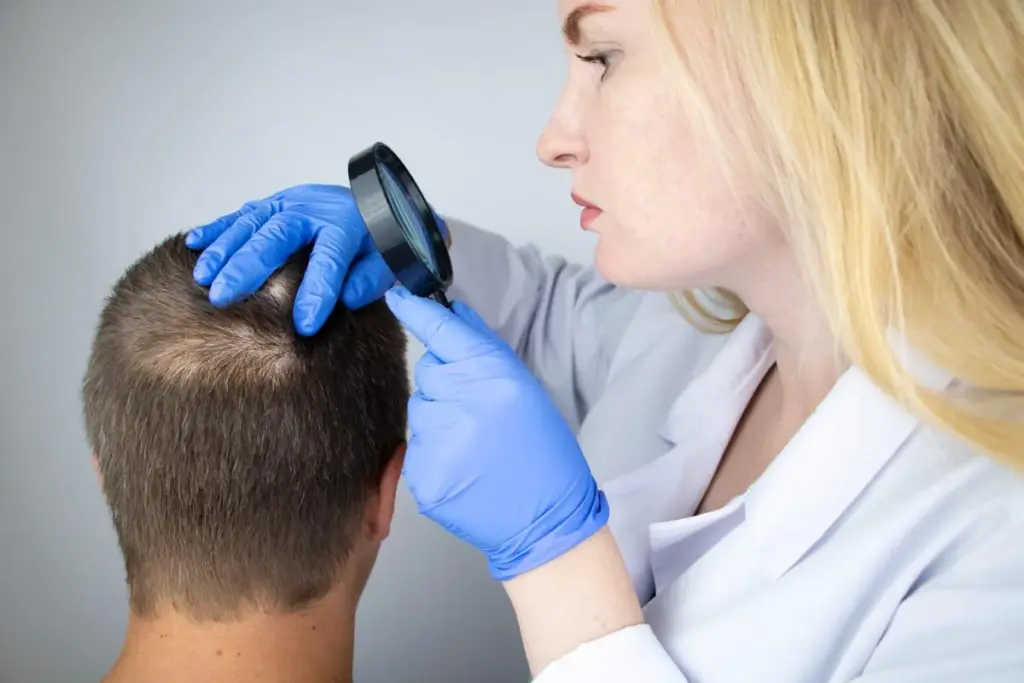
Androgenetic alopecia, or pattern baldness, is a common condition. It causes hair to thin due to hormones and genetics. It affects both men and women, but differently.
What is Androgenetic Alopecia?
Androgenetic alopecia is behind 95% of hair loss cases. It’s a hereditary condition that hormones, like androgens, influence. It leads to hair thinning on the scalp, creating a specific pattern of baldness.
The symptoms include gradual hair thinning, mainly on the scalp’s top and crown. Men often see a receding hairline. Women experience diffuse thinning over the scalp.
Global Prevalence and Statistics
Androgenetic alopecia is a worldwide health concern. It affects a large part of the population. By 50, about 50% of men and many women will have hair loss.
The condition’s prevalence grows with age. Millions worldwide suffer from it. Knowing this helps us understand the need for treatments and support.
By understanding androgenetic alopecia, we can tackle its challenges. We can also explore treatment options.
Male Pattern Baldness: Causes and Progression
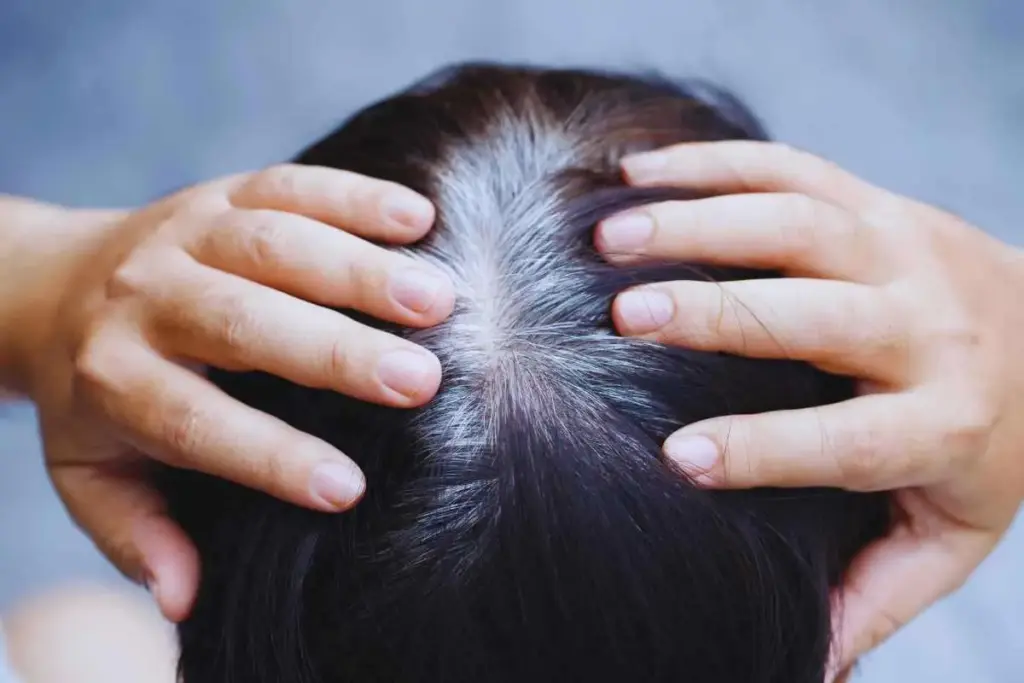
As men get older, they might start losing hair due to genetics and hormones. This condition, known as androgenetic alopecia, makes hair thinner and fall out in a certain pattern.
The Norwood Scale helps us understand how male pattern baldness progresses. It shows the severity of hair loss, from a little to a lot.
The Norwood Scale of Male Pattern Baldness
The Norwood Scale is a way to measure how much hair men lose. It helps doctors figure out how bad the hair loss is and what treatments to use. It shows different levels of baldness, from a little to a lot.
- Stage I: Very little hair loss, with almost no change in the hairline.
- Stage II: Hair starts to recede along the front hairline.
- Stage III: More hair loss, with thinning in the front and sides.
- Stage IV: Hair loss gets worse, forming a horseshoe shape.
- Stage V: Even more hair loss, with a thin line of hair left.
- Stage VI: Hair loss is extensive, with almost no hair left in the middle.
- Stage VII: The most severe, with almost no hair left, except around the back and sides.
Genetic and Hormonal Factors
Male pattern baldness is mainly caused by genetics and hormones. Dihydrotestosterone (DHT), a hormone, plays a big role. It makes hair follicles smaller, leading to thinner, shorter hairs and hair loss.
“The conversion of testosterone to DHT is a key factor in the development of male pattern baldness. Inhibiting this conversion is a common approach in treating the condition.”
Knowing about these causes helps find better ways to treat hair loss. By tackling genetics and hormones, men can find ways to stop or even reverse hair loss.
Female Pattern Baldness: Unique Characteristics
Female pattern baldness affects millions of women worldwide. It’s different from male baldness because women don’t lose their hairline. Instead, they experience thinning on the top and crown of their scalp.
This condition, also known as androgenetic alopecia, is caused by androgens. It leads to hair thinning over time. The rate at which it progresses can vary greatly from person to person.
The Ludwig Scale for Women
The Ludwig Scale helps measure the severity of female pattern baldness. It divides the condition into three stages, from mild to severe:
|
Ludwig Scale Stage |
Description |
|---|---|
|
Stage I |
Mild thinning, mainly on the top of the scalp |
|
Stage II |
Moderate thinning, with more noticeable balding on the crown |
|
Stage III |
Severe thinning, with significant balding on the top and crown |
Hormonal Influences in Women
Hormonal changes are key in female pattern baldness. Androgens, like dihydrotestosterone (DHT), shrink hair follicles. This makes hair thinner and shorter.
Hormonal shifts during menopause, pregnancy, or conditions like PCOS can worsen the condition. Knowing this helps in finding effective treatments.
Treatments aim to counter androgen effects on hair follicles. They promote hair growth and improve overall hair health.
Understanding female pattern baldness and its causes helps tailor treatments. This approach focuses on individual needs.
Why is My Hair Thinning? Common Causes
If you’re wondering why your hair is thinning, you’re not alone. Both men and women face this issue, causing worry and a search for answers.
Medical Conditions Beyond Genetics
Genetics are a big factor in hair thinning, but many medical conditions also play a role. Thyroid disorders can lead to hair loss due to hormonal imbalances. Autoimmune diseases like alopecia areata attack hair follicles, causing hair loss. Skin issues like psoriasis and eczema can also thin your hair.
Other conditions like iron deficiency, anemia, and infections can also cause hair thinning. It’s key to see a doctor to find and treat any underlying issues.
Lifestyle and Environmental Factors
Lifestyle and environment also affect your hair. Stress can lead to hair thinning by causing telogen effluvium, a condition where you shed more hair. What you eat is also important; a diet lacking iron, zinc, and biotin can slow hair growth.
How you take care of your hair matters too. Using too much heat, harsh chemicals, and tight hairstyles can damage your hair and scalp. Pollution and UV radiation can also harm your hair.
- Eating a balanced diet with vitamins and minerals is key for healthy hair.
- Lowering stress can help prevent hair loss caused by it.
- Using gentle hair care practices, like avoiding heat and mild shampoos, helps keep your hair healthy.
Who is the Best Person to See for Hair Loss?
Knowing who to see for hair loss is key to getting the right care. Hair loss can come from genetics, hormonal changes, or medical issues. It’s important to find the right specialist.
Board-Certified Dermatologists
Board-certified dermatologists are doctors who focus on skin, hair, and nail problems. They can find the cause of hair loss and suggest treatments. This includes medications for hair regrowth and managing medical conditions.
For women with hair fall, a dermatologist can help. They can suggest hair transplant clinics and surgical options if needed.
Hair Transplant Surgeons
Hair transplant surgeons focus on surgical hair restoration. They use methods like Follicular Unit Extraction (FUE) and Follicular Unit Transplantation (FUT) for natural results.
These surgeons work with patients to find the best procedure. They ensure the transplanted hair looks natural and blends with the rest.
Trichologists and Hair Specialists
Trichologists study and treat hair and scalp disorders. They are not doctors but offer valuable hair care advice and treatments.
|
Specialist |
Expertise |
Treatment Options |
|---|---|---|
|
Board-Certified Dermatologists |
Diagnosis and treatment of hair loss |
Medications, addressing medical conditions |
|
Hair Transplant Surgeons |
Surgical hair restoration |
FUE, FUT, other surgical techniques |
|
Trichologists |
Hair and scalp care |
Non-surgical treatments, hair care advice |
In conclusion, the right specialist for hair loss depends on the cause and individual needs. A dermatologist or hair transplant surgeon can offer a detailed plan. Trichologists provide extra support and hair care advice.
Diagnostic Procedures for Hair Loss
Diagnosing hair loss requires a detailed approach. This includes physical exams, looking at medical history, and using advanced tech. Accurate diagnosis is key to choosing the right treatments.
Physical Examination Techniques
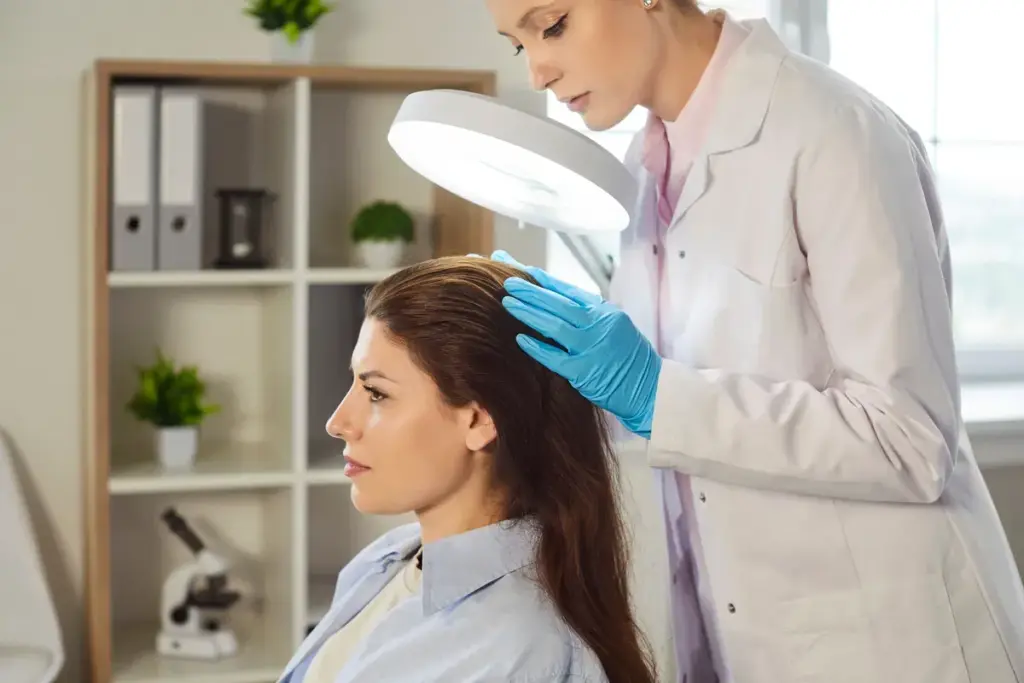
A thorough physical exam is the first step. We check the pattern of hair loss for thinning or balding. This helps us figure out the type of hair loss, like male or female pattern baldness.
We also look at the scalp’s health. We check for redness, scaling, or other signs of problems that might cause hair loss.
Blood Tests and Scalp Biopsies
Sometimes, blood tests are needed to find underlying health issues. These tests check for hormonal imbalances or nutritional deficiencies.
A scalp biopsy might be done if we’re not sure of the diagnosis. It involves taking a small scalp sample for microscopic examination.
Advanced Diagnostic Technologies
We use advanced diagnostic technologies to better understand hair loss. Digital scalp analysis shows hair density and thickness. This gives us insights into hair loss progression.
“Advanced diagnostic tools have revolutionized the way we approach hair loss, enabling more precise diagnoses and tailored treatment plans.”
Other tools, like hair density measurements and phototrichograms, provide detailed info on hair growth. They help us see how well treatments are working.
Non-Surgical Treatment Options for Men
Men looking to fight hair loss have many non-surgical options. These treatments are popular because they work well and are safer than surgery.
FDA-Approved Medications
The FDA has approved medicines for male hair loss. Minoxidil and Finasteride are top choices.
|
Medication |
Application |
Efficacy |
|---|---|---|
|
Minoxidil |
Topical application |
Stimulates hair growth and slows down hair loss |
|
Finasteride |
Oral |
Reduces dihydrotestosterone (DHT), a hormone contributing to hair loss |
Topical Treatments
Topical treatments are applied to the scalp to boost hair growth. Minoxidil is a well-known treatment that helps slow hair loss and grow new hair.
Low-Level Laser Therapy
Low-Level Laser Therapy (LLLT) is a non-invasive treatment. It uses a low-level laser or light-emitting device. LLLT is thought to increase hair density and promote growth by stimulating the scalp.
It’s wise to talk to a healthcare professional. They can help find the best non-surgical treatment for you.
Hair Regrowth for Women: Non-Surgical Approaches
Hair regrowth for women is possible without surgery. Women have unique needs, so treatments differ from men’s. We’ll look at non-surgical ways to help women grow their hair.
Female-Specific Medications
Some medicines are made just for women’s hair loss. Minoxidil is approved by the FDA for both men and women. But, women with thin hair might need a weaker version to avoid scalp irritation.
Spironolactone is sometimes used for women’s hair loss, even though it’s not officially approved for it. It blocks androgens, which can cause hair loss in women.
Topical Solutions for Women
Topical treatments are key for hair growth. Minoxidil is a well-known one. But, there are also natural ingredients like biotin and keratin that strengthen hair follicles and improve hair texture.
Women might also try low-level laser therapy (LLLT) devices. These devices help grow hair by boosting blood flow to the scalp.
Nutritional Approaches for Women’s Hair Health
Good nutrition is essential for hair health. Eating foods rich in vitamins and minerals like iron, zinc, and biotin supports hair growth.
Supplements can also help. For example, omega-3 fatty acids nourish the scalp, leading to healthier hair. Always talk to a doctor before starting any supplements.
Surgical Interventions for Advanced Hair Loss
Surgical options are popular for those with significant hair loss. They offer various techniques to meet individual needs. It’s key to know the different methods and their benefits.
Follicular Unit Extraction (FUE)
Follicular Unit Extraction, or FUE, is a modern hair restoration method. It takes individual follicular units from the donor area. This minimally invasive approach leaves no linear scarring, appealing to many.
The process starts with finding and extracting healthy hair follicles from the back and sides. A special tool is used for this. The follicles are then dissected into individual units for transplantation. These units are placed in the balding areas, growing to create a natural-looking hairline.
Follicular Unit Transplantation (FUT)
Follicular Unit Transplantation, or FUT, is another surgical hair restoration technique. It differs from FUE by removing a strip of hair-bearing skin from the donor area. This strip is then dissected into individual follicular units for transplantation.
FUT is effective for those needing many grafts, as it allows for a large number of units in one session. Yet, it results in a linear scar, a factor to consider for some.
Comparing Surgical Techniques
Choosing between FUE and FUT depends on several factors. These include the extent of hair loss, donor hair quality and quantity, and personal preferences regarding scarring and recovery. Both techniques have their advantages, and the right choice should be made with a hair restoration specialist.
FUE is often preferred for its minimally invasive nature and lack of linear scarring. FUT is chosen for its ability to transplant many grafts at once. The best technique for a patient depends on their unique situation.
Combination Therapies and Their Success Rates
Using different treatments together can help people with hair loss more than one treatment alone. This method has become popular because it might work better.
“Mixing therapies can tackle hair loss from different sides, possibly giving better results than one treatment,” says a top hair restoration expert. We’ll look at some of these mixtures and how well they work.
Minoxidil Plus Finasteride
Minoxidil and finasteride are often used together. Minoxidil is applied to the scalp to grow hair and slow loss. Finasteride is taken by mouth to lower DHT, a hormone that causes hair loss.
Research shows mixing minoxidil and finasteride works better than either alone. This mix can make hair thicker and slow down loss. A study in the Journal of Clinical and Aesthetic Dermatology found more hair for those using both treatments.
Multi-Modal Approaches
Other mixtures are being tried too. These include adding low-level laser therapy (LLLT), platelet-rich plasma (PRP) therapy, and supplements to the usual treatments.
LLLT uses low-level lasers to grow hair. It might make treatments like minoxidil and finasteride work better. PRP therapy, which injects platelet-rich plasma into the scalp, can also help hair grow and scalp health.
Patient Satisfaction Statistics
Most patients are happy with combination therapies. A study in the Journal of Clinical and Aesthetic Dermatology found over 80% of patients were pleased with minoxidil and finasteride together.
“The key to successful hair loss treatment lies in a complete approach that tackles all hair loss factors,” says a leading hair restoration expert. “By mixing therapies, we can get better and lasting results.”
Patients who stick to a mix of treatments usually see better results and are happier. As research keeps growing, we expect to find even better mixtures.
Specialized Hair Loss Centers: Liv Hospital Approach
Liv Hospital’s hair restoration program is known for its multidisciplinary team and focus on international standards. We know how upsetting hair loss can be. Our goal is to offer full care that helps both your body and mind.
Multidisciplinary Hair Restoration Teams
Our teams at Liv Hospital include experts in dermatology, hair transplant surgery, and trichology. This multidisciplinary approach means we create a treatment plan just for you. “Our team’s work together is essential for great results,” says a top hair transplant surgeon at Liv Hospital.
Our specialists talk about the best treatment options for you. This teamwork lets us offer many treatments, from medicines to surgery. We make sure you get the best care for your hair loss.
International Standards and Innovations
Liv Hospital follows international standards in hair restoration. We always update our methods and use the newest hair restoration technology. Our dedication to being the best is shown in our modern facilities and strict safety and quality rules.
“The field of hair restoration is always changing, and at Liv Hospital, we aim to give our patients the best treatments.”
By using multidisciplinary teams and sticking to international standards, Liv Hospital offers a special way to treat hair loss. Our patients get a full care plan that is both effective and caring. We use the latest in medical science and technology to help with your hair loss concerns.
Psychological Impact and Coping Strategies
Hair loss can be very upsetting, affecting how you look and feel. It’s not just about looks; it also affects your mental health. The emotional and social sides of hair loss are complex.
People who lose their hair might feel anxious, depressed, or less confident. The emotional impact can really change daily life and how you connect with others. It’s key to recognize these feelings and find the right help.
Mental Health Considerations
Hair loss can have many mental health effects. Research shows it can lead to depression and anxiety. Seeing hair loss can make you want to hide and feel embarrassed.
“The psychological impact of hair loss can be as significant as the physical. It’s vital to tackle both for full care.” -Dermatologist
Handling hair loss needs a complete plan. This includes medical help, emotional support, and sometimes, talking to a psychologist. Learning to cope is essential for dealing with the emotional side.
Support Resources
There are many places to get help if you’re losing your hair. Here are a few:
- Support groups, online or in-person, where you can share and find friends.
- Counseling, like cognitive-behavioral therapy (CBT), to help with mental health.
- Online forums and guides that offer tips and advice on dealing with hair loss.
|
Support Resource |
Description |
Benefits |
|---|---|---|
|
Support Groups |
Places to share and find support. |
Emotional help, feeling part of a community. |
|
Counseling Services |
Professional help for mental health. |
Learning to cope, mental health support. |
|
Online Resources |
Info and tips on managing hair loss. |
Easy to access, lots of information. |
Family and friends also play a big role in emotional support. A strong support network helps a lot in dealing with hair loss.
In summary, it’s vital to address the emotional side of hair loss for full care. Understanding mental health and using support resources can help you cope better with hair loss.
Conclusion: Taking Action Against Pattern Baldness
Understanding the treatment options is key to fighting pattern baldness. We’ve looked at both non-surgical and surgical ways to tackle hair loss.
Pattern baldness, or androgenetic alopecia, is a big problem worldwide. It causes a lot of stress. Knowing the causes and how it progresses helps people choose the right treatment.
There are many treatments out there. From FDA-approved drugs like minoxidil and finasteride to surgeries like FUE and FUT. Places like Liv Hospital offer top-notch care and support.
Finding the right treatment means looking at your own situation. This includes how much hair you’ve lost, your health history, and your lifestyle. Talking to a dermatologist or hair transplant surgeon can help find the best treatment for you.
Looking into these options and getting expert advice can help you manage hair loss. It can also boost your confidence in how you look.
FAQ
What is the best course of treatment for female pattern baldness?
For female pattern baldness, a mix of medications, topical treatments, and lifestyle changes works best. It’s key to talk to a board-certified dermatologist to find the right treatment.
What are the common causes of hair thinning in women?
Women’s hair thinning can come from many sources. Hormonal imbalances, medical issues, genetics, and lifestyle factors like stress and poor diet are common causes.
How is male pattern baldness classified?
Male pattern baldness is graded using the Norwood Scale. It shows how severe the hair loss is and its pattern.
What is the role of genetics in hair loss?
Genetics are a big factor in hair loss, like in androgenetic alopecia. If your family has a history of hair loss, you might get it too.
Who is the best person to see for hair loss?
For hair loss, see a board-certified dermatologist or a hair transplant surgeon. They know how to diagnose and treat hair loss well.
What diagnostic procedures are used to determine the cause of hair loss?
To find out why you’re losing hair, doctors use physical checks, lab tests, scalp biopsies, and tools like trichoscopy.
What are the non-surgical treatment options for men with hair loss?
Men can try non-surgical treatments like FDA-approved minoxidil and finasteride, topical solutions, and low-level laser therapy.
What are the surgical options for treating advanced hair loss?
For serious hair loss, men can consider FUE or FUT surgeries. These methods help grow hair back.
How effective are combination therapies for hair loss?
Using minoxidil and finasteride together can really help grow hair and slow down loss.
What is the psychological impact of hair loss, and how can it be managed?
Hair loss can really affect your mind, causing stress, anxiety, and low self-esteem. But, there are ways to cope, like counseling and support groups.
How can I prevent further hair loss?
To stop hair loss, live healthily. Eat well, manage stress, and use gentle hair care. A dermatologist can also help find and treat the cause.
What is the Ludwig Scale used for?
The Ludwig Scale helps measure how severe female pattern baldness is. It’s a way to standardize hair loss in women.
Are there any nutritional approaches that can support hair health in women?
Yes, eating foods rich in vitamins and minerals, like biotin and vitamin D, can help keep your hair healthy.
References
Nestor, M. S., Ablon, G., Gade, A., Han, H., & Fischer, D. L. (2021, December). Treatment options for androgenetic alopecia: Efficacy, side-effects, compliance, financial considerations, and ethics. Journal of Cosmetic Dermatology, 20(12), 3759-3781. PMID: 34741573. Retrieved from https://pubmed.ncbi.nlm.nih.gov/34741573/



 Departments
 Related Videos
 Our Doctors
 News
News