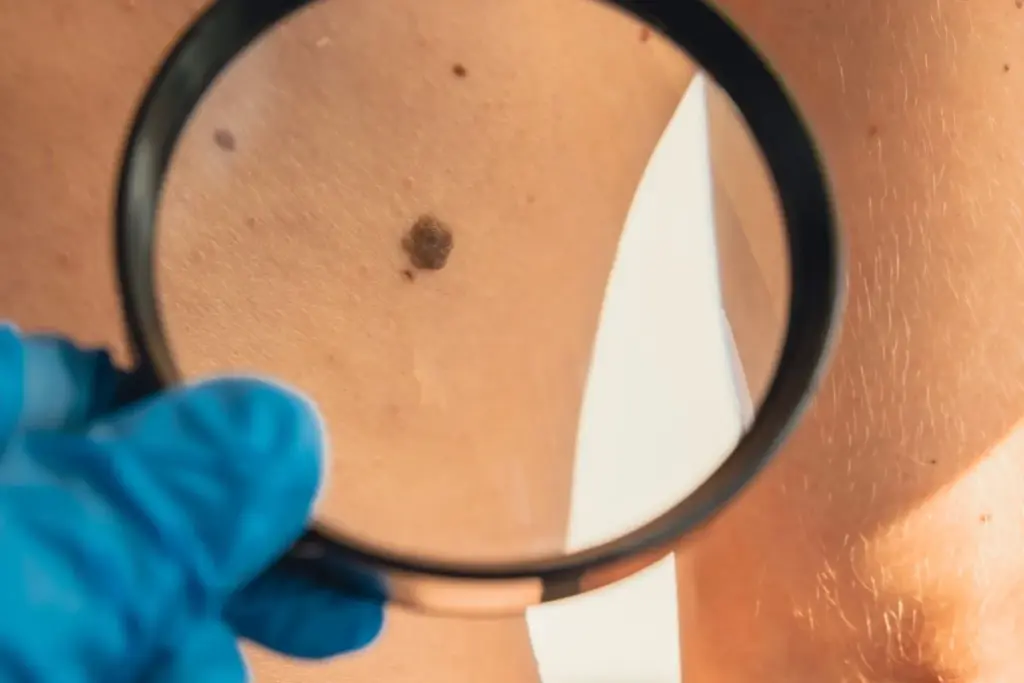
Melanoma can show up anywhere on the body. But it often appears on sun-baked spots, like the back. Knowing where melanoma skin cancer spots might pop up is key for catching it early and treating it right.
Melanoma moles can hide anywhere. Find out the most common places these dangerous spots appear on your body today.
So, how often does melanoma happen? It’s more common than you might think, mainly in people who spend a lot of time in the sun. Catching it early is vital for better survival chances. So, it’s important to know the risks and keep an eye on your skin.
Key Takeaways
- Melanoma is most common on sun-exposed areas, such as the back.
- Australia has the highest incidence of melanoma per capita.
- Early detection is key for effective treatment.
- Monitoring skin health is essential for identifying melanoma early.
- Understanding the risks can help in preventing melanoma.
What You Need to Know About Melanoma
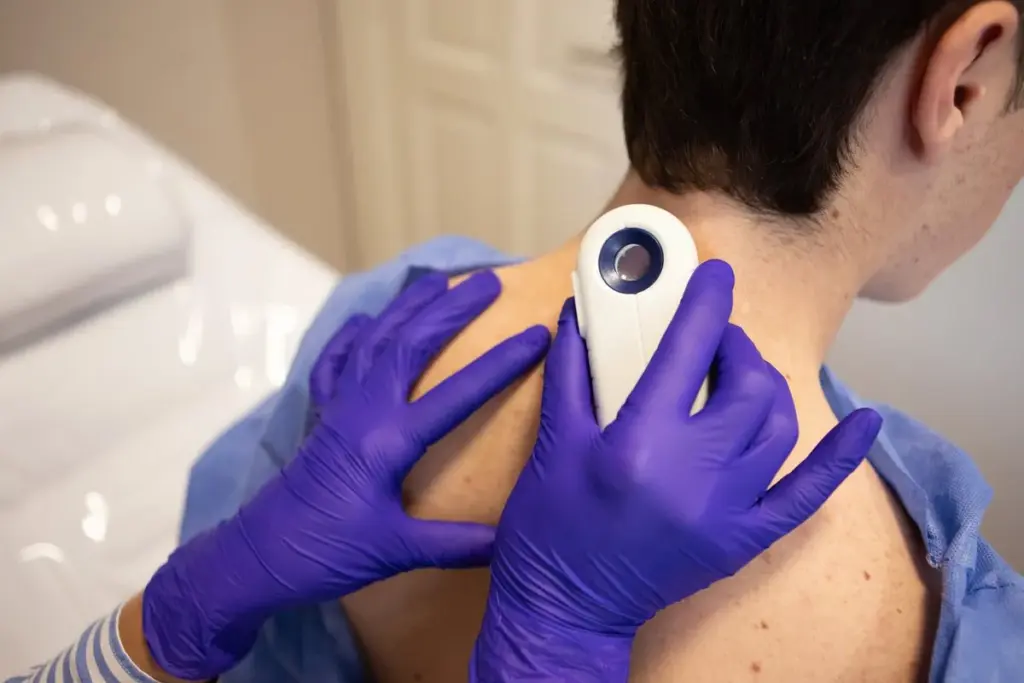
Melanoma is a serious skin cancer that causes most skin cancer deaths. It’s important to know about melanoma to catch it early and treat it effectively.
Definition and Basic Characteristics
Melanoma starts from melanocytes, the cells that make our skin color. It grows out of control, forming tumors. Melanoma can appear anywhere on the body, not just where the sun hits.
How Melanoma Develops
Melanoma grows due to genetics and the environment. Too much UV radiation from the sun or tanning beds is a big risk. Genetic predisposition also plays a part, with some genes making you more likely to get it.
Sun-Exposed Areas
Melanoma is more common in sun-exposed spots. These include the face, back, and legs. The back is a big risk for men, while women often get it on their legs. The face is a common spot for both men and women.
Gender Differences in Melanoma Location
Studies show men and women get melanoma in different places.
Common Sites in Men
Men often get melanoma on their backs. This is because the back gets a lot of sun, which increases the risk. Men should check their backs for any unusual moles or changes.
Common Sites in Women
Women are more likely to get melanoma on their legs. It’s important to watch for any unusual changes or moles on the legs. Regular self-checks and doctor visits can help catch it early.
Knowing these differences helps people focus on their risk areas. This can lead to better early detection and prevention.
Melanoma on the Back: The Most Common Site for Men

The back is a common spot for melanoma in men, showing the need for awareness and regular checks. Almost 27.4% of new melanoma cases happen in people aged 65-74. This age group needs to be extra careful.
Why the Back is Vulnerable
The back gets a lot of sun, making it more likely for melanoma. Sun or tanning bed UV rays can damage skin, leading to cancer. Early detection and treatment, as shown in studies like the ipilimumab study, are key to better outcomes.
Recognizing Suspicious Moles on the Back
To spot melanoma on the back, watch for moles that change in size, shape, or color. Black moles and cancer are linked, but not all black moles are cancerous. It’s important to keep an eye on any new or changing moles.
Self-Examination Tips
Regular self-checks are vital for early detection. Use a mirror to see your back, or get someone to help. Look out for any melanoma skin cancer spots that seem odd or are changing.
|
Self-Examination Tips |
Description |
|---|---|
|
Use a Mirror |
Check your back using a mirror, or have someone assist you. |
|
Monitor Moles |
Look for changes in size, shape, or color of moles. |
|
Watch for Symptoms |
Be aware of any itching, bleeding, or pain from moles. |
By being proactive and aware of the risks, men can lower their chance of melanoma on the back. This helps improve their chances of early detection and successful treatment.
Melanoma on the Legs: The Most Common Site for Women
Women often get melanoma on their legs. This makes checking these areas very important. It’s key to know why melanoma happens here and how to spot it early.
Why Legs are Frequently Affected
The legs are a common spot for melanoma in women. This is because of sun exposure and genetics. UV radiation is a big factor, and the legs get a lot of sun.
Identifying Concerning Changes
It’s important to notice any skin changes early. The ABCDE rule helps: Asymmetry, Border irregularity, Color variation, Diameter, and Evolving. If a mole looks different, see a doctor.
Regular Monitoring Strategies
Checking your skin regularly is key. Look at your legs every month and note any changes. Prevention and early detection are key to beating melanoma. Cities often catch it early because of better healthcare.
Being proactive helps women find melanoma early. Regular checks and quick doctor visits are vital for treating it well.
Understanding Different Types of Melanoma Moles
It’s important to know about the different types of melanoma for early detection and treatment. Melanoma is a serious skin cancer with several types, each with its own challenges.
Superficial Spreading Melanoma
Superficial spreading melanoma is the most common type, making up about 70% of cases. It looks like a flat or slightly raised spot with irregular edges and different colors. Catching it early is key to prevent it from getting worse.
Nodular Melanoma
Nodular melanoma grows fast and is aggressive. It looks like a firm, dome-shaped spot that can be black, blue, red, or the same as the skin. Because it grows quickly, it’s very dangerous and needs quick medical attention.
Lentigo Maligna Melanoma
Lentigo maligna melanoma often shows up on sun-damaged skin, like the face, in older people. It starts as a lentigo maligna, a type of melanoma in situ. It’s important to catch it early to stop it from getting worse.
Acral Lentiginous Melanoma
Acral lentiginous melanoma is rare and happens on the palms, soles, or under the nails. It’s not caused by sun exposure and can be hard to spot. Knowing about this type is key for early detection and treatment.
|
Type of Melanoma |
Common Location |
Characteristics |
|---|---|---|
|
Superficial Spreading Melanoma |
Trunk, arms, legs |
Flat or slightly raised, irregular borders, varied colors |
|
Nodular Melanoma |
Anywhere |
Rapidly growing, firm, dome-shaped nodule |
|
Lentigo Maligna Melanoma |
Face, sun-damaged skin |
Begins as lentigo maligna, invades deeper over time |
|
Acral Lentiginous Melanoma |
Palms, soles, under nails |
Not related to sun exposure, challenging to diagnose |
At Liv Hospital, we aim to provide the latest in academic care and quality care. Knowing about the different types of melanoma is vital for both patients and doctors to manage this complex disease well.
Less Common Locations for Melanoma Spots
Melanoma can show up in places you might not expect. It’s important to know where to look for it. This knowledge helps catch it early and treat it effectively.
Melanoma on Face
Melanoma on the face is a big worry because it’s so visible. It can affect how you look. So, it’s key to check your face moles often and get advice if they change.
Melanoma on Extremities
Melanoma can also appear on arms and legs. It’s important to watch for changes in these areas. This is true, even on the bottom of the foot and toe, where it can be dangerous if not caught early.
Melanoma on Bottom of Foot
Melanoma on the bottom of the foot is rare but serious. It’s often found late because it’s hard to see. So, it’s vital to check your feet regularly.
Melanoma on Toe
Melanoma on the toe can look like other things, like fungus. If your toe looks different, see a doctor right away.
Hidden Melanoma Sites
Some melanomas hide in spots that are hard to find. These include under the nails and in the eye. These areas are not usually checked during regular skin exams.
Melanoma Under Nails
Melanoma under the nails looks like a bruise or fungus. Watch for any changes in your nail color or texture.
Melanoma in the Eye
Ocular melanoma is in the eye and can be tricky to spot. Regular eye exams are key to catching it early.
Finding melanoma early can greatly improve your chances of survival. Regular self-checks and doctor visits are essential for early detection.
Identifying Melanoma: The ABCDE Rule
To spot melanoma skin cancer, we use the ABCDE rule. This guide is from the American Academy of Dermatology.
The ABCDE rule helps spot melanoma. It looks at moles for five things: Asymmetry, Border irregularity, Color variation, Diameter, and Evolving.
Asymmetry
A normal mole looks symmetrical. If you draw a line through it, both sides should look the same. Melanoma spots are often not symmetrical.
Border Irregularity
Melanoma moles have irregular edges. They might be notched or scalloped. Benign moles have smooth edges.
Color Variation
Benign moles are usually one color, brown. Melanomas can be many colors, including brown, black, and red, white, or blue patches.
Diameter
Melanomas are often bigger than benign moles. A size bigger than 6mm (like a pencil eraser) is a worry.
Evolving
Any change in a mole is a warning. Melanomas grow over time. Benign moles stay the same.
Using the ABCDE rule helps find suspicious moles. If you see these signs, see a dermatologist.
Risk Factors and Demographic Patterns
It’s important to know the risk factors and patterns of melanoma to prevent and detect it early. We’ll look at how age, race, location, and environment affect melanoma risk.
Age-Related Risk
Age is a big risk factor for melanoma. Almost 27.4% of new cases are in people aged 65-74. As we get older, our skin can’t fix DNA damage from the sun as well. So, older adults need to watch their skin closely for any changes.
Racial and Ethnic Factors
Melanoma risk changes a lot between different races and ethnic groups. People with fair skin, light hair, and a history of sunburns are at higher risk. It’s key for these groups to protect their skin from the sun and get regular skin checks.
Geographic and Environmental Influences
Where you live affects your risk of melanoma. Places near the equator get more sun. Also, being exposed to certain chemicals or having radiation therapy can raise your risk.
Urban vs. Rural Diagnosis Differences
There’s a difference in melanoma diagnosis between cities and rural areas. Cities see more early-stage melanoma, while rural areas see more late-stage cases. This might be because of healthcare access and screening differences. We need to work on making care fair for everyone.
Knowing these risk factors and patterns helps us fight melanoma better. We can create plans to prevent and detect it early. This will help lower the number of cases and deaths from this disease.
Conclusion: Prevention, Early Detection, and Treatment Options
Melanoma is a serious skin cancer that needs awareness and early action. At Liv Hospital, we offer top-notch healthcare for international patients. Early detection can greatly increase survival chances, and new treatments are available.
Knowing where melanoma moles often appear is key. Men should watch their backs, and women their legs. Regular self-checks and monitoring are vital for catching melanoma early.
By focusing on prevention, early detection, and treatment, we can help patients more. Our goal is to give international patients the best care and support. We aim to ensure they get the best treatment possible.
FAQ
What is melanoma and how does it develop?
Melanoma is a serious skin cancer. It starts in melanocytes, the cells that make pigment. These cells become abnormal and grow too much, often because of UV radiation from the sun or tanning beds.
Where is melanoma most commonly found on the body?
Melanoma can appear anywhere but often shows up on sun-exposed areas. This includes the back, legs, and face. Men tend to get it on their backs, while women often get it on their legs.
What are the different types of melanoma?
There are several types of melanoma. These include superficial spreading, nodular, lentigo maligna, and acral lentiginous melanoma. Each type has its own look and treatment options.
How can I identify potentially dangerous moles using the ABCDE rule?
The ABCDE rule helps spot moles that might be melanoma. It stands for Asymmetry, Border irregularity, Color variation, Diameter, and Evolving. If a mole shows any of these signs, see a dermatologist.
What are the risk factors for developing melanoma?
Melanoma risk increases with age, mostly in people over 65. Fair skin, family history, and UV exposure also raise the risk. Where you live and environmental factors also play a part.
Can melanoma occur in areas not exposed to the sun?
Yes, melanoma can happen in sunless areas. This includes under nails, on soles of feet, or in the eye. These hidden sites are harder to spot.
How common is melanoma, and what are the mortality rates?
Melanoma is a big health issue, more so for non-Hispanic Whites. It’s one of the most common skin cancers and its numbers are going up. High mortality rates highlight the need for early detection and treatment.
Are there any differences in melanoma diagnosis between urban and rural areas?
Yes, there are differences in melanoma diagnosis between urban and rural areas. Factors like healthcare access, UV exposure, and socioeconomic status affect these differences.
What are the strategies for preventing and detecting melanoma early?
To prevent melanoma, avoid too much UV radiation, wear protective clothes, and stay in the shade. For early detection, do regular self-exams, watch for mole changes, and see a dermatologist if you notice anything odd.
References
National Center for Biotechnology Information (NCBI): https://pmc.ncbi.nlm.nih.gov/articles/PMC10703395/