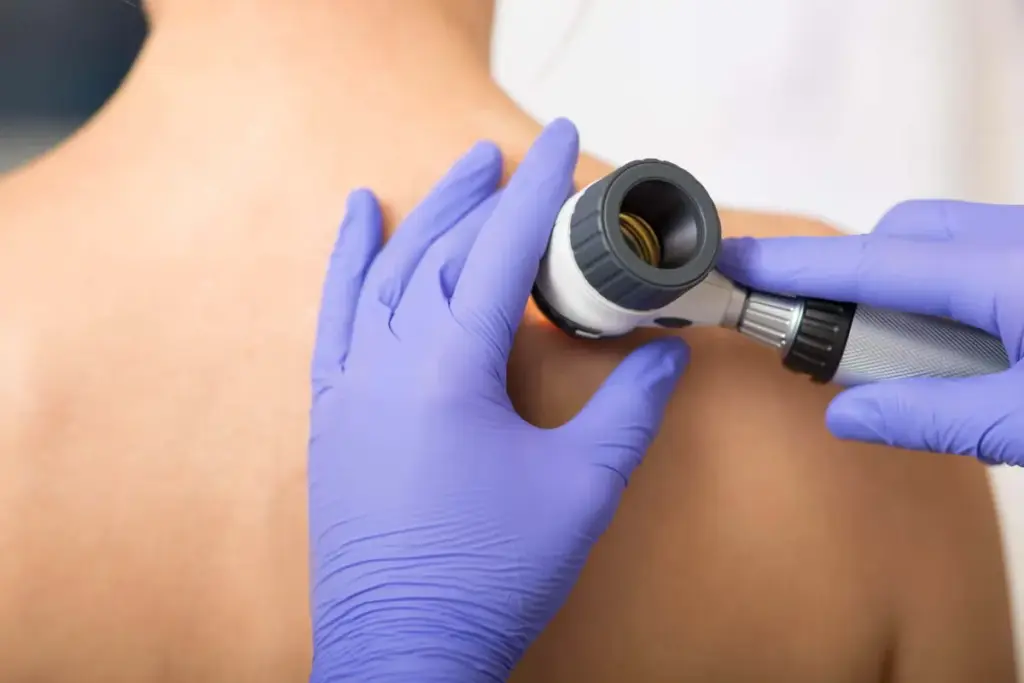
Finding out if skin cancer has spread is key to treating it right. show how important it is to know how far it has gone.
We use top-notch imaging and genetic tests to see how far skin cancer has spread. A dermatologist might take a biopsy to check the cancer cells. This helps figure out if it has moved to other parts of the body.
Key Takeaways
- Advanced imaging and genomic analysis aid in determining skin cancer spread.
- A dermatologist plays a critical role in diagnosing and staging skin cancer.
- Biopsy is a key tool in checking if skin cancer has spread.
- Getting the staging right is key for effective skin cancer treatment.
- Knowing how far skin cancer has spread helps in making a treatment plan that fits you.
Melanoma: The Most Dangerous Form of Skin Cancer
Melanoma is the most dangerous skin cancer because it grows fast and can spread. It’s important to know about its risks and why it’s a big health threat.
2.2% Lifetime Risk for Americans
About 2.2% of Americans will get melanoma at some point. This shows how vital it is to be aware and take steps to prevent it. Here’s a table that shows how common and deadly melanoma is:
|
Year |
Incidence Rate |
Mortality Rate |
|---|---|---|
|
2018 |
22.4 per 100,000 |
2.7 per 100,000 |
|
2019 |
23.1 per 100,000 |
2.8 per 100,000 |
|
2020 |
24.5 per 100,000 |
3.0 per 100,000 |
The numbers show melanoma is getting more common and deadly. This highlights the need for more research and education.
Why Melanoma Metastasizes Rapidly
Melanoma spreads fast because its cells are very aggressive. They can move through blood and lymph vessels, reaching other parts of the body. Knowing why this happens helps doctors find better ways to treat it.
Several things make melanoma spread quickly:
- Genetic mutations: Certain genetic changes make melanoma cells more likely to spread.
- Tumor thickness: Thicker tumors are more likely to spread.
- Lymph node involvement: Cancer in lymph nodes is a sign that the disease might spread.
Doctors can use this information to plan treatments that might stop the cancer from spreading.
Clinical Examination Techniques
Dermatologists use many techniques to check skin lesions and see if they might spread. These steps are key for finding problems early and getting a correct diagnosis.
Visual Assessment Methods
Looking at the skin is the first thing dermatologists do. They check the size, shape, color, and feel of the lesions. This helps them know if they need to look closer.
They look for lesions that seem odd or have changed. If a lesion looks suspicious, they might do more tests like dermoscopy or biopsy.
The ABCDE Rule for Suspicious Lesions
The ABCDE rule helps spot suspicious skin spots. Each letter stands for something: Asymmetry, Border, Color, Diameter, and Evolving. These are signs of a possible problem.
|
Characteristic |
Description |
|---|---|
|
Asymmetry |
Lesion is not symmetrical |
|
Border Irregularity |
Edges are uneven or notched |
|
Color Variation |
Multiple colors or uneven color distribution |
|
Diameter |
Lesion is larger than 6mm in diameter |
|
Evolving |
Changes in size, shape, or color over time |
Using the ABCDE rule helps dermatologists find spots that need more checking. This can lead to catching skin cancer early and treating it sooner.
Dermoscopy: First-Line Noninvasive Detection
Dermatologists use dermoscopy as a first step to find skin problems. This method is non-invasive and has changed how we detect skin cancer early. It helps us see skin lesions in detail, which is key for spotting skin cancers.
How Dermatologists Use Dermoscopy
We use dermoscopy to see skin structures that are hidden from the naked eye. This method uses a dermatoscope to light up and enlarge the skin lesion. It lets us examine it closely.
Here’s how it works: we put the dermatoscope on the skin. It takes high-quality images. These images help us spot patterns that show if a lesion is benign or malignant.
The main things we look for are:
- Color variations: Different colors in a lesion might mean it’s cancerous.
- Asymmetry: Lesions that aren’t symmetrical could be cancerous.
- Border irregularities: Uneven or notched borders might indicate skin cancer.
Limitations in Metastasis Detection
Even though dermoscopy is great for finding skin cancer early, it has its limits. It can’t tell if the cancer has spread to other parts of the body. We need more tests, like biopsies and imaging, to check for metastasis.
Some of the issues are:
- It can’t see deep tissue structures.
- It doesn’t give info on lymph node involvement.
- It can’t directly check for distant metastasis.
Physical Assessment for Metastatic Spread
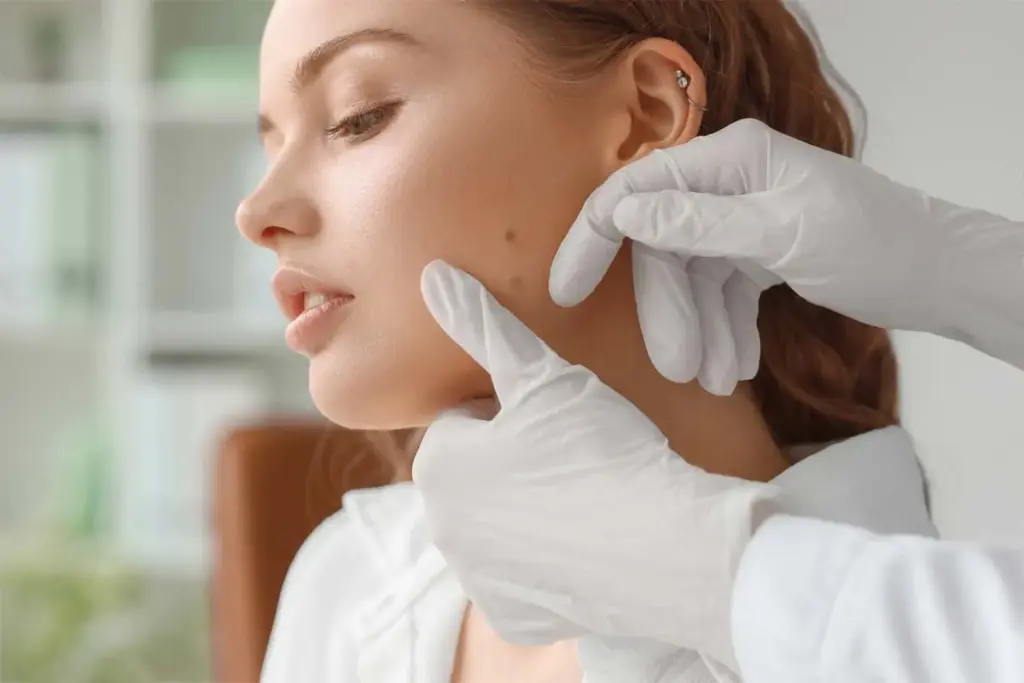
A thorough physical check is key to see if skin cancer has spread. We look closely for any signs of metastasis. This is important for figuring out the stage and treatment.
Comprehensive Lymph Node Examination
Checking lymph nodes is a big part of the physical check. We feel the lymph nodes near the tumor to see if they’re big or sore. This could mean the cancer has spread.
Lymph node examination means feeling the lymph nodes in the neck, armpits, and groin. If we find anything odd, we’ll need to do more tests.
Identifying Distant Metastasis Signs
We also look for signs of cancer spreading to other places. This includes checking for symptoms in the lungs, liver, or bones. We look at the patient’s health for any unusual signs or pain.
By using what we find in the physical check and other tests, we understand the disease better. Then, we can plan the best treatment.
Skin Biopsy Procedures and Analysis
A biopsy is a key tool for dermatologists to diagnose skin cancer. We use biopsies to check suspicious skin growths. This helps us see if they are cancerous and how far they’ve spread.
There are different types of biopsies we might use. This depends on the size, location, and look of the growth.
Types of Diagnostic Biopsies
A shave biopsy is used for growths that stick out from the skin. It removes the top skin layers with a special tool. For deeper or more suspicious growths, we might choose a punch biopsy or an excisional biopsy.
The type of biopsy depends on the suspected cancer type and its severity. A study on shows how important accurate biopsy results are for treatment.
Histopathological Markers of Metastasis
After getting a biopsy sample, we look at it under a microscope. We check for signs of cancer spread, like abnormal cells and high cell division rates. “The presence of metastatic disease is a critical factor in determining the prognosis and treatment plan for patients with skin cancer,” experts say.
By looking at these signs, we can tell if the cancer has spread. This helps us choose the best treatment for the patient.
Sentinel Lymph Node Biopsy for Melanoma Staging
The sentinel lymph node biopsy is a key tool for finding out how far melanoma has spread. It checks if cancer has reached the lymph nodes. This is important for choosing the right treatment.
The Mapping Procedure
The procedure finds the first lymph node that cancer cells might reach from the tumor. This is done with a radioactive substance and/or blue dye injected near the tumor. The node is then taken out and checked for cancer. This method is important because it helps avoid removing too many lymph nodes, which can cause problems.
- The procedure is usually done under local or general anesthesia.
- A small amount of radioactive material is injected near the melanoma.
- A blue dye is also injected to help find the sentinel lymph node during surgery.
What Positive Results Indicate
If cancer is found in the sentinel lymph node, it means the melanoma has started to spread. This is key for accurately staging the cancer and understanding the prognosis. Positive results might mean more lymph nodes need to be removed. They could also lead to treatments like immunotherapy or targeted therapy. Finding cancer in the sentinel lymph node is a big factor in deciding what to do next.
- Further treatment options are discussed based on the biopsy results.
- The patient may have more surgery to remove more lymph nodes.
- Adjuvant therapies might be suggested to lower the chance of the cancer coming back.
By knowing how far melanoma has spread to the lymph nodes, doctors can make a better treatment plan. This plan is tailored to the patient’s specific needs.
Advanced Imaging Technologies for Metastasis Detection
Advanced imaging technologies are key in the fight against skin cancer. They help doctors see how far cancer has spread. This is vital for planning treatment.
PET/CT Scan Applications
PET/CT scans mix PET’s function info with CT’s body details. This combo is great for finding cancer spread in skin cancer patients. PET/CT scans spot high activity areas, showing cancer before it’s seen in other ways.
We use PET/CT scans to check the whole body for cancer spread. This helps us make better treatment plans. PET/CT scans are very good at finding cancer spread.
MRI and Ultrasound Techniques
MRI and Ultrasound are also key for finding metastasis. MRI shows soft tissues clearly, perfect for checking lymph nodes. Ultrasound is good for first checks and biopsies because it’s easy and safe.
When Advanced Imaging Becomes Necessary
Advanced imaging is needed when cancer spread is suspected. This could be from a doctor’s check, biopsy, or when staging cancer. The right imaging depends on the situation and where cancer might spread.
|
Imaging Modality |
Primary Use in Metastasis Detection |
|---|---|
|
PET/CT |
Whole-body assessment for metastatic disease |
|
MRI |
Detailed examination of soft tissues and lymph nodes |
|
Ultrasound |
Initial assessment and guided biopsies |
Using these advanced imaging tools helps us find cancer spread early and accurately. This leads to better patient care.
Hyperspectral Imaging: 96.7% Sensitivity in Early Detection
Hyperspectral imaging (HSI) is changing dermatology with a 96.7% sensitivity rate. It’s great at finding skin cancer early, which helps patients a lot. This technology is making a big difference in how we find skin cancer.
How HSI Technology Works
Hyperspectral imaging captures detailed spectral information from the skin. It does this by shining different wavelengths of light on the skin and measuring what comes back. Then, special algorithms look for patterns that show skin cancer.
A study on shows HSI is very accurate at spotting skin lesions.
Benefits Over Conventional Methods
HSI has many advantages over old methods. It’s gentle on patients because it doesn’t hurt. It also catches more cases of skin cancer early, thanks to its high sensitivity.
Here’s a comparison of how different methods do:
|
Diagnostic Method |
Sensitivity Rate |
Non-invasive |
|---|---|---|
|
Hyperspectral Imaging (HSI) |
96.7% |
Yes |
|
Conventional Visual Examination |
Variable, often lower |
Yes |
|
Biopsy |
High |
No |
As the table shows, HSI is a top choice for finding skin cancer early. It’s both sensitive and non-invasive.
AI-Powered Diagnosis with 94% Accuracy
Dermatologists are using AI to diagnose skin cancer with 94% accuracy. This change is thanks to new automated diagnostic algorithms. They work well with clinical assessments.
Automated Diagnostic Algorithms
Automated diagnostic algorithms are key in finding skin cancer early. They look at lots of data, like skin lesion images, to spot cancer signs. Machine learning models get better with time, making diagnoses more accurate.
AI is also good at analyzing dermoscopic images. Studies show AI can find skin cancer as well as doctors. This is a big win for early detection.
Integration with Clinical Assessment
AI diagnosis and clinical assessment together are a big step forward. AI gives insights, but doctors use their knowledge to make a final call. This team effort means better care for patients.
By mixing AI analysis with traditional methods, doctors can make better choices. This combo boosts accuracy and makes patient care smoother.
|
Diagnostic Method |
Accuracy |
Advantages |
|---|---|---|
|
AI-Powered Diagnosis |
94% |
High accuracy, early detection |
|
Clinical Assessment |
Variable |
Expert judgment, complete care |
|
Combined Approach |
Enhanced |
Improved accuracy, efficient care |
Genomic Data and Machine Learning in Melanoma Diagnosis
The use of genomic data and machine learning has changed how we diagnose melanoma. We can now analyze complex genetic information with great accuracy. This leads to better diagnosis and treatment for patients.
0.95 AUROC in Distinguishing Metastatic Disease
Research shows that machine learning can spot metastatic disease with an AUROC of 0.95. This is a big leap from old methods like looking at skin and biopsies. A study in found that using genomic data and machine learning boosts accuracy.
This method can look at huge amounts of data to find patterns that are hard to see other ways. It has led to better tools for catching melanoma early.
The 89% Validation Accuracy Breakthrough
Recently, machine learning models have reached a 89% validation accuracy in diagnosing melanoma. This is a big step forward, showing how reliable these models are. Below is a table with key findings from studies on using genomic data and machine learning in melanoma diagnosis.
|
Study |
AUROC |
Validation Accuracy |
|---|---|---|
|
Study 1 |
0.95 |
89% |
|
Study 2 |
0.92 |
85% |
|
Study 3 |
0.90 |
82% |
These findings show the huge promise of using genomic data and machine learning in melanoma diagnosis. They offer new hope for better patient care.
Comprehensive Staging of Skin Cancer

Accurate staging of skin cancer is key to predicting patient outcomes and guiding treatment. Dermatologists use a detailed staging system to assess disease severity. This helps in creating effective treatment plans.
The TNM Classification System
The TNM Classification System is a common method for skin cancer staging. It looks at three main areas: the tumor’s size and spread (T), nearby lymph nodes (N), and distant metastasis (M). This system helps standardize disease classification, making it easier for healthcare professionals to communicate.
|
TNM Component |
Description |
|---|---|
|
T (Tumor) |
Size and extent of the primary tumor |
|
N (Node) |
Involvement of nearby lymph nodes |
|
M (Metastasis) |
Presence of distant metastasis |
A study in the Journal of Clinical Oncology found the TNM system reliable for predicting skin cancer outcomes.
“The TNM staging system is a critical tool in the management of skin cancer, allowing clinicians to stratify patients according to risk and tailor treatment.”
How Staging Directs Treatment Pathways
The stage of skin cancer at diagnosis greatly affects treatment choices. Early-stage disease might be treated with surgery or localized therapies. Advanced disease often needs systemic treatments like immunotherapy or targeted therapy.
- Surgical excision for early-stage disease
- Systemic therapies for advanced disease
- Radiation therapy for palliation or adjuvant treatment
As we learn more about skin cancer biology, accurate staging becomes even more critical. It allows for more personalized and effective care for our patients.
Treatment Approaches for Metastatic Skin Cancer
When skin cancer spreads to other parts of the body, a detailed treatment plan is needed. We know that treating metastatic skin cancer requires a mix of therapies. This approach helps manage the disease well. We will talk about the main treatment methods.
Surgical Interventions
Surgery is key in treating metastatic skin cancer. We use surgery to take out tumors in other parts of the body. This helps ease symptoms and improve life quality. Sometimes, surgery can even cure the disease if all cancer is removed.
Immunotherapy Advancements
Immunotherapy has changed how we treat metastatic skin cancer. It uses the body’s immune system to fight cancer cells. We use checkpoint inhibitors and other treatments to boost the immune response against melanoma and other skin cancers. These new treatments have shown great promise in trials, giving patients new hope.
Targeted Molecular Therapies
Targeted molecular therapies are also important in treating metastatic skin cancer. We use drugs that target specific genetic mutations or molecular pathways in cancer cells. For example, BRAF inhibitors work well on melanoma with certain BRAF mutations. They slow the disease’s growth and improve patient results.
Conclusion: Early Detection Saves Lives
Early catching of skin cancer spreading is key to good treatment and better patient results. Dermatologists use many methods to find out if cancer has spread. They look closely at the patient, use special tools, and do tests to check.
New tech like hyperspectral imaging and AI is making finding cancer better. Genomic data and machine learning help doctors know if cancer has spread. These new tools are changing how we treat skin cancer, giving patients more hope and longer lives.
We must keep improving medical tech and treatments. Working with doctors, patients can get the right care early. This boosts their survival chances. Our team is dedicated to top-notch care for all patients, including those from abroad.
FAQ
What are the early signs of melanoma?
Early signs of melanoma include changes in mole size, shape, or color. Look for new moles too. We check for asymmetry, irregular borders, color changes, size increase, and evolving moles. This is known as the ABCDE rule.
How is melanoma diagnosed?
Melanoma is diagnosed by looking at the mole, using dermoscopy, and skin biopsy. A dermatologist checks the mole with the ABCDE rule. They might do a biopsy to confirm it’s melanoma.
What is the difference between melanoma and skin cancer?
Melanoma is a type of skin cancer from melanocytes, the pigment cells. Not all skin cancers are melanomas. Basal cell and squamous cell carcinomas are other types.
How is melanoma staged?
Melanoma staging looks at tumor thickness, lymph node spread, and distant metastasis. We use the TNM system to stage it. This helps decide treatment.
What are the treatment options for metastatic melanoma?
Treatments for metastatic melanoma include surgery, immunotherapy, and targeted therapies. The best treatment depends on disease extent, patient health, and other factors.
Can melanoma be prevented?
While we can’t prevent all melanomas, we can lower risk. Avoid too much UV, wear protective clothes, seek shade, and use sunscreen. Regular skin checks are key.
What is the role of sentinel lymph node biopsy in melanoma?
Sentinel lymph node biopsy checks if melanoma has spread to lymph nodes. It removes the first node to check for cancer.
How accurate is AI-powered diagnosis in detecting melanoma?
AI diagnosis is very accurate, up to 94% in some studies. But, AI isn’t a full replacement for human doctors. We use it to help diagnose.
What is hyperspectral imaging, and how is it used in melanoma detection?
Hyperspectral imaging is a non-invasive method that captures detailed skin information. It’s very sensitive to melanoma. It’s used for early detection.
References
- Li, Q., et al. (2023). Hyperspectral imaging for skin cancer detection. Retrieved from https://pmc.ncbi.nlm.nih.gov/articles/PMC10705122/
- Nature. (2019). A deep learning algorithm for classification of primary skin cancer. Retrieved from https://www.nature.com/articles/s41598-019-52134-4
- Nature. (2024). Deep learning for melanoma detection. Retrieved from https://www.nature.com/articles/s41598-024-59783-0
- National Cancer Institute SEER Program. (n.d.). Cancer Stat Facts: Melanoma of the Skin. Retrieved from https://seer.cancer.gov/statfacts/html/melan.html
- American Cancer Society. (n.d.). How Is Skin Cancer Diagnosed? Retrieved from https://www.cancer.org/cancer/types/skin-cancer/detection-diagnosis-staging/how-diagnosed.html



 Departments
 Related Videos
 Our Doctors
 News
News