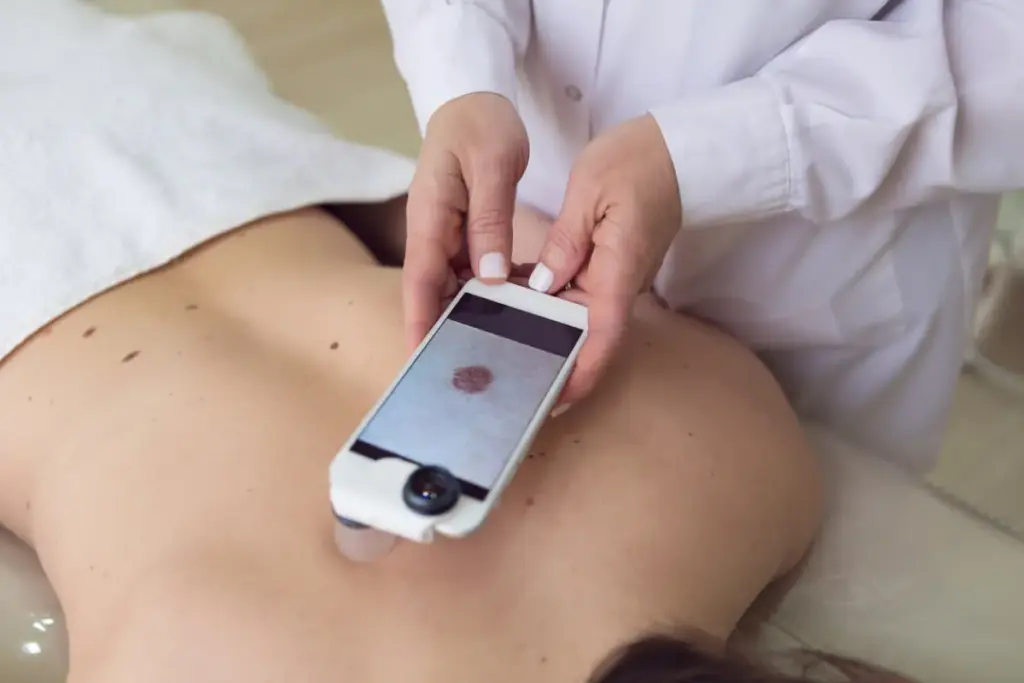
Melanoma is a serious skin cancer that needs to be caught early. It’s hard to diagnose, even for experts. Looking at the skin and using dermoscopy can help spot melanoma symptoms. But, they’re not enough to be sure.
Studies show that dermoscopy is not always reliable. It can lead to too many false alarms. So, a biopsy is the best way to confirm if you have melanoma.
We’ll look into why diagnosing melanoma without a biopsy is tough. We’ll see why getting it right is key for good treatment.
Key Takeaways
- Melanoma diagnosis is challenging without a biopsy.
- Dermoscopy has limitations in diagnosing melanoma.
- Histopathological examination is the gold standard for diagnosis.
- Accurate diagnosis is vital for effective treatment.
- Knowing melanoma symptoms is important for catching it early.
What is Melanoma and Why Early Detection Matters
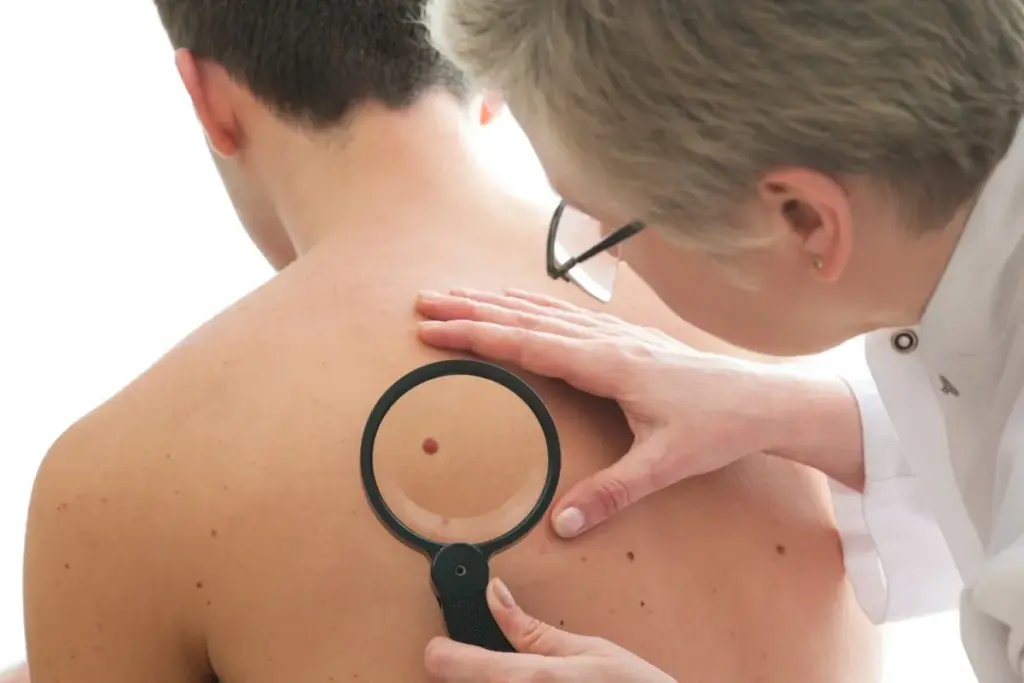
Exploring melanoma shows us how vital early detection is. Melanoma is a serious skin cancer that starts in melanocytes, the cells that make melanin. Knowing how it develops helps us see why finding it early is so important.
Statistics on survival rates with early detection
Finding melanoma early makes a big difference in survival. The numbers are clear: early detection means a good chance of treatment success. Survival rates are much higher when caught early compared to later.
The 98.4% 15-year survival rate for early-stage cases
People diagnosed early with melanoma have a 98.4% chance of surviving 15 years. This highlights how critical early detection and quick medical action are. Important facts include:
- Early-stage melanoma has a 98.4% 15-year survival rate.
- Waiting too long to get diagnosed lowers survival chances.
- Regular skin checks are key for catching it early.
Understanding melanoma and how it starts helps us see why finding it early is so important. The numbers prove that catching it early is key for better treatment and survival.
The Gold Standard: Why Biopsies Remain Essential
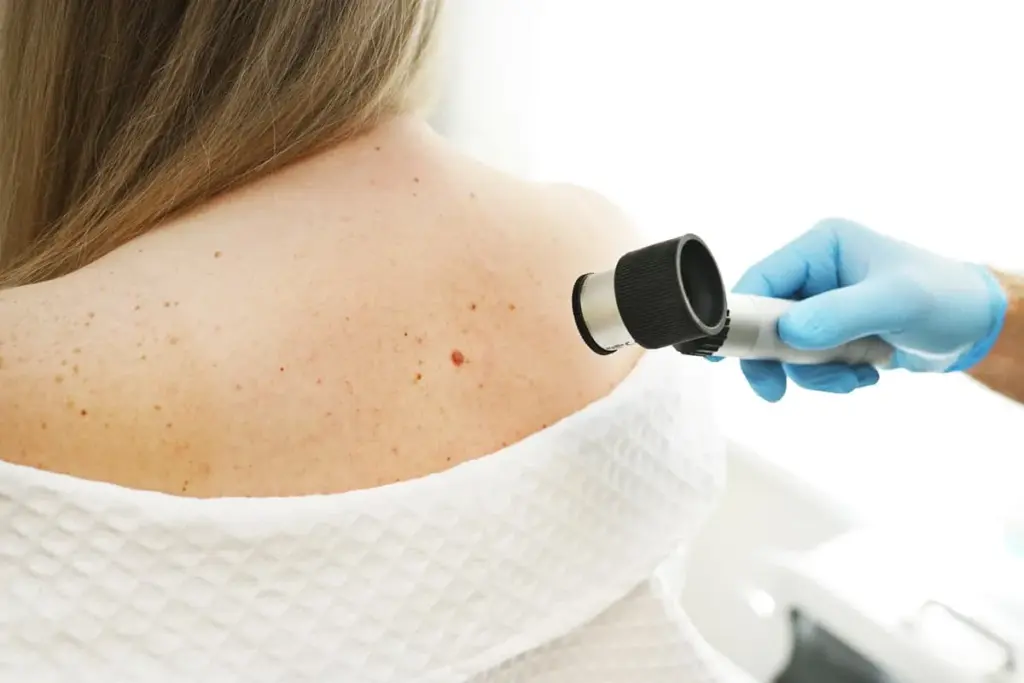
In the medical world, biopsies are seen as the top way to find out if you have melanoma. Even with new tech, biopsies are the best way to know if you have melanoma of skin cancer.
Types of Melanoma Biopsies and Procedures
There are different biopsies for melanoma, like excisional, incisional, and punch biopsies. Excisional biopsies take out the whole area that looks suspicious. Incisional biopsies just take a part of it. Punch biopsies take a small piece of tissue.
The Histopathological Examination Process
After a biopsy, the tissue goes for a detailed look under a microscope. This check looks for cancer cells. It helps figure out if you have melanoma and how far it has spread.
Accuracy and Limitations of Biopsy Results
Biopsy results are very accurate for melanoma. But, there can be errors or wrong readings. Yet, biopsies are the best because they are very accurate and give a lot of information.
We count on biopsies for a clear diagnosis. This is key for making a good treatment plan. Knowing the type and stage of melanoma helps doctors choose the right treatment for each patient.
Visual Inspection by Dermatologists
The first step in finding melanoma is often a visual check by a dermatologist. This method depends on the dermatologist’s skill to spot suspicious spots that need more looking into.
The ABCDE Criteria for Melanoma Identification
Dermatologists use the ABCDE criteria to check for skin cancer. The ABCDE rule stands for:
- Asymmetry: One half of the mole doesn’t match the other.
- Border: The edges are irregular, ragged, or blurred.
- Color: The color is not uniform and may include shades of brown, black, or even patches of red, white, or blue.
- Diameter: The mole is larger in diameter than a pencil eraser.
- Evolving: The mole is changing in size, shape, or color.
By using the ABCDE criteria, dermatologists can better spot lesions that need a biopsy.
Ugly Duckling Sign and Other Visual Indicators
Dermatologists also look for the “ugly duckling sign.” This means a mole that looks different from others on the same person. It’s based on the idea that melanomas often look unlike other moles on the same person.
|
Visual Indicator |
Description |
|---|---|
|
ABCDE Criteria |
Asymmetry, Border irregularity, Color variation, Diameter > 6mm, Evolving |
|
Ugly Duckling Sign |
A mole that looks different from others on the same patient |
While looking with the naked eye is helpful, it has its limits. The accuracy of these checks can vary. There’s a chance of missing a real problem or seeing something that isn’t there.
To get better at finding melanoma, dermatologists use more tools than just looking. Knowing how to spot signs of melanoma is key for catching it early and treating it well.
Dermoscopy: Enhanced Visual Diagnosis
Dermoscopy is key in spotting melanoma early. It’s a non-invasive way for doctors to look at skin lesions closely. This lets them see more than the naked eye can.
Improving Detection with Dermoscopy
Dermoscopy uses a special microscope to zoom in on skin lesions. This lets doctors see the details of color, shape, and texture. These details help spot signs of melanoma.
Thanks to dermoscopy, doctors can find melanoma more often. The success rate is 85% to 90%. It also helps avoid mistakes by correctly identifying non-melanoma cases 70% to 80% of the time.
The Challenge of Overdiagnosis
But dermoscopy has its downsides. One big issue is overdiagnosis. This means harmless spots are thought to be cancer. It worries patients and costs more because of extra tests and treatments.
To avoid this, doctors need to get better at reading dermoscopy images. They must keep learning and use better criteria. This will help them make more accurate diagnoses.
Advanced Imaging Technologies for Melanoma Detection
Advanced imaging technologies are changing how we find melanoma. They give us detailed pictures of skin spots, helping doctors make accurate diagnoses.
Reflectance Confocal Microscopy
Reflectance confocal microscopy (RCM) is a non-invasive way to look at skin spots. It shines a laser on the skin to get clear images. These images help doctors spot melanoma.
Optical Coherence Tomography
Optical coherence tomography (OCT) is another non-invasive tool. It gives doctors cross-section images of skin spots. OCT uses special light to see the details of the spot.
Multispectral and Hyperspectral Imaging Systems
Multispectral and hyperspectral imaging systems take pictures in different colors. They help find melanin and other signs of melanoma. These systems can spot things that are hard to see with the naked eye.
Comparative Accuracy Rates of Advanced Imaging Methods
It’s important to compare how well these imaging methods work. This helps us understand their strengths and weaknesses.
|
Imaging Technology |
Sensitivity |
Specificity |
|---|---|---|
|
Reflectance Confocal Microscopy |
85-90% |
80-85% |
|
Optical Coherence Tomography |
80-85% |
75-80% |
|
Multispectral Imaging |
90-95% |
85-90% |
These new imaging tools are making it easier to find melanoma. Knowing what each tool does best helps doctors give better care to patients.
Emerging Non-Invasive Diagnostic Tools
New non-invasive tools are changing how we find melanoma. These tools help catch cancer early and cut down on painful tests.
Elastic Scattering Spectroscopy
Elastic scattering spectroscopy is very promising. It has a sensitivity rate over 90%. This method looks at how light interacts with tissue to spot cancerous moles. It can find melanoma early by checking tissue changes.
Tape-Strip Genetic Assays
Tape-strip genetic assays are another new method. They use an adhesive tape to collect skin cells for genetic analysis. Though promising, they need more research and FDA approval status is pending.
Electrical Impedance Spectroscopy and Other Physical Methods
Electrical impedance spectroscopy checks the electrical properties of skin lesions. Other methods, like different types of spectroscopy, are also being tested. They aim to find melanoma symptoms without invasive tests.
Accessibility and Cost Barriers to New Technologies
Despite their promise, these new tools face big challenges. Accessibility and cost are major hurdles. For example:
- Expensive equipment costs
- Not enough in rural or poor areas
- Healthcare pros need special training
Overcoming these obstacles is key to making these technologies available to more people.
Artificial Intelligence in Melanoma Diagnosis
Artificial intelligence is becoming key in finding melanoma early. This is a serious skin cancer. Technology in healthcare is growing, and AI is playing a big part in analyzing medical data.
Analyzing Skin Lesions with AI Algorithms
AI algorithms look at skin lesions by using lots of data, including images. They learn from patterns to spot melanoma. This helps doctors make better diagnoses.
Explainable AI: Enhancing Clinician Confidence
Explainable AI is a big step forward. It shows how AI makes its decisions. This makes doctors more confident in using AI tools.
Accuracy Rates: AI vs. Board-Certified Dermatologists
Research shows AI can match doctors in finding melanoma. Here’s a table comparing AI and doctor accuracy:
|
Diagnosis Method |
Accuracy Rate |
|---|---|
|
AI Algorithms |
85-90% |
|
Board-Certified Dermatologists |
88-92% |
Limitations and Ethical Considerations
AI is promising for melanoma diagnosis but has its limits. There are concerns about bias, privacy, and validation. It’s important to use AI wisely.
We need to use AI in a way that helps doctors, not replaces them. This balance is key.
Warning Signs that Require Immediate Medical Attention
Some skin lesions need to be seen by a doctor right away. Look out for these signs:
- Asymmetry: If the lesion is not symmetrical.
- Border irregularity: Lesions with uneven, notched, or scalloped edges.
- Color variation: Lesions that are multicolored or have an unusual color.
- Diameter: Lesions that are larger in diameter than a pencil eraser.
- Evolution: Changes in size, shape, or color over time.
Self-Examination Techniques and Frequency
Checking your skin regularly is a great way to spot changes early. We suggest doing this once a month, focusing on sun-exposed areas. Use mirrors to see all parts of your skin. Note any new or changing spots.
Risk Factors that Increase the Need for Regular Screening
Some people need to be more careful and see doctors more often. This includes those with a history of skin cancer, a family history of melanoma, fair skin, and a history of bad sunburns.
What to Expect During a Professional Skin Examination
A dermatologist will carefully check your skin during an exam. They might use a dermatoscope for a closer look. They’ll check all your skin lesions to see if any look like melanoma or other cancers. This is a key step in keeping your skin healthy and catching problems early.
Conclusion: The Future of Melanoma Diagnosis
As we move forward in melanoma diagnosis, new technologies and better methods are key. Dermatologists can spot melanomas early by looking at skin cancer pictures. This helps a lot.
New research will make diagnosing melanoma even better. Tools like dermoscopy and artificial intelligence are getting more use. They help find melanoma early.
We think the future of melanoma diagnosis is bright. By using new tech and expert doctors together, we can catch melanoma early. This will lead to better treatments and more lives saved.
FAQ
What is melanoma and how does it develop?
Melanoma is a serious skin cancer. It starts in melanocytes, the cells that make skin pigment. These cells grow out of control, often because of UV radiation.
Can melanoma be diagnosed without a biopsy?
Visual checks and dermoscopy can suggest a skin issue. But, a biopsy is the best way to confirm melanoma. It takes a tissue sample for detailed examination.
What are the different types of biopsies used for melanoma diagnosis?
There are several biopsies for melanoma, like excisional and incisional biopsies. The choice depends on the lesion’s size, location, and depth.
How accurate are biopsy results in diagnosing melanoma?
Biopsy results are very accurate if done right. They help confirm melanoma, show the tumor’s type and thickness, and guide treatment.
What is dermoscopy and how does it aid in melanoma detection?
Dermoscopy uses a special microscope to look at skin lesions. It helps spot melanoma signs like irregular pigment and blood vessels, making diagnosis better.
Can artificial intelligence (AI) diagnose melanoma as accurately as a dermatologist?
AI can analyze skin lesions well and find melanoma. Some AI systems match dermatologists’ accuracy. But, AI is not yet a main tool for diagnosis.
What are the warning signs of melanoma that require immediate medical attention?
Look out for new or changing moles, lesions with odd shapes or colors, and those that itch, bleed, or hurt. Use the ABCDE criteria to check lesions.
How can I perform self-examination for skin cancer?
Examine your skin in a bright area, using a mirror for hard spots. Look for new or changing moles and use the ABCDE criteria. Do this monthly and see a dermatologist for any concerns.
What are the risk factors that increase the need for regular skin cancer screening?
Risk factors include sunburns, too much UV, fair skin, family history, and past skin cancers. If you have these, see a dermatologist for regular checks.
What can I expect during a professional skin examination?
A dermatologist will check your skin and might use dermoscopy for close looks. They’ll look for melanoma signs, talk about your risk, and suggest tests or follow-ups.
References
National Center for Biotechnology Information (NCBI): https://pmc.ncbi.nlm.nih.gov/articles/PMC10703395/



 Departments
 Related Videos
 Our Doctors
 News
News