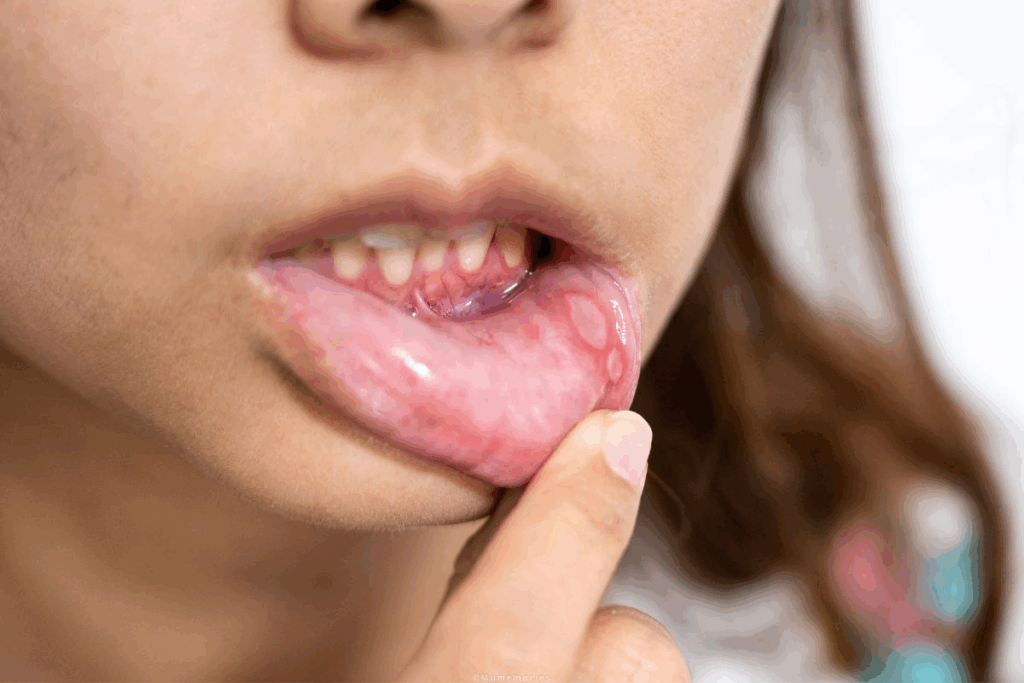
The oral cavity is where we eat, speak, and breathe. At Liv Hospital, we know how vital the oral mucosa is for our health. It keeps our mouth healthy and helps us feel good overall mucosa histology.
The oral mucosa is divided into three main types. These are based on histological and functional characteristics. Knowing about the structure and function of these types helps us understand their role in keeping our mouths healthy.
Our team at Liv Hospital uses this knowledge to give our patients the best care. We focus on what each patient needs for their health.
Key Takeaways
- The oral mucosa is categorized into three types based on histological characteristics.
- Understanding oral mucosa is essential for accurate diagnosis and treatment.
- The three types of oral mucosa play a critical role in oral health and disease.
- Comprehensive knowledge of oral mucosa enables patient-centered care.
- Oral mucosa histology is vital for appreciating its role in overall health.
Overview of Oral Mucosa

Oral mucosa is a mucous membrane that is key to oral health. It covers the inside of the mouth. It goes from the lips to the palatopharyngeal folds. This membrane is different from skin outside the mouth in looks and structure.
Definition and Anatomical Boundaries
The oral mucosa lines the inside of the mouth. It is continuous with the skin at the vermilion border of the lips. It reaches up to the palatopharyngeal folds. Knowing its boundaries helps us understand its role.
General Functions in the Oral Environment
The oral mucosa has several important functions. It protects against mechanical, chemical, and thermal stresses. It also helps with sensation, like touch, temperature, and taste. Plus, it aids in secretion, helping keep the mouth healthy.
Embryological Development of Oral Mucosa

Learning about the start of oral mucosa is key to understanding its role. The making of oral mucosa is a detailed process that happens in the womb. It leads to the different kinds of mucosa in our mouths.
Formation During Fetal Development
The oral epithelium comes from the embryonic ectoderm. This layer is made of stratified squamous epithelium. It can be keratinized or not, based on its job in the mouth. The making of oral mucosa is vital for the mouth’s lining.
“The growth of oral mucosa is a complex and well-controlled process,” say experts. The types of mucosa change due to genes and the environment.
Differentiation of Mucosa Types
The oral mucosa breaks into three main types: lining, masticatory, and specialized. Each type looks and works differently, fitting its role in the mouth.
- Lining mucosa is non-keratinized and found in areas that need to be flexible, like the cheeks and floor of the mouth.
- Masticatory mucosa is keratinized and in spots that face a lot of stress, like the gingiva and hard palate.
- Specialized mucosa is on the tongue’s top and has taste buds and papillae. It’s key for tasting food.
The growth of these mucosa types in the womb is key for the mouth to work right. Knowing how they develop helps us understand their roles and how they work.
Basic Histological Components of Oral Mucosa
The oral mucosa has several key parts that work together. These parts help keep the mucosa healthy and functioning well. Understanding these components is important for oral health and disease prevention.
Epithelial Layer Organization
The epithelial layer is the outermost part of the oral mucosa. It acts as a barrier against external factors. Depending on the area, this layer can be either keratinized or non-keratinized.
The thickness and keratinization of the epithelial layer vary. Areas like the gingiva and hard palate have a keratinized epithelium. This provides extra protection against mechanical stress.
Basement Membrane Structure
The basement membrane is under the epithelial layer. It’s a complex structure that keeps the mucosa intact. It has two layers: the basal lamina and the lamina reticularis.
The basement membrane helps with nutrient and waste exchange. It also acts as a selective barrier. This barrier controls what passes between the epithelium and the connective tissue.
Lamina Propria Composition
The lamina propria is the layer of connective tissue under the basement membrane. It’s made of collagen and elastin fibers, along with cells like fibroblasts and lymphocytes. The lamina propria has two sublayers: the papillary and reticular layers.
The papillary layer is near the epithelium and has many papillae. The reticular layer is deeper and has denser tissue. This layer supports, flexes, and nourishes the epithelial layer.
Submucosa Features
In some parts of the oral cavity, there’s a submucosa layer. It’s a layer of loose connective tissue with blood vessels, nerve fibers, and minor salivary glands. The submucosa adds support and flexibility to the mucosa.
The thickness and presence of the submucosa vary by location. Some areas, like the gingiva, don’t have a distinct submucosa.
Mucosa Histology: Cellular and Molecular Composition
The oral mucosa’s cells and molecules are key to its protective and sensory roles. Knowing its histology helps us understand its importance in oral health.
Epithelial Cell Types and Arrangement
The oral mucosa’s epithelial layer has different cell types. These include basal, spinous, and superficial cells. The way these cells are arranged changes based on the mucosa type. Basal cells, in particular, are very active in cell division.
Connective Tissue Components
Underneath the epithelium lies the connective tissue. It’s divided into lamina propria and submucosa. The lamina propria has blood vessels, nerve fibers, and immune cells. The submucosa adds more support and flexibility.
Vascular and Neural Elements
The oral mucosa is well-supplied with blood vessels. These vessels bring oxygen and nutrients to the cells. It also has nerve fibers and receptors, allowing for sensory perception.
Immune Cells in Oral Mucosa
The mucosa is home to immune cells like Langerhans cells and lymphocytes. These cells are vital in fighting off pathogens.
Component | Description | Function |
Epithelial Cells | Basal, spinous, and superficial cells | Protective barrier |
Connective Tissue | Lamina propria and submucosa | Support and flexibility |
Vascular Elements | Blood vessels | Oxygen and nutrient supply |
Neural Elements | Nerve fibers and receptors | Sensory perception |
Immune Cells | Langerhans cells and lymphocytes | Pathogen defense |
Lining Mucosa: Histological Features
The lining mucosa covers about 60% of the mouth. It’s found in places like the soft palate, cheeks, lips, alveolar mucosa, and the floor of the mouth. It plays a key role in oral functions.
Non-keratinized Stratified Squamous Epithelium
The lining mucosa is made of non-keratinized stratified squamous epithelium. This epithelium has many layers of squamous cells without keratin on their surface. A well-known oral histologist once said,
The non-keratinized epithelium provides a smooth surface that facilitates the movement of food and other substances within the oral cavity.
Structural Organization and Thickness
The lining mucosa’s structure is layered with epithelial cells. Its thickness varies by location in the mouth. It’s thicker where there’s more stress.
Distribution in Oral Cavity
The lining mucosa covers the mouth, excluding areas for chewing. It’s on the soft palate, cheeks, lips, alveolar mucosa, and the floor of the mouth. Its wide presence shows its vital role in oral health.
We understand the lining mucosa’s role in keeping the mouth healthy. Its unique structure helps it do its job well, ensuring our oral health.
Lining Mucosa: Functional Characteristics
The lining mucosa plays a key role in the mouth. It protects, helps with movement, and aids in sensing. These functions are vital for our daily activities.
Protection and Mobility
The lining mucosa moves freely, which is important for chewing and speaking. Its loose attachment helps it absorb shocks, protecting deeper tissues from harm.
This dual role is key for our oral health. It keeps the mouth healthy and helps us perform daily tasks.
Sensory Function
The lining mucosa is full of nerve endings. These nerves feel touch, temperature, and pain. They help us move and understand our mouth.
Absorption Properties
Though not its main job, the lining mucosa can absorb some things. It’s not very open, but it can take in some medicines. This is important for dental and medical treatments.
Response to Mechanical Stress
The lining mucosa faces many stresses in the mouth. It changes to handle these stresses. It can get thicker and stronger over time, adapting to the mouth’s needs.
Masticatory Mucosa: Histological Features
The masticatory mucosa has unique features. It has a keratinized epithelium that helps it resist wear and tear. This mucosa is also firmly attached to the bone, which is key for its function.
Keratinized Stratified Squamous Epithelium
Masticatory mucosa is made of a keratinized stratified squamous epithelium. This epithelium has many layers of cells, with the top layer being keratinized. Keratin is a protein that makes the surface strong and rigid.
This type of epithelium acts as a barrier against mechanical forces. It protects the tissues underneath from damage. This is very important in areas that face a lot of friction during chewing.
Structural Organization and Thickness
The structure of masticatory mucosa is designed for its function. The epithelium is thick, which helps it resist mechanical stress. The thickness varies based on the location and the stress it faces.
The lamina propria, a layer of connective tissue under the epithelium, supports it. It also helps with the exchange of nutrients and waste. Together, the thick epithelium and strong lamina propria make masticatory mucosa strong enough for chewing.
Distribution in Oral Cavity
Masticatory mucosa is found in areas of the mouth that face a lot of mechanical forces. It covers the gums and the hard palate. This makes these areas durable against the abrasive forces of food processing.
Location | Characteristics | Function |
Gingiva | Keratinized stratified squamous epithelium, firmly attached to underlying bone | Resists mechanical forces during mastication |
Hard Palate | Keratinized epithelium, dense lamina propria | Provides a rigid surface for food processing |
In summary, the masticatory mucosa’s features are designed to handle the stresses of chewing. Its keratinized epithelium, structure, and placement protect the mouth.
Masticatory Mucosa: Functional Characteristics
Masticatory mucosa is a special type of oral mucosa. It handles the tough job of chewing and processing food. Its unique structure and function are key to oral health.
Resistance to Mechanical Forces
The keratinized epithelium of masticatory mucosa is tough against friction and abrasion. This is vital for handling the stresses of chewing.
Key Features:
- Keratinized stratified squamous epithelium
- High density of collagen fibers in the lamina propria
- Strong attachment to the underlying bone
Role in Mastication
Masticatory mucosa is essential for chewing. It offers a stable surface for food breakdown. Its strong bond to bone keeps it in place during chewing.
Characteristics | Functional Significance |
Keratinized epithelium | Resists wear and tear during mastication |
Lamina propria composition | Provides strength and resilience |
Firm attachment to bone | Maintains surface integrity during chewing |
Protective Mechanisms
The masticatory mucosa has defenses against mechanical, chemical, and microbial threats. Its keratinized surface acts as a barrier against abrasion. Immune cells in the lamina propria fight off infections.
Tissue Regeneration Capabilities
Masticatory mucosa can regenerate, which is vital for its health. This process involves the growth of epithelial cells and the remodeling of connective tissue.
We understand the critical role of masticatory mucosa in oral health. Its ability to regenerate and function is key to dental health and pathology.
Specialized Mucosa: Histological Features
The tongue’s top surface has special mucosa. It’s key for taste and food processing. This mucosa is different from others.
Unique Epithelial Organization
The tongue’s top mucosa has a special layer. It’s a non-keratinized stratified squamous epithelium. This lets taste buds exist.
This layer is thick and has many cell types. These include taste receptor cells and supporting cells. Basal cells are also present.
“The complexity of the epithelial organization in specialized mucosa is key for taste,” experts say. It helps the tongue sense the environment.
Taste Buds and Papillae Structure
Taste buds are found in the epithelium. They’re on the surface of papillae. Papillae make the tongue feel rough.
There are different papillae types. Fungiform, circumvallate, and foliate papillae each have their own role.
- Fungiform papillae are mushroom-shaped and cover the tongue’s front two-thirds.
- Circumvallate papillae are bigger and line up near the tongue’s end.
- Foliate papillae are on the tongue’s sides.
Distribution on Tongue Dorsum
The tongue’s top is split by the terminal sulcus. The front has fungiform papillae. The back has circumvallate papillae near the sulcus.
This pattern helps the tongue taste food well.
Innervation Patterns
The tongue’s top mucosa is connected by nerves. Cranial nerves VII, IX, and X carry taste signals. The nerve connections match the taste bud locations.
In summary, the tongue’s top mucosa is special. Its structure and innervation are key for taste. Knowing this helps us understand how we taste food.
Specialized Mucosa: Functional Characteristics
Specialized mucosa is key for tasting food and breaking it down. It’s mainly on the tongue’s top part. This area helps us taste and move food around in our mouth.
Gustatory Function
Taste buds on the tongue’s surface handle taste. They have tiny hairs that catch five basic tastes: sweet, sour, salty, bitter, and umami. This lets us enjoy food and spot bad stuff.
Mechanical Processing of Food
The tongue’s surface helps break down food. Its bumps and ridges mix food with saliva. This makes food ready for swallowing.
Sensory Perception
Specialized mucosa does more than taste. It also feels texture and temperature. This info mixes with taste to shape how we experience food.
Role in Speech and Swallowing
It’s also vital for talking and swallowing. The tongue’s surface helps make sounds. Its feel helps us swallow food safely.
Comparative Analysis of Oral Mucosa Types
The oral cavity has three main types of mucosa: lining, masticatory, and specialized. Each type has its own unique features and functions.
Structural Differences and Similarities
The lining mucosa is made of a flexible, non-keratinized epithelium. This allows it to move easily. On the other hand, the masticatory mucosa is keratinized, making it strong against forces. The specialized mucosa on the tongue’s top has taste buds and papillae.
Even though they differ, all three types have a similar structure. They all have an epithelial layer, a basement membrane, a lamina propria, and a submucosa.
Mucosa Type | Epithelial Characteristics | Primary Function |
Lining Mucosa | Non-keratinized Stratified Squamous | Protection and Mobility |
Masticatory Mucosa | Keratinized Stratified Squamous | Resistance to Mechanical Forces |
Specialized Mucosa | Contains Taste Buds and Papillae | Gustatory Function and Food Processing |
Functional Adaptations
Each mucosa type has special functions. Lining mucosa helps with movement and protection in places like the cheeks and floor of the mouth. Masticatory mucosa is strong against chewing forces on the gingiva and hard palate. Specialized mucosa is key for taste and food processing.
Proportional Distribution in Oral Cavity
The types of mucosa are spread out differently in the mouth. Lining mucosa covers a lot of areas, like the lips, cheeks, and floor of the mouth. Masticatory mucosa is on the gingiva and hard palate, where it faces a lot of stress. Specialized mucosa is only on the tongue’s top.
Regenerative Capabilities
All three types of mucosa can heal themselves, but how and to what extent varies. Their ability to regenerate is vital for keeping the mouth healthy and responding to damage or illness.
Clinical Significance and Pathology
Understanding the oral mucosa’s pathology is key for good dental care. The oral mucosa faces many diseases that can harm our health. Knowing about these diseases is important.
Common Pathological Conditions by Mucosa Type
Different parts of the oral mucosa face different diseases. For example, the lining mucosa often gets oral lichen planus and mucoceles. The masticatory mucosa is less likely to get sick but can get keratosis and traumatic ulcers.
- Lining mucosa: oral lichen planus, mucoceles
- Masticatory mucosa: keratosis, traumatic ulcers
- Specialized mucosa: conditions affecting taste buds and papillae
The tongue’s mucosa can get diseases that mess with taste and papillae. These include glossitis and geographic tongue.
Diagnostic Considerations in Oral Examination
When checking the oral mucosa, we must look at the patient’s history and symptoms. A full check-up includes looking, feeling, and sometimes taking a biopsy.
- Visual inspection for lesions and abnormalities
- Palpation to assess texture and tenderness
- Biopsy for definitive diagnosis
Therapeutic Implications
Treating oral mucosa diseases depends on the disease, its severity, and the patient’s health. Treatment can be simple or need surgery.
Some treatments are:
- Topical corticosteroids for inflammatory conditions
- Antifungal medications for fungal infections
- Surgical excision for potentially malignant or malignant lesions
Oral Mucosa in Dental Implantology
The health of the oral mucosa is very important for dental implants. The mucosa around implants affects how well they work and look.
Important things to think about include:
- Mucosal thickness and quality
- Adequate attached mucosa
- Proper implant placement and prosthetic design
In conclusion, knowing about oral mucosa diseases is essential for good dental care. By understanding these diseases and how to treat them, we can help our patients better.
Conclusion
Knowing about oral mucosa histology is key to keeping our mouths healthy. There are three main types of oral mucosa. Each one has its own role in our mouth.
Looking into oral mucosa histology shows us how complex our mouth’s lining is. We learn about the unique features of each type. This helps us understand their roles in health and disease.
Understanding the different types of oral mucosa is critical for fighting oral diseases. Each type is designed for a specific task. Knowing this helps us diagnose and treat better.
In short, the oral mucosa is very important for our mouth’s health. Learning about its structure and function helps us care for it better. This knowledge helps us fight diseases and keep our mouths healthy.
FAQ
What are the three types of oral mucosa?
The oral mucosa is divided into three types. These are lining mucosa, masticatory mucosa, and specialized mucosa. Each type has its own unique characteristics and roles.
What is the main function of the oral mucosa?
The oral mucosa protects, senses, and secretes. It is vital for oral health and helps with various oral functions.
How does the histology of lining mucosa differ from masticatory mucosa?
Lining mucosa has non-keratinized stratified squamous epithelium. Masticatory mucosa, on the other hand, has keratinized stratified squamous epithelium. This difference reflects their distinct functions.
What is the role of specialized mucosa in the oral cavity?
Specialized mucosa, mainly on the tongue dorsum, handles taste and food processing. It is key for sensory perception and taste.
How do the different types of oral mucosa respond to mechanical stress?
Lining mucosa is flexible and adapts to movement. Masticatory mucosa resists forces and friction. Specialized mucosa has structures for taste and sensory functions.
What are the clinical implications of understanding oral mucosa histology?
Knowing about oral mucosa histology helps in diagnosing and treating oral diseases. It’s also important for dental implant success.
How does the oral mucosa regenerate?
The oral mucosa can regenerate itself. The ability to do so varies among types, based on their structure and function.
What is the significance of keratinized versus non-keratinized epithelium in oral mucosa?
Keratinized epithelium, found in masticatory mucosa, offers more resistance to wear. Non-keratinized epithelium, in lining mucosa, allows for better flexibility and mobility.
How does the distribution of oral mucosa types relate to their function?
The types of oral mucosa are distributed based on their functions. Lining mucosa covers areas needing flexibility. Masticatory mucosa is in high-stress areas. Specialized mucosa is in taste and sensory areas.
References
National Center for Biotechnology Information. Oral Mucosa: Histology, Structure, and Function. Retrieved from https://pubmed.ncbi.nlm.nih.gov/34283481/