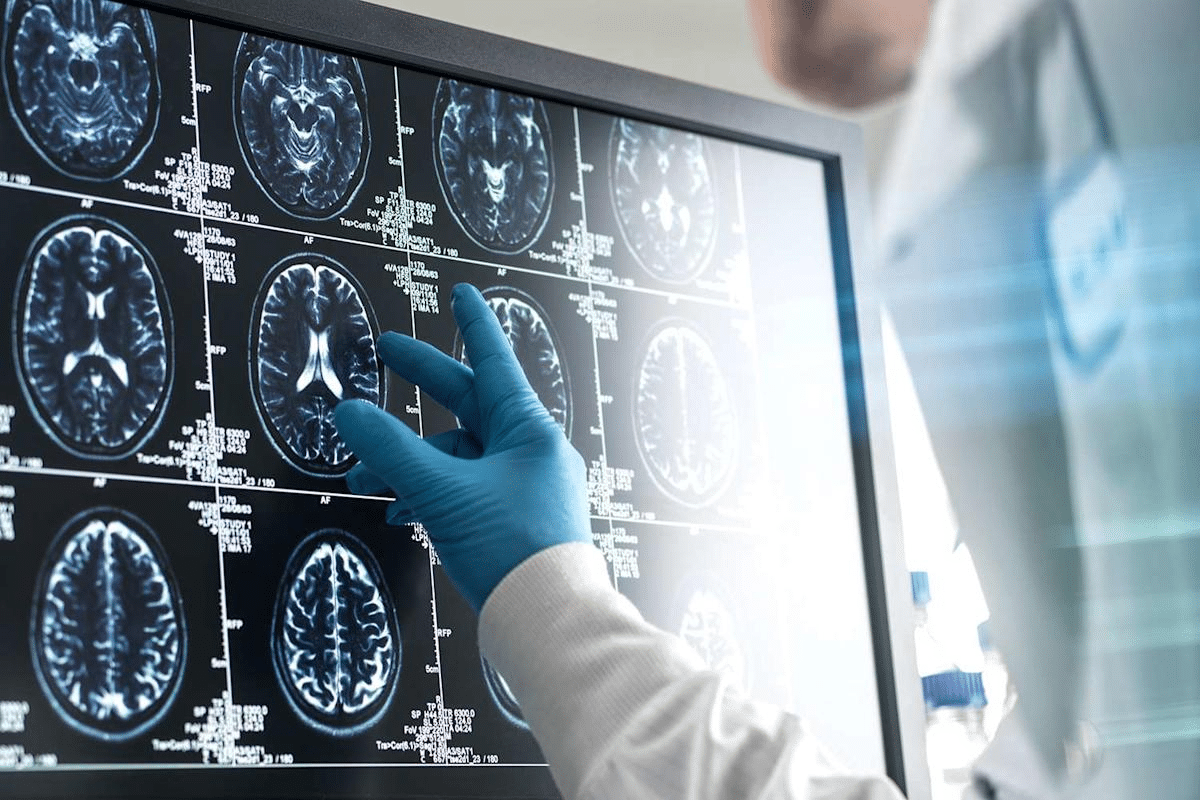
We are diving into the complex world of neurodegenerative diseases. A term often mentioned is neurofibrillary tangles. These are clusters of tau protein that have been altered by hyperphosphorylation. They are a main sign of Alzheimer’s disease and other tauopathies.
NFTs play a big role in Alzheimer’s, leading to a decline in cognitive abilities. It’s important to understand how they form and grow. This knowledge is key to creating new treatments and spotting the disease early.
Key Takeaways
- NFTs are made of hyperphosphorylated tau protein.
- They are a main sign of Alzheimer’s disease.
- The presence of NFTs is linked to cognitive decline.
- Understanding NFTs is vital for Alzheimer’s treatments.
- NFTs are also seen in related tauopathies.
The Science Behind Neurofibrillary Tangles

Exploring neurofibrillary tangles shows how they form and affect the brain. These tangles are key in Alzheimer’s disease. Knowing what they are and how they came to be is key to finding new treatments.
Definition and Basic Structure
Neurofibrillary tangles are insoluble fibrillar structures made mostly of hyperphosphorylated tau protein. They are in the neurons of people with Alzheimer’s. They cause neurons to malfunction and die.
The structure of NFTs is complex. Tau protein, when changed by hyperphosphorylation, clumps together. This clumping is a key step in making NFTs. Knowing how NFTs are made helps us find ways to treat them.
The tau protein, when changed, breaks away from microtubules and starts to clump. This is a key step in making NFTs. Understanding NFTs is important for finding new treatments.
|
Component |
Description |
Role in NFT Formation |
|---|---|---|
|
Tau Protein |
Microtubule-associated protein |
Primary component of NFTs when hyperphosphorylated |
|
Hyperphosphorylation |
Excessive phosphorylation of tau protein |
Causes tau to detach from microtubules and aggregate |
|
Paired Helical Filaments |
Aggregated tau protein structures |
Building blocks of NFTs |
Historical Discovery and Research Milestones
The discovery of neurofibrillary tangles goes back to the early 1900s. Alois Alzheimer first saw them in 1907. His finding was a big step in understanding Alzheimer’s disease.
Research has made great progress. We now know how tau protein makes NFTs and how NFTs harm neurons. Important discoveries include finding different tau proteins and understanding how they get changed.
We keep learning more about NFTs and their role in brain diseases. This knowledge helps us find new ways to treat these diseases.
Tau Protein: The Building Block of NFTs

Tau protein is key in keeping microtubules stable in neurons. Its malfunction leads to neurofibrillary tangles (NFTs). To grasp how tau protein causes NFTs, we need to look at its role in healthy neurons and its different forms.
Normal Tau Function in Healthy Neurons
In healthy neurons, tau protein helps stabilize microtubules. Tau protein binds to microtubules, helping them form and stay stable. This is vital for neurons to work right, like moving nutrients and organelles.
The way tau protein and microtubules work together is controlled by phosphorylation. Normally, tau gets phosphorylated just right, thanks to kinases and phosphatases. But, when things go wrong, this balance is lost, causing tau to get phosphorylated too much.
Tau Isoforms and Their Distribution in the Brain
Tau protein comes in many forms, thanks to the MAPT gene’s splicing. These forms differ in their repeats and inserts. Each form is found in different parts of the brain and linked to different diseases.
The mix of 3R and 4R tau forms changes in different brain areas. This mix is key to understanding NFTs. For example, the 3R to 4R ratio might affect how likely NFTs are to form in some diseases.
|
Tau Isoform |
Characteristics |
Brain Distribution |
|---|---|---|
|
3R Tau |
Three tandem repeats, less prone to aggregation |
Predominant in certain neuronal populations |
|
4R Tau |
Four tandem repeats, more prone to aggregation |
Found in specific brain regions, associated with certain tauopathies |
Knowing how tau protein works and its different forms helps us understand NFTs. By looking at tau’s role in healthy neurons and its spread in the brain, we can see how it goes wrong in diseases.
Formation of Neurofibrillary Tangles
The journey to NFT formation starts with hyperphosphorylation of tau proteins. These proteins are key to keeping microtubules stable. But when tau gets hyperphosphorylated, it changes in ways that lead to NFTs.
The Hyperphosphorylation Process
Hyperphosphorylation adds phosphate groups to tau proteins. This is done by kinases, enzymes that start the phosphorylation. When tau is hyperphosphorylated, it detaches from microtubules and starts to clump together.
Microtubule Disassembly and Destabilization
When tau detaches from microtubules, these structures become unstable. Microtubules are vital for axonal transport and keeping neurons healthy. Their disassembly can lead to disease.
This destabilization affects neurons deeply. It disrupts the transport of nutrients and organelles. This can cause synaptic problems and lead to neuron loss, seen in Alzheimer’s and other tauopathies.
Paired Helical Filament Assembly
Hyperphosphorylated tau proteins form paired helical filaments (PHFs), the main part of NFTs. PHFs are hard to break down and stick together, making them a lasting part of NFTs.
PHF formation is key to NFT development. These structures build up in neurons and harm their function. Knowing how PHFs form is important for finding treatments for NFTs.
Recent Discoveries in Neurofibrillary Tangle Composition
Recent studies have greatly improved our knowledge of neurofibrillary tangles (NFTs) in Alzheimer’s disease. NFTs are made mainly of tau protein and play a big role in Alzheimer’s. We’re learning more about NFTs, which helps us understand the disease better and find new treatments.
MIT Research on 3R and 4R Tau Mixing Patterns
Researchers at MIT have found important details about 3R and 4R tau isoforms in NFTs. Tau protein comes in different forms, known as isoforms. These forms, 3R and 4R, affect how tau interacts with microtubules and are linked to Alzheimer’s disease.
The mix of 3R and 4R tau isoforms in NFTs matters. The mix can change how stable and harmful NFTs are. This knowledge helps us understand how NFTs form and how they harm neurons.
The Recruitment Mechanism of Tau Proteins
How tau proteins join NFTs is key to their formation. Tau proteins are drawn into NFTs through changes like hyperphosphorylation. Knowing how tau proteins are recruited is vital for finding new treatments.
Recent studies show that specific interactions between tau proteins are important. These interactions help form paired helical filaments (PHFs), a hallmark of NFTs. By studying these interactions, we can learn more about how NFTs form and how to stop or slow the disease.
Neurofibrillary Tangles in Alzheimer’s Disease Pathology
In Alzheimer’s disease, neurofibrillary tangles are more than just a side effect. They are a key biomarker linked to cognitive decline. We will look into their importance and compare them to amyloid plaques, another major feature of Alzheimer’s.
NFTs as a Primary Biomarker of Alzheimer’s
Neurofibrillary tangles, made mostly of tau protein, are a major biomarker for Alzheimer’s. Their amount and spread match the severity of cognitive symptoms. The link between NFTs and cognitive decline makes them a valuable marker for disease progression.
Research shows NFTs are closely tied to neurodegeneration. Studies have found that NFTs in different brain areas can predict Alzheimer’s severity. This makes NFTs a promising target for diagnosis and treatment.
Comparison with Amyloid Plaques
Both NFTs and amyloid plaques are signs of Alzheimer’s disease, but they are different. Amyloid plaques are outside the cells, made of amyloid-beta peptides. NFTs, on the other hand, are inside the cells, made of tau protein. The relationship between these two pathologies is complex and not fully understood.
|
Characteristics |
Neurofibrillary Tangles (NFTs) |
Amyloid Plaques |
|---|---|---|
|
Composition |
Hyperphosphorylated tau protein |
Amyloid-beta peptides |
|
Location |
Intracellular |
Extracellular |
|
Correlation with Cognitive Decline |
Strong correlation |
Variable correlation |
The comparison between NFTs and amyloid plaques shows their different roles in Alzheimer’s. Knowing these differences is key for creating targeted treatments.
The Progression and Spread of NFTs in the Brain
NFTs move through the brain in a certain way. This pattern is shown by the Braak staging system. It helps us see how NFTs grow and affect brain function.
Braak Staging and Anatomical Distribution
The Braak staging system is key for understanding Alzheimer’s disease. It shows how NFTs start in the brain and spread. Braak staging is important for knowing where NFTs are found and how they cause symptoms.
Braak and Braak’s system has stages from I to VI. Stages I and II start with the transentorhinal region. Then, stages III and IV involve the limbic system. Stages V and VI show NFTs in many parts of the brain.
Prion-Like Spreading Mechanisms
Studies show NFTs spread like prions. This means misfolded tau protein starts normal tau proteins to clump together. This prion-like spreading is thought to be responsible for the progression of NFTs from one brain region to another.
“The prion-like spreading hypothesis provides a compelling explanation for the sequential progression of NFTs in Alzheimer’s disease.”
The exact ways NFTs spread are being studied. It’s thought that tau aggregates from one neuron can spread to others. This helps NFTs move through the brain.
Knowing how NFTs spread is key to fighting Alzheimer’s. By understanding how they move, researchers can find new ways to treat the disease.
Cellular and Synaptic Damage Caused by Neurofibrillary Tangles
NFTs in neurons start a chain of harmful events. They are not just signs of brain damage. They actually make the brain cells worse and less functional.
Mechanisms of Neurotoxicity
NFTs harm the brain in several ways. One main way is by messing up the tau protein’s job. Tau hyperphosphorylation creates NFTs, which mess up the brain’s transport system. This leads to a lack of nutrients and organelles, causing brain cells to starve and die.
“The hyperphosphorylation of tau protein is a critical step in the formation of NFTs, and understanding this process is key to developing therapeutic interventions.” Researchers say this complex process involves many enzymes and proteins.
Impact on Synaptic Function and Neuronal Viability
NFTs hurt the brain’s ability to connect and learn. They disrupt synaptic plasticity, which is vital for memory and learning. As NFTs grow, the brain’s connections fade, making it harder for neurons to survive.
A study found that
“NFTs are linked to fewer synapses and poor communication between neurons, leading to memory loss in Alzheimer’s disease.”
Loss of synaptic function is a key part of brain damage.
- NFTs disrupt normal tau function.
- Hyperphosphorylation leads to microtubule instability.
- Synaptic plasticity is impaired.
- Neuronal viability is compromised due to NFT accumulation.
Knowing how NFTs damage brain cells and connections is key to finding treatments for Alzheimer’s and other tauopathies.
Cognitive and Behavioral Consequences of NFT Pathology
NFTs are a key feature of Alzheimer’s disease. They affect how our brain works and change our behavior. As NFTs build up, they harm brain cells, leading to memory loss and changes in how we act.
Correlation Between NFT Load and Cognitive Decline
Research shows a clear link between NFTs in the brain and cognitive decline. The more NFTs, the worse the memory and thinking skills. This is true for many brain functions, like memory and paying attention.
A study in the Journal of Alzheimer’s Disease found a strong link. It showed that NFTs in certain brain areas are linked to how well someone can think. This was measured by the Mini-Mental State Examination (MMSE).
“The density of NFTs in the brain is a strong predictor of cognitive decline in Alzheimer’s disease,” the authors noted.
|
Cognitive Domain |
NFT Load Correlation |
Cognitive Decline Severity |
|---|---|---|
|
Memory |
High |
Severe |
|
Attention |
Moderate |
Moderate |
|
Executive Function |
High |
Severe |
Specific Behavioral Changes Linked to NFT Distribution
NFTs don’t spread evenly in the brain. They tend to gather in areas important for emotions and behavior. This includes the limbic system.
Studies link NFTs in certain brain spots to apathy and agitation. Looking closely at where NFTs are can help understand why Alzheimer’s patients act differently.
It’s important to understand how NFTs affect behavior. This knowledge helps doctors tailor care for Alzheimer’s patients. It makes treatment more effective and personal.
Beyond Alzheimer’s: Neurofibrillary Tangles in Other Tauopathies
Neurofibrillary tangles (NFTs) are found in diseases other than Alzheimer’s. They affect many patients. NFTs are key in Alzheimer’s but also show up in other brain diseases.
These include frontotemporal dementia and progressive supranuclear palsy. They all have NFTs, showing how complex brain diseases can be.
Frontotemporal Dementia and Pick’s Disease
Frontotemporal dementia (FTD) damages the brain’s frontal and temporal lobes. NFTs are a big part of FTD, with tau protein being a key player. Pick’s disease, a type of FTD, has Pick bodies made of tau protein.
“The presence of NFTs in FTD and Pick’s disease shows how tau affects brain diseases.”
Comparing NFTs in Alzheimer’s and FTD shows they are different. Here’s a table that highlights these differences:
|
Disease |
NFT Composition |
Primary Brain Regions Affected |
|---|---|---|
|
Alzheimer’s Disease |
Primarily 3R and 4R tau |
Hippocampus, Temporal Lobe |
|
Frontotemporal Dementia |
Mainly 4R tau |
Frontal and Temporal Lobes |
|
Pick’s Disease |
3R tau |
Frontal and Temporal Lobes |
Progressive Supranuclear Palsy and Corticobasal Degeneration
Progressive Supranuclear Palsy (PSP) and Corticobasal Degeneration (CBD) are tauopathies with NFTs. PSP causes gaze problems, balance issues, and memory loss. CBD leads to uneven Parkinson’s symptoms and muscle stiffness.
Tau proteins in PSP and CBD form NFTs, harming neurons. Scientists are studying this to find new treatments.
Studying NFTs in different tauopathies helps us find better treatments. By understanding the similarities and differences, we can help patients more effectively.
Diagnostic Approaches for Detecting Neurofibrillary Tangles
Neurofibrillary tangles are key signs of Alzheimer’s disease. Finding them is essential for a correct diagnosis. Many methods have been created to spot NFTs, each with its own benefits and drawbacks.
Cerebrospinal Fluid Biomarkers
Cerebrospinal fluid (CSF) biomarkers are vital for diagnosing Alzheimer’s. They help see if NFTs and other harmful changes are present. Important biomarkers include tau protein and its changed forms, linked to NFTs.
Research shows that tau protein levels in CSF are higher in Alzheimer’s patients. These markers help tell Alzheimer’s apart from other brain diseases. They also show how severe the disease is.
|
Biomarker |
Description |
Clinical Significance |
|---|---|---|
|
Total Tau |
Measures overall tau protein levels in CSF |
Elevated in Alzheimer’s disease, correlates with neuronal damage |
|
Phosphorylated Tau |
Specifically measures phosphorylated tau protein |
Highly specific for Alzheimer’s disease, associated with NFT formation |
PET Imaging and Other Neuroimaging Techniques
PET imaging has changed how we diagnose Alzheimer’s. It lets us see NFTs in the brain of a living person. Tau PET tracers bind to NFTs, giving a clear measure of tau problems.
Many tau PET tracers are being tested, with some showing great promise. These tracers help us see where NFTs are and how much there are. This helps us understand how the disease progresses and affects thinking.
Emerging Blood-Based Biomarkers
Blood tests for Alzheimer’s are a new area of research. New tests can find tau protein and other important markers in blood. This is a big step forward.
These blood tests are not yet fully proven but could be a big help. They might make diagnosing Alzheimer’s easier and less scary. Scientists are working hard to make these tests reliable and accurate.
As we learn more about NFTs and Alzheimer’s, finding better ways to diagnose is key. Using CSF biomarkers, PET scans, and blood tests will be important. They will help us understand and treat Alzheimer’s better in the future.
Conclusion
We’ve looked into how neurofibrillary tangles (NFTs) affect Alzheimer’s disease. They are key markers of the disease and play a big role in brain decline. NFTs are made of tau protein that has been changed by hyperphosphorylation.
Their presence and amount in the brain show how severe the disease is. Our knowledge about NFTs has grown a lot. New studies have told us more about what they are made of and how they spread.
The Braak staging system helps us see how NFTs progress in the brain. New ways to find and track NFTs, like testing cerebrospinal fluid and PET scans, are being explored. These methods could help doctors diagnose and monitor the disease better.
In summary, NFTs are very important in Alzheimer’s disease. More research is needed to understand them better. This knowledge will help us find new ways to treat the disease.
FAQ
What are neurofibrillary tangles and their role in Alzheimer’s disease?
Neurofibrillary tangles (NFTs) are abnormal structures found in the brains of people with Alzheimer’s disease. They are made of twisted tau protein threads. These tangles are a key sign of the disease.
What is the normal function of tau protein in healthy neurons?
In healthy neurons, tau protein helps keep microtubules stable. Microtubules are vital for the neurons to work and communicate well.
How are neurofibrillary tangles formed?
NFTs form when tau protein is over-phosphorylated. This causes microtubules to break down. Then, paired helical filaments start to form.
What is the significance of NFTs in Alzheimer’s disease pathology?
NFTs are a main sign of Alzheimer’s disease. They are linked to memory loss and brain damage. They also help the disease spread.
How do NFTs compare to amyloid plaques in Alzheimer’s disease?
NFTs and amyloid plaques are both signs of Alzheimer’s. But NFTs are more linked to brain damage and memory loss. Amyloid plaques are outside the cells, while NFTs are inside.
What is the Braak staging system, and how does it relate to NFT progression?
The Braak staging system shows how NFTs spread in the brain. It starts in the entorhinal cortex and spreads to more areas.
Can NFTs be detected using diagnostic tests?
Yes, tests like cerebrospinal fluid biomarkers and PET imaging can find NFTs. Blood tests are also being developed.
Are NFTs exclusive to Alzheimer’s disease?
No, NFTs are also seen in other brain diseases like frontotemporal dementia. They are found in Pick’s disease, progressive supranuclear palsy, and corticobasal degeneration too.
What are the cognitive and behavioral consequences of NFT pathology?
NFTs are linked to memory loss, confusion, and changes in personality. They cause cognitive decline.
How do NFTs impact synaptic function and neuronal viability?
NFTs harm neurons and disrupt communication between them. This damage contributes to the worsening of Alzheimer’s disease and other tauopathies.
What is the current understanding of the recruitment mechanism of tau proteins?
Research shows that tau proteins join NFTs through a complex process. This involves specific tau forms and prion-like mechanisms.
What are the different isoforms of tau, and how are they distributed in the brain?
Tau protein has different forms, like 3R and 4R tau. These forms are found in different parts of the brain. They play different roles in NFT formation and brain diseases.
Reference
National Center for Biotechnology Information. Evidence-Based Medical Guidance. Retrieved from https://www.ncbi.nlm.nih.gov/pmc/articles/PMC5116834/