Last Updated on November 14, 2025 by Ugurkan Demir
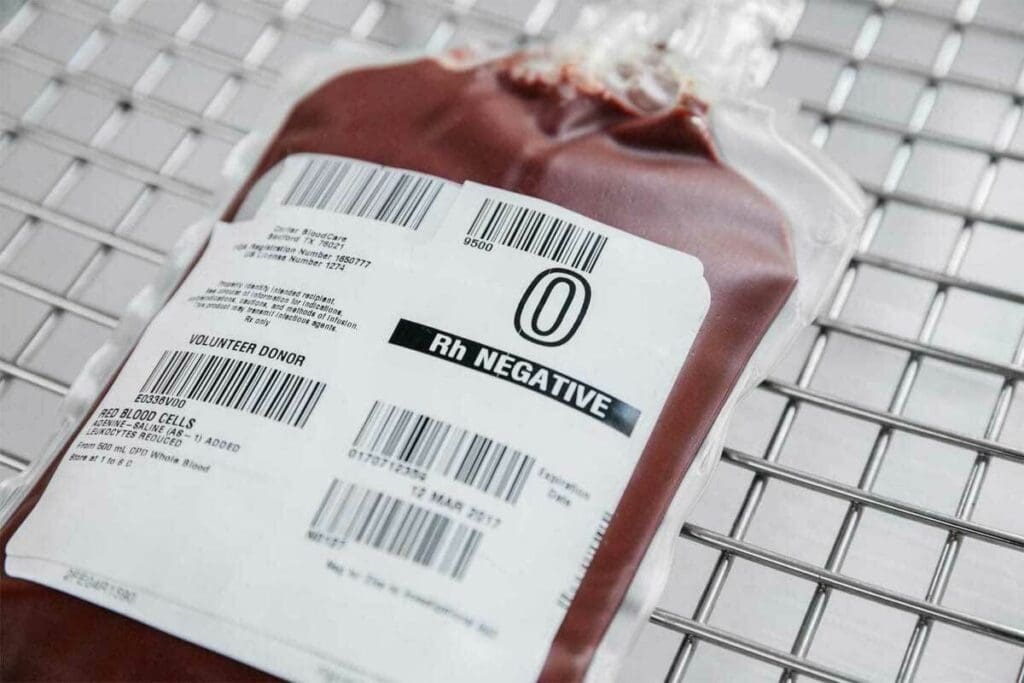
In emergencies, type O-negative blood is a lifesaving hero. It can be given to anyone, making it key in medical crises.
About 45% of people in the U.S. have type O blood. But only about 7% have O-negative blood. This makes it very valuable in hospitals like Liv Hospital, where it helps patients in urgent need.
O-negative blood is special because it doesn’t have A, B, or Rh antigens. This lowers the chance of harmful immune reactions. So, it’s a vital resource for emergency blood transfusions.
Key Takeaways
- Type O negative blood is known as the universal donor.
- It can be transfused to patients of any blood group.
- OO-negative blood lacks A, B, and Rh antigens, reducing immune reactions.
- Only about 7% of the U.S. population has O-negative blood.
- It’s a critical resource in medical emergencies and surgeries.
Understanding Blood Types and Compatibility
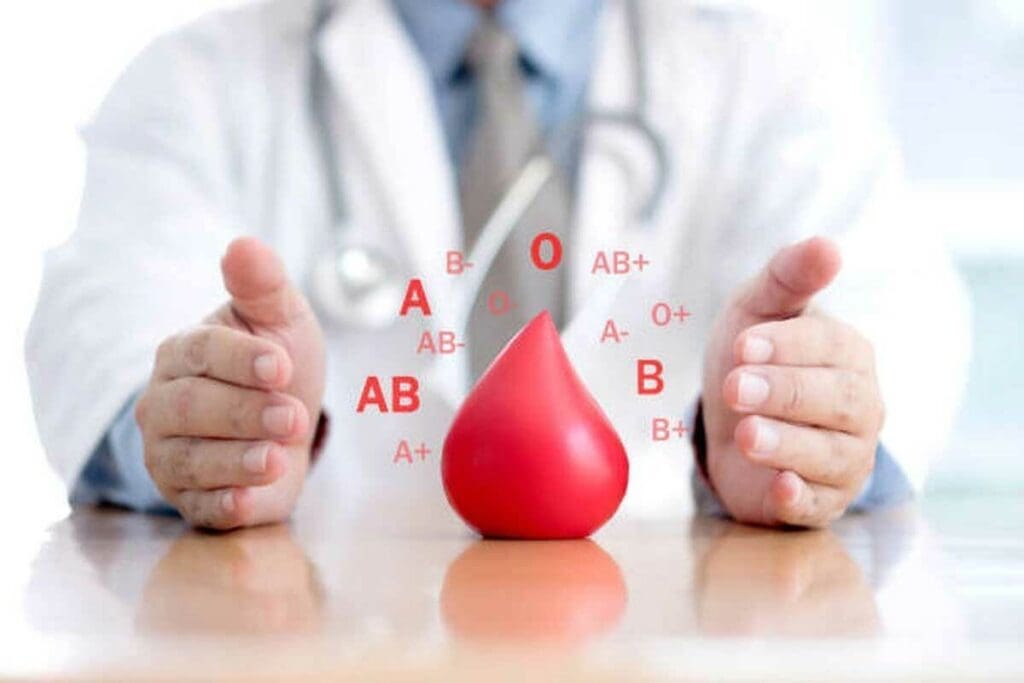
To understand blood type compatibility, we need to know the systems behind it. It’s key in transfusion medicine. It affects the safety and success of blood transfusions.
Blood type is based on specific antigens on red blood cells. The ABO blood group system and the Rhesus factor classify blood types.
The ABO Blood Group System
The ABO system divides blood into four types: A, B, AB, and O. These types depend on A and B antigens on red blood cells.
- Type A blood has A antigens.
- Type B blood has B antigens.
- Type AB blood has both A and B antigens.
- Type O blood has neither A nor B antigens.
The Rhesus Factor Explained
The Rhesus factor is another important antigen. It can be present or absent, making blood Rh positive (Rh+) or Rh negative (Rh-). This factor adds complexity to blood type compatibility.
How Blood Type Compatibility Works
Blood type compatibility comes from the ABO system and the Rhesus factor.
- Receiving blood with an incompatible ABO type can trigger an immune reaction.
- Transfusing Rh- blood to an Rh+ person can also cause an immune response.
Knowing these rules is essential for safe transfusions.
In summary, blood type compatibility involves the ABO and Rhesus systems. Ensuring compatibility is vital for successful blood transfusions and patient safety.
O Negative Blood: The Universal Donor
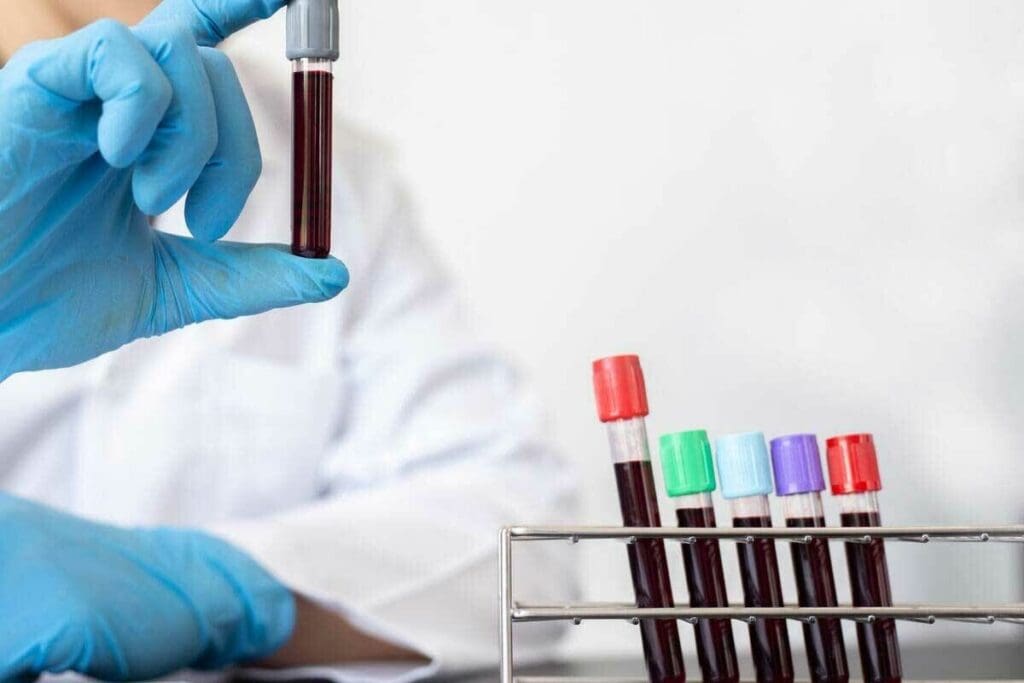
O-negative blood is special because it doesn’t have certain antigens on its surface. This makes it very important in transfusions, even in emergencies. There’s no time to check the patient’s blood type then.
What Makes O Negative Blood Universal
O-negative blood is unique because it works with all major blood types. It doesn’t have the A and B antigens found in other blood types. So, it can be given to people with A, B, AB, or O blood types safely.
The Absence of A, B, and Rh Antigens
O-negative blood is safe because it doesn’t have A, B, or Rh antigens. The Rh factor can cause problems if the wrong blood is given. So, O-negative blood is the safest choice for emergencies.
Compatibility with All Blood Types
O-negative blood works with all ABO and Rh blood types. This makes it very useful in medical emergencies. It’s great for trauma cases, newborns, and surgery when time is short.
In short, O-negative blood is the universal donor type. It can be given to anyone in need. Its role in emergency medicine is very important, making O-negative blood donations critical.
The Rarity of Type O Negative Blood
O-negative blood is rare, found in only 7-9% of people. This rarity is a big issue because it’s so compatible with others. It’s also very important in emergency medical situations.
Global Distribution of O Negative Blood
O-negative blood isn’t spread out evenly worldwide. Research shows it varies by population. For example, in Europe, about 8% have it, while in the U.S., it’s around 7%. In some African and Asian countries, it’s even rarer.
Demographic Variations in O Negative Prevalence
Things like ethnicity and where you live affect how common O-negative blood is. For example:
- In the Basque region of Spain and France, more people have O-negative blood than globally.
- Some ethnic groups in Africa and Asia have less O-negative blood.
Why Only 7-9% of the Population Has Blood Group Type O Negative
The reasons for O-negative blood are complex. Genetics, evolution, and population changes all play a part. The lack of A and B antigens, plus no Rh antigens, makes O-negative blood a universal donor type. But this doesn’t explain why it’s so rare.
In summary, O-negative blood comes from genetics, demographics, and geography. Knowing these factors helps manage its supply. This ensures it’s available for medical emergencies.
Critical Applications of O Negative Blood
O-negative blood is key in saving lives in urgent medical cases. Its special qualities make it vital for many emergency and medical needs.
Emergency and Trauma Situations
In emergency care, O-negative blood is often the first choice for trauma patients. Trauma patients need quick blood transfusions to stay stable. O-negative blood is used because it matches all ABO blood types.
This is very important in emergencies where there’s no time to check the patient’s blood type.
- Used in pre-hospital care by emergency medical services (EMS)
- Critical for patients with severe injuries or bleeding
- Essential in mass casualty incidents where multiple patients require transfusions
Surgical Procedures Requiring O Negative Blood
O-negative blood is also key in some surgeries, mainly those with a lot of blood loss. Surgeons and anesthesiologists use O-negative blood for major surgeries when the patient’s blood type is not known.
- Major surgeries with anticipated significant blood loss
- Surgeries on patients with rare blood types or complex antibody profiles
- Emergency cesarean sections or other obstetric emergencies
When Patient Blood Type Is Unknown
In cases where a patient’s blood type is unknown, O-negative blood is the safest choice for transfusions. This is very important in emergency departments where patients may arrive unconscious or with severe injuries.
O-negative blood acts as a universal fallback, lowering the risk of bad reactions due to blood type incompatibility.
Special Populations: Newborns and Cancer Patients
O-negative blood is also vital for certain patient groups, like newborns and cancer patients. Newborns may need blood transfusions for hemolytic disease of the newborn (HDN), and O-negative blood is often used.
Cancer patients undergoing chemotherapy or other treatments may also need blood transfusions. O-negative blood can be used in these cases, even if the patient’s blood type is not known.
The Paradox of O Rhesus Negative Blood Recipients
O-negative blood is the universal donor type. Yet, those with this blood type face unique challenges when getting blood transfusions. This shows how complex blood compatibility is and the special needs of O-negative patients.
Why O Negative Individuals Can Only Receive O Negative Blood
O-negative people can only get O-negative blood. This is because their immune system has antibodies against other blood types. If they get blood of a different type, their immune system might attack it.
The Immune Response to Foreign Antigens
O-negative people’s immune system reacts to A, B, or Rh antigens on transfused red blood cells. Their body sees these as foreign and fights them. This can destroy the transfused red blood cells, making the transfusion less effective and possibly causing serious health issues.
Key factors influencing the immune response include:
- The presence of pre-formed antibodies against A or B antigens
- The introduction of Rh antigens in Rh-negative individuals
- The overall health and immune status of the recipient
Challenges Faced by O Negative Patients
O-negative patients have several challenges with blood transfusions. The main issue is finding enough compatible O-negative blood. In emergencies, getting O-negative blood quickly can be hard. Healthcare providers must carefully manage these patients to avoid bad reactions.
The limitations faced by O-negative individuals highlight the need for enough O-negative blood. Blood banks and healthcare systems must work together to make sure this critical resource is available when needed.
Recent Research and Findings on the Blood Group That Is a Universal Donor
Ongoing research into blood compatibility has shown the key role of O-negative blood in transfusion medicine. Studies have confirmed O-negative blood’s unique status as the universal donor type. This is vital in emergencies where time is of the essence and a patient’s blood type cannot be determined.
Advancements in Understanding Blood Compatibility
Research has made big strides in understanding blood compatibility. It has focused on the genetic and molecular basis of blood group antigens. The American Red Cross says knowing these antigens is key to safee blood transfusions.
New Discoveries About O Negative Blood Properties
New findings have revealed the special properties of O O-negativelood. It lacks A, B, and Rh antigens, making it safe for all blood types. This is very useful in trauma and emergencies.
Ongoing Studies and Their Implications
Studies are looking into ways to better store and extend the shelf life of O-negative blood. They are also working on increasing donations of this critical blood type. These efforts could greatly improve patient care in critical situations.
The ongoing research into O-negative blood highlights its importance as the universal donor type. It stresses the need for regular donations to ensure enough supply for medical emergencies.
Problems with the O Negative Blood Group
O-negative blood is special because it can be given to anyone. This is great in emergencies, but it also means there’s always a big need for it. This need often can’t be met because there’s not enough.
The Constant Demand for O Negative Blood
O-negative blood is always needed because it’s safe for anyone. Trauma patients, newborns, and those having surgery often need it. This need is everywhere, making it hard for blood banks to keep enough on hand.
Supply Limitations and Blood Bank Challenges
But, there’s not much O-negative blood because it’s rare. Only 7-9% of people have it. Blood banks struggle to keep enough for everyone. They also need to make sure other blood types are available. Managing inventory well is key to meeting changing needs.
Strategies to Increase O Negative Blood Donations
To solve the problem, there are a few ways. Targeted donor recruitment campaigns can bring in more O-negative donors. Blood banks can also work on keeping donors coming back. Plus, spreading the word about how important O-negative blood is can encourage more people to donate.
By tackling the challenges of O-negative blood and using smart strategies, we can manage its supply better. This way, it will be there when it’s most needed.
Common Misconceptions About Which Blood Type Is a Universal Donor
O-negative blood is known for being a universal donor. But many myths surround its use and compatibility. IO negative blood can indeedsave lives in emergencies. Yet, it’s not always the best choice for everyone.
Universal Donor Limitations
O-negative blood is the go-to for emergencies, but it has its limits. While it can be given to anyone, the body might react to other parts of the blood. It’s important to know that being a universal donor doesn’t mean it works for everything.
Plasma Compatibility Differences
There’s a big myth about plasma transfusions. O-negative is not the universal donor for plasma. AB plasma is, because it doesn’t have antibodies against A or B antigens. This is key because the wrong plasma can cause serious problems.
Health Myths Associated with O Negative Blood
Many myths surround O-negative blood, like it having special health benefits or risks. But tno proof havingO negative blood type gives you health perks or problems. We should focus on its role in transfusions, not myths.
In summary, O-negative blood is vital in emergencies. But we must understand its limits and plasma differences. By clearing up these myths, we can truly value OO-negativeblood’s lifesaving role.
Conclusion: The Continuing Importance of O Negative Blood
O-negative blood is key in transfusion medicine because it’s compatible with everyone. It’s the universal donor blood type. This makes it essential in emergencies when time is of the essence.
The importance of O-negative blood is huge. It can be given to anyone, saving lives in critical situations. Its O-negative blood significance is also seen in the constant need for it in hospitals and blood banks.
To keep up with demand, we need more donations. The medical field depends on donors to have enough O-negative blood. By knowing its value and the challenges in getting it, we can help keep it available for those who need it most.
FAQ
What is Type O Negative Blood?
Type O Negative blood is a special blood type. It doesn’t have A or B antigens on its surface. It’s also Rh negative, making it safe for many people.
Which Group of Blood Is a Universal Donor?
O Negative blood is the universal donor type. It can be given to anyone, no matter their blood type or Rh factor.
What Makes O Negative Blood Universal?
O-negative blood is universal because it has no A, B, or Rh antigens. This makes it safer for people with different blood types.
Can O Negative Blood Be Transfused to Anyone?
O-negative blood is safe for most people, but not everyone. In emergencies, it can be given to anyone. Butit’s best for those with O Negative or O Positive blood types.
Why Is O Negative Blood So Rare?
O O-negativelood is rare, found in 7-9% of the world’s population. This is because it needs specific genetic conditions.
What Are the Challenges Faced by O Negative Individuals in Receiving Blood Transfusions?
O Negative people can only get O Negative blood. It’s important to have enough of this blood type for them.
Are There Any Myths or Misconceptions About O Negative Blood?
Yes, myths say O Negative blood is completely universal and can be given without testing. They also say people with this blood type have certain health traits.
How Can O-Negative Blood Donations Be Increased?
To get more O-negative blood, we can use targeted campaigns and donation drives. We also need to educate people about its importance.
What Are the Implications of Recent Research on O Negative Blood?
New studies have helped us understand O-negative blood better. This could lead to better ways to manage blood transfusions and improve patient care.
Why Is Maintaining a Sufficient Supply of O-negative blood Important?
Having enough O-negative blood is key for emergencies, surgeries, and other medical needs. It ensures patients get the right blood type.
References
- Doyen, D., et al. (2024). Optimizing O red blood cell concentrate usage in the emergency department: Balancing risks and supplies. Transfusion, 64(12), 2952-2960. https://pmc.ncbi.nlm.nih.gov/articles/PMC11670554/