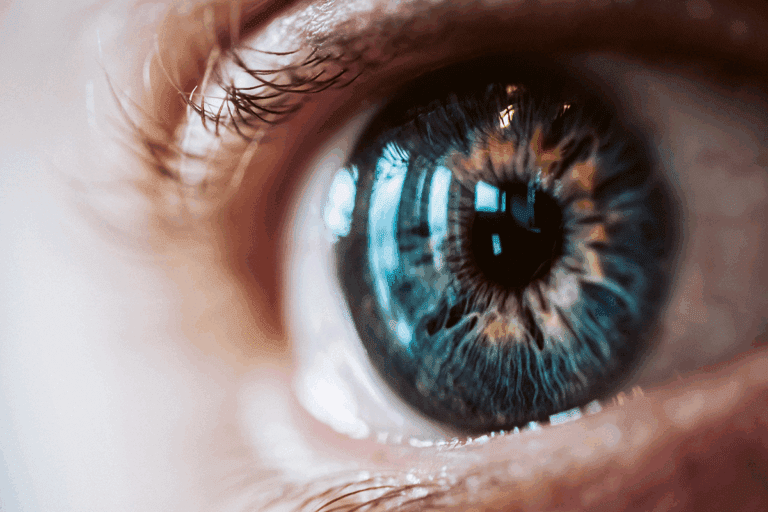
Explore ophthalmology diagnostic tests including vision exams and advanced eye imaging technologies.

Diagnosing eye conditions requires precise tests like OCT scans and slit-lamp exams. Learn about eye operation diagnosis, how to prepare, and what the results mean.

We're Here to Help.
Get in Touch.

Send us all your questions or requests, and our expert team will assist you.

Doctors

The Comprehensive Eye Examination

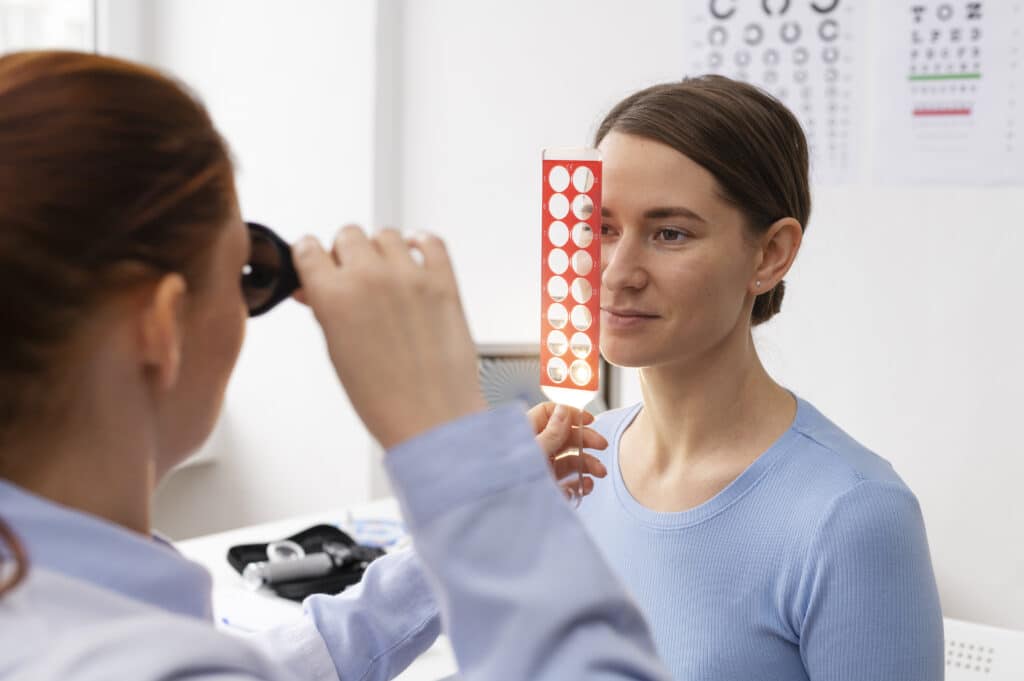
The foundation of diagnosis is the comprehensive eye exam. This is not merely a vision check but a thorough evaluation of the entire visual system. It typically begins with patient history and visual acuity testing using a Snellen chart.

The “refraction” is the part of the exam where the doctor determines the lens power needed to correct refractive errors. This involves looking through a phoropter and answering “which is better, one or two?”

This process determines the prescription for glasses or contact lenses. It is a subjective test that relies on patient feedback to fine-tune the focus.

  • Patient history and symptom review
  • Visual acuity measurement (Snellen chart)
  • Refraction for glass prescription
  • Color vision screening
  • Stereopsis or depth perception testing
Icon LIV Hospital

Slit Lamp Biomicroscopy

OPHTHALMOLOGY

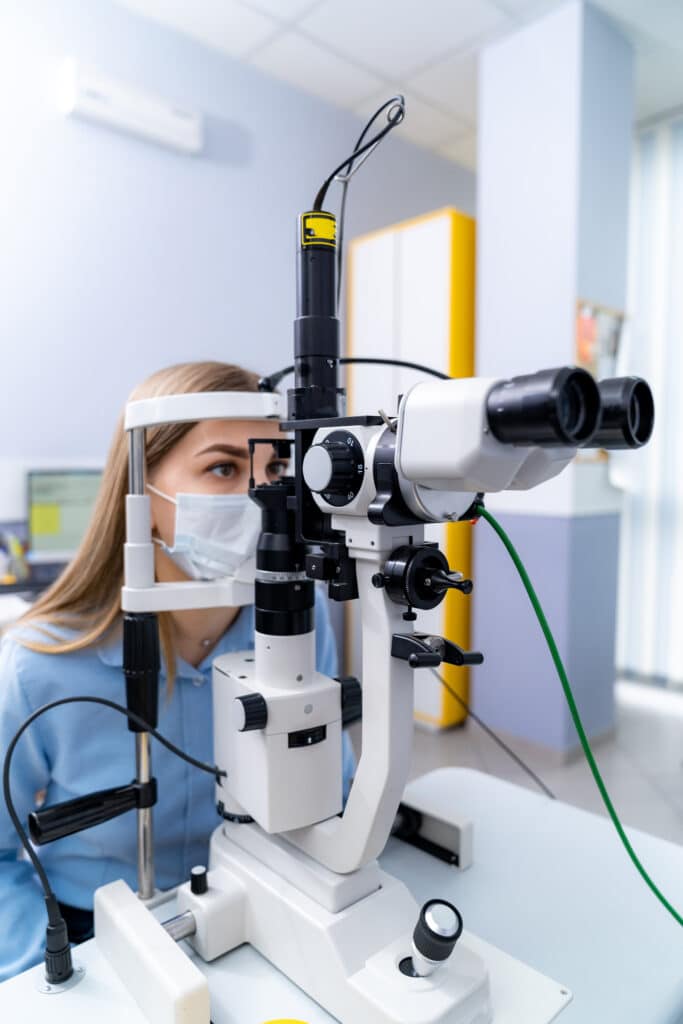
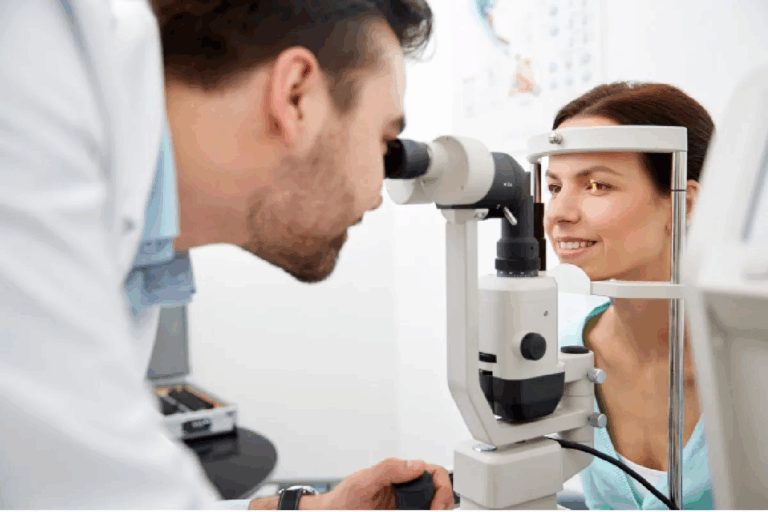
The slit lamp is the primary microscope that the doctor uses to examine the eye. It projects a thin beam of light into the eye, allowing for a 3D view of the anatomy.

The doctor examines the lids, lashes, cornea, iris, and lens. By using special handheld lenses, they can also view the back of the eye, including the optic nerve and retina.

This instrument allows for the detection of microscopic abnormalities. It is used to diagnose cataracts, corneal ulcers, and macular degeneration.

  • Magnified view of anterior structures
  • Assessment of corneal clarity
  • Evaluation of the anterior chamber
  • Inspection of the crystalline lens
  • Examination of the posterior segment

Icon 1 LIV Hospital

Tonometry and Glaucoma Screening

cardiological consultation treatment heart diseases medical concept LIV Hospital

Tonometry is the measurement of intraocular pressure (IOP). High pressure is a major risk factor for glaucoma. The “air puff” test is a common screening tool, but the gold standard is to touch the eye with a probe after numbing it.

Applanation tonometry measures the force needed to flatten a small area of the cornea; pachymetry measures corneal thickness, which influences the pressure reading.

Visual field testing (perimetry) maps the peripheral vision. This helps detect the “blind spots” caused by glaucoma or neurological damage.

  • Measurement of fluid pressure in the eye
  • Correction for corneal thickness
  • Assessment of drainage angle (Gonioscopy)
  • Mapping of peripheral vision sensitivity
  • Analysis of optic nerve head structure

Retinal Imaging and OCT

Optical Coherence Tomography (OCT) has revolutionized diagnosis. It is like an ultrasound that uses light instead of sound. It creates high-resolution cross-sectional images of the retina.

OCT allows doctors to see each distinct layer of the retina. It is essential for diagnosing and monitoring macular edema, macular holes, and glaucoma damage.

Fundus photography captures color images of the back of the eye. These serve as a permanent record to track disease progression over time, such as in diabetic retinopathy.

  • Cross-sectional imaging of retinal layers
  • Measurement of retinal thickness
  • Analysis of the optic nerve fiber layer
  • Documentation of vascular changes
  • Monitoring of macular fluid response

Angiography

Fluorescein angiography involves injecting a vegetable-based dye into a vein in the arm. As the dye travels to the eye, a special camera takes a rapid sequence of photos.

This highlights the blood vessels in the retina and choroid. It reveals leaking vessels, blockages, and abnormal new vessel growth.

Indocyanine green angiography is a similar test that visualizes the deeper blood vessels of the choroid. These tests are crucial for guiding laser treatment in retinal diseases.

  • Visualization of retinal blood flow
  • Identification of leaking capillaries
  • Detection of neovascularization
  • Assessment of macular ischemia
  • Differentiation of wet vs dry AMD

Corneal Topography

Corneal topography creates a 3D map of the cornea’s surface curvature. It is essential for fitting contact lenses and for screening for keratoconus, a condition in which the cornea bulges.

It is also a mandatory preoperative test for refractive surgery, such as LASIK. It ensures the cornea is regular and thick enough to withstand the procedure.

The map shows high and low spots, astigmatism patterns, and surface irregularities that affect visual quality.

  • Mapping of corneal surface curvature
  • Screening for corneal ectasia
  • Guidance for refractive surgery planning
  • Fitting of specialty contact lenses
  • Diagnosis of irregular astigmatism

30 Years of
Excellence

Trusted Worldwide

With patients from across the globe, we bring over three decades of medical

Book a Free Certified Online
Doctor Consultation

Clinics/branches
Op. MD. Ulviye Askerova Op. MD. Ulviye Askerova Ophthalmology
Group 346 LIV Hospital

Reviews from 9,651

4,9

Was this article helpful?

Was this article helpful?

adult woman checks eyesight with binocular slitlamp checking retina female eye closeup modern ophthalmology clinic LIV Hospital

Ultrasonography

When a dense cataract or blood blocks the view into the eye, ultrasound is used. B-scan ultrasound creates a two-dimensional image of the posterior eye.

It helps detect retinal detachments, tumors, and foreign bodies. A-scan ultrasound measures the length of the eye, which is critical for calculating the power of the implant lens for cataract surgery.

Ultrasound biomicroscopy (UBM) uses high frequencies to image the anterior structures behind the iris, which is useful in complex glaucoma cases.

  • Imaging through opaque media
  • Detection of retinal detachment
  • Measurement of axial length
  • Visualization of ciliary body cysts
  • Assessment of intraocular tumors

Electrophysiology

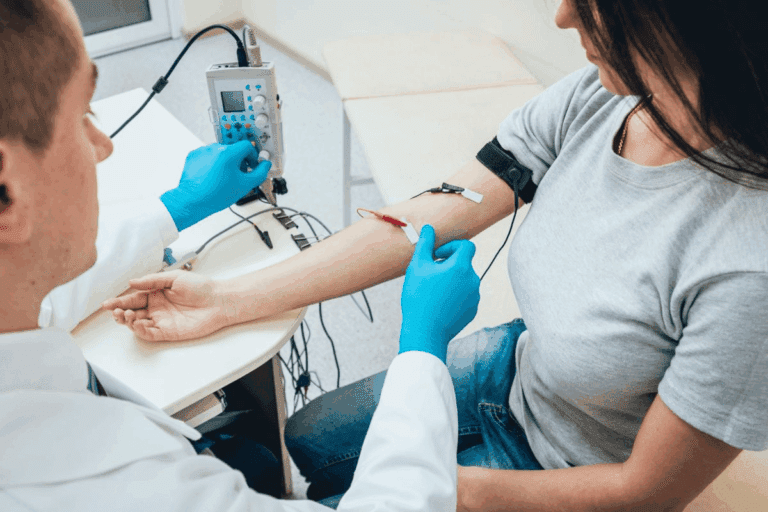
Electrophysiological tests evaluate the electrical function of the visual system. Electroretinography (ERG) measures the electrical response of the retina to light flashes.

It distinguishes between diseases of the rods and those of the cones. It is vital for diagnosing inherited retinal degenerations, such as retinitis pigmentosa.

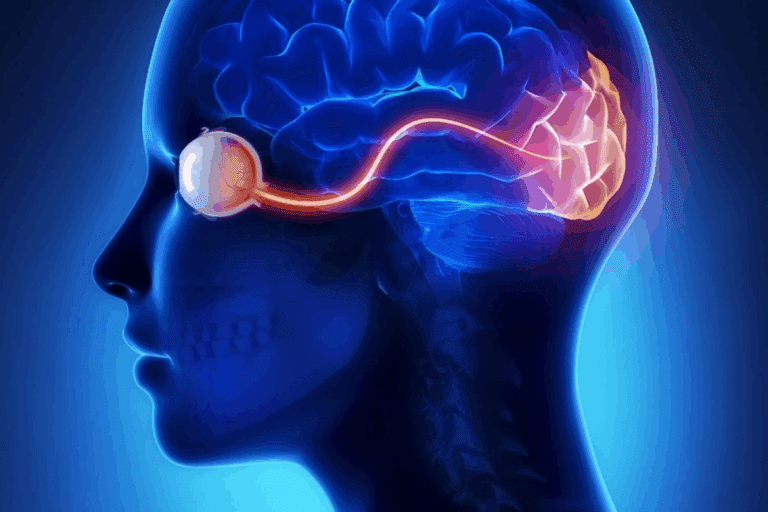
Visual Evoked Potentials (VEPs) measure electrical signals recorded in the visual cortex. It tests the integrity of the pathway from the eye to the brain, useful in optic neuritis.

  • Assessment of retinal cell function
  • Differentiation of rod and cone disease
  • Testing of optic nerve conduction
  • Diagnosis of unexplained vision loss
  • Monitoring of drug toxicity

Pediatric Diagnostics

Examining children requires special techniques and patience. Doctors may look for pediatric ophthalmology resources near them to find child-friendly clinics. Retinoscopy is an objective method for measuring refractive error that does not require the child to answer questions.

The “cover test” evaluates eye alignment and detects strabismus. Prisms are used to measure the angle of deviation.

Cycloplegic drops dilate the pupil and relax the focusing muscles. This ensures an accurate measurement of farsightedness, which is common in children.

  • Objective refraction with retinoscopy
  • Evaluation of eye alignment (Strabismus)
  • Stereoacuity testing for 3D vision
  • Cycloplegic dilation for accurate prescription
  • Screening for amblyopia risk factors

Dry Eye Testing

Diagnosing dry eye goes beyond symptoms. The Schirmer test uses paper strips placed in the eyelid to measure tear production volume.

Tear breakup time (TBUT) measures the stability of the tear film. Dye is put in the eye, and the doctor times how long it takes for dry spots to appear.

Meibography images the oil glands in the eyelids. It reveals if glands are blocked or atrophied, guiding treatment for evaporative dry eye.

  • Measurement of tear volume production
  • Assessment of tear film stability
  • Imaging of meibomian glands
  • Staining of ocular surface damage
  • Analysis of tear osmolarity

Genetic Testing

With the rise of gene therapies, genetic testing is becoming part of the diagnostic workup. Saliva or blood samples are analyzed to identify specific mutations causing eye disease.

This confirms the clinical diagnosis and helps predict disease progression. It allows for family counseling and identifies patients eligible for clinical trials.

It is particularly relevant for conditions like Leber congenital amaurosis and Stargardt disease.

  • Identification of causative gene mutations
  • Confirmation of hereditary diagnoses
  • Family risk assessment and counseling
  • Eligibility for gene therapy trials
  • Prognostic information for vision loss

Finding a Specialist

Searching for ophthalmology services available in the local area is the first step for many. Diagnosis often starts with a generalist and moves to a subspecialist.

Referral centers often have the specialized equipment needed for advanced testing. The diagnostic journey may involve multiple visits to gather all necessary data.

Telemedicine is also emerging as a diagnostic tool, enabling remote screening of retinal images.

  • Referral to subspecialty clinics
  • Access to advanced diagnostic hardware
  • Remote screening capabilities
  • Review of outside medical records
  • Coordination of complex care

Evaluation of Ocular Motility

Testing eye movement is crucial for diagnosing double vision. The doctor asks the patient to follow a target in different directions of gaze.

This tests the function of the six muscles controlling each eye and the cranial nerves that supply them. Limitations in movement can pinpoint the location of a lesion.

Hess charts provide a pictorial record of eye movements, useful for monitoring changes over time in conditions like thyroid eye disease.

  • Assessment of extraocular muscle range
  • Diagnosis of cranial nerve palsies
  • Documentation of diplopia fields
  • Evaluation of convergence ability
  • Monitoring of muscle restriction

Confocal Microscopy

This is a non-invasive imaging technique that provides cellular-level views of the cornea. It allows the doctor to see individual cells, nerves, and pathogens.

It is used to diagnose fungal or amoebic infections (Acanthamoeba) rapidly without a biopsy. It also assesses the health of the corneal endothelium.

It is a powerful tool for difficult corneal cases where standard culture results are negative or delayed.

  • In vivo cellular imaging
  • Rapid diagnosis of corneal infections
  • Assessment of endothelial cell count
  • Evaluation of corneal nerves
  • Monitoring of post-transplant healing

30 Years of
Excellence

Trusted Worldwide

With patients from across the globe, we bring over three decades of medical

Book a Free Certified Online
Doctor Consultation

Clinics/branches

Was this article helpful?

Was this article helpful?

We're Here to Help.
Get in Touch.

Send us all your questions or requests, and our expert team will assist you.

Doctors

FREQUENTLY ASKED QUESTIONS

What does it mean if my eye pressure is high?

High eye pressure (ocular hypertension) means you are at a greater risk for developing glaucoma, but it does not mean you have the disease yet; it requires careful monitoring.

Yes, dilating the pupils opens the window to the back of the eye, allowing the doctor to fully inspect the retina and optic nerve for signs of disease that are otherwise hidden.

No, the air puff test is painless; it startles patients because of the sudden burst of air and the noise, but it does not touch or harm the eye.

20/20 is a standard of visual acuity; it means that at a distance of 20 feet, you can see what a normal eye should see at that distance.

If your eyes were dilated, your vision will be blurry up close and sensitive to light for several hours, so it is safer to have a driver or wait until the effects wear off.

Spine Hospital of Louisiana

Let's Talk About Your Health

BUT WAIT, THERE'S MORE...

Leave your phone number and our medical team will call you back to discuss your healthcare needs and answer all your questions.

Let's Talk About Your Health

How helpful was it?

helpful
helpful
helpful
Your Comparison List (you must select at least 2 packages)