What Is Knee Arthroplasty?
Knee Arthroplasty, commonly referred to as Knee replacement, is an orthopedic surgical procedure performed to resurface a knee joint damaged by arthritis or injury. The primary objective is to relieve debilitating pain and correct limb deformity, such as “bow-legs” or “knock-knees.” During the procedure, the damaged bone and cartilage from the femur, tibia, and patella are removed and replaced with an artificial joint made of metal alloys and high-grade polymers.
Understanding Total Knee Arthroplasty
A total knee arthroplasty involves the replacement of all three compartments of the knee joint. This is the definitive solution for patients with widespread joint destruction. In modern orthopedics, Knee Prosthesis Surgery has become one of the most successful operations, with high patient satisfaction rates. At Liv Hospital, we combine surgical expertise with advanced materials to ensure that the new joint mimics the natural biomechanics of the human knee, allowing for a return to a pain-free, active lifestyle.
The Diagnostic Evaluation
Before proceeding with Knee Arthroplasty, a specialist at Liv Hospital performs a detailed clinical exam. We evaluate your limb alignment, stability, and muscle strength. We also look for “flexion contractures,” where the knee can no longer be fully straightened, a common complication of advanced arthritis that is addressed during the Knee Replacement Surgery Procedure.
Advanced Imaging for Precision
While X-rays are the primary tool to show “joint space narrowing,” we often utilize advanced Total Knee Arthroplasty Techniques that involve 3D imaging. CT scans or MRIs are used to create a digital map of your knee. This data allows our surgeons to perform “virtual surgery,” selecting the exact size of the Knee Prosthesis Surgery components and their precise orientation to ensure perfect balance and alignment.
The Knee Replacement Surgery Procedure
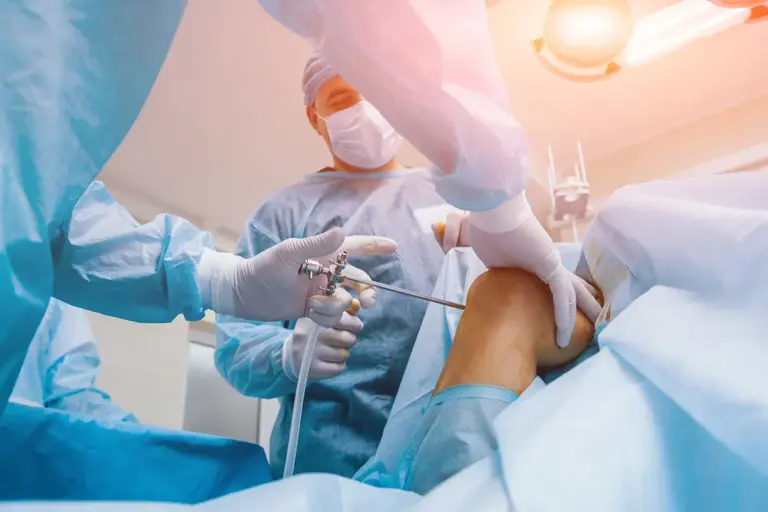
During the operation, the surgeon resurfaces the ends of the femur and tibia. The metal components are either “press-fit” or secured with bone cement. A medical-grade plastic spacer is inserted between the metal parts to facilitate smooth movement. Modern Total Knee Arthroplasty Techniques prioritize minimizing tissue trauma to speed up the initial recovery phase.
Recovery and Mobilization
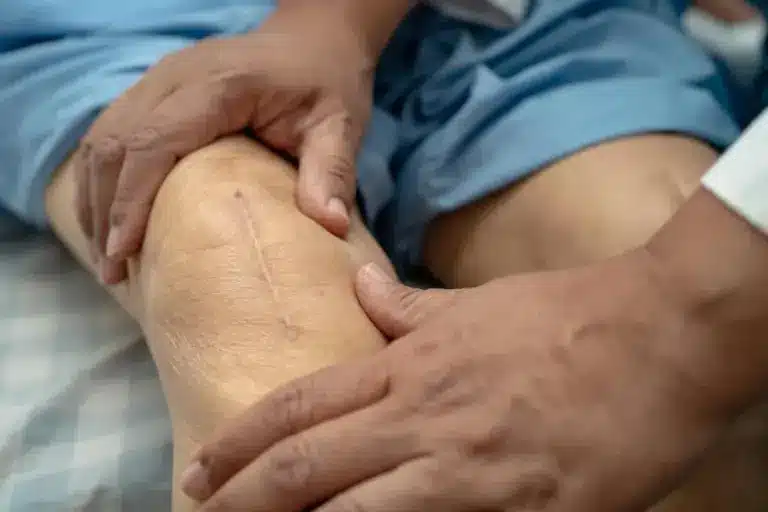
Recovery from Knee Arthroplasty begins almost immediately. At Liv Hospital, we encourage patients to stand and walk with assistance within hours of the Knee replacement.
- Weeks 1–2: Focus on wound healing, reducing swelling, and achieving at least 90° of knee flexion.
- Weeks 3–6: Gradual weaning from walking aids and starting more advanced physical therapy.
- Months 3+: Full return to low-impact daily activities and hobbies as the total knee arthroplasty becomes fully integrated.
Essential Rehabilitation Tips
The success of your Knee Arthroplasty depends heavily on your dedication to physical therapy. The goal is to strengthen the quadriceps and hamstrings to support the new joint and prevent stiffness. Following your prescribed home exercise program is the most critical part of achieving a successful Knee replacement.
Long-Term Care for Your New Joint
- Focus on Range of Motion: In the early weeks, use a stationary bike (once cleared) to help “bend” the knee and prevent scar tissue.
- Maintain a Healthy Weight: Reducing the load on your total knee arthroplasty is the best way to prevent the prosthetic from wearing out early.
- Avoid High Impact: Avoid repetitive jumping or running; instead, focus on low-impact activities like swimming, cycling, or walking.
- Monitor for Swelling: Use ice and elevation after exercise to manage inflammation during the first few months.
Why Choose Liv Hospital?
Liv Hospital is a center of excellence for Knee Arthroplasty. Our orthopedic surgeons are experts in the latest Total Knee Arthroplasty Techniques, including robotic-assisted and patient-specific instrumentation. We provide a comprehensive, multidisciplinary approach that takes you from advanced 3D diagnosis to specialized rehabilitation. Our goal is to provide a durable, high-performing knee that allows you to return to the life you love. We encourage you to reach out and call Liv Hospital to schedule a consultation and take the first step toward a pain-free future.