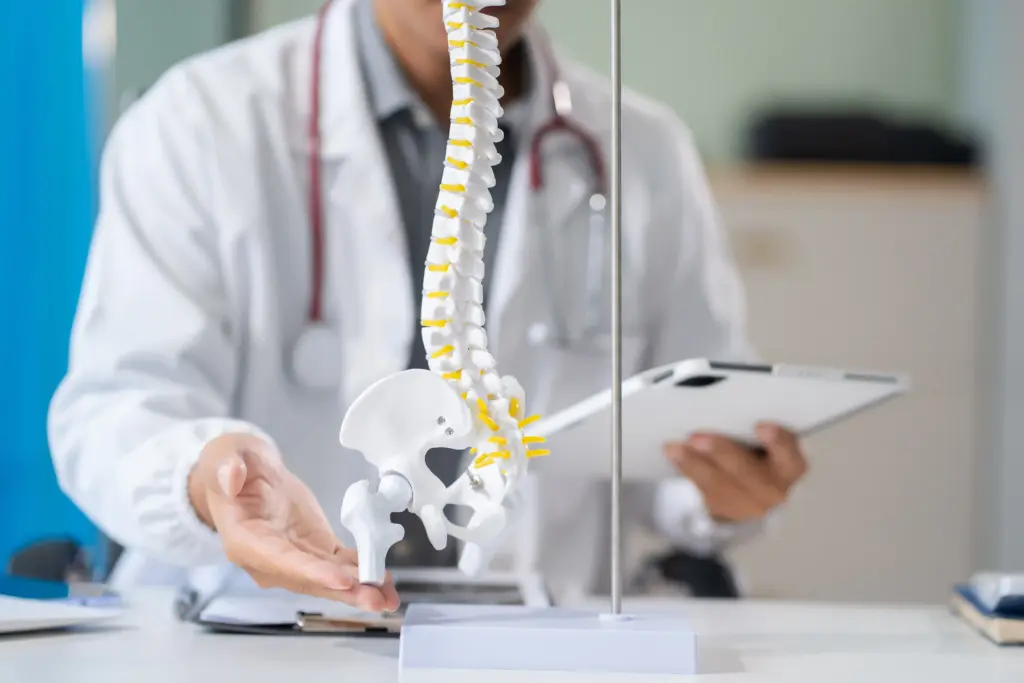
Orthopedics focuses on the musculoskeletal system. Learn about the diagnosis, treatment, and rehabilitation of bone, joint, ligament, and muscle conditions.
We're Here to Help. Get in Touch.
Send us all your questions or requests, and our expert team will assist you.
Overview and definition
Trauma surgery is the branch of medicine dedicated to treating severe, often life-threatening physical injuries. It is the first line of defense for people who need immediate care after accidents, violence, or disasters. Unlike planned surgeries, such as a hip replacement or a cosmetic procedure, trauma surgery is almost always an emergency. The patients arriving for this type of care have often experienced blunt force impact, penetrating wounds, or severe burns that require rapid intervention to save life and limb. A trauma surgeon is a specialized doctor trained to handle chaos. They must make critical decisions in seconds, often with incomplete information. Their role is not just to resolve a single problem but to stabilize the entire patient. This involves managing shock, stopping bleeding, and prioritizing which injuries to treat first. From a car crash victim with multiple broken bones to a patient with a gunshot wound, trauma surgery encompasses the entire spectrum of sudden physical harm. This section will explore the high-stakes world of trauma care, explaining how hospitals are organized to treat these emergencies and the unique skills that save lives when every second counts.
What Constitutes "Trauma"?
In medical terms, “trauma” refers to a physical injury caused by an external force. This force can be mechanical, thermal, chemical, or electrical. Mechanical trauma is the most common and includes blunt force (like a fall or car accident) and penetrating trauma (like a stab wound or gunshot). Thermal trauma refers to burns or freezing injuries. Chemical and electrical trauma involve damage from hazardous substances or high-voltage currents.
Trauma is often categorized by severity. Minor trauma might include a simple broken wrist or a cut that needs stitches. Major trauma involves injuries that threaten life or permanent disability, such as a severe head injury, a ruptured spleen, or multiple complex fractures. Trauma centers are designed specifically to handle these major cases, providing a level of care and resources that a standard emergency room cannot always offer.
The Trauma Center System
Not all hospitals are equipped to handle severe trauma. The medical system designates specific hospitals as “Trauma Centers” based on their resources and capabilities. These centers are ranked by levels, typically from Level I to Level V.
A Level I Trauma Center is the highest level of care. It has trauma surgeons, neurosurgeons, orthopedic surgeons, and other specialists available 24 hours a day. It also conducts research and serves as a referral center for a large region. A Level II center provides similar clinical care but may not have the research or teaching components. Lower-level centers (III, IV, V) can stabilize patients but often transfer the most severe cases to a Level I or II facility. Understanding this system explains why an ambulance might bypass a closer hospital to take a severely injured patient to a specialized trauma center.
Orthopedics is a broad field that addresses conditions present from birth (congenital), those caused by injury (traumatic), and those that develop over time due to aging or wear and tear (degenerative).
The field is often divided into specialized areas of focus, allowing physicians to develop high-level expertise in specific parts of the body or types of conditions:
Joint Reconstruction and Arthroplasty: Focuses on replacing damaged joints, particularly the hip and knee, due to arthritis.
Sports Medicine: Deals with injuries related to physical activity, such as ligament tears, meniscus injuries, and rotator cuff problems.
Spine Surgery: Addresses conditions affecting the vertebral column, including herniated discs, spinal stenosis, and scoliosis.
Hand and Upper Extremity: Focuses on the complex network of small bones, tendons, and nerves in the hand, wrist, and elbow (e.g., carpal tunnel syndrome).
Foot and Ankle: Manages issues ranging from bunions and flat feet to complex fractures and Achilles tendonitis.
Orthopedic Trauma: Specializes in the management of severe fractures and dislocations, often resulting from accidents.
Pediatric Orthopedics: Dedicated to treating musculoskeletal issues in growing children, such as clubfoot, hip dysplasia, and growth plate fractures.
Musculoskeletal Oncology: A specialized field treating benign and malignant tumors of the bone and soft tissue.
The "Golden Hour" Concept
Trauma care is driven by the concept of the “Golden Hour.” This medical principle suggests that a critically injured patient has the highest chance of survival if they receive definitive medical treatment within the first hour after the injury occurs. While the exact time frame can vary, the core message is that speed saves lives.
During this critical window, the goal is to stop hemorrhage (bleeding), restore breathing, and prevent shock. Shock is a dangerous condition in which the organs don’t get enough blood and oxygen. Trauma teams work with intense efficiency to identify and treat these immediate threats before moving on to less urgent injuries. This philosophy dictates the entire flow of trauma care, from the paramedics on the scene to the surgeons in the operating room.
The Role of the Trauma Surgeon
A trauma surgeon is often a general surgeon with advanced training in critical care. They act as the captain of the ship. When a trauma patient arrives, the trauma surgeon leads the resuscitation team. They perform the initial assessment, order the necessary scans, and perform life-saving procedures like chest tube insertions or emergency exploratory surgeries.
However, trauma surgery is inherently multidisciplinary. The trauma surgeon coordinates with orthopedic surgeons to fix bones, neurosurgeons to treat brain injuries, and vascular surgeons to repair blood vessels. They also manage the patient’s care in the Intensive Care Unit (ICU) after surgery, overseeing the complex physiology of recovery. Their job is not done when the incision is closed; they follow the patient through the critical days and weeks that follow.
30 Years of Excellence
Trusted Worldwide
With patients from across the globe, we bring over three decades of medical
Send us all your questions or requests, and our expert team will assist you.
Acute Care Surgery
The field has evolved into “Acute Care Surgery.” This combines trauma surgery, emergency general surgery (like treating a burst appendix or a perforated bowel), and critical care medicine. This ensures that patients with any surgical emergency—whether from a car crash or a sudden illness—have access to a highly skilled surgeon at any hour of the day or night.
This model provides continuous, 24/7 coverage. This means that if you arrive at noon on a Wednesday, you will receive immediate care. It is a system built on readiness and expertise.
What is the difference between an ER doctor and a trauma surgeon?
An ER doctor (emergency medicine physician) specializes in diagnosing and stabilizing all types of emergencies, from heart attacks to broken bones. A trauma surgeon is a surgical specialist who performs operations and manages the critical care of patients with severe physical injuries. They work together closely.
Do I need a referral for trauma surgery?
No. Trauma surgery is emergency care. Patients usually arrive via ambulance or helicopter. You do not schedule an appointment for trauma surgery.
What happens when I arrive at a trauma center?
You will be taken to a “trauma bay,” a specialized room in the ER. A large team of doctors and nurses will swarm around you to assess your ABCs (Airway, Breathing, Circulation), cut off your clothes to find injuries, and start IVs and monitoring equipment immediately.
Is trauma surgery always open surgery?
Not always. While major internal bleeding often requires opening the abdomen or chest (laparotomy or thoracotomy), some injuries can be treated with minimally invasive techniques, such as using catheters to stop bleeding in blood vessels (embolization).
Can trauma surgery fix everything?
Trauma surgeons can do wonderful things to repair the body, but they cannot fix everything. Some injuries, particularly severe brain or spinal cord damage, may have permanent consequences despite the best surgical care. The goal is to save life first, then limb, then function.