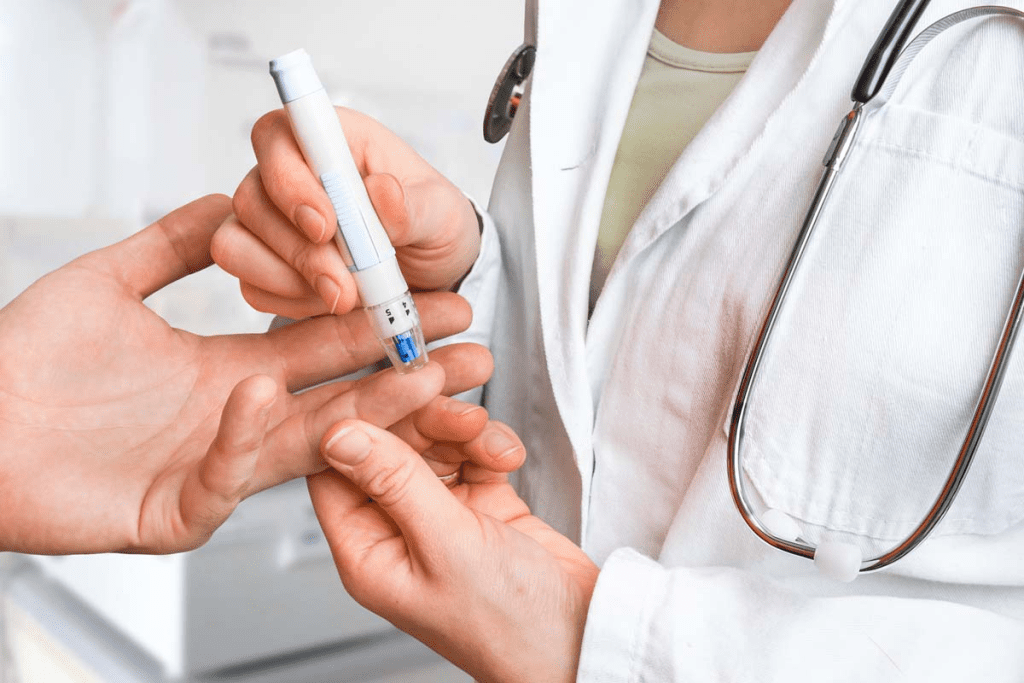
Blood disorders are complex and affect millions globally. Did you know that conditions like pancytopenia, where the blood lacks enough red and white blood cells and platelets, require precise diagnostic testing? Accurate diagnosis is key for effective treatment.
Doctors employ various tests to identify blood disorders. A complete blood count (CBC) is often the first step. It gives insights into different blood cell levels. Additional tests, like a peripheral blood smear and bone marrow aspiration, may be needed for conditions such as thrombotic thrombocytopenic purpura and G6PD deficiency.
Key Takeaways
- Blood disorders require precise diagnostic testing for effective treatment.
- A complete blood count (CBC) is typically the first diagnostic step.
- Further tests like peripheral blood smear and bone marrow aspiration may be needed.
- Conditions like pancytopenia and thrombotic thrombocytopenic purpura require accurate diagnosis.
- G6PD deficiency is another condition diagnosed through specific blood tests.
Understanding Blood Disorders: An Overview

It’s important to know about blood disorders to diagnose and treat them. These disorders affect how blood works, impacting our health and well-being.
Common Types of Blood Disorders
Blood disorders include pancytopenia, where there’s a drop in red and white blood cells and platelets. Thrombotic thrombocytopenic purpura (TTP) causes blood clots in small blood vessels. Hereditary spherocytosis is a genetic disorder that affects red blood cell production, leading to anemia.
These conditions can greatly affect a person’s life. We’ll dive deeper into them to understand their health impacts.
The Importance of Early Detection
Spotting blood disorders early is key to managing them well. Catching conditions like TTP and pancytopenia early can greatly help patients. Knowing the signs and risks can lead to quicker medical help.
Initial Assessment and Medical History

Doctors start by looking at a patient’s medical history when diagnosing blood disorders. This first step is key. It helps find symptoms and risk factors that might show a blood disorder. We’ll look at symptoms that lead to more tests and why family history matters.
Key Symptoms That Prompt Blood Disorder Testing
Certain symptoms can mean a blood disorder is present. This leads doctors to do more tests. These symptoms include:
- Fatigue and weakness, which can be signs of anemia or other red blood cell issues.
- Bruising and bleeding easily, which might point to platelet or clotting problems.
- Frequent infections, which could mean immune system or white blood cell issues.
- Pale skin, jaundice, or other signs that could be linked to hemolytic anemia or other blood issues.
Some conditions, like Thrombotic Thrombocytopenic Purpura (TTP), have specific symptoms. These include ttp symptoms like purpura, thrombocytopenia, and microangiopathic hemolytic anemia. Spotting these symptoms early is key for quick diagnosis and treatment.
Family History Considerations
A patient’s family history is very important for diagnosing inherited blood disorders. Conditions like spherocytosis, with spherocyte (abnormally shaped red blood cells), often run in families. Knowing a patient’s family history helps doctors find genetic factors that might be causing their condition.
For example, a family history of pancytopenia, which is a low count of red and white blood cells and platelets (pancytopenia means fewer than normal cells), can lead to earlier and more focused testing. By looking at family history, doctors can tailor care better. This can help find conditions sooner, leading to better treatment results.
Complete Blood Count (CBC): The First Line of Investigation
Healthcare professionals often start with a test called the Complete Blood Count (CBC) to diagnose blood disorders. This test gives a wide view of blood’s different parts, like red and white blood cells, and platelets.
What CBC Measures
A CBC checks important blood health parameters. It looks at:
- Red Blood Cell (RBC) Count: Counts red blood cells, which carry oxygen.
- White Blood Cell (WBC) Count: Measures white blood cells, key for fighting infections.
- Platelet Count: Checks platelets, vital for blood clotting.
- Hemoglobin (Hb) Level: Sees how much hemoglobin, a protein in red blood cells, is present.
- Hematocrit (Hct): Finds the red blood cell proportion in the blood.
Any abnormal CBC results can point to blood disorders. For example, low red blood cell or hemoglobin counts might show anemia. An odd white blood cell count could hint at an infection or leukemia.
Interpreting CBC Results
Understanding CBC results is key. For instance, pancytopenia, a drop in red and white blood cells and platelets, can be spotted through a CBC. Knowing what pancytopenia means is important, as it might signal bone marrow failure or serious conditions.
Other disorders, like thrombocytopenic thrombotic purpura (TTP), can also be detected by CBC. TTP is rare and causes blood clots in small blood vessels. A CBC can show a low platelet count, a TTP sign.
Also, a CBC can hint at hereditary spherocytosis, a genetic disorder affecting red blood cells. Abnormal CBC results might lead to more tests to confirm the diagnosis.
In summary, the CBC is a key diagnostic tool. It offers insights into blood’s components. By knowing what a CBC measures and how to read its results, doctors can spot many blood disorders. This includes pancytopenia and thrombocytopenic thrombotic purpura, leading to the right tests and treatments.
Peripheral Blood Smear Examination
A peripheral blood smear examination gives us a look at the blood’s cells. It helps diagnose blood-related issues. We spread blood on a slide, stain it, and then look at it under a microscope.
Visual Analysis of Blood Cells
We look at blood cells to find any oddities. We check their size, shape, and how they stain. For example, inherited spherocytosis shows up as round red blood cells.
Abnormalities Visible Under the Microscope
Under the microscope, we see many oddities. We might see different shapes of red blood cells or white blood cell issues. For instance, TTP (Thrombotic Thrombocytopenic Purpura) shows up as broken red blood cells. We also look for signs of G6PD deficiency like hemolysis.
| Condition | Visible Abnormalities | Clinical Significance |
| Inherited Spherocytosis | Spherically shaped red blood cells | Hemolytic anemia |
| TTP | Schistocytes (fragmented red blood cells) | Thrombocytopenia, microangiopathic hemolytic anemia |
| G6PD Deficiency | Evidence of hemolysis (e.g., Heinz bodies) | Hemolytic anemia triggered by infections or certain drugs |
Looking closely at a blood smear gives us important clues. It helps us figure out what’s wrong and how to treat it. This test is key in diagnosing blood disorders, including those linked to fetal hemoglobin.
Bone Marrow Aspiration and Biopsy
Bone marrow aspiration and biopsy are key tests for diagnosing blood-related issues. They help us understand how blood cells are made. This is important for spotting different disorders.
When Bone Marrow Testing Is Necessary
Doctors often suggest bone marrow tests when a Complete Blood Count (CBC) shows something’s off. For example, if you have pancytopenia, which means low blood cell counts, these tests can find the cause. Knowing what causes pancytopenia helps doctors treat it right.
Bone marrow tests are also key for spotting blood cancers and other issues with blood cell making. They can check for problems with hemoglobin F production, among other things.
The Procedure and What It Reveals
A bone marrow test takes a sample from the hip bone. It uses a needle to get a liquid sample or sometimes a small bone piece. Then, doctors look at it under a microscope for any blood cell issues.
This test can show many things, like cancer cells or how blood cells are made. For example, it can help diagnose G6PD deficiency by looking at red blood cell production. It’s also useful for TTP (Thrombotic Thrombocytopenic Purpura), where it helps confirm the presence of blood clots.
By studying the bone marrow, doctors can understand blood disorders better. This helps them find better treatments for these conditions.
Diagnosing Pancytopenia: A Detailed Approach
Diagnosing pancytopenia is a complex task. It requires both clinical evaluation and lab tests. This condition is marked by low counts of red and white blood cells and platelets. It can cause serious health issues.
Understanding Pancytopenia Definition and Causes
Pancytopenia means having fewer red and white blood cells and platelets. It can happen for many reasons, like bone marrow failure or infections. Aplastic anemia symptoms include feeling tired, getting sick easily, and bleeding problems.
The reasons for pancytopenia fall into three main groups. These are problems with the bone marrow, blood cells being destroyed, and the spleen holding onto too many cells. G6pd disease and g6p deficiency can also cause pancytopenia by leading to hemolytic anemia.
Specific Tests for Pancytopenia Diagnosis
To diagnose pancytopenia, several tests are needed. A Complete Blood Count (CBC) is the first step. It shows the blood cell counts. Other tests might include:
- Bone marrow aspiration and biopsy to check if the bone marrow can make blood cells.
- Peripheral blood smear to look at the blood cells for any oddities.
- Genetic testing to find inherited conditions that might cause pancytopenia.
The symptoms of aplastic anemia signs and symptoms help doctors figure out what’s wrong. These signs include looking pale, feeling very tired, getting sick often, and bleeding easily.
| Diagnostic Test | Purpose | Key Findings in Pancytopenia |
| Complete Blood Count (CBC) | To assess the counts of red blood cells, white blood cells, and platelets. | Low counts of all three cell types. |
| Bone Marrow Aspiration and Biopsy | To evaluate the bone marrow’s cellularity and detect abnormalities. | Aplastic or hypocellular marrow. |
| Peripheral Blood Smear | To visually examine the morphology of blood cells. | Abnormalities in cell shape, size, and count. |
By using clinical checks and these tests, doctors can accurately find out if someone has pancytopenia. They can then figure out why it’s happening. This helps them choose the right treatment.
Hemoglobin Analysis and Electrophoresis
Detecting abnormal hemoglobin types is made possible through hemoglobin analysis and electrophoresis. These methods help in diagnosing and managing related conditions. Hemoglobin analysis is a key diagnostic tool that identifies various blood disorders, including those related to abnormal hemoglobin types.
Detecting Abnormal Hemoglobin Types
Hemoglobin electrophoresis is a lab technique used to identify different hemoglobin types in the blood. It’s very useful in diagnosing conditions like sickle cell disease and thalassemia. By separating and measuring different hemoglobin types, we can find abnormal hemoglobin variants.
Common abnormal hemoglobin types include:
- Hemoglobin S (sickle cell hemoglobin)
- Hemoglobin C
- Hemoglobin E
- Hemoglobin Bart’s
These abnormal hemoglobin types can cause health issues, from mild anemia to severe hemolytic diseases. Accurate diagnosis through hemoglobin electrophoresis helps us provide the right treatment and management plans.
Fetal Hemoglobin Testing and Clinical Significance
Fetal hemoglobin (HbF) is the main hemoglobin in fetal development. Sometimes, high levels of HbF can stay into adulthood, which can be a sign of certain blood disorders. Fetal hemoglobin testing is used to diagnose and monitor conditions like hereditary persistence of fetal hemoglobin (HPFH) and some types of anemia.
| Condition | HbF Level | Clinical Significance |
| Hereditary Persistence of Fetal Hemoglobin (HPFH) | Elevated | Generally benign; may compensate for other hemoglobinopathies |
| Sickle Cell Disease | Variable | Higher HbF levels may reduce disease severity |
| Beta-Thalassemia Major | Elevated | Important for disease management and transfusion requirements |
Understanding the clinical significance of fetal hemoglobin levels helps us diagnose and manage blood disorders effectively. For example, patients with sickle cell disease who have higher levels of HbF may face fewer complications. This is because HbF can stop sickle hemoglobin from polymerizing.
In conclusion, hemoglobin analysis and electrophoresis are key tools in diagnosing and managing blood disorders related to abnormal hemoglobin types. By accurately identifying and interpreting different hemoglobin variants, we can offer targeted treatments and improve patient outcomes.
Diagnosing Thrombotic Thrombocytopenic Purpura (TTP)
Diagnosing TTP means spotting its unique signs and confirming it with lab tests. TTP is a rare blood disorder. It causes low platelets and damage to red blood cells.
Clinical Presentation of TTP
TTP symptoms can vary. They often include bruising or bleeding and signs of red blood cell damage like fatigue and jaundice. Knowing TTP symptoms is key for early detection.
It also causes neurological problems and kidney issues. This makes diagnosing TTP complex.
Laboratory Tests for TTP Confirmation
Lab tests are vital for confirming TTP. They include a complete blood count (CBC) to check for low platelets and anemia. A peripheral blood smear looks for schistocytes, signs of red blood cell damage.
Understanding pancytopenia means and cytopenia definition helps see how severe the condition is. It guides further testing.
Tests like ADAMTS13 activity are key. Low levels of this enzyme point to TTP.
Genetic Testing for Blood Disorders
Genetic testing is now used to find inherited blood disorders. It looks at DNA for specific markers. This has made diagnosing and managing severe aplastic anemia and G6PD deficiency better.
Inherited Blood Disorders and Genetic Markers
Inherited blood disorders come from parents to kids through genes. They can mess with blood cell production or function. Genetic testing finds the markers for these conditions, leading to early diagnosis and treatment.
Severe aplastic anemia happens when the bone marrow can’t make blood cells. Genetic tests can spot the mutations causing this. G6PD deficiency, which affects red blood cells, is also diagnosed through genetic testing.
| Condition | Genetic Marker | Diagnostic Implication |
| Severe Aplastic Anemia | Mutations in genes like TERC or TERT | Early diagnosis and possible bone marrow transplant |
| G6PD Deficiency | Mutations in the G6PD gene | Staying away from things that cause hemolysis |
| Thrombotic Thrombocytopenic Purpura (TTP) | Mutations in the ADAMTS13 gene | Helping with plasma exchange treatment |
The Role of Genetic Counseling
Genetic counseling is key for managing inherited blood disorders. It gives info on the condition, its genetics, and risks to future kids. Counselors also talk about genetic testing and help with care choices.
For families with inherited blood disorders, counseling offers emotional support and planning advice. It helps find at-risk family members for early treatment.
Advanced Diagnostic Techniques
Advanced diagnostic techniques are key in accurately diagnosing blood disorders. These modern methods have greatly improved our understanding and management of complex blood conditions.
Flow Cytometry
Flow cytometry is a detailed technique for analyzing cells in a blood sample. It helps diagnose conditions like TTP disease and other blood disorders with great accuracy.
This method labels cells with fluorescent antibodies that stick to specific proteins. As cells go through a flow cytometer, the fluorescence is measured. This gives us important info about the cells.
Cytogenetic Analysis
Cytogenetic analysis looks at chromosomes to find genetic issues in blood disorders. It’s very useful for diagnosing G6PD deficiency and Hereditary Spherocytosis, where genetics are key.
By studying chromosomes, we can spot deletions, translocations, and other issues. This info is essential for creating the right treatment plan.
Molecular Diagnostics
Molecular diagnostics use various techniques to find genetic mutations in blood disorders. Methods like PCR and next-generation sequencing help us diagnose at the molecular level.
For example, in the Pancytopenia definition, molecular diagnostics can find causes like bone marrow failure. This info is vital for making treatment decisions and improving patient care.
In summary, advanced techniques like flow cytometry, cytogenetic analysis, and molecular diagnostics have changed hematology. They give us deep insights into blood disorders, leading to more accurate diagnoses and effective treatments.
Imaging Studies in Blood Disorder Diagnosis
Imaging techniques are key in diagnosing and treating blood disorders. Blood tests and bone marrow exams are the main tools. But, imaging studies are vital when complications or related conditions are suspected.
Necessity of Imaging
Imaging isn’t always the first step in diagnosing blood disorders. But, it’s needed when complications or unclear diagnoses arise. For example, in thrombotic thrombocytopenic purpura (TTP), imaging spots organ damage or other issues.
Imaging checks spleen size in suspected pancytopenia. An enlarged spleen hints at underlying issues. It also spots organ abnormalities caused by blood disorders.
Types of Imaging Used
Different imaging methods are used based on the disorder or complication. Common ones include:
- Ultrasound: Good for spleen size and abdominal issues.
- Computed Tomography (CT) scans: Show detailed organ images, spotting enlargement or damage.
- Magnetic Resonance Imaging (MRI): Offers detailed organ and tissue images, useful in some blood disorder cases.
Here’s a quick guide on when and how these imaging techniques are applied:
| Imaging Technique | Use in Blood Disorder Diagnosis | Common Findings |
| Ultrasound | Assessing spleen size, abdominal abnormalities | Splenomegaly, liver issues |
| CT Scan | Evaluating organ damage, spotting complications | Organ enlargement, hemorrhage |
| MRI | Detailed organ and tissue assessment | Bone marrow issues, organ damage |
In summary, imaging is critical in diagnosing and managing blood disorders, mainly when complications are suspected. The right imaging technique gives healthcare providers valuable insights. This helps in creating a more effective treatment plan.
Conclusion:
Diagnostic techniques are getting better, changing how we manage blood disorders. This means doctors can now give more accurate and effective care. Tests like Complete Blood Count (CBC) and genetic testing are key in diagnosing diseases. These tests help find conditions like Thrombotic Thrombocytopenic Purpura (TTP) and G6PD deficiency. They also help with inherited spherocytosis. The future of diagnosing blood disorders is bright. Research is ongoing for treatments like ttp treatment and g6pd deficiency treatments. Learning more about fetal hemoglobin will also help improve patient care.
As we learn more, we’ll see better ways to manage inherited conditions like spherocytosis. This will lead to better health outcomes for patients.It’s important for healthcare providers to keep up with new diagnostic techniques. By doing so, they can provide the best care possible. This will greatly improve the lives of those with blood disorders.
FAQ
What are the common symptoms that prompt blood disorder testing?
Symptoms like fatigue, weakness, and pale skin are common. Shortness of breath and frequent infections also prompt testing. Other signs include bruising, bleeding gums, and petechiae.
What is pancytopenia, and how is it diagnosed?
Pancytopenia means fewer red and white blood cells and platelets. It’s diagnosed with a Complete Blood Count (CBC) test. This test measures blood cell levels.
What is Thrombotic Thrombocytopenic Purpura (TTP), and how is it diagnosed?
TTP is a rare disorder with blood clots in small vessels. It’s diagnosed with CBC, blood smear, and tests for abnormal hemoglobin.
What is the role of genetic testing in diagnosing blood disorders?
Genetic testing finds inherited blood disorders. It identifies genetic markers and offers genetic counseling.
What is the importance of hemoglobin analysis and electrophoresis in diagnosing blood disorders?
These tests detect abnormal hemoglobin types. They’re key in diagnosing sickle cell disease and thalassemia.
What are the benefits of advanced diagnostic techniques in blood disorder diagnosis?
Techniques like flow cytometry and molecular diagnostics improve accuracy. They provide detailed information on blood disorders.
When is imaging necessary in diagnosing and managing blood disorders?
Imaging is needed for organ damage or enlargement. It’s also used to assess disease progression.
What is G6PD deficiency, and how is it treated?
G6PD deficiency affects the enzyme glucose-6-phosphate dehydrogenase. Treatment avoids triggers like certain medications and foods.
What is hereditary spherocytosis, and how is it diagnosed?
It’s a genetic disorder with abnormal red blood cells. Diagnosis involves a blood smear and other tests.
What is the significance of fetal hemoglobin testing?
Fetal hemoglobin testing diagnoses and monitors blood disorders. It’s used for beta-thalassemia and hereditary persistence of fetal hemoglobin.
What is the role of bone marrow aspiration and biopsy in diagnosing blood disorders?
These procedures diagnose and monitor disorders like leukemia and lymphoma. They examine bone marrow cells.
References
- Hariz, A., (2023). Megaloblastic Anemia. StatPearls. https://www.ncbi.nlm.nih.gov/books/NBK537254/
- Miller, J. W. (2024). Excess folic acid and vitamin B12 deficiency. Current Medicinal Chemistry, 31(20), 2587“2598. https://journals.sagepub.com/doi/10.1177/03795721241229503