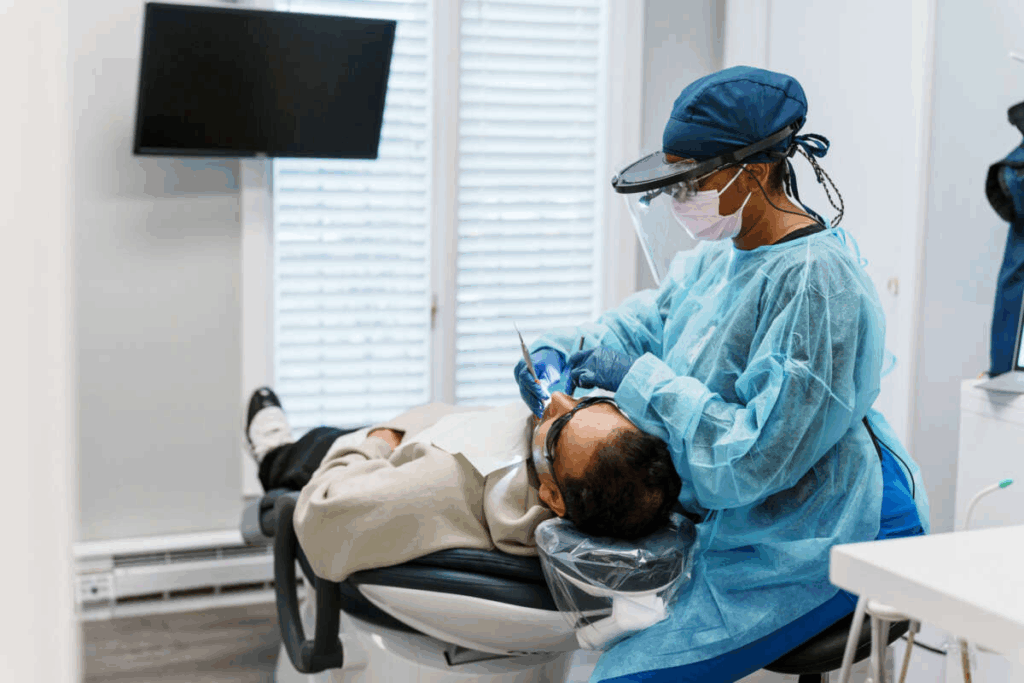
Salivary gland infections and blockages affect thousands of people worldwide. Parotid sialadenitis is a common form of gland inflammation.
At Liv Hospital, we focus on the causes and treatment options for these conditions. This is to prevent serious complications. Our team uses innovative diagnostic protocols and patient-centered care. We aim to deliver exceptional outcomes in treating infected and blocked salivary glands.
Understanding the underlying causes, whether bacterial, viral, or due to mechanical obstruction, is key for effective treatment.
Key Takeaways
- Parotid sialadenitis is a common form of salivary gland inflammation.
- Effective treatment requires understanding the underlying causes.
- Liv Hospital offers complete care for salivary gland infections and blockages.
- Innovative diagnostic protocols and patient-centered care are vital for successful treatment.
- Preventing serious complications is a top priority.
Understanding Salivary Gland Disorders

The salivary glands are key to our oral health. They produce saliva, which helps with digestion and keeps our mouth clean.
What Are Salivary Glands and Their Function
The salivary glands make saliva. There are three main pairs: the parotid, submandibular, and sublingual glands. There are also many small glands in our mouth. Saliva breaks down food and keeps our mouth clean by removing bacteria and food bits.
Common Salivary Gland Disorders
Common issues include sialadenitis (inflammation), sialolithiasis (stones), and tumors. These can come from infections, blockages, or diseases. For example, sialadenitis might be caused by a virus or bacteria. Sialolithiasis often happens when we don’t drink enough water.
- Sialadenitis: Inflammation of the salivary glands, often due to infection.
- Sialolithiasis: Formation of stones within the salivary glands or ducts.
- Salivary gland tumors: Abnormal growths within the salivary glands, which can be benign or malignant.
Impact on Quality of Life
Salivary gland problems can really affect how we feel. Symptoms like pain, swelling, and trouble eating or speaking can be hard to deal with. For instance, a blocked sublingual gland can make eating and swallowing hard.
It’s important to know about these issues to get the right treatment. We’ll look at causes, symptoms, and how to treat them next.
Anatomy of the Salivary Gland System

The salivary gland system is key for saliva production and oral health. It includes major and minor glands. This network helps with digestion and keeping the mouth clean.
Major Salivary Glands: Parotid, Submandibular, and Sublingual
The major glands are the parotid, submandibular, and sublingual. The parotid gland is the biggest and sits on the face. The submandibular gland is under the jaw, and the sublingual gland is under the tongue. Together, they make a lot of the mouth’s saliva.
Gland | Location | Function |
Parotid | Sides of the face | Produces serous saliva |
Submandibular | Under the jaw | Produces both serous and mucous saliva |
Sublingual | Under the tongue | Produces mainly mucous saliva |
Minor Salivary Glands
Minor glands are found all over the mouth, like on the lips and tongue. They make a bit of saliva but it’s important for mouth health.
Ductal System and Saliva Production
The ductal system carries saliva from the glands to the mouth. Major glands have special ducts that open in the mouth. Saliva keeps flowing, even when we’re not eating, because of these glands.
Knowing how the salivary glands work helps doctors treat problems like parotid sialadenitis. It’s important to understand these glands to manage mouth issues.
Causes of Parotid Sialadenitis
Understanding what causes parotid sialadenitis is key to treating it. This condition is when the parotid gland gets inflamed. We’ll look at the main reasons for this to help you understand it better.
Bacterial Infections
Bacterial infections, like those from Staphylococcus aureus, often cause parotid sialadenitis. These infections can make the parotid gland swell up, causing pain and pus.
Viral Infections
Viral infections also play a big role in parotid sialadenitis. Mumps, for example, is a virus that can make the parotid gland swell. Other viruses can also cause this problem, so it’s important to look at all possibilities.
Autoimmune Conditions
Autoimmune conditions, where the body attacks itself, can also cause parotid sialadenitis. Sjögren’s syndrome is one such condition that can affect the salivary glands, leading to inflammation.
Medications and Dehydration
Some medications and not drinking enough water can also lead to parotid sialadenitis. Medications that reduce saliva or cause dehydration can increase the risk. So, staying hydrated and checking your medications is important to prevent this condition.
Sialolithiasis: Salivary Stones and Blockages
Sialolithiasis is when stones form in the salivary glands, causing blockages. This can lead to sialadenitis, an inflammation of the gland. Symptoms include pain, swelling, and more.
Formation of Salivary Stones
Salivary stones, or sialoliths, form from minerals in saliva. These minerals can crystallize into small stones. Dehydration, reduced saliva flow, and certain conditions can cause this.
Key factors in the formation of salivary stones include:
- Dehydration, which concentrates the saliva
- Reduced saliva flow due to medications or medical conditions
- Abnormalities in the salivary gland ducts
Risk Factors for Developing Sialolithiasis
Several factors can increase the risk of sialolithiasis. These include:
Risk Factor | Description |
Dehydration | Reduces saliva flow, increasing mineral concentration |
Certain Medications | Can reduce saliva production, leading to stone formation |
Medical Conditions | Conditions like Sjögren’s syndrome can affect saliva production |
A medical expert notes, “Dehydration is a big risk factor for sialolithiasis. It lowers saliva flow and raises mineral concentration for stones.”
“Dehydration is a significant risk factor for sialolithiasis, as it reduces saliva flow and increases the concentration of minerals that can form stones.”Medical Expert, Salivary Gland Specialist
Common Locations for Salivary Stones
Salivary stones often occur in the submandibular gland. They can also appear in the parotid and sublingual glands. The stone’s location affects symptoms and treatment.
Knowing where salivary stones usually form and the risk factors helps in diagnosing and treating them. By tackling the causes and managing symptoms, patients can alleviate discomfort from salivary stones.
Recognizing Symptoms of Parotid Sialadenitis
Knowing the symptoms of parotid sialadenitis is key to getting help quickly. We’ll cover the main signs to look out for. This will help you know when it’s time to see a doctor.
Swelling and Pain Patterns
Swelling in the parotid gland area is a main symptom. It can be very uncomfortable. The pain can be mild or severe.
The pain might be constant or only happen when you eat. This can make eating and talking hard.
Key characteristics of swelling and pain include:
- Tenderness to the touch
- Visible swelling in the cheek area
- Pain that radiates to other areas of the face or ear
- Discomfort when chewing or swallowing
Changes in Saliva Production
Parotid sialadenitis can also change how much saliva you make. You might have less saliva, leading to a dry mouth. Or, you might make too much saliva.
These changes can make it hard to swallow and affect your taste. They also raise the risk of oral infections.
Associated Symptoms
Other symptoms can happen with parotid sialadenitis. These include fever, chills, and feeling generally unwell. This is more common if it’s caused by a bacterial infection.
In some cases, a salivary gland abscess can form. This is a serious problem that needs quick medical help. Signs of an abscess include very bad pain, high fever, and a lot of swelling.
When to Seek Medical Attention
It’s important to know when to get medical help. If you have severe pain, trouble swallowing, a high fever, or a lot of swelling, see a doctor. Getting help early can stop problems and make you feel better.
Seek immediate medical attention if you have:
- Severe swelling or pain
- High fever or chills
- Difficulty opening your mouth or swallowing
- Pus or discharge from the gland
Diagnostic Approaches for Salivary Gland Disorders
Healthcare professionals use many methods to diagnose salivary gland disorders. They look at symptoms, use imaging and lab tests, and sometimes do sialendoscopy.
Physical Examination Techniques
A thorough physical exam is the first step. They check the face and neck for swelling or redness. They also feel the glands for tenderness or stones.
Key aspects of the physical examination include:
- Visual inspection for signs of inflammation or swelling
- Palpation to detect masses, tenderness, or stones
- Assessment of salivary flow and ductal patency
Imaging Studies
Imaging studies are key in diagnosing salivary gland disorders. Different methods give different views.
Common imaging techniques include:
- Ultrasound: Useful for detecting stones, cysts, and tumors
- CT scans: Provide detailed images of the salivary glands and surrounding structures
- MRI: Offers high-resolution images of soft tissues, helpful in diagnosing tumors and inflammatory conditions
- Sialography: Involves the injection of contrast material into the salivary gland ducts to visualize the ductal system
Laboratory Tests
Laboratory tests are vital, mainly for infections or autoimmune diseases.
Laboratory tests may include:
- Blood tests to check for signs of infection or inflammation
- Serological tests for autoimmune conditions like Sjögren’s syndrome
- Culture and sensitivity testing of saliva or pus to identify pathogens
Sialendoscopy
Sialendoscopy is a minimally invasive procedure. It lets doctors see the ducts directly. It’s great for finding and fixing blockages, stones, and strictures.
“Sialendoscopy has revolutionized the management of salivary gland disorders by providing a direct visual assessment of the ductal system, enabling both diagnosis and treatment in a single procedure.”
During sialendoscopy, a small endoscope is used. It lets the doctor see inside the ducts, find problems, and fix them, like removing stones or widening the ducts.
Medical Treatments for Parotid Sialadenitis
Medical treatment for parotid sialadenitis includes antibiotics, anti-inflammatory drugs, and other therapies. We will look at these treatments to see how they help manage the condition.
Antibiotic Therapy for Bacterial Infections
Antibiotic therapy is key when parotid sialadenitis is caused by bacteria. Drugs like amoxicillin-clavulanate or clindamycin target the bacteria, including Staphylococcus aureus. “Antibiotic therapy is essential in managing bacterial parotid sialadenitis, reducing the risk of complications and promoting recovery,” as emphasized by recent clinical guidelines.
Anti-inflammatory Medications
Anti-inflammatory medications help reduce swelling and pain in parotid sialadenitis. Nonsteroidal anti-inflammatory drugs (NSAIDs) like ibuprofen can reduce inflammation and ease symptoms. Corticosteroids may also be used for their strong anti-inflammatory effects.
Sialogogues to Stimulate Saliva Flow
Sialogogues stimulate saliva production, helping to clear blockages in the salivary glands. They enhance saliva flow, aiding in resolving parotid sialadenitis. Common sialogogues include gustatory stimulants like citric acid or ascorbic acid, taken orally.
Treatment of Underlying Conditions
It’s important to treat any underlying conditions that may cause parotid sialadenitis. This might involve managing autoimmune disorders, adjusting medications, or addressing dehydration. Treating the root cause helps prevent recurrent episodes and improves salivary gland health.
In conclusion, treating parotid sialadenitis involves antibiotics, anti-inflammatory drugs, sialogogues, and addressing underlying conditions. A personalized treatment plan can greatly improve patient outcomes and quality of life.
Surgical Interventions for Blocked Salivary Glands
When other treatments don’t work, surgery might be needed for blocked salivary glands. Dealing with these issues can be tough. It’s important to look at all treatment options.
Sialendoscopy and Stone Removal
Sialendoscopy is a small procedure that lets us see inside the salivary gland ducts. We can find and remove blockages or stones. It’s great for treating salivary stones.
During the procedure, we might also do irrigation or balloon dilation. This ensures the duct is clear and working right. Sialendoscopy has less recovery time and little scarring, making it a good choice for many.
Lithotripsy for Salivary Stones
Lithotripsy is used for big salivary stones that can’t be removed by sialendoscopy. It uses shock waves to break the stone into smaller pieces. These pieces can then leave the body on their own. It’s a safe and effective way to get salivary function back.
Duct Dilation Procedures
Duct dilation helps with narrowings in the salivary gland ducts. It improves saliva flow and relieves symptoms. We use different methods, like balloon dilation, to do this.
Gland Excision: When Is It Necessary?
Sometimes, removing the salivary gland is needed. This is usually for severe or recurring problems that other treatments can’t fix. It’s a more serious procedure but can solve some issues.
To show the different surgical options, we’ve made a table:
Procedure | Invasiveness | Recovery Time | Indications |
Sialendoscopy | Minimally invasive | Short | Sialolithiasis, ductal strictures |
Lithotripsy | Non-invasive | Minimal | Large salivary stones |
Duct Dilation | Minimally invasive | Short | Ductal strictures |
Gland Excision | Invasive | Longer | Recurrent or severe salivary gland disorders |
As the table shows, each surgery has its own use and effects. We’ll choose the best treatment for you based on your needs.
Home Remedies and Self-Care Strategies
There are many home remedies and self-care strategies to help with parotid sialadenitis and blocked salivary glands. These methods can make managing symptoms easier. They can also improve your overall well-being.
Warm Compresses and Massage Techniques
Warm compresses can reduce swelling and ease pain. Soak a clean cloth in warm water, wring it out, and apply it to the affected gland for a few minutes. Do this several times a day. Gentle massage can also help by stimulating saliva flow and reducing blockages.
Hydration and Dietary Modifications
Drinking plenty of water is key for healthy saliva production. It helps prevent dehydration and blockages. Eating foods that stimulate saliva production is also helpful. Try citrus fruits and sour candies.
But, avoid foods that can make symptoms worse. This includes dairy and acidic foods.
Salivary Stimulation Methods
There are ways to boost saliva production. Sialagogues, like sour candies or lemons, can help. Using a saliva substitute or humidifier can also keep your mouth moist. This reduces discomfort and aids in healing.
Oral Hygiene Practices
Good oral hygiene is vital for preventing infections and healing. Brushing teeth regularly and using fluoride toothpaste is important. Flossing daily and visiting the dentist regularly can help too.
By using these home remedies and self-care strategies, patients can manage their symptoms better. It’s important to talk to a healthcare professional before starting any new remedies. This ensures they are safe and right for you.
Preventing Recurrence of Salivary Gland Problems
To stop salivary gland problems from coming back, we need to change our lifestyle and get medical help. Knowing what causes these issues helps us keep our glands working right.
Lifestyle Modifications
Changing our lifestyle can lower the chance of salivary gland problems. Being more active and handling stress better are key. Also, not smoking helps keep our glands healthy.
Experts say, “A healthy lifestyle is key to preventing many salivary gland disorders.”
“Eating a balanced diet with fruits, veggies, and whole grains supports gland health.”
Proper Hydration Habits
Drinking enough water is key for our glands. It keeps them working right and stops stones from forming. Aim for eight glasses of water a day, but it can vary.
Regular Dental Check-ups
Going to the dentist regularly is important for our mouth and glands. Dentists spot gland issues early and teach us how to keep our mouth clean.
- See your dentist every six months.
- Brush and floss well.
- Tell your dentist about gland problems.
Managing Chronic Conditions
For people with long-term health issues like diabetes, managing them is key. Working with doctors to control these conditions helps our glands stay healthy.
By following these steps, we can lower the risk of gland problems coming back. This helps keep our mouth healthy.
Conclusion
Understanding parotid sialadenitis and blocked salivary glands is key to managing these issues. We’ve looked at the causes, symptoms, and treatments. It’s important to get a proper diagnosis and start treatment early.
Salivary gland problems can really affect your life. It’s important to know the signs of infection and see a doctor. This can help avoid serious issues and improve your health.
Knowing your treatment options helps you make better choices. If your symptoms don’t get better or get worse, see a doctor. This ensures you get the right care for your condition.
Managing salivary gland issues needs a full approach. This includes medical treatments, changes in your lifestyle, and taking care of yourself. Working with your healthcare team can help you feel better and prevent problems from coming back.
FAQ
What causes a blocked salivary gland?
A blocked salivary gland can happen for a few reasons. It might be due to stones in the gland, or because of inflammation, infection, or duct narrowing.
What are the symptoms of parotid sialadenitis?
Parotid sialadenitis symptoms include swelling and pain in the gland area. You might also notice changes in saliva, fever, and trouble swallowing.
How is parotid sialadenitis diagnosed?
To diagnose parotid sialadenitis, doctors do a physical exam and imaging tests like ultrasound or CT scans. They also do lab tests and sometimes sialendoscopy to see the ducts.
What are the treatment options for parotid sialadenitis?
Treatment for parotid sialadenitis includes antibiotics for infections and anti-inflammatory drugs. Doctors might also prescribe sialogogues to help saliva flow. In some cases, surgery like sialendoscopy or gland removal is needed.
Can salivary gland infections be prevented?
Yes, you can prevent salivary gland infections by keeping your mouth clean and staying hydrated. Avoiding dehydration and managing chronic conditions also helps.
What is sialendoscopy?
Sialendoscopy is a small procedure where a doctor uses a tiny endoscope in the gland ducts. It helps diagnose and treat issues like removing stones or widening narrowed ducts.
How can I manage symptoms of a blocked salivary gland at home?
To manage a blocked salivary gland at home, try warm compresses and gland massage. Stay hydrated and use methods to stimulate saliva production.
When should I seek medical attention for salivary gland issues?
See a doctor if you have ongoing or severe symptoms like swelling, pain, or trouble swallowing. Also, if you have a fever or signs of infection, seek help.
What is the role of hydration in preventing salivary gland disorders?
Hydration is key in preventing salivary gland problems. It keeps the glands working right and lowers the risk of stones and other issues.
Can certain medications cause salivary gland problems?
Yes, some medications can lead to salivary gland issues like dehydration or reduced saliva. Always talk to your doctor about any side effects.
References
National Center for Biotechnology Information. Evidence-Based Medical Guidance. Retrieved from https://pubmed.ncbi.nlm.nih.gov/30170291/