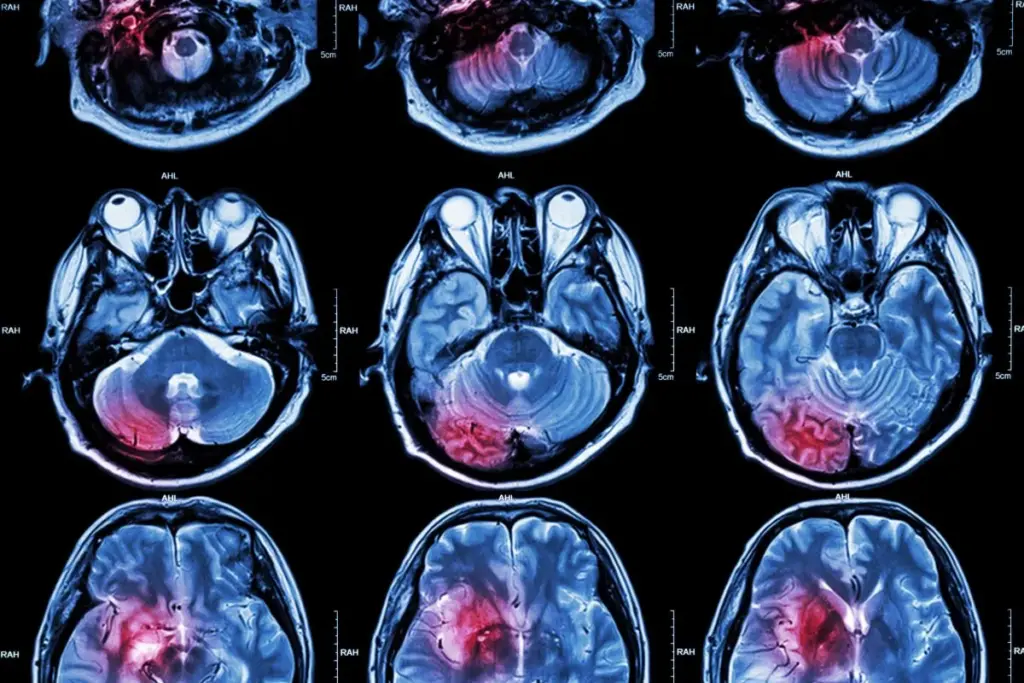
Brain tumors can start in any part of the brain or skull. This includes the protective lining and the underside of the brain (skull base). They can also form in the brainstem, sinuses, and nasal cavity. The brain‘s complex structure makes it possible for tumors to develop in different areas.
Discover the pineal gland and other critical brain tumor origins. Learn how location affects symptoms and find the best paths to recovery.
The brain is made up of several parts. These include the cerebrum, cerebellum, and brainstem. Each part can be a possible site for tumor growth. Knowing where brain tumors come from is key to diagnosing and treating them well.
Key Takeaways
- Brain tumors can occur in multiple areas of the brain and skull.
- The cerebrum, cerebellum, and brainstem are possible sites for tumor development.
- Understanding brain tumor origins is vital for diagnosis and treatment.
- Brain tumor symptoms vary based on the tumor’s location.
- Early detection is essential for effective treatment.
The Nature and Definition of Brain Tumors
Brain tumors are abnormal growths of cells in the brain. They can be either benign or malignant. These growths are classified based on their origin and characteristics.
The cerebrum, the largest part of the brain, has four lobes. Each lobe has its own function. The parietal lobe is key in processing sensory information like touch and temperature. Knowing how the cerebral cortex, the outer layer of the cerebrum, works helps us understand how tumors affect the brain.
What Constitutes a Brain Neoplasm
A brain neoplasm is a tumor if it grows abnormally and can harm brain function. It can start from different cell types in the brain, like glial cells and meningeal cells.
Brain tumors are classified based on the cells involved and their location. For example, gliomas come from glial cells, and meningiomas come from the meninges, which protect the brain.
Primary vs. Secondary Brain Tumors
Primary brain tumors start in the brain itself. Secondary brain tumors come from cancer cells spreading to the brain from other parts of the body. Knowing the difference is key for the right treatment.
|
Type of Brain Tumor |
Origin |
Characteristics |
|---|---|---|
|
Primary |
Originates within the brain |
Can be benign or malignant |
|
Secondary (Metastatic) |
Spreads to the brain from other parts of the body |
Typically malignant |
The parietal lobe function includes processing sensory information and helping with spatial orientation and navigation. Tumors in this lobe can cause symptoms like sensory problems and trouble with spatial awareness.
Brain Anatomy: Understanding the Potential Tumor Sites

Knowing the brain’s layout is key to finding where tumors might grow. The brain is a complex organ with different parts handling various tasks. Tumors can pop up in any area, messing with the brain’s functions.
The Cerebrum and Its Four Lobes
The cerebrum is the brain’s biggest part, split into four lobes: frontal, parietal, temporal, and occipital. Each lobe does something unique. The frontal lobe helps with making decisions and moving. The parietal lobe deals with sensory info. The temporal lobe is key for hearing and memory. The occipital lobe handles vision.
Tumors in these areas can cause different symptoms. For example, a tumor in the occipital lobe might mess with your vision. A tumor in the frontal lobe could affect how you move or your personality.
The Cerebral Cortex Structure
The cerebral cortex is the outer layer of the cerebrum. It’s made of glial cells and neurons. It handles sensory info, movement, and thinking. Tumors can grow from the glial cells, known as gliomas, and can be more or less aggressive.
Deep Brain Structures and the Brain Stem
Deep brain structures like the basal ganglia, thalamus, and hypothalamus control movement, pass on sensory info, and manage body functions. The brain stem links the cerebrum to the spinal cord, handling basic needs like breathing and heart rate. Tumors in these spots are hard to treat because they’re close to important brain parts.
|
Brain Region |
Function |
Potential Symptoms of Tumor |
|---|---|---|
|
Frontal Lobe |
Decision-making, motor function |
Personality changes, motor weakness |
|
Occipital Lobe |
Visual processing |
Visual disturbances, blindness |
|
Brain Stem |
Regulates basic functions like breathing |
Difficulty breathing, swallowing |
Cellular Origins of Brain Tumors
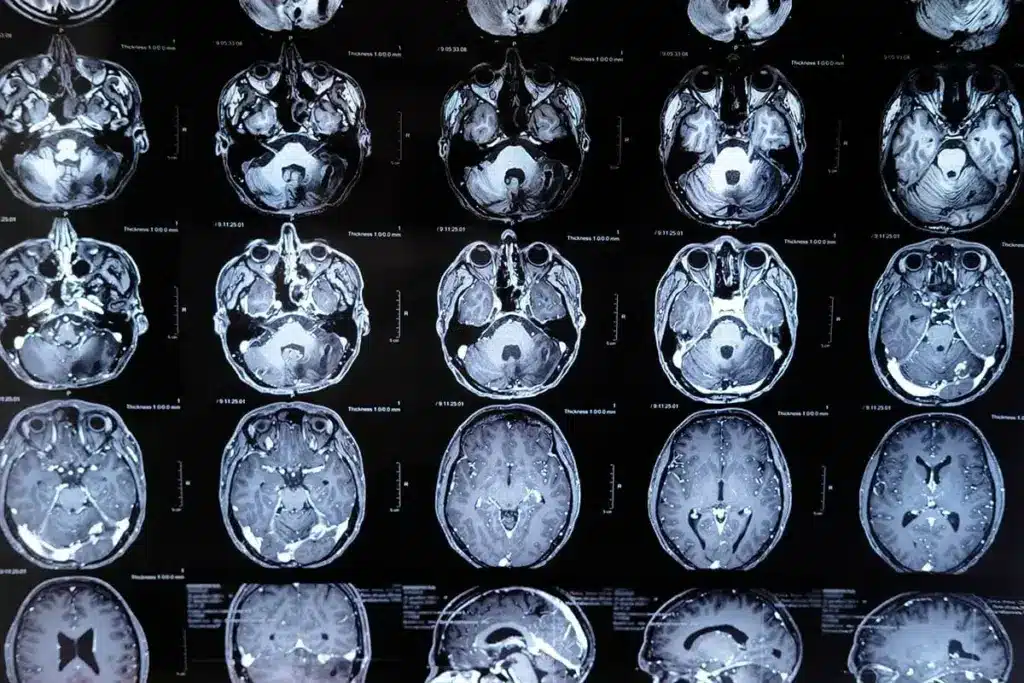
Brain tumors come from different cells, leading to various types. Knowing where they start is key to figuring out if they’re benign or malignant.
A benign definition means a tumor that’s not cancerous. It grows slowly and doesn’t spread to other brain areas. On the other hand, malignant tumors are cancerous. They grow fast and spread, causing brain cancer symptoms like headaches and seizures.
Brain tumors can start from different brain cells, like glioblastoma and medulloblastoma. This shows how complex brain tumors can be.
Knowing how brain tumors start and what they are is vital. It helps doctors find better treatments and improve patient care.
FAQ
What is a brain tumor?
A brain tumor is an abnormal growth of cells in the brain. It can be benign or malignant. These tumors can happen in different parts of the brain, like the cerebrum, cerebellum, and brainstem.
What are the different types of brain tumors?
There are many types of brain tumors. Gliomas and meningiomas are two common ones. Gliomas come from glial cells, while meningiomas come from the meninges, which protect the brain.
What is the cerebrum, and what are its functions?
The cerebrum is the biggest part of the brain. It has four lobes: frontal, parietal, temporal, and occipital. It handles things like thought, emotion, movement, and sensation.
The frontal lobe helps with decision-making. The parietal lobe deals with sensory information. The temporal lobe is for hearing, and the occipital lobe is for seeing.
What is the difference between a benign and malignant brain tumor?
Benign brain tumors are not cancerous and don’t spread. Malignant tumors are cancerous and can spread, making them more dangerous.
What are the symptoms of a brain tumor?
Symptoms of a brain tumor vary. They can include headaches, seizures, confusion, and trouble with speech or vision. Weakness or numbness in the limbs is also common.
Can brain tumors occur in the pineal gland?
Yes, brain tumors can happen in the pineal gland. This gland is small and located in the brain. Tumors here are rare and can be benign or malignant.
What is the cerebral cortex, and how is it affected by brain tumors?
The cerebral cortex is the outer layer of the cerebrum. It handles sensory information, movement, and thought. Brain tumors can harm the cerebral cortex, causing symptoms like seizures, weakness, and trouble thinking.
What is the role of glial cells in the development of brain tumors?
Glial cells support and maintain neurons in the brain. Gliomas, a type of brain tumor, start from glial cells. When these cells become cancerous, they can grow into tumors.
National Center for Biotechnology Information. Evidence-Based Medical Insight. Retrieved from https://pubmed.ncbi.nlm.nih.gov/27157931/