Plastic surgery restores form and function through reconstructive procedures, cosmetic enhancements, and body contouring.
Send us all your questions or requests, and our expert team will assist you.
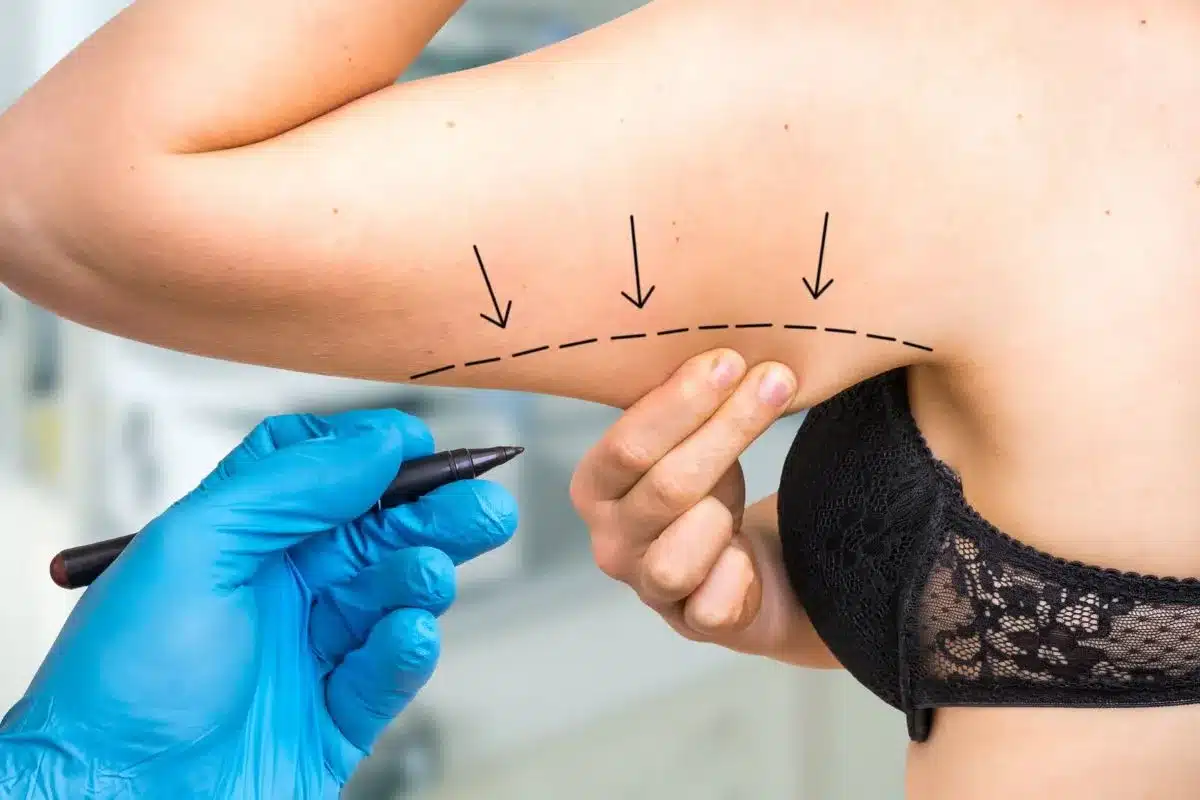
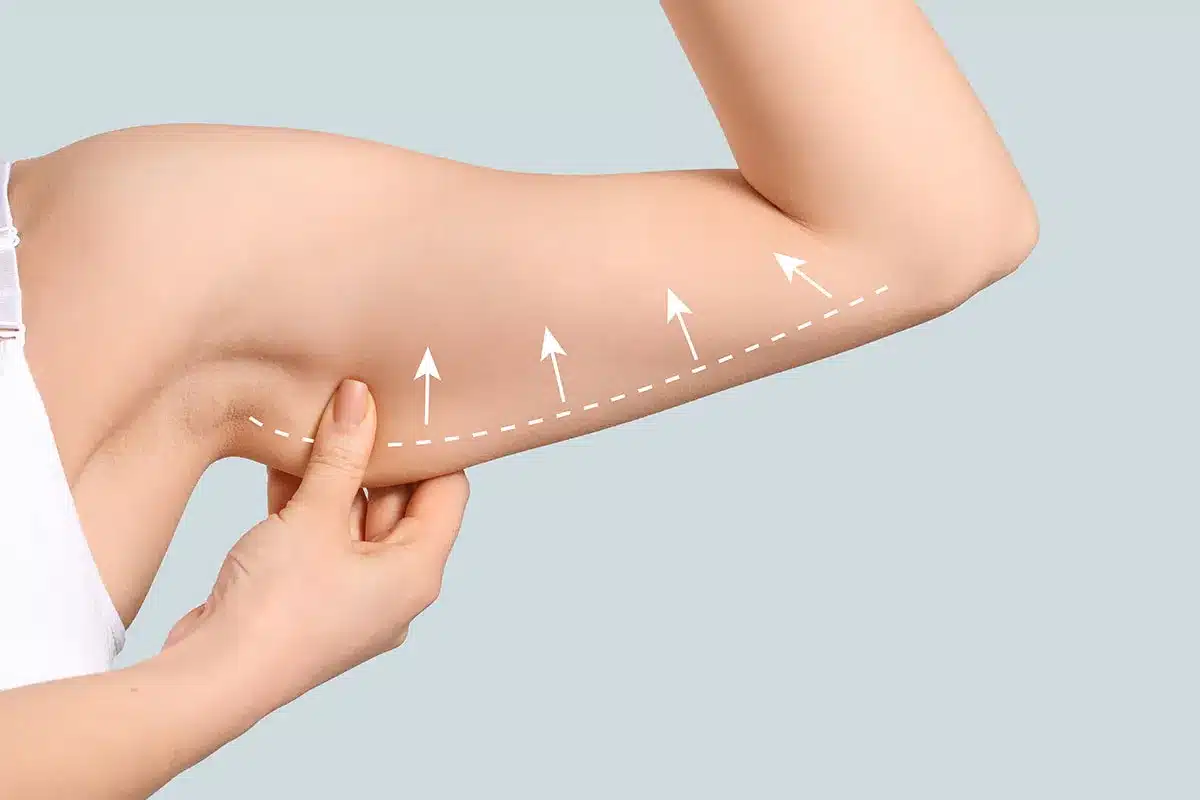
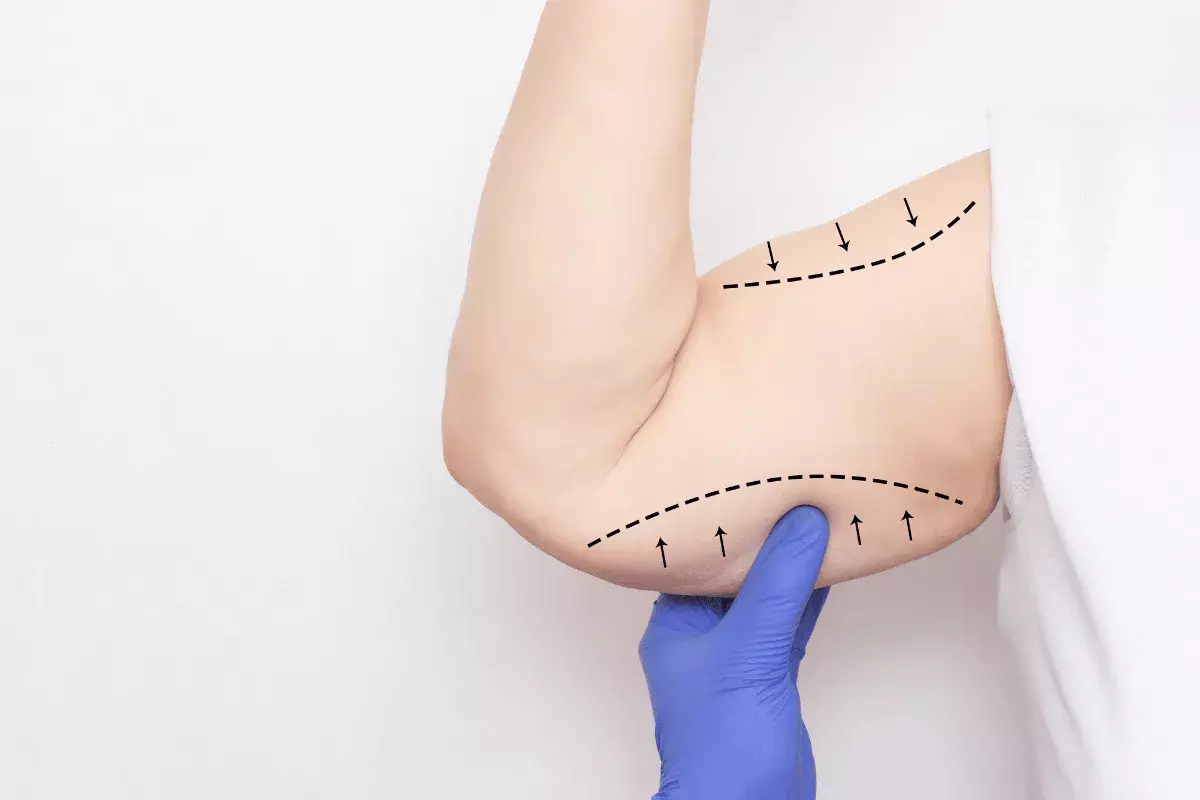
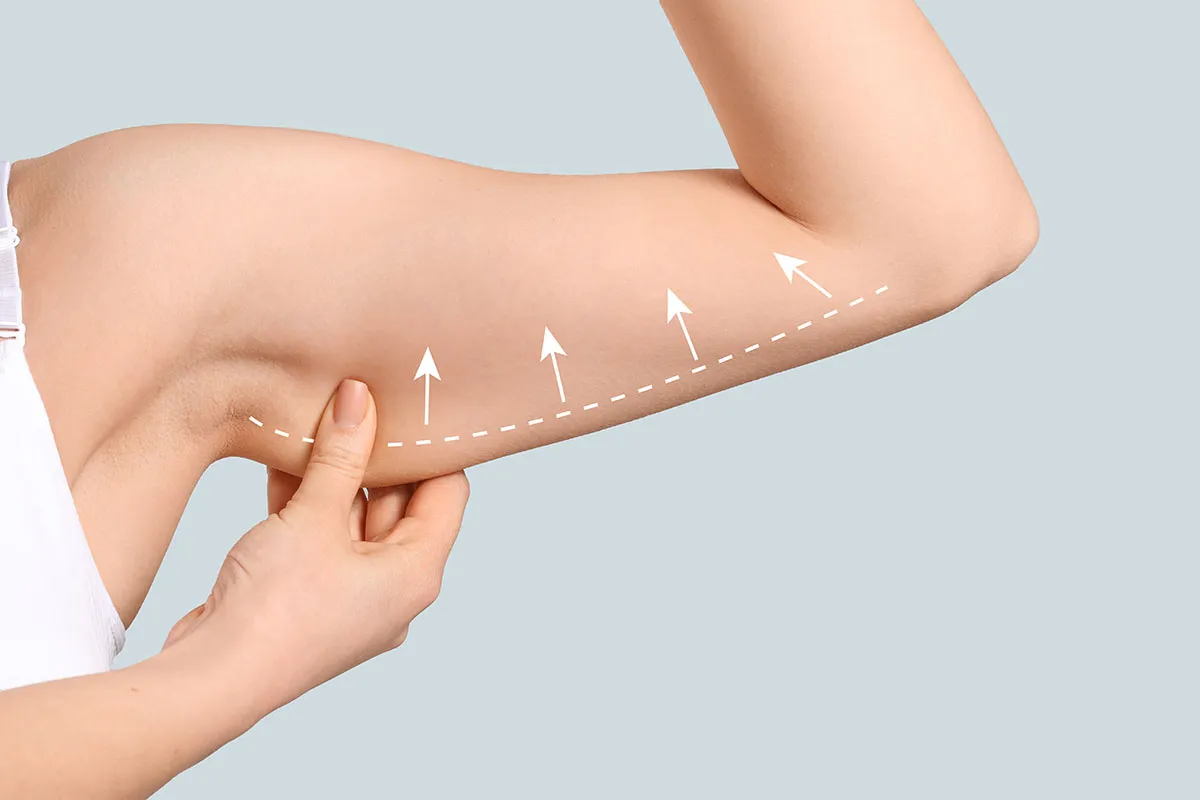
The standard brachioplasty is the most frequently performed arm lift procedure. It is designed to address moderate to severe skin laxity extending from the armpit to the elbow. This procedure provides the most comprehensive correction for the bat-wing deformity found in the majority of weight-loss and aging patients.
The incision for a standard brachioplasty runs longitudinally along the inner arm. It typically begins at the axilla and terminates just above the olecranon (elbow). This placement allows for the maximum removal of redundant tissue in both the vertical and horizontal vectors.
The specific placement of the scar can vary based on the surgeon’s preference and the patient’s anatomy. Some surgeons place the incision in the bicipital groove, while others put it more posteriorly. The posterior placement aims to hide the scar from the frontal view when the arms are down.
This procedure often includes internal sutures to anchor the skin to the deep fascia. This prevents the scar from migrating or widening over time. It is the gold standard for reshaping the arm when significant skin excess is present.

The mini brachioplasty is a less invasive option tailored for patients with mild to moderate skin laxity confined to the upper third of the arm. These patients typically do not have excess skin extending to the elbow. The goal is to tighten the upper arm without a long, visible scar.
The incision for a mini arm lift is confined to the axilla. It may be a crescent shape or a T shape tucked high into the fold. Through this incision, the surgeon excises a diamond-shaped piece of skin and pulls the remaining arm skin upward to tighten it.
While the scar is well hidden, the procedure’s lifting capacity is limited. It cannot correct sagging skin near the elbow. It relies heavily on the remaining skin’s quality to redrape smoothly. It is often combined with liposuction to reduce bulk in the upper arm.
This procedure is ideal for younger patients or those with early signs of aging who want to improve the contour of the upper arm without the trade-off of a longitudinal scar.

Extended brachioplasty is an aggressive procedure designed for patients with massive weight loss who have significant skin redundancy that continues from the arm onto the lateral chest wall. In these cases, a standard arm lift would leave a dog ear or skin bunching at the armpit.
The incision for an extended brachioplasty runs from the elbow, up through the axilla, and continues down the side of the chest. This allows the surgeon to remove the excess skin and fat rolls located along the bra line or the side of the breast.
This L-shaped or Z-sZ-shapedar allows for a seamless contour between the arm and the torso. It tightens the skin of the armpits and the lateral breast area, providing a more complete upper-body rejuvenation. It is a more complex surgery with a longer recovery, but it offers superior results for patients with extensive loose skin.
Lipo-brachioplasty combines liposuction and surgical skin excision. This hybrid approach is used when there is a significant amount of excess fat in addition to loose skin. Performing liposuction first debulks the arm, thins the subcutaneous fat layer, and preserves the lymphatics and nerves.
By removing the fat before cutting the skin, the surgeon can see the underlying anatomy more clearly and preserve essential structures, such as blood vessels. It also allows for a more aggressive removal of skin because the tissue is more pliable and less bulky.
This technique often yields a better contour than excision alone, as it sculpts the fat layer to define the muscles better. It also tends to have a lower complication rate from seroma formation because the lymphatic vessels are spared during liposuction.

Short scar brachioplasty is an intermediate procedure between the mini and standard arm lifts. The incision extends from the axilla but stops mid-arm, usually halfway to the elbow. It is indicated for patients with moderate laxity that extends beyond the reach of a mini lift but does not require a full incision to the elbow.
This approach balances the desire for scar minimization with the need for effective contouring. It allows for more skin removal than the mini lift but avoids the visibility of scars on the lower arm, which is often the most exposed part when wearing short sleeves.
The geometric design of the excision is critical in this procedure to prevent a bunching effect at the scar’s end. Surgeons often use a specific S-shaped or curved incision to evenly distribute tension and allow the scar to settle naturally into the arm contours.
For a specific subset of patients, an invisible arm lift performed solely with liposuction may be sufficient. These candidates have excess fat but maintain excellent skin elasticity with no significant sagging. The procedure involves removing the fat through tiny puncture wounds, leaving virtually no visible scars.
This procedure relies entirely on the skin’s ability to retract after the fat is removed. It is most effective in younger patients. Technologies such as VASER or laser-assisted liposuction are often used to stimulate skin tightening from within.
While it does not remove skin, the induction of collagen production by energy-based devices can provide a mild tightening effect. It is a contouring procedure rather than a lifting procedure, ideal for debulking thick arms that weight fluctuations have not stretched.
The posterior arm lift places the incision directly on the back of the arm. This contrasts with the medial placement. The rationale is that the scar is hidden from view when the person is viewed from the front or when the arms are at the sides.
This placement allows for the direct excision of the most dependent part of the bat wing deformity. It is often easier to hide this scar when taking photos or looking in a mirror, although it is visible from behind.
This approach is chosen based on the patient-specific pattern of laxity and their lifestyle preferences regarding scar visibility. It provides excellent access to the posterior fat compartments and allows for tight contouring of the triceps area.
Revision brachioplasty is performed to correct suboptimal results from a previous arm lift. Common reasons for revision include scar widening, residual dog ears at the ends of the incision, or under correction where too much loose skin remains.
The procedure may involve excising the old scar and re-suturing the wound with better tension management. It might also involve additional liposuction to smooth out irregularities or extending the incision to remove remaining skin bunches.
Revision surgery is more complex due to the presence of scar tissue and altered anatomy. It requires careful planning to ensure that the skin is not over-tightened, which could restrict arm movement or compromise wound healing.

Send us all your questions or requests, and our expert team will assist you.
The Invisible Arm Lift, performed with liposuction only, leaves the least scarring because it requires only tiny puncture holes. However, among excisional procedures, the Mini Brachioplasty leaves the most minor scar, confined to the armpit.
A dog ear is a slight pucker or bunch of excess skin and fat that can form at the end of an incision, typically near the armpit or elbow. It occurs when the length of the incision is not sufficient to smooth out the contour completely. It can be corrected with a minor revision.
Yes. An incision on the inner arm is hidden when your arms are down, but visible when you wave. A posterior incision is hidden from the front but visible from behind. Your surgeon will help you decide which placement best fits your lifestyle.
Yes, this is a prevalent combination, especially among post-weight-loss patients. In an extended brachioplasty, the incisions can sometimes be connected to lift the lateral chest and breast simultaneously, streamlining the upper body.
A mini arm lift cannot fix loose skin near the elbow. If a patient has skin laxity along the entire arm, a mini lift will result in an unnatural, bunched appearance. A full arm lift is necessary to smooth the whole length of the arm.


Leave your phone number and our medical team will call you back to discuss your healthcare needs and answer all your questions.
Leave your phone number and our medical team will call you back to discuss your healthcare needs and answer all your questions.
Your Comparison List (you must select at least 2 packages)