Plastic surgery restores form and function through reconstructive procedures, cosmetic enhancements, and body contouring.
Send us all your questions or requests, and our expert team will assist you.
A breast lift, also called mastopexy, is a surgery that treats breast ptosis, which means sagging. In breasts, ptosis refers to the nipple and breast tissue dropping below the crease under the breast.
The way the skin and internal support structures work together affects breast shape. There is no muscle inside the breast itself. Instead, fibrous bands called Cooper’s ligaments run through the breast tissue, connecting it to the skin and chest muscle.
As time passes, these ligaments lose their stretch and strength. They act like rubber bands that have been stretched too many times and cannot snap back. When this happens, gravity pulls the breast tissue down, causing sagging.
The skin envelope also plays a critical role. The skin acts as a biological brassiere, containing the breast tissue. When the skin loses elasticity due to aging, sun damage, or rapid stretching, it can no longer support the weight of the breast. This leads to a mismatch between the breast’s volume and the skin’s surface area.

Gravity is a constant force acting upon the soft tissues of the body. The heavier the breast gland, the greater the gravitational pull. This continuous tension exerts stress on the skin and the suspensory ligaments, accelerating the rate of ptosis. Women with larger, heavier breasts often experience sagging at an earlier age compared to those with smaller breasts.
Lifestyle choices also play a big role. Smoking is a major factor because nicotine narrows blood vessels and reduces oxygen and nutrients to the skin. This weakens the skin’s structure and speeds up aging, which can cause sagging earlier.
Exposure to ultraviolet radiation is another environmental factor. UV rays penetrate the skin and break down elastin fibers, which provide resilience. While the breasts are often covered, the décolletage and upper breast skin are frequently exposed, leading to a loss of support from the upper pole.
Nutritional status also plays a role. Sudden weight gain or loss can compromise the breast’s structural integrity. A diet lacking essential proteins and vitamins may result in weaker connective tissue, making the breast more susceptible to gravity’s effects.

Pregnancy causes major hormone changes that affect the breasts. The breasts get bigger to prepare for breastfeeding, which stretches the skin and internal ligaments. The tissue inside the breast also grows, making them heavier.
After childbirth and breastfeeding, the milk glands shrink back to their original size. However, the skin and ligaments that were stretched often do not return to how they were before.
This change can make many women feel disappointed. The breasts lose volume, but the skin stays stretched. This makes the upper part of the breast look empty and the lower part look heavier, leading to a sagging shape.
It is a common misconception that breastfeeding itself causes sagging. Research suggests that the pregnancy itself and associated volume changes are the primary drivers of ptosis. The number of pregnancies often correlates more strongly with the degree of sagging than with the act of breastfeeding.
Big changes in weight are a major reason for breast sagging. When you gain weight, your breasts get bigger as they store more fat, which stretches the skin. If you lose weight, the fat shrinks, but the skin may not tighten up again.
This is especially common in people who have lost a lot of weight, like after weight loss surgery. The skin can’t bounce back, so the breasts sag a lot and the nipple may end up well below the breast crease.
The tissue’s quality changes with weight cycling. The connective tissue can become thinner and less supportive. This makes the breasts feel softer and less firm. A breast lift aims to address this by removing the excess non-contractile skin and reshaping the remaining tissue.
Understanding the patient’s weight history is crucial. Ideally, patients should be at a stable weight before undergoing surgery. Performing a lift on a patient who plans to lose significantly more weight may result in recurrent sagging as the volume continues to decrease.

The physical changes associated with breast ptosis often have a significant psychological impact. Many women feel that their external appearance no longer matches their internal sense of vitality and youth. Deflation and sagging can lead to a loss of self-confidence and body image issues.
Clothing choices can become limited. Women with sagging breasts may have trouble finding comfortable bras that give enough lift. They might avoid swimwear or tight clothes because they feel self-conscious about their breast shape.
A breast lift is often described as a restorative procedure. It is not necessarily about changing who the patient is, but rather restoring a part of their body that has been altered by time and life events. The psychological relief of restoring a more youthful contour can be profound.
Many women say they feel more balanced and even “lighter” after surgery. Moving the nipple to a higher, more central spot helps the breasts look more natural and can greatly improve how women feel about their bodies.
The ideal candidate for a breast lift is a woman who is physically healthy and maintains a stable weight. She is likely bothered by the feeling that her breasts sag, are pendulous, or have lost volume and firmness. Her nipples may point downward or fall below the breast crease.
Candidates should not smoke. Smoking reduces blood flow and raises the risk of problems like poor healing or tissue loss. Most surgeons require patients to quit nicotine before surgery.
It’s important for patients to have realistic expectations. A breast lift improves shape and position, but it does leave scars. Patients need to understand and accept this trade-off.
Women planning to have more children may be told to wait before having a breast lift. Although the surgery usually does not affect breastfeeding or pregnancy, changes during pregnancy can stretch the breasts again and undo the results.

Send us all your questions or requests, and our expert team will assist you.

It’s important to know that a breast lift is different from breast augmentation or reduction. Augmentation uses implants or fat to make the breasts bigger, but it does not fix major sagging or remove extra skin.
Breast reduction removes fat, skin, and tissue to make the breasts smaller and lighter. Every reduction includes a lift, but not every lift includes a reduction or implants.
A breast lift reshapes your own breast tissue by removing extra skin and tightening what’s left, raising the breast. It doesn’t really change the size, but the breasts may look a bit smaller because they are firmer and sit higher.
Many patients choose to combine procedures. An augmentation mastopexy combines a lift with an implant to restore both shape and volume. This is common for women who have experienced significant deflation after pregnancy or weight loss.
The position of the nipple areola complex (NAC) is a key determinant in the diagnosis of ptosis. In a youthful breast, the nipple typically sits above the inframammary fold, pointing slightly upward and outward.
As ptosis progresses, the NAC migrates downward. Surgeons grade ptosis based on the position of the nipple relative to the fold. Grade 1 involves the nipple at the level of the fold. Grade 2 has the nipple below the fold but above the lower breast contour. In Grade 3, the nipple is at the lowest point of the breast.
During a breast lift, the NAC is repositioned higher. Crucially, it usually remains attached to a pedicle of tissue (blood and nerve supply) to preserve sensation and vascularity. It is not removed and grafted back on, except in rare, extreme cases.
The size of the areola can also be addressed. Breast stretching often causes the areola to enlarge. The surgeon can reduce the areola’s diameter during the lift to create a size that is proportionate to the new breast shape.
“Bottoming out” refers to a condition where the breast tissue slides down the chest wall, but the nipple remains high, or where the implant (if present) stays high while the tissue sags off it. In the context of a natural breast lift, the goal is to prevent the tissue from sliding back down.
This requires securing the breast tissue to the chest wall fascia. The internal reshaping of the gland is just as significant as the skin tightening. If only the skin is pulled, the heavy gland will eventually stretch the skin out again, leading to recurrent ptosis.
Modern techniques emphasize “internal bra” sutures or, in some cases, the use of mesh supports to provide long-term stability. This internal scaffolding takes the strain off the skin closure, enabling better healing and longer-lasting results.
The surgeon creates a cone of breast tissue that is, to some degree, self-supporting. The skin is then draped over this cone without excessive tension. This approach minimizes scar widening and ensures a natural shape.
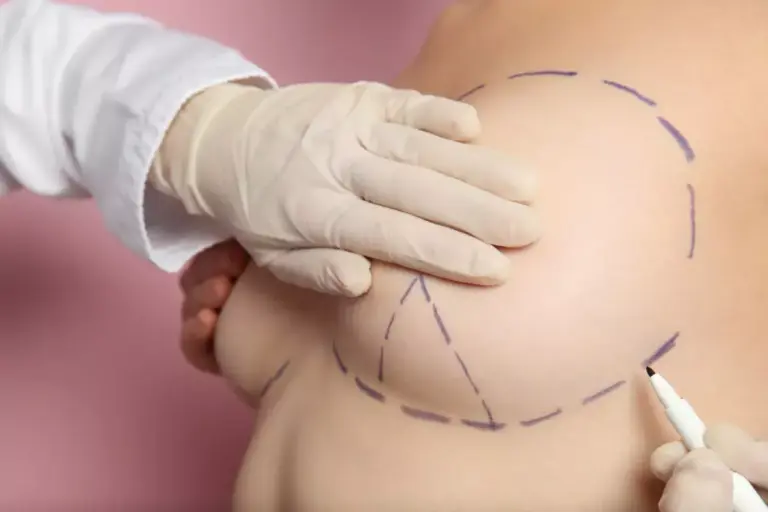
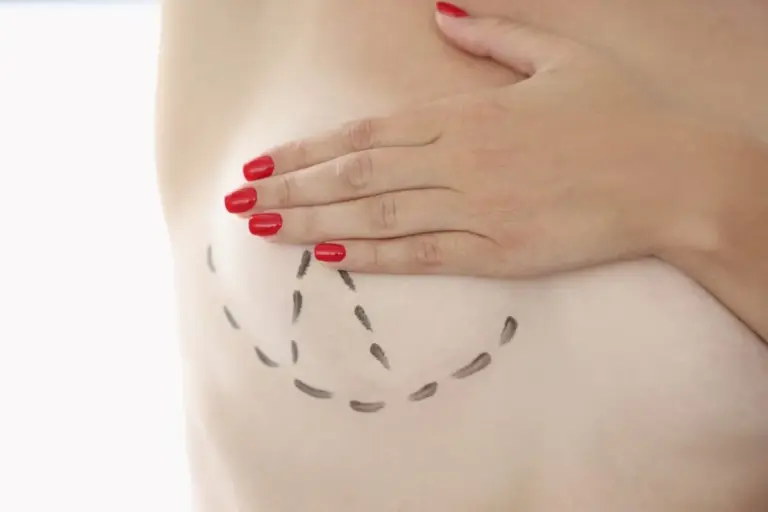
The incision pattern is determined by the amount of excess skin and the degree of sagging. Mild sagging may only require a donut lift. Moderate sagging usually needs a vertical lift. Severe sagging requires an anchor lift. Your surgeon will recommend the best option to achieve your goals.
“Scarless” usually refers to radiofrequency skin-tightening treatments (such as BodyTite) or thread lifts. These are non-surgical and offer very mild improvement for patients with minimal sagging. They cannot replicate the results of a surgical mastopexy for moderate to severe ptosis.
Absolutely. A breast lift is often performed without an implant. This is called an auto-augmentation or simply a mastopexy. It uses your own tissue to reshape the breast. It is ideal if you are happy with your volume but unhappy with the shape.
A breast lift alone does not significantly change the volume of your breast tissue. However, because the breast is firmer and lifted, you may wear a slightly smaller cup size due to the tighter shape, or you may fill out the same cup size more effectively.
Nipple sensation is usually preserved because the nipple remains attached to a blood and nerve supply during the surgery. However, temporary numbness or hypersensitivity is common during recovery. Permanent loss of sensation is a rare but possible risk.

 Breast Lift
 Breast Lift
Leave your phone number and our medical team will call you back to discuss your healthcare needs and answer all your questions.
Your Comparison List (you must select at least 2 packages)