Plastic surgery restores form and function through reconstructive procedures, cosmetic enhancements, and body contouring.
Send us all your questions or requests, and our expert team will assist you.
Digital reimplantation is a major achievement in modern reconstructive microsurgery. It means surgically reattaching a finger, thumb, or toe that has been completely cut off. The process is much more involved than just sewing tissues together. Surgeons must carefully reconnect blood vessels, nerves, tendons, and bone to bring the digit back to life and function.
The main goal of this surgery is to restore important function, not just make the hand or foot look normal. Our hands are essential for interacting with the world, so losing a finger can make daily tasks much harder. Reimplantation aims to fix this by reconnecting the amputated part so it works again.
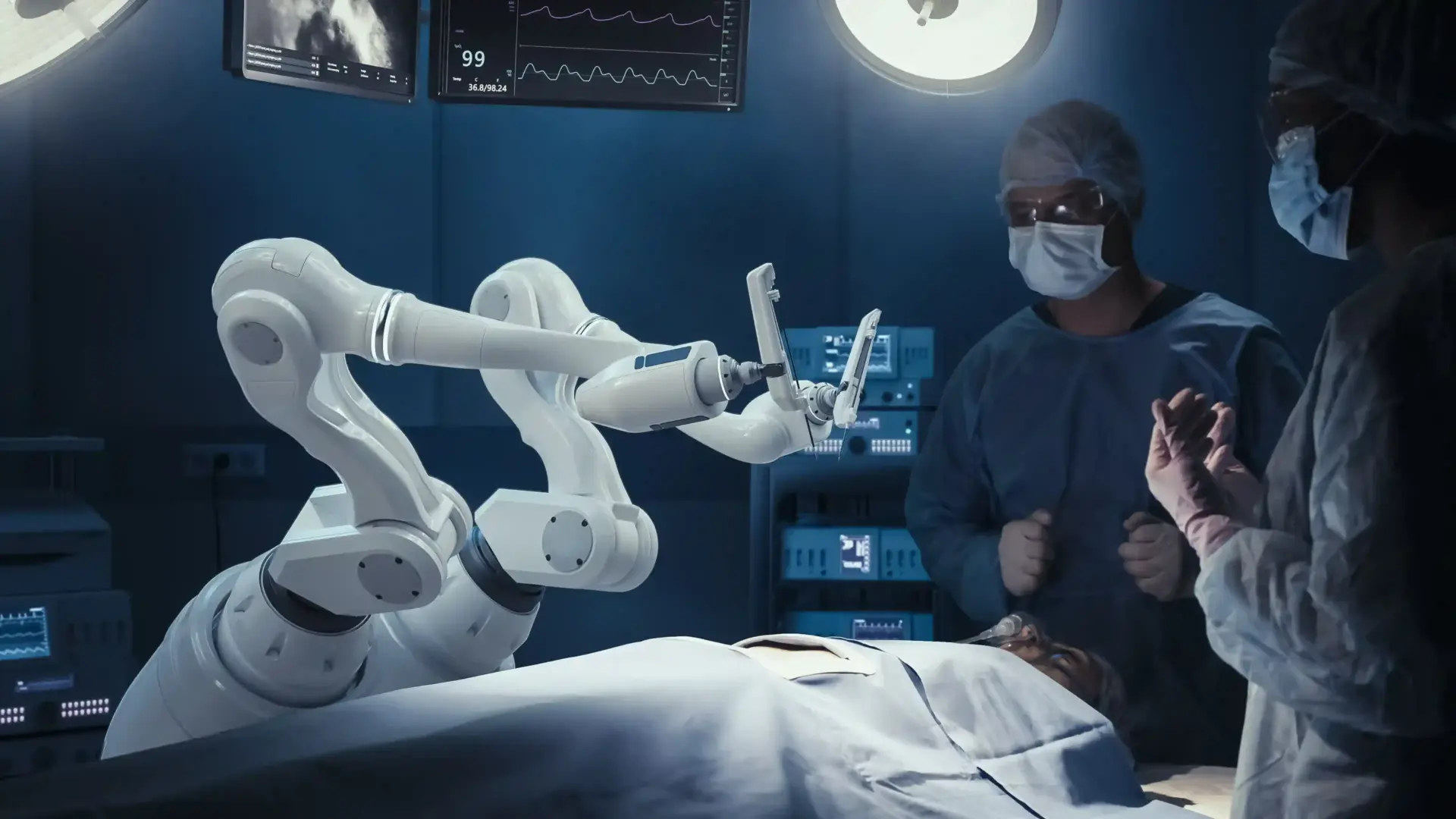
Microsurgery is at the heart of digital reimplantation. Surgeons use powerful microscopes and precise tools to repair structures that are often smaller than a millimeter. The procedure only works if these tiny blood vessel repairs stay open and healthy.
Surgeons use specialized sutures that are finer than a human hair to join the ends of arteries and veins. This requires a steady hand and extensive training in microvascular techniques. Without the magnification provided by modern optical systems, restoring blood flow to a severed digit would be impossible.

It’s important to know the difference between reimplantation and revascularization. Reimplantation means reattaching a part that has been completely cut off from the body, with nothing left connecting it. The severed part is brought to the hospital on its own, separate from the patient.
Revascularization involves repairing a body part that has been partially severed but remains attached by some tissue, such as skin, tendon, or a small bridge of muscle. In these cases, the blood supply has been compromised, and the tissue is ischemic, meaning it lacks oxygen. The surgical principles are similar, but the logistical approach differs slightly.
Time is the most important factor in digital reimplantation. When a finger or toe is cut off, it loses its oxygen supply, which is called ischemia. Muscle and nerve tissues are especially sensitive to this and can be permanently damaged if blood flow is not restored soon.
There are two kinds of ischemia: warm and cold. Warm ischemia happens when the amputated part stays at room temperature. Cold ischemia is when the part is kept cool. Cooling the digit slows down cell activity, giving surgeons more time to reattach it successfully.
The type of injury is very important for deciding if reimplantation will work. Injuries are usually grouped into three types: guillotine, crush, and avulsion. A guillotine injury is a sharp, clean cut, like from a knife or glass. These cause the least damage and have the best chance of success.
Crush injuries happen when a strong force squeezes the finger, causing a lot of damage to soft tissues and breaking the bone. Avulsion injuries are when the finger is pulled or torn off, often pulling out blood vessels and nerves as well. These types of injuries are more complicated and need more complex repairs.
The main goal of reimplantation is to restore function, not just keep the finger alive. A finger that survives but is stiff, painful, or numb can be less useful than an amputation. So, surgeons decide to replant based on how well the finger is likely to work afterward.
Surgeons prioritize the return of sensation and movement. The ability to feel hot, cold, and pressure is essential for the safe use of the hand. Similarly, the ability to flex and extend the digit is crucial for gripping and manipulation.
To reimplant a finger or toe successfully, the amputated part must be in good enough shape. If the blood vessels and nerves are too damaged, or if the bone is crushed beyond repair, saving the digit may not be possible.
The surgeon checks the area around the injury, called the “zone of injury,” to see if there are healthy blood vessels to connect. In bad crush injuries, the inside of the vessels may be damaged far beyond where the finger was cut off, which makes repair harder and more likely to fail due to blood clots.
In cases of multi-digit amputations in which some parts are damaged beyond repair, surgeons may use the “spare parts” concept. This involves using undamaged tissue, bone, or vessels from a non-salvageable digit to reconstruct a more critical digit, such as the thumb.
This strategy helps the hand work as well as possible. For example, if both the thumb and index finger are cut off, but the index finger is badly crushed and the thumb is cleanly cut, parts of the index finger can be used to help save the thumb, since the thumb is most important for hand use.
Losing a finger or toe can deeply affect a person’s emotions. Our hands are always visible and play a big role in how we see ourselves and communicate. Amputation can cause feelings of being disfigured, anxious, or even losing part of one’s identity at work.
Reimplantation gives people a chance to feel whole again. Even if the finger or toe does not work perfectly, just having it back can help emotionally. Still, patients need to be ready for a long recovery and lots of rehabilitation to get the best result.
The field of digital reimplantation has evolved alongside advancements in optical technology. Modern operating microscopes offer variable magnification, high-definition clarity, and integrated lighting systems, enabling surgeons to visualize the finest details of vascular anatomy.
These optical systems enable the use of supermicrosurgery techniques, allowing vessels smaller than 0.5 millimeters to be repaired. This expands the possibilities for reimplantation to include distal fingertips and pediatric patients with tiny vessels.
A key part of a successful reimplantation is making sure blood can drain out of the finger or toe through the veins. Arteries bring blood in, but veins must carry it away. If the veins are not repaired well, blood builds up, the digit turns purple, and it can die.
Surgeons try to fix more veins than arteries to make sure blood drains well. If they cannot repair enough veins, they may use other methods, like medical leeches or blood thinners, to help drain blood until new veins grow.
Reimplantation in children has its own challenges. Their blood vessels are smaller and can spasm more easily, which makes surgery harder. But children’s nerves and bones heal and regrow much better than in adults.
Surgeons are more likely to try to save fingers or toes in children than in adults. This is because children have a better chance of regaining function and feeling over time.
Digital reimplantation is not just about reattaching severed parts. It also includes procedures like toe-to-hand transfers, where a toe (usually the second or big toe) is moved to the hand to replace a missing thumb or finger.
This surgery uses the same microsurgical techniques as regular reimplantation. It gives patients a working finger or thumb, helping them regain the ability to pinch and grasp, which is important for everyday tasks.

Send us all your questions or requests, and our expert team will assist you.
Reimplantation involves reattaching a body part that has been completely severed and separated from the body. Revascularization involves repairing a body part that is still partially attached by skin or tendon but has lost its blood supply and requires vessel repair to survive.
Ideally, a finger should be reattached within 12 hours if kept warm, or up to 24 hours if properly cooled (cold ischemia). The sooner the blood flow is restored, the better the chances for tissue survival and functional recovery. Muscle tissue degrades faster than skin or bone.
The thumb accounts for approximately 40-50% of hand function because it provides opposition, allowing us to grasp and manipulate objects. Therefore, surgeons will make every possible effort to replant an amputated thumb, even in cases with severe injury.
Yes, toes can be reattached, but it is less common than finger reimplantation. It is typically reserved for the great toe, which aids balance and push-off, or for pediatric patients. In many adult cases, the loss of a lesser toe does not significantly impact walking function.
Microsurgery is a specialized surgical technique that uses high-powered microscopes and precision instruments to repair tiny structures, such as blood vessels and nerves. It is the fundamental skill required for successful digital reimplantation.


Leave your phone number and our medical team will call you back to discuss your healthcare needs and answer all your questions.
Your Comparison List (you must select at least 2 packages)