Plastic surgery restores form and function through reconstructive procedures, cosmetic enhancements, and body contouring.
Send us all your questions or requests, and our expert team will assist you.
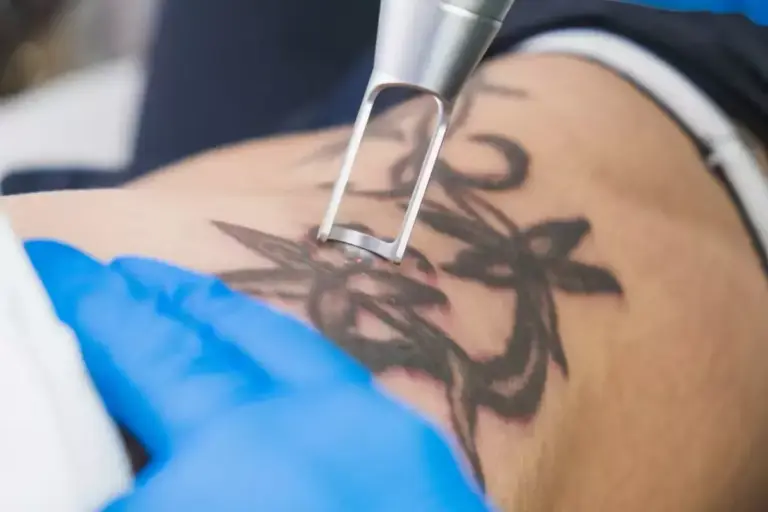
Surgical tattoo removal, also called surgical excision, is the only way to get rid of unwanted tattoo ink immediately and completely. Unlike laser removal, which breaks up ink for your body to clear over time, excision cuts out the tattooed skin all at once. This reconstructive procedure focuses on fully removing the pigment.
Surgeons see this procedure as a trade-off: you swap a visible, often colorful tattoo for a surgical scar. This decision is made carefully. Surgery is usually chosen for small tattoos, ink that does not respond to lasers, or when someone wants the tattoo gone right away.

The success of surgical excision depends a lot on how flexible the skin is around the tattoo. The main idea is to cut out the tattooed skin and sew the edges together. Having enough loose, stretchy skin nearby is key.
Surgeons rely on the skin’s natural stretch to close the wound. If the skin is tight or the tattoo is big, closing the area may be too difficult. In these cases, the surgeon decides if a simple closure, staged removal, or skin graft is needed.

The simple elliptical excision is the usual method for small or medium tattoos. The surgeon draws a football-shaped outline around the tattoo, making it about three times as long as it is wide to avoid bunching at the ends. The whole tattoo is removed in one piece.
This method lets the surgeon close the skin in a straight line, which can often be hidden in natural creases or wrinkles. It is most often used for tattoos on areas with plenty of loose skin, like the upper arm, thigh, or torso. The result is usually a thin line where the tattoo used to be.
Serial excision, or staged removal, is used for larger tattoos that cannot be removed in one surgery without too much tension. In this method, the surgeon takes out part of the tattoo, usually from the center, and moves the skin to close the gap.
The rest of the tattoo stays in place so the skin can stretch and relax over time, a process called biological creep. After a few months, when the skin is looser, another surgery removes more of the tattoo. This way, even large tattoos can be removed while keeping the final scar shorter.
For large tattoos or those on tight areas like the lower leg or forearm, closing the skin simply may not work. In these cases, surgeons use reconstructive methods like skin grafting. The tattooed skin is removed, and a thin layer of healthy skin from another area, such as the thigh, is used to cover the wound.
Skin grafting removes the ink but leaves a patch-like look and a second scar where the skin was taken. This method is usually only used when the tattoo must be removed for medical reasons, like an allergy, or when the patient cares more about removal than appearance.
Tissue expansion is the most advanced way to remove large tattoos and cover the area with normal skin. A silicone balloon is placed under the healthy skin next to the tattoo. Over several weeks, the balloon is slowly filled with saline, which stretches the skin.
When enough extra skin has grown, a second surgery removes both the balloon and the tattoo. The new skin is then moved to cover the area. This method gives the best match for skin texture and color, but it takes time and involves two surgeries.
The thinking behind surgical tattoo removal is very different from laser removal. Laser removal tries to fade the ink and keep the skin as it is. Surgery treats the tattooed skin as damaged and aims to replace or rebuild it. The goal is to restore the skin so that no pigment is left.
This approach focuses on making sure the tattoo is completely gone. People who choose surgery often want no trace left, either because they are tired of the tattoo or have jobs where even a faint image is not allowed. The surgeon’s job is to rebuild the skin’s surface without the ink.
At the heart of this procedure is the idea of an exchange: you trade a tattoo for a scar. The surgeon’s job is to make sure the scar is as thin, flat, and well-placed as possible. Careful planning of where to cut is important.
The scar will be permanent, while the tattoo could have been removed in other ways. Choosing surgery means you would rather have a scar than the tattoo. This is common for tattoos that are offensive, linked to gangs, or on the face and neck.
Not every body part is equally good for surgical excision. Areas that move a lot, like the chest, shoulders, and upper back, are more likely to form raised or thick scars. On the other hand, the face and neck usually heal with better-looking scars because they have a good blood supply.
Surgeons look at where the tattoo is on the body to predict how the scar will heal. Tattoos on the arms and legs may need more loosening of the skin to close the wound, compared to tattoos on the trunk, where the skin is softer and easier to work with.
Surgical tattoo removal combines ideas from both plastic surgery and skin surgery. It uses methods from skin cancer reconstruction to take out tattoo ink. The same techniques used to remove skin cancers are adapted to remove tattooed skin while keeping the area looking and working well.
This medical framework ensures that the removal is safe and effective. It allows the use of advanced closure techniques, such as Z-plasties or W-plasties, to break up the linear scar and make it less visible.
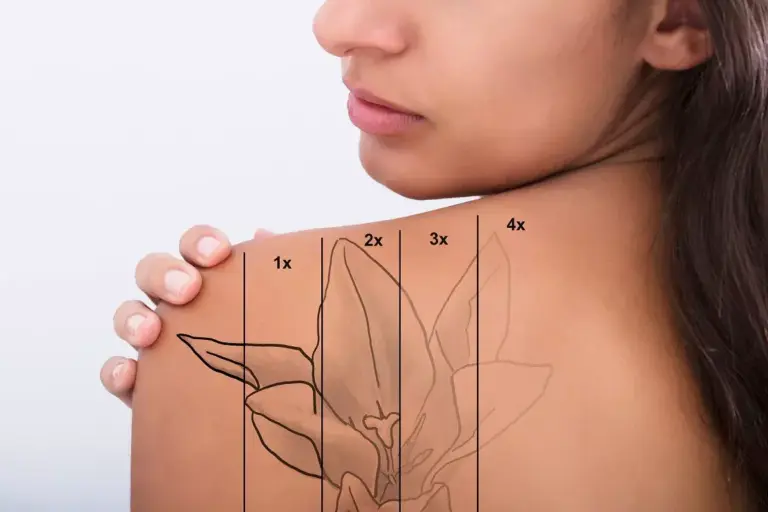
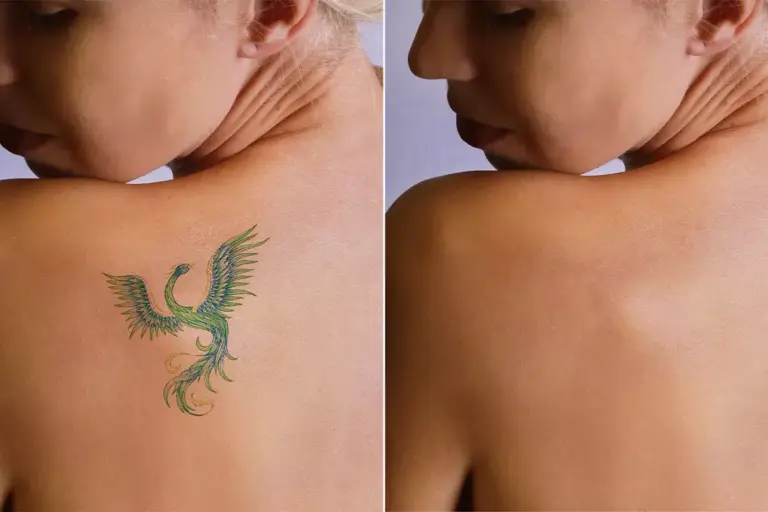
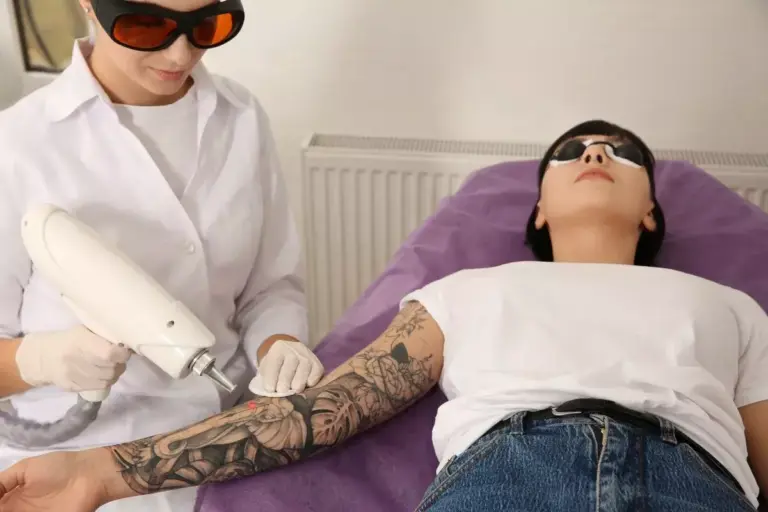
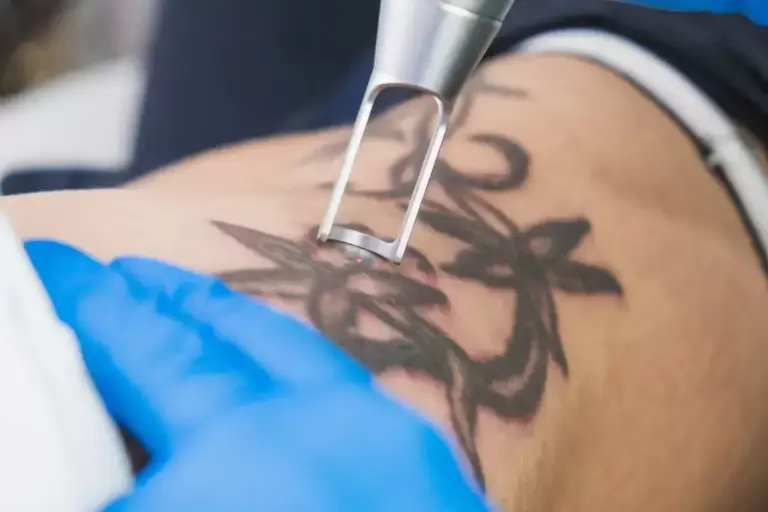
While laser therapy is common, surgical excision has clear benefits for some people. Lasers have trouble with certain ink colors like yellow, white, or fluorescent shades, and can cause blisters or white spots. Surgery does not depend on ink color—it removes the skin no matter what ink was used.
Surgery is also much faster. A small tattoo can be removed in about 30 minutes, while laser removal might take 10 to 15 sessions over two years. For people who need quick results, like for a wedding, joining the military, or a job interview, surgery is often the best choice.
People often choose surgical tattoo removal because they want to move on from their past. Tattoos can be lasting reminders of old relationships, beliefs, or quick decisions. Surgery gives a clear break from that history.
This procedure allows patients to regain control over their appearance. Whether it is removing a name from a wrist or a symbol from the neck, the immediate nature of the surgery offers a swift psychological resolution that the slow fading of laser cannot provide.

Send us all your questions or requests, and our expert team will assist you.
Laser removal breaks down the ink particles so your body can absorb them over time, which requires multiple sessions and years. Surgical removal cuts out the tattooed skin entirely in one or a few procedures, trading the tattoo for a surgical scar immediately.
Technically, yes, but size and location are the limiting factors. Small tattoos on loose skin are ideal. Extensive tattoos may require skin grafts or tissue expansion, which can leave more significant scarring, so surgeons assess each case individually.
Serial excision is a staged approach for larger tattoos. The surgeon removes part of the tattoo and stitches it closed. After the skin stretches and relaxes over 3 to 6 months, a second surgery is performed to remove the remaining excess skin, keeping the scar smaller.
Yes, surgical removal always results in a permanent scar. The goal of the surgeon is to make this scar as thin and inconspicuous as possible, often hiding it in natural skin creases, but a line will replace the ink.
Yes, surgical removal is significantly faster. A simple excision is a “one-and-done” procedure that removes the ink instantly. Laser removal often requires 8 to 12 sessions, spaced 8 weeks apart, and can take up to 2 years to complete.

 Plastic Surgery
 Plastic Surgery
 Plastic Surgery
 Plastic Surgery
 Plastic Surgery
 Plastic Surgery
Your Comparison List (you must select at least 2 packages)