
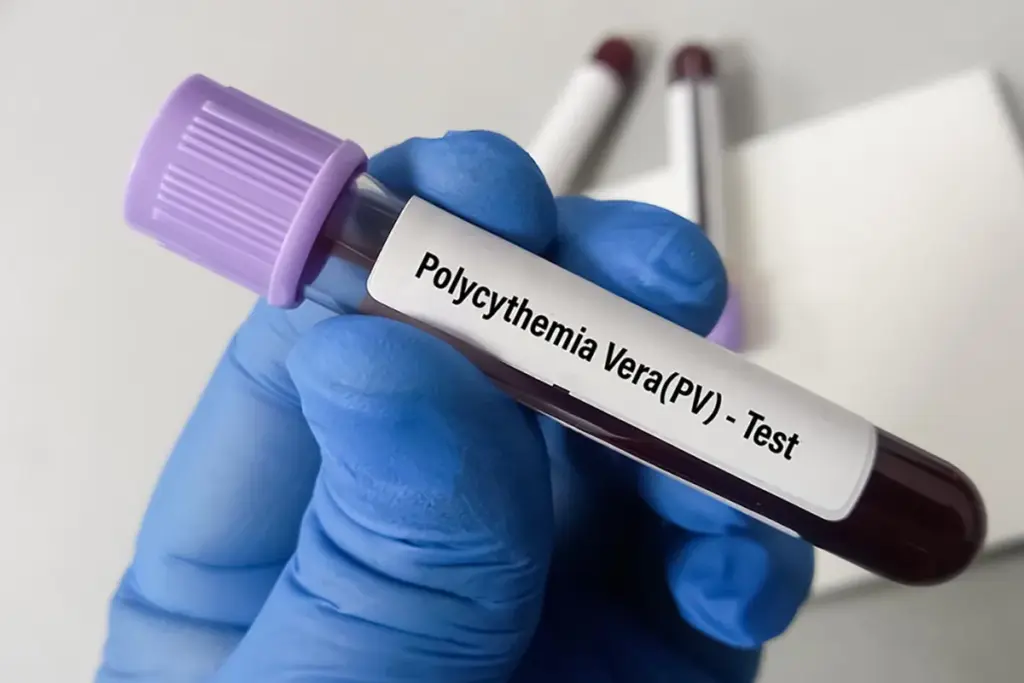
Diagnosing polycythemia vera (PV) can be tricky because it looks like other blood disorders. At Liv Hospital, we know how important it is to get the diagnosis right. PV is a rare condition, affecting very few people each year.
Many diseases can look like PV, making it hard to tell them apart. We will look at the diseases that seem like PV and how to tell them apart. This way, patients get the right treatment and care.
Key Takeaways
- Polycythemia vera is often confused with other blood disorders.
- Accurate diagnosis is key for good treatment.
- High hematocrit and hemoglobin levels are important signs.
- Differentiating PV from other diseases needs lab tests and doctor checks.
- Knowing the differences between PV and its look-alikes helps patients more.
- Getting the right care is vital for managing PV and similar conditions.
Understanding Polycythemia Vera: An Overview
To understand polycythemia vera, we need to look at its basics. This includes what it is and how it works. Polycythemia vera (PV) is a condition where the body makes too many red and white blood cells and platelets. This can lead to blood clots and other problems.
Definition and Pathophysiology
PV often comes from a JAK2 gene mutation, known as JAK2V617F. This mutation activates a signaling pathway that promotes excessive cell proliferation and longevity. This results in too many red blood cells, which is a key sign of PV. Knowing how PV works helps doctors figure out how to treat it.
This condition also causes the blood to get thicker, which raises the risk of blood clots. Managing this risk is a big part of treating PV. For more on PV, check out the.
Epidemiology and Demographics
PV is not very common, and its occurrence changes depending on where you are. Most people get diagnosed with PV when they’re around 64 years old. But, about 25% of people are diagnosed before they turn 50. PV is a bit more common in men than women.
The main things to know about PV’s spread include:
- Median age at diagnosis: around 64 years
- About 25% of patients are under 50 years old at diagnosis
- Slightly more common in men than women
Knowing these facts helps doctors spot PV early. Catching it early can stop many of the problems it can cause.
Clinical Presentation of Polycythemia Vera

Polycythemia Vera (PV) shows a variety of symptoms. These range from mild complaints like fatigue and headache to serious issues like thrombosis. The symptoms can differ a lot from one person to another.
Common Symptoms and Signs
People with PV often feel tired and dizzy. This is because their blood is thicker due to more red blood cells. Some may also get itchy, often after taking a hot shower.
Lab tests show high levels of red blood cells in PV. Knowing what is Hct in blood test results helps spot PV. Patients also might have high hemoglobin and white blood cell counts.
Complications of Untreated PV
Untreated PV can cause serious problems. A big risk is thrombosis, or blood clots. These can lead to heart attacks and strokes.
Other issues include a big spleen and a higher chance of turning into worse diseases. So, catching it early and treating it is key to avoid these problems and manage symptoms well.
Diagnostic Criteria for Polycythemia Vera
To diagnose polycythemia vera (PV), we use a detailed method. This method includes both clinical and lab criteria. We follow the World Health Organization (WHO) guidelines and specific lab tests to make an accurate diagnosis.
WHO Classification System
The WHO system is key for diagnosing PV and other myeloproliferative neoplasms. It combines clinical and lab data for a clear diagnosis. The main criteria are:
- Elevated Hemoglobin or Hematocrit: High levels of hemoglobin or hematocrit point to PV. A hematocrit over 49% in men and 48% in women is high.
- Presence of JAK2 Mutations: The JAK2V617F mutation is a key marker for PV. It helps tell PV apart from other causes of high red blood cell counts.
- Bone Marrow Biopsy Findings: Certain bone marrow features, like hypercellularity and all three myeloid lineages, support PV diagnosis.
Laboratory Findings in True PV
Lab tests are vital for diagnosing true PV. Key findings include:
- Elevated Hematocrit (HCT) Levels: High HCT levels are a key sign of PV. We check HCT to see the red blood cell count in the blood.
- Low Erythropoietin (EPO) Levels: PV patients usually have low EPO levels. This is different from secondary polycythemia, where EPO levels are high.
- JAK2 Mutation Analysis: A positive JAK2 mutation is a key diagnostic sign, found in most PV patients.
By using these lab findings and WHO criteria, we can accurately diagnose PV. This helps us tell it apart from other myeloproliferative disorders.
The Challenge of Differential Diagnosis in Polycythemia
Diagnosing polycythemia vera is tough because it looks like other conditions. This disease makes too many red and white blood cells and platelets. But, other diseases can look like PV, making it hard to tell them apart.
Why Accurate Diagnosis Matters
Getting the right diagnosis is key. The treatment for PV is different from other blood disorders. High hemoglobin and hematocrit levels are signs, but knowing the cause is important.
PV needs special treatments to prevent blood clots and manage symptoms. But, other polycythemia might need different treatments, like fixing the cause. So, it’s important to tell PV apart from other conditions for the best care.
Common Diagnostic Pitfalls
There are a few reasons why diagnosing PV can be tricky. These include:
- It can look like other blood disorders
- There might be other reasons for too many blood cells
- Lab results can vary
To avoid mistakes, we need a thorough approach. This includes a detailed medical history, physical check-up, lab tests, and sometimes a bone marrow biopsy.
|
Diagnostic Criteria |
PV |
Secondary Polycythemia |
|---|---|---|
|
Erythropoietin Level |
Low |
Normal or High |
|
JAK2 Mutation |
Present in majority |
Absent |
|
Bone Marrow Findings |
Hypercellular with trilineage hyperplasia |
Variable, often normal |
By knowing these differences and using a careful diagnostic method, we can better diagnose PV. This ensures patients get the right treatment.
Secondary Polycythemia: The Primary Mimic
Secondary polycythemia is a condition where there’s too much red blood cell mass. It’s often mixed up with polycythemia vera. Knowing the difference is key for the right diagnosis and treatment.
Pathophysiology of Secondary Polycythemia
Secondary polycythemia happens when something outside the bone marrow makes more red blood cells. This can be because of many reasons, like chronic hypoxia.
Hypoxia-Driven Secondary Polycythemia
Chronic hypoxia is a big reason for secondary polycythemia. Things like COPD, sleep apnea, and high altitudes can cause it. They make the body produce more erythropoietin (EPO), leading to more red blood cells.
The main things that cause hypoxia-driven secondary polycythemia are:
- Chronic Hypoxia: Long-term low oxygen levels.
- EPO Production: More EPO made because of hypoxia.
- Erythrocytosis: More red blood cells because of EPO.
Distinguishing Features from PV
It’s important to tell secondary polycythemia apart from polycythemia vera (PV). The main differences are:
- Etiology: Secondary polycythemia comes from outside factors like hypoxia. PV is a bone marrow problem.
- EPO Levels: EPO is high in secondary polycythemia. But in PV, it’s low because of too many red blood cells.
- Clinical Presentation: Symptoms of the cause, like hypoxia, are seen in secondary polycythemia.
Knowing these differences helps doctors diagnose and treat polycythemia correctly. By finding the cause and knowing if it’s primary or secondary, doctors can give better care.
Chronic Hypoxic Conditions Mimicking PV
Chronic hypoxic conditions, like those from respiratory and sleep disorders, can cause more red blood cells. This is similar to Polycythemia Vera (PV).
Chronic Obstructive Pulmonary Disease (COPD)
COPD is a lung disease that gets worse over time. It blocks airflow and causes inflammation in the airways. People with COPD often have low oxygen levels in their blood, which can make their body make more red blood cells.
It’s important to tell if someone with COPD has secondary polycythemia. This can change how they are treated and their outlook. Table 1 shows the main differences between primary and secondary polycythemia in COPD patients.
|
Characteristics |
Primary Polycythemia (PV) |
Secondary Polycythemia in COPD |
|---|---|---|
|
Etiology |
Myeloproliferative neoplasm |
Chronic hypoxia due to COPD |
|
EPO Level |
Low |
Normal or elevated |
|
JAK2 Mutation |
Present in majority |
Absent |
|
Treatment Approach |
Phlebotomy, JAK inhibitors |
Oxygen therapy, management of COPD |
Sleep Apnea and Nocturnal Hypoxemia
Sleep apnea causes breathing to stop many times during sleep. This leads to low oxygen levels at night. It can make the body produce more erythropoietin, causing secondary polycythemia.
To diagnose sleep apnea-induced polycythemia, a full sleep study is needed. Treatment usually involves using CPAP therapy to help with breathing during sleep.
High Altitude Living and Adaptation
People living at high altitudes have less oxygen in the air. This can cause the body to make more red blood cells. The body tries to adapt to the lower oxygen levels by increasing red blood cell production.
It’s important to understand how high altitude affects blood counts. Adaptation to high altitude is a natural response and not a pathological condition. But, it can make diagnosing PV harder.
Smoking-Induced Erythrocytosis
Smoking is linked to many health problems, including a condition that can look like polycythemia vera (PV). This condition, called smoking-induced erythrocytosis, has more red blood cells. This can make blood thicker and cause heart problems.
It’s important to understand how smoking causes this condition. We’ll look at how smoking changes the body and affects red blood cell production.
Mechanisms of Tobacco-Related Polycythemia
Smoking can raise red blood cell counts in several ways. One reason is chronic hypoxia, caused by carbon monoxide in smoke. This reduces blood’s oxygen-carrying ability, leading to more red blood cells being made.
Smoking also causes lung and heart diseases that make hypoxia worse. These factors together can greatly increase hematocrit levels. Knowing what is hct in blood test is key; Hct shows how much of the blood is red blood cells. High Hct levels are a sign of erythrocytosis.
Clinical and Laboratory Differentiation
To tell smoking-induced erythrocytosis from polycythemia vera, we need to look at the patient’s history and lab results. People with smoking-induced erythrocytosis often have a history of smoking and may have COPD or other smoking-related diseases.
Lab tests might show high hemoglobin and hematocrit levels, and sometimes a bit higher white blood cell count. But, unlike PV, it doesn’t usually have high platelet counts or the JAK2 V617F mutation.
A study found that smoking increases the risk of erythrocytosis. Quitting smoking can lower hematocrit levels.
This shows why it’s vital to know a patient’s smoking history when they have erythrocytosis.
To correctly diagnose erythrocytosis, we must look at both the patient’s history and lab results. A detailed approach helps tell smoking-induced erythrocytosis from true polycythemia vera. This guides the right treatment.
Erythropoietin-Secreting Tumors
Certain tumors can make erythropoietin, leading to high hematocrit and hemoglobin levels. Erythropoietin (EPO) is a hormone that helps make red blood cells. When tumors make EPO, it can cause more red blood cells, known as secondary polycythemia.
This condition can look like polycythemia vera (PV), a disease where blood cells grow too much.
Renal Cell Carcinoma and EPO Production
Renal cell carcinoma (RCC) is well-known for making EPO. The kidney usually makes EPO, but RCC can make too much. This can cause too many red blood cells.
Key points to consider:
- RCC is a common tumor associated with EPO production.
- Excessive EPO production can lead to increased red blood cell production.
- Diagnosis of RCC should be considered in patients presenting with polycythemia and other suggestive symptoms.
Other EPO-Producing Neoplasms
Other tumors can also make EPO, like RCC. These include liver cancer, uterine tumors, and brain tumors. The way these tumors make EPO can differ, but they all can increase red blood cells.
“The association between certain tumors and erythropoietin production highlights the complexity of diagnosing polycythemia. A thorough diagnostic approach is key to tell primary and secondary causes apart.” – Hematology Expert
Essential Thrombocythemia vs. Polycythemia Vera
Understanding myeloproliferative neoplasms like essential thrombocythemia and polycythemia vera is key. They share some traits but have clear differences. This is important for diagnosis.
Shared Features and Overlapping Presentations
Both ET and PV can cause similar problems. These include blood clots, enlarged spleens, and high blood cell counts. The JAK2 V617F mutation is found in many cases of both, making diagnosis tricky.
Patients with ET and PV might feel tired, itchy, or have burning skin. But, lab tests are needed to tell them apart.
Distinguishing Laboratory Findings
Lab tests are vital in telling ET from PV apart. PV shows high hemoglobin and hematocrit levels. ET, on the other hand, has high platelet counts.
|
Laboratory Parameter |
Polycythemia Vera (PV) |
Essential Thrombocythemia (ET) |
|---|---|---|
|
Hemoglobin/Hematocrit |
Elevated |
Normal |
|
Platelet Count |
Often elevated |
Elevated |
|
White Blood Cell Count |
Often elevated |
Usually normal |
|
JAK2 V617F Mutation |
Present in majority |
Present in a significant proportion |
|
Erythropoietin (EPO) Level |
Low |
Normal |
Prognostic and Treatment Differences
ET and PV have different outlooks and treatments. PV carries a higher risk of blood clots and can lead to other serious conditions. Treatment for PV includes removing blood and low-dose aspirin to prevent clots.
ET, on the other hand, is managed with anti-platelet therapy. High-risk patients might need drugs to lower platelet counts. Treatment choices for ET depend on the risk of blood clots and bleeding.
Knowing the unique traits and treatments for ET and PV is essential. It helps in giving the best care to patients with these conditions.
Primary Myelofibrosis as a PV Mimic
Primary myelofibrosis is a disorder that can look like polycythemia vera early on. It’s important to know the differences to make the right diagnosis and treatment.
Early-Stage Myelofibrosis Characteristics
In the beginning, primary myelofibrosis can seem like polycythemia vera. It might show high hemoglobin levels and elevated hematocrit (Hct). But, it’s different because the bone marrow gets more fibrous over time, leading to low Hct levels.
The early signs of primary myelofibrosis include:
- Splenomegaly, causing pain and discomfort in the left upper abdomen.
- Feeling tired, losing weight, and having night sweats.
- High counts of white blood cells and platelets in the blood.
Bone Marrow Findings and Differentiation
A bone marrow biopsy is key to telling primary myelofibrosis apart from polycythemia vera. It shows:
- Fibrosis: The bone marrow has more fibrous tissue.
- Megakaryocyte proliferation and atypia: The megakaryocytes look abnormal.
- Osteosclerosis: The bones become harder due to too much bone formation.
A leading hematologist says, “Bone marrow biopsy is the best way to diagnose primary myelofibrosis and tell it apart from other diseases like PV.” (
This precise diagnosis helps doctors make better treatment plans and improve patient care.
)
Disease Progression Patterns
Primary myelofibrosis can change at different rates. Some people stay the same for years, while others get worse quickly. The disease’s progress depends on genetic mutations, like JAK2 V617F, and how much fibrosis is in the bone marrow.
Keeping track of how the disease is changing involves:
- Checking blood counts and looking at the blood smear.
- Doing bone marrow biopsies to see how much fibrosis and cells there are.
- Using imaging to see how big the spleen is and if there are other problems.
By knowing how primary myelofibrosis is different from polycythemia vera, doctors can give better diagnoses and treatments. This helps improve patient care.
Genetic Mutations in PV and Its Mimics
Genetic mutations are key to understanding polycythemia vera (PV) and its look-alikes. Finding specific genetic changes is vital for diagnosing and telling these conditions apart.
JAK2 Mutations in Myeloproliferative Neoplasms
The JAK2 gene mutation is common in myeloproliferative neoplasms (MPNs), like PV. The JAK2 V617F mutation is seen in about 95% of PV patients. It changes the JAK2 protein, making it always active. This leads to too much red blood cell production.
We’ll see how JAK2 mutations help diagnose PV and what they mean for treatment.
EPO Receptor Mutations
Erythropoietin receptor (EPOR) mutations cause primary familial and congenital polycythemia (PFCP). They make red blood cells too sensitive to EPO. This results in too many red blood cells.
Knowing about EPOR mutations helps tell PV apart from other polycythemia types.
Other Relevant Genetic Alterations
Other genetic changes can also lead to polycythemia or mimic PV. For example, VHL gene mutations cause Chuvash polycythemia. This rare disorder makes hemoglobin levels go up because of too much EPO.
|
Genetic Mutation |
Condition |
Effect |
|---|---|---|
|
JAK2 V617F |
Polycythemia Vera (PV) |
Constitutive activation of JAK-STAT pathway |
|
EPOR Mutations |
Primary Familial and Congenital Polycythemia (PFCP) |
Hypersensitivity to EPO |
|
VHL Mutations |
Chuvash Polycythemia |
Increased EPO production |
These genetic changes show how complex diagnosing polycythemia can be. They also highlight the need for genetic testing to tell PV from its look-alikes.
Stress Erythrocytosis and Relative Polycythemia
We will look into how stress erythrocytosis and relative polycythemia can look like polycythemia vera (PV). It’s key to get the right diagnosis. These conditions show high hematocrit levels, which can confuse doctors if not checked right.
Dehydration and Plasma Volume Contraction
Dehydration often leads to relative polycythemia. It makes red blood cells seem more than they are because of less plasma. This can happen from not drinking enough water, losing too much, or taking certain meds. For example, diuretics can make you lose more water, making your blood seem thicker and your hematocrit levels seem higher.
It’s important to know how dehydration affects hematocrit levels. The says it’s key to measure red blood cell mass and plasma volume right. This helps tell the difference between relative polycythemia and true PV.
Stress-Induced Hemoconcentration
Stress can also make blood more concentrated. This is because of hormones like adrenaline. It can make hematocrit levels go up, like in PV. This happens a lot in emergency rooms where patients are very stressed.
It’s important to tell stress erythrocytosis apart from true PV. PV is a disorder where too many red blood cells are made. But stress erythrocytosis is a reaction that goes away when the stress does.
Knowing about stress erythrocytosis and relative polycythemia helps doctors make better diagnoses. This leads to better care and fewer mistakes. It also means patients get the right treatment and avoid bad side effects from wrong diagnoses.
Rare Congenital Causes of Polycythemia
Congenital polycythemia is a rare group of disorders. They can cause high hematocrit and hemoglobin levels, like polycythemia vera (PV). It’s important to understand these conditions to make the right diagnosis and tell them apart from PV.
Chuvash Polycythemia and VHL Mutations
Chuvash polycythemia is a rare disorder. It happens when the body makes too many red blood cells in response to low oxygen. It’s linked to VHL gene mutations, which affect how the body handles low oxygen.
People with Chuvash polycythemia often have high red blood cell counts. They might also have varicose veins and blood clots.
A study on Chuvash polycythemia showed the value of genetic testing. It found that those with the VHL mutation had much higher red blood cell counts than those without (Gordeuk et al., 2004). This highlights the importance of genetic tests for those with polycythemia.
“The identification of VHL mutations in patients with congenital polycythemia has significant implications for diagnosis and management.”
High-Oxygen-Affinity Hemoglobinopathies
High-oxygen-affinity hemoglobinopathies are rare congenital conditions that can lead to polycythemia. These disorders come from mutations in the hemoglobin gene. This makes the hemoglobin hold onto oxygen too tightly, causing tissue hypoxia.
This hypoxia triggers more production of erythropoietin. This leads to an increase in red blood cells, causing polycythemia.
|
Condition |
Genetic Mutation |
Clinical Features |
|---|---|---|
|
Chuvash Polycythemia |
VHL gene mutation |
Elevated hematocrit, varicose veins, thrombosis |
|
High-Oxygen-Affinity Hemoglobinopathy |
Hemoglobin gene mutation |
Polycythemia, tissue hypoxia |
It’s vital to accurately diagnose these rare congenital causes of polycythemia. Genetic testing is key in finding the cause. This allows for the right treatment plan.
Multidisciplinary Approach to Diagnosing Polycythemic Disorders
Diagnosing polycythemic disorders needs a team effort. This team approach ensures patients get the best care. It uses the skills of many doctors to tackle these complex conditions.
Role of Hematology Specialists
Hematology specialists are key in diagnosing these disorders. They know a lot about blood diseases. They help by:
- Doing detailed bone marrow tests to find the cause of polycythemia.
- Understanding genetic tests, like JAK2 mutation analysis, to help diagnose.
- Creating treatment plans that fit each patient’s needs.
Importance of Complete Testing
Complete testing is essential for accurate diagnosis. It includes many lab tests and doctor’s checks. These help find the real cause of polycythemia. Important tests are:
- Complete Blood Count (CBC) to check red blood cell levels.
- Erythropoietin (EPO) tests to tell primary from secondary polycythemia.
- Genetic tests for myeloproliferative neoplasms.
Using Evidence-Based Protocols
Using proven protocols is key for effective care. We stick to guidelines from the World Health Organization (WHO). This means:
- Keeping up with the latest research to update our methods.
- Working together as a team to create care plans.
- Watching how patients do to make our care even better.
This team effort helps us make accurate diagnoses. It also improves how well patients do with polycythemic disorders.
Treatment Considerations Based on Accurate Diagnosis
Getting a correct diagnosis is key to treating polycythemia vera (PV) and other myeloproliferative neoplasms. These conditions are complex, so treatment must be carefully planned. It should match the specific cause of the problem.
Therapeutic Approaches for True PV
Managing true PV aims to lower the risk of blood clots and control symptoms. Phlebotomy is a main treatment, aiming to lower red blood cell count. A study in the New England Journal of Medicine shows it can cut down on heart problems in PV patients.
“The goal of phlebotomy is to reduce the hematocrit to
Managing Secondary Polycythemia
Secondary polycythemia treatment targets the root cause. For example, if it’s caused by low oxygen, oxygen therapy or fixing the lung or heart issue might help. “Managing the underlying cause is key in controlling secondary polycythemia,” showing how important accurate diagnosis is.
- Identifying and treating the underlying cause of hypoxia.
- Optimizing oxygen therapy for patients with chronic hypoxemia.
- Monitoring hematocrit levels to avoid excessive erythrocytosis.
Treatment of Other Myeloproliferative Neoplasms
Other conditions like essential thrombocythemia (ET) and primary myelofibrosis (PMF) need different treatments. ET treatment focuses on preventing blood clots and bleeding. PMF aims to ease symptoms, improve life quality, and possibly slow disease progression with JAK inhibitors.
A multidisciplinary approach is vital for these complex conditions. It involves hematologists, oncologists, and other experts to create a treatment plan that fits each patient’s needs.
Conclusion: Importance of Precise Diagnosis in Polycythemic Disorders
Getting a precise diagnosis is key to managing polycythemic disorders well. It’s important to know the different conditions that can look like polycythemia vera (PV). This includes secondary polycythemia and erythrocytosis. A high hematocrit level, often seen in PV, can also be found in other conditions. This makes it hard to diagnose accurately.
We need to understand what hematocrit is and its role in diagnosing these disorders. Hematocrit is the part of blood that has red blood cells. A high level can mean PV or other disorders related to erythrocytosis. Getting the diagnosis right helps doctors create better treatment plans for patients.
In summary, knowing a lot about polycythemic disorders and their look-alikes is essential. By understanding these complexities and using detailed tests, we can give patients the best care. This is true for those with high hematocrit levels or erythrocytosis.
FAQ
What is polycythemia vera (PV), and how is it defined?
Polycythemia vera is a condition where the body makes too many red blood cells. It also makes too many white blood cells and platelets. This is a type of disorder.
What are the common symptoms of polycythemia vera?
People with PV might feel headaches, dizzy, tired, and have other symptoms. If not treated, it can cause serious problems like blood clots and heart issues.
How is polycythemia vera diagnosed?
Doctors use the WHO system to diagnose PV. They look at symptoms and lab results. High red blood cell counts and JAK2 mutations are key signs.
What is the difference between polycythemia vera and secondary polycythemia?
Secondary polycythemia looks like PV but is caused by things like low oxygen or smoking. It’s not a myeloproliferative neoplasm like PV.
What are the causes of secondary polycythemia?
It can happen due to low oxygen levels, like in COPD or sleep apnea. Smoking and tumors that make erythropoietin also cause it.
How is secondary polycythemia distinguished from polycythemia vera?
Doctors look at lab results and symptoms. They also check for causes like low oxygen or tumors that make EPO.
What is the role of JAK2 mutations in polycythemia vera?
JAK2 mutations are often found in PV. They help doctors diagnose PV. These mutations are important in how the disease works.
What are the treatment options for polycythemia vera?
Treatment for PV depends on the case. It usually involves lowering red blood cell counts and managing symptoms.
How is high hematocrit or high hemoglobin diagnosed and managed?
High red blood cell counts can mean PV or secondary polycythemia. Doctors need to do tests and check symptoms to figure it out.
What is erythrocytosis, and how is it related to polycythemia vera?
Erythrocytosis is when there are too many red blood cells. It can be from PV or secondary polycythemia. Knowing the cause is key to treating it right.
What is the significance of hematocrit (HCT) in blood tests?
Hematocrit shows how many red blood cells are in the blood. High levels can mean PV or secondary polycythemia. It’s important to understand what it means.
References
- Fox, S., Griffin, L., & Harris, D. R. (2021). Polycythemia vera: Rapid evidence review. American Family Physician, 103(11), 680-687. https://www.aafp.org/pubs/afp/issues/2021/0601/p680.html American Academy of Family Physicians+1
- NCBI Bookshelf. (n.d.). Polycythemia (StatPearls). Retrieved from https://www.ncbi.nlm.nih.gov/books/NBK526081/ NCBI
- Tefferi, A., & Barbui, T. (2020, October). Polycythemia vera and essential thrombocythemia: 2021 update on diagnosis, risk-stratification and management. American Journal of Hematology, 95(12), 1599-1613. https://doi.org/10.1002/ajh.26008 PubMed+2Wiley Online Library+2
- Nature: Polycythemia vera: historical oversights, diagnostic details, and … (2021). Leukemia & Lymphoma / Nature Partner Journals. https://www.nature.com/articles/s41375-021-01401-3 Nature+1
- ASH Publications. (2021). Polycythemia vera: 2021 update on diagnosis, risk stratification, and response evaluation. Blood, 136(17), 2047. https://ashpublications.org/blood/article/136/17/2047/461796/Polycythemia-vera-2021-update-on-diagnosis-risk American Academy of Family Physicians+1
- Verywell Health. (n.d.). Polycythemia vera: diagnosis. Retrieved from https://www.verywellhealth.com/polycythemia-vera-diagnosis-5210736 Verywell Health



 Departments
 Related Videos
 Our Doctors
 News
News