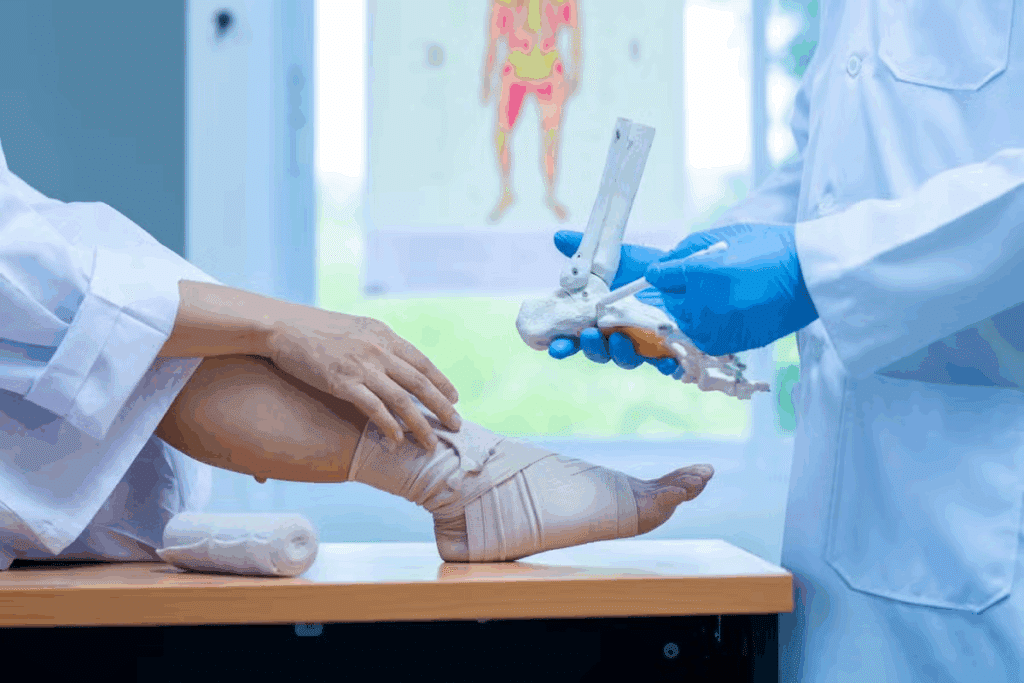
Did you know that using surgical indicators well can really help patients in orthopedic surgeries? Healthcare providers can make better choices by looking at key performance indicators. This helps improve the care quality. The most risky orthopedic surgery involves the spine. Learn about nerve damage risks and blood loss during complex fusions.
We know that diagnostic criteria and referral reasons are key in picking the right treatment. By studying these metrics, doctors can find ways to get better at caring for patients.
Key Takeaways
- Key performance indicators are key in guiding treatment decisions in orthopedic procedures.
- Effective use of surgical indicators improves patient outcomes.
- Diagnostic criteria and referral reasons are vital in determining the best treatment approach.
- Analyzing these metrics helps healthcare professionals identify areas for improvement.
- Optimizing treatment approaches enhances the overall quality of care.
What Are Orthopedic Surgery Metrics?
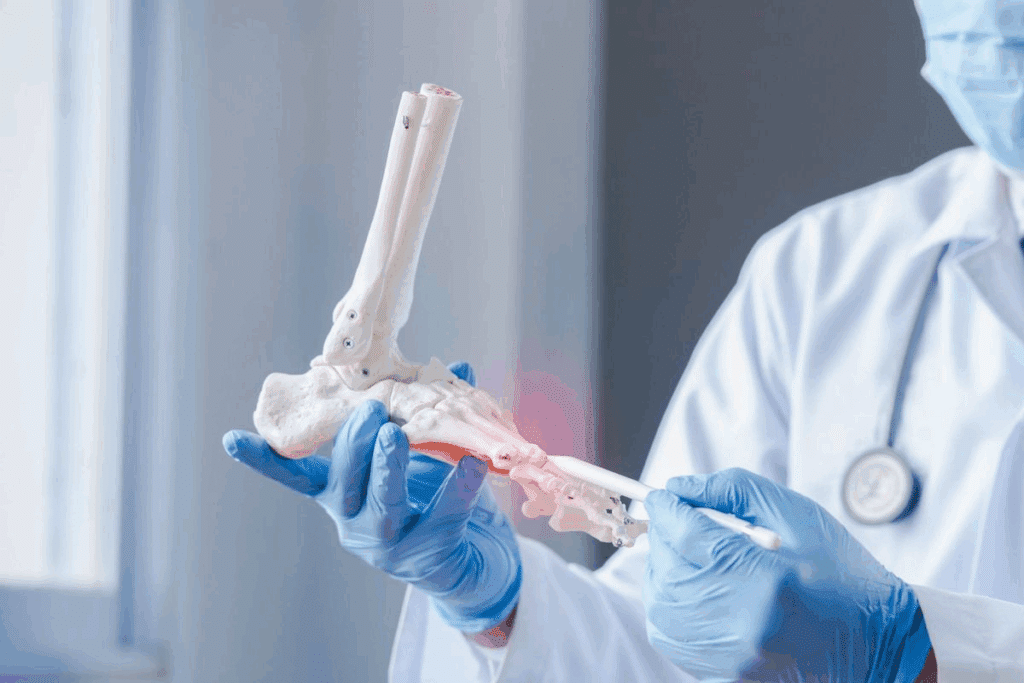
Orthopedic surgery uses metrics to check if surgeries are successful and if patients recover well. Healthcare providers know how vital it is to measure and analyze different indicators. This helps improve patient results and fine-tune treatment plans.
Definition and Importance
Orthopedic surgery metrics are data points that show how well surgeries work. They help healthcare providers see how they’re doing and find ways to get better. By tracking these metrics, we can make our treatments better and care for patients more effectively.
Metrics are important for several reasons:
- They help us see if surgeries are working well
- They show where we can improve
- They guide our treatment choices with solid data
- They help keep patients safe and reduce risks
Overview of Key Metrics
There are key metrics in orthopedic surgery to measure performance and patient results. Some important ones are:
| Metric | Description |
| Surgical site infection rates | Shows how often infections happen at the surgery site |
| Patient-reported outcome measures (PROMs) | Looks at how patients feel based on what they say |
| Length of stay | Tracks how long patients stay in the hospital after surgery |
| Readmission rates | Measures how often patients come back to the hospital after going home |
A leading orthopedic surgeon said, “Metrics have changed how we care for patients. By using data, we can make treatments better and get better results.”
“Metrics are key to our goal of being the best in orthopedic care.”
By knowing and using these metrics, we can always get better at orthopedic surgery. This helps us give our patients the best care possible.
Key Performance Indicators in Orthopedic Surgery
Key performance indicators are key in orthopedic surgery. They help us see how well our surgeries are doing and where we can get better. We’ll look at the important KPIs for orthopedic surgery.
Surgical Outcomes
Surgical outcomes are very important in orthopedic surgery. They show if our surgeries are working well. We watch things like:
- Recovery Time: How long it takes for patients to get back to normal after surgery.
- Functional Improvement: How much patients can do again after surgery.
- Pain Reduction: How well our surgeries help reduce pain.
By keeping an eye on these, we can make our surgeries better and help our patients more.
Patient Satisfaction
Patient satisfaction is also a big deal in orthopedic surgery. It shows if we’re meeting our patients’ needs. Important parts include:
- Communication: How well we talk to our patients.
- Care Quality: How good our patients think our care is.
- Post-Operative Support: How much help we give patients after surgery.
When patients are happy, it means we’re doing a good job for them.
Complication Rates
Complication rates are another important KPI. They show us where we might be at risk and where we can get better. We look at:
| Type of Complication | Description | Impact on Patient Care |
| Infection | Bacterial or viral infections after surgery. | Longer recovery, might need more surgery. |
| Nerve Damage | Nerve problems during surgery, causing numbness or weakness. | Can be permanent or temporary. |
By understanding and lowering complication rates, we can make our care safer and better for our patients.
Measuring Surgical Outcomes: What to Track
It’s key to measure surgical outcomes well to see if orthopedic surgeries are working. We track different things to see how our work is doing and where we can get better.
To really check surgical outcomes, we look at important signs. These signs tell us how good and effective our care is.
Length of Stay
The length of stay (LOS) shows how well and fast we care for patients. A shorter stay means we’re doing things smoothly and safely. We look at LOS to find ways to make care even better.
Return to Function
Return to function is a big deal. It shows if patients can move and feel better after surgery. We use what patients tell us and doctor checks to see how well they’re doing.
Readmission Rates
Readmission rates tell us a lot about our care and support after patients leave. If many patients come back, it might mean we need to do better in helping them at home. We watch these rates to spot problems and fix them.
We also look at pain signals and motion limitation. These help us understand how well surgeries are doing. By looking at all this, we can make care better for patients.
By keeping an eye on these important signs, we can make our care better. This means better results for patients and higher quality in orthopedic surgery.
Patient Satisfaction Metrics in Orthopedic Surgery
Patient satisfaction is key in orthopedic surgery. It affects both patient results and doctor reputation. These metrics show us how well we care for patients and what we can do better.
Surveys and Feedback
Surveys and feedback are vital for measuring patient happiness. We use different surveys to learn about patients’ experiences. This includes how they feel about their care, communication, and results.
This feedback tells us what we’re doing right and what needs work. We look closely at:
- Preoperative care and education
- Postoperative pain management
- Communication with healthcare providers
- Overall satisfaction with care
Importance of Communication
Good communication is key to patient happiness. When patients are well-informed and involved, they’re more likely to be happy with their care. We make sure to talk clearly and kindly with our patients.
We want them to understand their condition, treatment options, and what to do after surgery. Good communication:
- Reduces anxiety and uncertainty
- Helps patients follow treatment plans
- Makes care safer
The Impact on Reputation
Patient satisfaction greatly affects a doctor’s reputation. Happy patients mean high ratings, which can bring in more patients. But, unhappy patients can harm a doctor’s reputation and scare off others.
Here’s a table showing how patient satisfaction affects reputation:
| Patient Satisfaction Metric | High Satisfaction | Low Satisfaction |
| Preoperative Care | 95% positive feedback | 20% negative feedback |
| Postoperative Pain Management | 90% positive feedback | 30% negative feedback |
| Overall Satisfaction | 92% positive feedback | 25% negative feedback |
By focusing on patient happiness and improving our care, we can boost our reputation. This way, we can give our patients the best results.
Complication Rates: Assessing Surgical Risks
It’s important to understand complication rates when looking at surgical risks in orthopedic procedures. Complications can come from many sources, like the patient’s health, how the surgery is done, and aftercare. We’ll look at the different complications, how to figure out who’s at risk, and how these rates affect surgery results.
Types of Complications
Orthopedic surgery can lead to several complications. These include:
- Infection: Surgical site infections can make recovery longer and might need more surgeries.
- Nerve Damage: Nerve injuries can cause numbness, weakness, or even paralysis, affecting a patient’s life quality.
- Blood Clots: Deep vein thrombosis (DVT) and pulmonary embolism (PE) are serious and can be deadly if not treated right.
- Implant Failure: When implants, like hip replacements, fail, it might mean another surgery is needed.
Spotting these complications early is key to managing them well and reducing their impact on recovery and healthcare costs.
Risk Stratification
Risk stratification means looking at patient and surgery factors to guess the chance of complications. Important factors include:
- Patient Health Status: Conditions like diabetes or heart disease can raise the risk of surgery.
- Surgical Complexity: How complex and long the surgery is can affect the risk of complications.
- Surgeon Experience: The surgeon’s skill and experience are big in keeping complications low.
Knowing these factors helps healthcare providers take steps to lower risks and improve patient results.
Impact on Metrics
Complication rates have a big impact on many surgery metrics, like patient happiness, how long patients stay, and readmission rates. High complication rates can lead to:
- Decreased Patient Satisfaction: Complications can make patients unhappy with their care, hurting the hospital’s reputation and patient loyalty.
- Increased Length of Stay: Handling complications often means patients stay longer, raising healthcare costs.
- Higher Readmission Rates: Complications can cause patients to come back, which is expensive and affects quality scores.
So, keeping complication rates low is key to bettering surgery results and giving top-notch care to patients.
Utilizing Data Analytics in Orthopedic Surgery
Orthopedic surgery is getting better thanks to data analytics. It makes surgeries more precise and care better for patients. By looking at big data, we spot trends, predict results, and make smart choices. This leads to happier patients and better surgery success.
Tools and Technology
Advanced tools and tech are key in data analytics for orthopedic surgery. Gait analysis software and imaging technologies help us understand patients better. They give us detailed info on how patients move and their bone structures, which is vital for planning surgeries.
Some important technologies include:
- Electronic Health Records (EHRs) for storing patient data
- Advanced statistical software for data analysis
- Machine learning algorithms to predict surgical outcomes
Analyzing Trends Over Time
Looking at trends over time helps us see what works in surgery and patient care. By watching complication rates, patient satisfaction scores, and surgical outcomes over time, we find ways to get better. This helps us improve our methods and care for patients.
For example, a study might show that a certain surgery works better with a certain care plan after. Knowing this helps us fine-tune our methods and care for patients better.
“The use of data analytics in healthcare is not just about managing data; it’s about turning that data into actionable insights that improve patient care.”
– Orthopedic Surgeon
Making Data-Driven Decisions
Data-driven decisions are central to modern orthopedic surgery. By using data analytics, we go beyond just guessing or relying on stories. We make choices based on solid data analysis. This not only improves patient results but also makes our surgeries more efficient and cost-effective.
Benefits of making decisions based on data include:
- Improved patient outcomes through targeted interventions
- Enhanced operational efficiency in surgical departments
- Better resource allocation based on data insights
As we keep using data analytics, we see big improvements in care delivery. By using these tools and methods, we’re not just advancing orthopedic surgery. We’re also giving our patients the best possible results.
Benchmarking Orthopedic Surgery Metrics
Benchmarking is key in orthopedic surgery. It helps us check and boost our surgical results. By looking at how we compare to others, we find ways to get better and care for our patients better.
Setting Standards for Performance
Setting clear goals is a big part of benchmarking. We aim to meet the best practices in the field. This means:
- Choosing important metrics like how well surgeries go, patient happiness, and how often problems happen.
- Starting with a baseline to see how we do over time.
- Setting goals to get better based on what others do well.
Comparison with Industry Averages
Looking at how we stack up against others shows us where we can do better. This helps us see:
- Where we’re not following the best ways to do things.
- When we might need to rethink how we treat patients.
- How we can get better by following the best practices.
For example, if we have more problems than others, we can figure out why and fix it.
Continuous Improvement
Benchmarking is an ongoing effort, not just a one-time thing. We need to:
- Keep an eye on our numbers to see how we’re doing.
- Look at the data to find trends and areas to work on.
- Make changes based on what we learn to keep getting better.
By always trying to get better, we can keep our surgery metrics high and our patient care top-notch.
Key Takeaways:
- Benchmarking helps us improve our surgery results.
- Having clear goals is essential for benchmarking.
- Always comparing to others helps us find ways to get better.
The Role of Quality Improvement Initiatives
Quality improvement initiatives are changing orthopedic surgery. They focus on best practices and making patients happy. We always check and improve our surgery to give the best care to our patients.
Implementing Best Practices
Improving orthopedic surgery involves many steps. We keep up with new techniques and follow evidence-based medicine. Our healthcare teams are trained in the best ways to care for patients. Evidence-based guidelines help standardize care and improve results.
We also believe in continuous education and training for our teams. Our surgeons learn about new advancements through workshops and conferences. This helps them give the best care possible.
Key Initiatives in Orthopedics
There are many important initiatives in orthopedic surgery. These include:
- Enhancing patient safety through rigorous infection control measures
- Improving surgical outcomes by adopting best practices in perioperative care
- Utilizing data analytics to identify areas for improvement and track progress over time
These efforts not only help patients but also make orthopedic care better and more efficient.
Measuring Effectiveness
We use many metrics to see if our efforts are working. These include patient satisfaction, complication rates, and readmission rates. Regular audits and feedback mechanisms help us see how we’re doing and where we can get better.
By using data and analytics, we make smart choices. This leads to better patient outcomes and higher satisfaction rates.
Financial Metrics Related to Orthopedic Surgery
Financial metrics are key to checking how well orthopedic surgery departments do. They help see if the department is financially healthy. They also help make better choices to improve care.
Cost-Effectiveness Analysis
Cost-effectiveness analysis is very important. It looks at the costs and results of different actions in orthopedic surgery. This helps find the best treatments that are affordable and effective.
For example, it’s useful to compare the costs of surgery versus not doing surgery for osteoarthritis. We look at both direct costs like surgery and indirect costs like rehab and lost work time.
Revenue Cycle Management
Revenue cycle management (RCM) is also very important. It covers everything from when a patient first signs up to when they pay their bill. Good RCM makes sure providers get paid right and on time.
In orthopedic surgery, RCM deals with insurance claims, billing, and coding for surgeries. By making these processes smoother, hospitals can save money and stay financially strong.
Profitability Metrics
Profitability metrics show if orthopedic surgery services are making money. They look at things like profit margins, return on investment (ROI), and how much money each surgery makes.
By looking at these metrics, leaders can make smart choices. They can better use resources, change prices, and make their surgery departments more profitable.
In summary, financial metrics are very important for orthopedic surgery. By focusing on cost-effectiveness, RCM, and profitability, providers can keep their services strong. This helps them give better care while staying financially stable.
The Future of Orthopedic Surgery Metrics
The world of orthopedic surgery metrics is about to change a lot. New trends and tech will shape how we measure success in surgeries. These changes will come from better technology and shifts in healthcare.
Emerging Trends
New trends are coming to orthopedic surgery metrics. One big trend is focusing more on patient-reported outcomes. This means we’ll look more at how patients feel and live after surgery.
Another trend is using artificial intelligence (AI) and machine learning (ML) in surgeries. These tools can make diagnoses better and predict how well surgeries will do. This will help us measure success in new ways.
Technological Innovations
New tech is changing how we measure success in orthopedic surgery. Better imaging technology like 3D scans and MRI gives us more accurate info. This helps plan and do surgeries more precisely.
Also, wearable devices and remote monitoring let us track patients’ recovery in real-time. This data helps us see how well surgeries work and where we can get better.
“The integration of technology in orthopedic surgery is not just about improving outcomes; it’s about enriching the patient’s journey.”
Orthopedic Surgeon
Predictions for the Next Decade
In the next ten years, orthopedic surgery metrics will get even better. They’ll use more data and advanced analytics. Big data will help us understand surgeries and patient recovery in new ways.
We also expect more focus on personalized medicine. Metrics will be made for each patient, based on their unique needs. This will mean more flexible and detailed metrics for everyone.
| Metric | Current Status | Future Direction |
| Patient-Reported Outcomes | Limited integration | Increased focus and standardization |
| Artificial Intelligence/Machine Learning | Emerging applications | Widespread adoption for predictive analytics |
| Imaging Technology | Advanced 3D imaging | Integration with AI for enhanced diagnostics |
The future of orthopedic surgery metrics is bright. It will be shaped by new tech, healthcare changes, and a focus on each patient. By embracing these changes, we can keep our metrics up to date and improve patient care.
Case Studies: Successful Implementation of Metrics
Case studies show how orthopedic surgery metrics have changed healthcare. They give us real examples of how these metrics work in practice. This helps us see their benefits.
Hospital A’s Journey
Hospital A started using orthopedic surgery metrics to improve care. They looked at surgical results, patient happiness, and complications. They used data tools to find and fix problems.
Thanks to these efforts, Hospital A cut down on hospital stays and readmissions. For example, they reduced average hospital stay by 25% by improving post-op care. Also, 90% of patients were very happy with their care.
| Metric | Pre-Implementation | Post-Implementation |
| Average Length of Stay | 5 days | 3.75 days |
| Readmission Rate | 15% | 8% |
| Patient Satisfaction | 80% | 90% |
Lessons Learned
Hospital A learned the value of always checking their data. They kept improving by looking at their metrics often. They also found that working together as a team was key.
- Regularly review and update metrics to reflect changing practices and goals.
- Foster a culture of continuous improvement among staff.
- Utilize data analytics to inform decision-making.
Impact on Patient Care
Hospital A’s use of metrics greatly improved patient care. They saw better results and happier patients. They also made diagnoses more accurate with tools like X-rays and MRIs.
In short, Hospital A’s story shows how metrics can change healthcare for the better. By following their lead, other hospitals can also see big improvements.
Conclusion: The Importance of Orthopedic Surgery Metrics
Orthopedic surgery metrics are key to top-notch patient care and better surgical results. They help healthcare providers spot areas to get better and make smart choices based on data. This way, they can improve their work.
We talked about how to measure how well surgeries go, how happy patients are, and how often problems happen. Data analysis and comparing with others are also important. Using these tools, doctors can give better care, save money, and build a good name for themselves.
Going forward, healthcare providers must focus on these metrics and use them in their work. This ensures patients get the best care and our healthcare keeps getting better. We need to keep an eye on these numbers to make sure care gets even better and patients get the best results.
FAQ
What are the key performance indicators used in orthopedic surgery?
We track many things, like how well surgeries go and how happy patients are. We also look at how often complications happen and how long patients stay in the hospital. This helps us make sure we’re giving the best care possible.
How do orthopedic surgery metrics impact patient care?
By looking at these metrics, we can find ways to get better. We can make treatment plans better and make patients happier. This leads to better health and more effective care.
What is the significance of complication rates in orthopedic surgery?
Looking at complication rates helps us understand risks. It helps us spot problems early and find ways to avoid them. This makes surgeries safer and more successful.
How do we measure patient satisfaction in orthopedic surgery?
We use surveys and feedback to see how happy patients are. We look at things like how well we communicate and how we manage pain. This helps us know where we can get better.
What role does data analytics play in orthopedic surgery?
Data analytics helps us understand trends and track important metrics. It helps us make smart decisions and improve care. This drives us to be better at what we do.
How do we benchmark orthopedic surgery metrics?
We compare our numbers to what others do. We set goals and work on getting better. This ensures our care is top-notch.
What are the financial metrics related to orthopedic surgery?
We look at how cost-effective we are and how well we manage money. We also check how profitable we are. This helps us keep our services high-quality and affordable.
How do imaging results and diagnostic criteria influence orthopedic surgery decisions?
Imaging like X-rays and MRIs help us figure out what’s wrong. They guide our treatment plans. Diagnostic criteria help us choose the best treatment for each patient.
What is the impact of pain signals and motion limitation on orthopedic surgery outcomes?
Understanding pain and how movement is limited helps us tailor treatments. This improves outcomes and makes patients happier.
How do we assess mobility issues and function loss in orthopedic patients?
We use tests like gait analysis to check how patients move. This helps us plan treatments and rehabilitation. It ensures we’re addressing the right issues.
What is the role of quality improvement initiatives in orthopedic surgery?
Quality improvement helps us adopt best practices. It lets us measure success and keep getting better. This keeps our care leading in orthopedic surgery.
References
National Center for Biotechnology Information. Evidence-Based Medical Insight. Retrieved from https://pubmed.ncbi.nlm.nih.gov/40453703/