
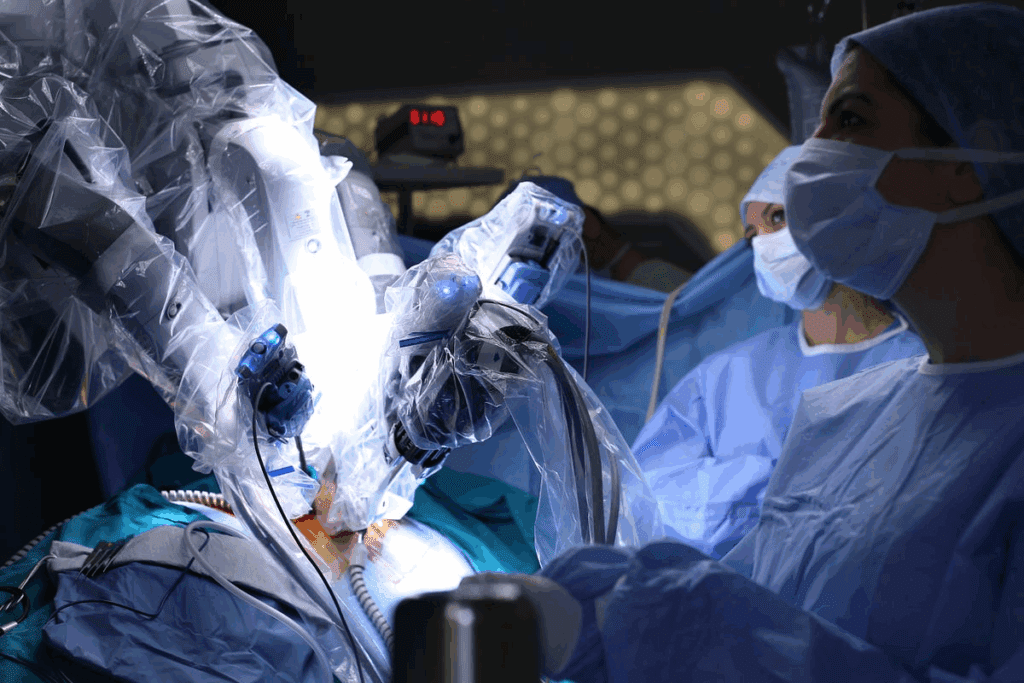
Robotic surgery is transforming healthcare, offering treatments that are more precise, less invasive, and safer for patients. We’re seeing a big change in medicine with improved surgical precision and enhanced 3D visualization leading the way.
This new tech is making patients’ outcomes better and recovery times shorter. The robotic surgery benefits include reduced blood loss and fewer complications, helping patients get better results overall.
Key Takeaways
- Robotic surgery offers more precise and less invasive treatment options.
- Enhanced 3D visualization improves surgical accuracy.
- Reduced blood loss and fewer complications lead to better patient outcomes.
- Patients experience shorter recovery times.
- Robotic surgery is revolutionizing the medical field with its advanced technology.
The Evolution of Surgical Techniques: From Open Surgery to Robotic Assistance

Surgical practices have changed a lot, moving from open surgery to using robots. This change aims to make surgeries better, shorter, and more precise.
Traditional Open Surgery: Limitations and Challenges
Open surgery means big cuts to get to the problem area. It works but has big downsides like a lot of damage, long recovery, and more risks like infection. The need for better ways has led to looking for new methods.
The Emergence of Minimally Invasive Techniques
Minimally invasive surgery came as a solution to open surgery’s problems. It uses small cuts and a camera to do the surgery. This method cuts down on damage, shortens recovery, and lowers risks. This change was a big step up in surgery.
The Introduction of Robotic Systems in Operating Rooms
Robotic systems in surgery have changed things even more. They bring better precision, control, and flexibility. Surgeons can do complex tasks more easily and accurately, thanks to robots. Robots in surgery have opened up new ways to care for patients.
Understanding Robotic Surgery: How It Works

Modern robotic surgical systems give surgeons enhanced control and precision. This leads to better patient outcomes. These systems have changed surgery, making it more accurate and less invasive.
Components of Modern Robotic Surgical Systems
Robotic surgical systems have several key parts. These include the surgeon’s console, robotic arms, and a high-definition visualization system.
The surgeon’s console is where the surgeon works. It has a high-resolution display and controls that let the surgeon move the robotic arms with precision.
The Surgeon’s Console and Control Interface
The surgeon’s console offers an easy-to-use interface. It lets the surgeon control the robotic arms precisely. The console also has a 3D visualization system for a clear view of the surgical site.
The controls are designed to reduce fatigue during long surgeries. This helps surgeons stay focused and perform complex tasks easily.
Robotic Arms and Instrument Functionality
The robotic arms are key to the system, providing dexterity and precision for detailed procedures. These arms have special instruments that can be swapped out during surgery.
The instruments mimic human hand movements. They allow for motions not possible with traditional laparoscopic tools.
Enhanced Surgical Precision: Overcoming Human Limitations
Robotic surgery brings a big plus: better precision. It gets rid of hand tremors and makes handling tissues easier. This means surgeons can do complex tasks with more skill than they could before.
Elimination of Hand Tremors for Steadier Procedures
Robotic surgery is great because it stops hand tremors. Robotic systems stabilize the surgeon’s hands, making movements steady and precise. This is key for surgeries that need a lot of detail, like neurosurgery.
Motion Scaling for Delicate Tissue Manipulation
Robotic surgery also has motion scaling. This lets surgeons make big moves outside the body that turn into small, precise ones inside. It’s super helpful for delicate tissue manipulation, where small mistakes can be big problems.
Motion scaling helps with detailed work like dissections and suturing. It lowers the chance of harming nearby tissues. This is really good for surgeries like prostatectomies and others that need careful handling.
Precision in Microscopic Surgical Environments
In tiny surgical spaces, robotic systems are unmatched. They let surgeons work in tight spots with more skill than old methods. The high-definition visualization and precise tools make it easier to handle complex areas.
Robotic technology has changed surgery for the better. It helps patients by improving precision and overcoming human limits. Robotic surgery is raising the bar in medical care.
Improved Visualization: 3D Magnification and Enhanced Imaging
Robotic surgical systems give surgeons high-definition 3D visualization. This helps them do complex procedures better. It’s a key part of robotic surgery, with many benefits over old methods.
High-Definition 3D Visualization Systems
The 3D systems in robotic surgery offer unparalleled clarity. They give a detailed, three-dimensional view of the surgery area. This lets surgeons work on complex anatomy with more precision.
Magnification Capabilities for Detailed Anatomical Views
Robotic surgery’s magnification capabilities are a big plus. Surgeons can zoom in on areas, getting a close look at the anatomy. This is very helpful in precise procedures.
Integration with Advanced Imaging Technologies
Advanced imaging has made surgery better. By working with robotic systems, these technologies have improved surgery results. Recent data shows advanced imaging technologies have significantly improved surgical visualization (Source: Third source).
Accessing Difficult Surgical Sites: Reaching the Previously Unreachable
Robotic surgery has changed the game in surgery. It lets us reach places that were once too hard or impossible. This is because of the tricky spots or complex body parts involved.
Robotic surgery is great at getting into tight spots. It gives surgeons the skill and accuracy to move around in tight spaces. This makes it easier to do complex surgeries.
Navigation in Confined Anatomical Spaces
The robotic system is amazing at getting into tight spots. This is super helpful in:
- Neurosurgery, where being precise is key
- Orthopedic surgery, where getting to joints is hard
- Gynecological surgery, where being gentle is important
Improved Access to Deep-Seated Tumors and Structures
Robotic surgery also helps get to deep tumors and structures. This is a big plus in cancer treatment. Being able to remove tumors precisely is very important. The robotic system’s better view and control help surgeons:
- Find and remove tumors better
- Do detailed cuts without harming nearby tissues
- Get to tumors that are hard to reach
This leads to better results and fewer complications for patients.
Maneuverability in Complex Anatomical Regions
Robotic surgery is also super flexible. Surgeons can do tricky surgeries in places like the pelvis or chest with more precision. This is thanks to:
- Instruments that can bend and turn in many ways
- Better views of the surgery area
- The ability to make small, careful movements
This means we can treat conditions that were once too risky or impossible.
In short, robotic surgery has made it easier to do hard surgeries. It lets surgeons work with more precision and control. As this tech gets better, we’ll see even more amazing uses in surgery.
Minimally Invasive Advantages: Smaller Incisions, Better Outcomes
Minimally invasive robotic surgery is changing healthcare. It reduces tissue trauma and scarring, making recovery faster. This method uses robotic systems for precise procedures through small incisions, leading to less trauma and quicker healing.
Reduced Tissue Trauma and Minimal Scarring
Robotic surgery greatly reduces tissue trauma. It uses small incisions and precise instruments. This results in less post-operative pain and minimal scarring, improving patient appearance.
Decreased Blood Loss During Surgical Procedures
Robotic surgery also means decreased blood loss during procedures. The precision and visualization of robotic systems help surgeons avoid bleeding. This is key in surgeries where blood loss is a significant concern.
Lower Risk of Surgical Site Infections
The small incisions in robotic surgery lower the risk of infections. The precision of the instruments also reduces tissue trauma. This leads to better patient outcomes and shorter hospital stays.
In summary, robotic surgery offers many benefits. It reduces tissue trauma, decreases blood loss, and lowers infection risk. These advantages make it a highly effective method for many surgeries.
Patient Recovery Benefits: Faster Healing and Reduced Hospitalization
Robotic surgery has changed how patients recover. It makes hospital stays shorter and healing faster. This is because robotic surgery is less invasive, causing less damage to tissues.
Shorter Hospital Stays After Robotic Procedures
Robotic surgery can lead to shorter hospital stays. It’s less invasive, so patients heal quicker. They can go home sooner than those who have traditional surgery.
Accelerated Return to Normal Activities and Work
The minimally invasive nature of robotic surgery helps patients get back to normal faster. With smaller cuts and less damage, they face fewer complications. This is great for those who need to get back to work or daily life quickly.
Reduced Post-Operative Pain and Medication Needs
Robotic surgery also means less pain and less need for pain meds. The precision of robotic surgery causes less tissue damage. This leads to less pain after surgery. So, patients need less pain medication, which lowers the risk of opioid addiction and other issues.
The benefits of robotic surgery for patient recovery are many:
- Faster recovery times
- Less post-operative pain
- Reduced need for pain medication
- Shorter hospital stays
- Quicker return to normal activities and work
Robotic surgery offers a safer, more efficient, and more comfortable experience. It leads to better outcomes and happier patients.
Robotic Surgery Benefits: Improving Patient Safety and Outcomes
Robotic surgery has changed the medical world for the better. It makes surgeries safer and more effective. This new way of doing surgery is a big step forward.
One key benefit is the reduced complication rates in complex procedures. Robotic systems help surgeons see and move more precisely. This makes it easier to work in tricky areas.
Reduced Complication Rates in Complex Procedures
Robotic systems help with complex surgeries by cutting down on problems. They offer better control and vision. This leads to more accurate and successful surgeries.
Lower Risk of Surgical Errors and Complications
Robotic surgery also means fewer mistakes and problems. The technology removes hand tremors. This makes the surgeon’s movements more steady and controlled.
Improved Long-Term Surgical Outcomes for Patients
Also, robotic surgery leads to better results for patients in the long run. It causes less damage and heals more precisely. This means patients can enjoy a better quality of life.
We see many benefits from robotic surgery. It makes surgeries safer and more effective. As technology gets better, we’ll see even more improvements in patient care.
Surgeon Ergonomics: Reducing Fatigue and Extending Careers
Robotic surgery has changed how surgeons work, making their jobs less tiring and possibly longer. These systems help surgeons work more comfortably and efficiently.
Comfortable Operating Position for Surgical Teams
Robotic surgery’s big plus is its ergonomic design. It lets surgeons work in a natural way, easing body strain. The console can be adjusted for different sizes and preferences.
Reduction in Physical Strain During Long Procedures
Robotic systems are made to lessen the physical load on surgeons. They allow surgeons to sit, which cuts down on fatigue from standing for hours in traditional surgeries.
A study showed robotic surgery cuts down on surgeon fatigue and discomfort. This is compared to laparoscopic procedures.
| Procedure Type | Surgeon Fatigue Level | Operating Time |
| Robotic Surgery | Low | 2-4 hours |
| Laparoscopic Surgery | Moderate to High | 2-4 hours |
Potential for Extended Surgical Career Longevity
Robotic systems reduce surgery’s physical toll, helping surgeons work longer. This benefits both surgeons and patients, ensuring care from experienced hands.
The ergonomic benefits of robotic surgery are key to its growing use. As technology advances, we’ll see even more improvements in surgeon comfort and work efficiency.
Applications in Urological Surgery: Prostatectomy and Beyond
Robotic surgery has changed urological procedures a lot. It brings better precision and care to operations like prostatectomy. This is great for keeping important parts and functions safe.
Robotic Prostatectomy: Preserving Function While Removing Cancer
Robotic prostatectomy is now a top choice for prostate cancer treatment. It’s less invasive and helps keep nerves and tissues safe. The precision of robotic systems allows for a more controlled removal of the prostate gland, lowering the chance of problems and speeding up recovery.
Some key benefits of robotic prostatectomy include:
- Reduced blood loss during surgery
- Less post-operative pain
- Shorter hospital stays
- Faster return to normal activities
Kidney Procedures: Precision in Partial Nephrectomy
Robotic help in kidney surgeries, like partial nephrectomy, lets surgeons take out tumors while keeping healthy tissue. The enhanced visualization and dexterity provided by robotic systems are key in these complex surgeries. They help with more accurate cuts and repairs.
Complex Pelvic Surgeries: Delicate Nerve Preservation
In complex pelvic surgeries, robotic systems give the precision needed to protect delicate nerves and structures. This is very important for keeping patients’ quality of life after surgery. The ability to do detailed dissections and stitching with better precision lowers the risk of nerve damage and other issues.
Gynecological Surgery Advancements: Precision for Women’s Health
Robotic systems have changed gynecological surgery for the better. They make procedures more precise and less invasive. This change is transforming women’s health, leading to better results and faster healing.
Hysterectomy: Minimizing Impact Through Robotic Approach
Robotic hysterectomy has changed how we remove the uterus. It’s a minimally invasive alternative to old methods. This approach causes less damage, less pain after surgery, and faster recovery.
Myomectomy: Preserving Fertility While Removing Fibroids
Robotic help in myomectomy lets us precisely remove fibroids without harming the healthy tissue. This is key for women who want to keep their fertility. The robotic system’s better view and control help us handle tissues gently, lowering the chance of problems.
Endometriosis Treatment: Visualizing and Excising Lesions
Robotic surgery is a precise way to see and remove endometrial lesions for those with endometriosis. The 3D high-definition view helps us spot and take out the bad tissue. This could lower the chance of the problem coming back and ease symptoms.
These new steps in gynecological surgery show how robotic tech can boost women’s health. It brings more precision, less invasion, and quicker healing. Robotic-assisted surgeries are setting a new high in patient care.
Cardiac and Thoracic Applications: Precision in Heart and Lung Procedures
Robotic surgery has changed how we do heart and lung surgeries. It brings precision and less invasive methods. This shift is making surgeries better for patients.
Mitral Valve Repair: Minimally Invasive Approaches
Mitral valve repair is a precise procedure. Robotic systems help surgeons do it with less invasion. This means less harm to the patient and quicker healing.
Robotic technology in mitral valve repair is showing great results. Studies show fewer complications and better survival rates than traditional surgery. The robotic tools help surgeons work on the mitral valve more easily.
Coronary Artery Bypass: Robotic Assistance Techniques
Robotic surgery is also improving coronary artery bypass grafting (CABG). It makes the surgery less invasive. This leads to less pain and quicker recovery for patients.
New robotic techniques are making CABG better. They help in getting grafts and doing the bypass with precision. This improves patient outcomes and lowers the risk of complications.
Lung Resections: Precision in Thoracic Surgery
Lung resections are complex and need precision. Robotic surgery helps a lot. It allows for precise removal of diseased parts while keeping healthy tissue.
The robotic tools give surgeons better control and vision. This makes lung resections more accurate. It can lead to better results and fewer complications for patients.
| Procedure | Benefits of Robotic Surgery | Outcomes |
| Mitral Valve Repair | Minimally invasive, precise repair | Reduced morbidity and mortality |
| Coronary Artery Bypass | Less invasive, reduced post-operative pain | Faster recovery, fewer complications |
| Lung Resections | Precise dissection, preservation of healthy tissue | Improved accuracy, reduced risk of complications |
Robotic surgery is getting better, and so are heart and lung surgery results. Robotic technology is changing surgery. It brings new hope for patients with complex heart and lung issues.
General Surgery Transformations: From Gallbladders to Gastrointestinal Procedures
Robotic surgery has changed general surgery a lot. It makes complex surgeries easier and more precise. Now, robotic systems are key in many operating rooms.
Robotic surgery has started a new chapter in general surgery. It makes surgeries more precise and cuts down recovery time. This technology improves outcomes for many surgeries.
Cholecystectomy: Robotic Approach to Gallbladder Removal
Robotic cholecystectomy is now a top choice for removing gallbladders. It’s a less invasive option than traditional surgery. The robotic system’s better view and precision help avoid complications and speed up healing.
- Improved visualization of the surgical site
- Enhanced precision in dissecting and removing the gallbladder
- Reduced risk of complications and faster recovery
Colorectal Surgery: Precision in Confined Spaces
In colorectal surgery, robotic systems offer precision in tight spaces. They help surgeons do complex surgeries more accurately. The robotic arms can reach and work in small areas, making dissections and suturing precise.
“The use of robotic systems in colorectal surgery has revolutionized the way we approach complex cases, providing improved outcomes and reduced morbidity.”Expert Surgeon
Bariatric Surgery: Robotic Assistance for Weight Loss Procedures
Robotic-assisted bariatric surgery is gaining popularity for weight loss. It’s safer and more effective. The robotic system’s better view and precision help surgeons do detailed procedures like gastric bypass and sleeve gastrectomy more accurately.
- Gastric bypass surgery with improved precision
- Sleeve gastrectomy with enhanced visualization
- Reduced risk of complications and improved patient outcomes
In conclusion, robotic surgery has greatly improved general surgery. It brings better precision, visualization, and shorter recovery times. As technology advances, we’ll see more uses of robotic systems in general surgery.
Neurosurgical Applications: Precision for Brain and Spine
Robotic surgery in neurosurgery has brought new precision to treating brain and spine issues. These systems are used more often to make procedures more accurate and safe.
Brain Tumor Resection: Minimizing Collateral Damage
Robotic-assisted brain tumor removal is precise, reducing harm to healthy tissue. This is key in neurosurgery, where the difference between tumor and normal brain is tiny.
Benefits of Robotic Brain Tumor Resection:
- Enhanced precision in tumor removal
- Reduced risk of damage to surrounding brain tissue
- Improved patient outcomes due to minimally invasive techniques
Spine Surgery: Accuracy in Instrumentation Placement
Robotic systems help in spine surgery by making instrumentation placement more accurate. This is vital for the success of spinal fusion.
| Procedure | Traditional Method | Robotic-Assisted Method |
| Pedicle Screw Placement | Manual placement with fluoroscopic guidance | Robotic-assisted placement with real-time imaging |
| Accuracy Rate | 85-90% | 95-99% |
Skull Base Surgery: Accessing Difficult Regions
Robotic-assisted skull base surgery makes it easier to reach complex areas. This is great for delicate procedures near the skull base.
Robotic systems in neurosurgery are a big step forward in treating brain and spine issues. As technology gets better, we’ll see even better results in neurosurgery.
Future Developments: The Next Generation of Robotic Surgery
The next generation of robotic surgery is set to improve precision and make healthcare more accessible. Technology is advancing fast, bringing big changes to robotic surgery. These changes are set to transform healthcare.
Artificial Intelligence Integration in Surgical Systems
Artificial intelligence (AI) is being added to robotic surgery systems. AI can look at lots of data quickly. This gives surgeons important insights and helps them make better decisions during surgery.
AI brings many benefits, including:
- More accurate surgeries
- Keeping patients safer with constant monitoring
- Creating surgical plans that fit each patient’s needs
| AI Application | Description | Benefit |
| Real-time Data Analysis | Analyzing patient data during surgery | Improved accuracy |
| Predictive Analytics | Forecasting possible complications | Enhanced patient safety |
| Personalized Medicine | Tailoring surgical plans to individual patients | Better outcomes |
Remote Surgery and Telemedicine Applications
Remote surgery lets surgeons work from anywhere with the help of robots and fast internet. This technology can:
- Bring specialized care to remote areas
- Lessen the need for patients to travel
- Help surgeons work together from different places
Miniaturization and Specialized Robotic Tools
Miniaturization of robotic tools is also advancing. Smaller, more precise tools make delicate surgeries possible. This could also mean patients recover faster.
Examples of these small tools include:
- Micro-instruments for brain surgery
- Nano-robots for precise treatments
- Small robotic arms for kids’ surgery
As we explore new limits in robotic surgery, we’ll see even more amazing uses of this tech in the future.
Conclusion: The Transformative Impact of Robotic Surgery on Modern Healthcare
We’ve seen how robotic surgery changes healthcare, making patient care and surgery better. It offers more precision, better results, and shorter recovery times. This makes it a key tool in many surgeries.
Robotic systems have changed how surgeons do complex surgeries. They allow for more control and accuracy. As tech gets better, we’ll see more improvements in robotic surgery, leading to better care for patients.
Robotic surgery has a big impact on healthcare. It makes surgeries more precise, cuts down on complications, and helps patients recover faster. Looking ahead, robotic surgery will likely play a big role in shaping medical care, bringing more advancements and options for patients.
FAQ
What are the primary benefits of robotic surgery?
Robotic surgery has many benefits. It reduces blood loss and makes incisions smaller. It also lowers the risk of infection and shortens hospital stays.
Patients recover faster with robotic surgery. It offers better precision and control for surgeons. This is great for complex and delicate procedures.
How does robotic surgery improve patient outcomes?
Robotic surgery improves outcomes by reducing tissue damage. It also lowers postoperative pain and speeds up recovery. The precision and visualization it offers lead to better results and safety for patients.
What types of surgeries are commonly performed using robotic systems?
Robotic surgery is used in many areas. This includes urology, gynecology, cardiac, thoracic, general, and neurosurgery. Procedures like prostatectomy, kidney surgery, and brain tumor removal are common.
How does robotic surgery enhance surgeon ergonomics?
Robotic surgery makes surgery more comfortable for surgeons. It reduces strain during long procedures. This can help surgeons work longer and with more precision.
What advancements can be expected in the future of robotic surgery?
The future of robotic surgery looks bright. We can expect more artificial intelligence, remote surgery, and smaller tools. These advancements will make surgery even more precise and accessible.
Is robotic surgery safe?
Yes, robotic surgery is safe when done by skilled surgeons. It’s designed to improve safety and outcomes. It reduces complications and errors, leading to better long-term results.
How does robotic surgery compare to traditional open surgery?
Robotic surgery has clear advantages over traditional surgery. It uses smaller incisions and results in less pain and quicker recovery. Robotic systems also offer better visualization and precision, making complex procedures more accurate.
Reference:
Cambridge University Hospitals: Bladder Care and Managementhttps://www.cuh.nhs.uk/patient-information/bladder-care-and-management/
Medical News Today: A guide to double voiding and bladder-emptying techniqueshttps://www.medicalnewstoday.com/articles/316706