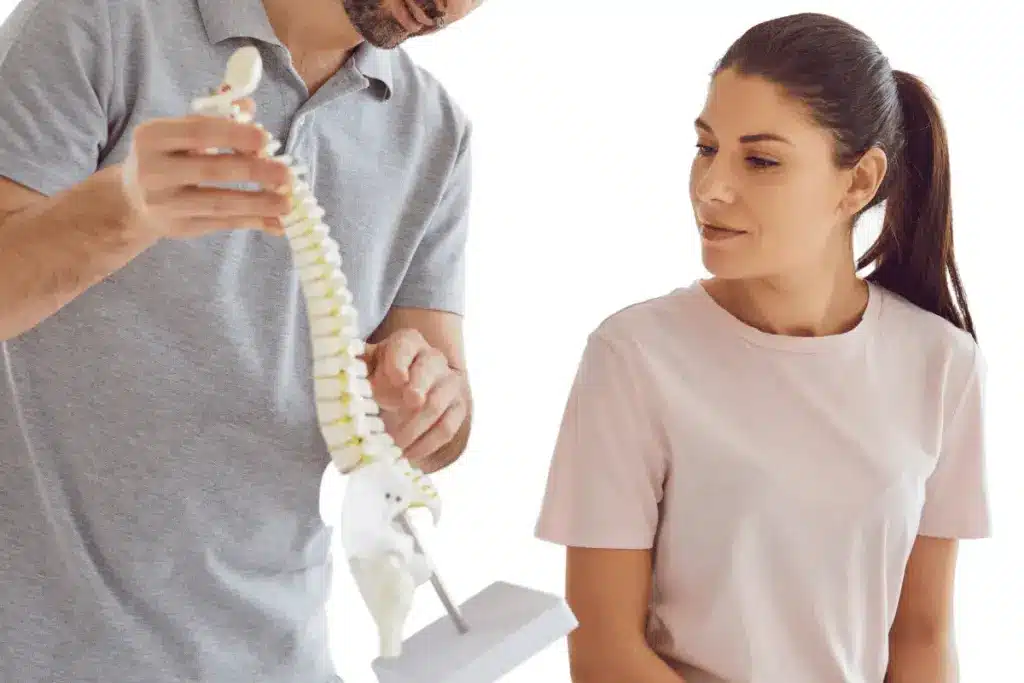
The human spinal cord is a complex and vital part of our body. It plays a key role in controlling many bodily functions. But, the number of bones in the spine or backbone is not as simple as it seems.
The spinal cord is made up of many vertebrae stacked on top of each other. The sacrum bone is at the base of the spine. Knowing what makes up the spinal cord helps us understand its role and importance.
Key Takeaways
- The spinal cord is a vital part of the central nervous system.
- The spine is composed of multiple vertebrae.
- The sacrum bone forms the base of the spine.
- Understanding the spinal cord’s components is essential for appreciating its function.
- The spinal cord plays a key role in controlling various bodily functions.
The Spinal Cord vs. Vertebral Column: Clarifying a Common Misconception
The spinal cord and vertebral column are often mixed up. But they have different roles in our bodies. The spinal cord is part of the nervous system. The vertebral column is a bony structure that supports and protects us.
What is the Spinal Cord?
The spinal cord is a long, thin tube made of nervous tissue. It runs from the brain to the lower back. It’s key for sending messages between the brain and the rest of the body.
What is the Vertebral Column or Backbone?
The vertebral column, or backbone, is made of many vertebrae stacked together. It helps us stand up straight and move around easily.
How the Vertebral Column Protects the Spinal Cord
The vertebral column wraps around and protects the spinal cord in the vertebral canal. The vertebrae help absorb shock and spread out pressure. This keeps the spinal cord safe.
|
Structure |
Function |
Composition |
|---|---|---|
|
Spinal Cord |
Transmits nerve signals |
Nervous tissue |
|
Vertebral Column |
Provides support and protection |
Bony vertebrae |
To sum up, the spinal cord and vertebral column are different. The vertebral column protects the spinal cord. This shows how cleverly our spine is designed.
Spine Anatomy: The Complete Structure of the Vertebral Column
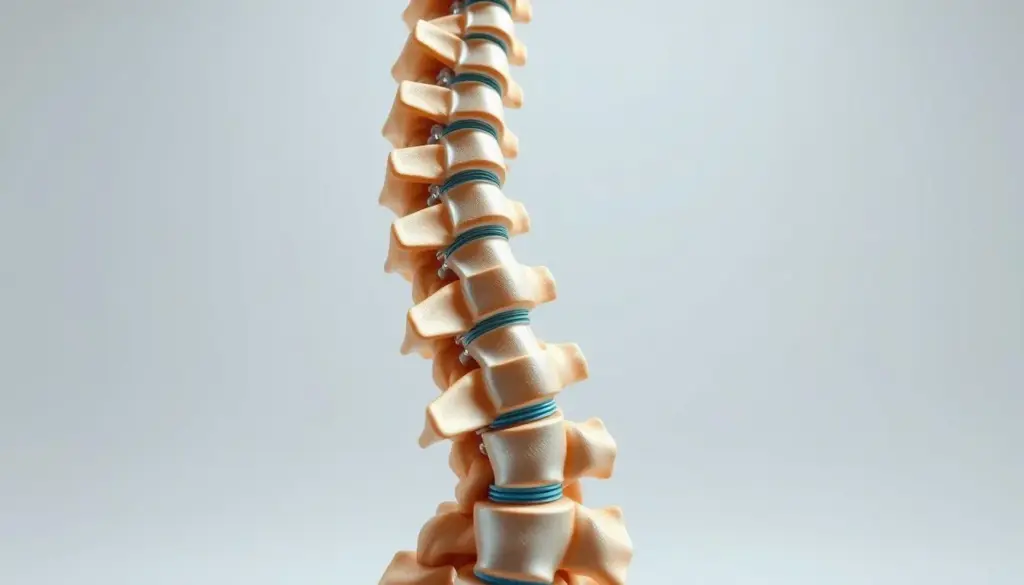
The vertebral column, or spine, is a key part of our skeleton. It supports us, protects our spine, and lets us move freely.
The Five Regions of the Spine
The spine is split into five areas: cervical, thoracic, lumbar, sacrum, and coccyx. Each part has its own role and features.
- The cervical spine is in the neck.
- The thoracic spine is in the upper back and is attached to the rib cage.
- The lumbar spine is in the lower back and bears a significant amount of the body’s weight.
- The sacrum is a fused set of vertebrae at the base of the spine.
- The coccyx, or tailbone, is located at the very bottom of the spine.
Primary Functions of the Vertebral Column
The vertebral column has key roles: it supports our body, protects the spinal cord, and helps us move.
The main functions include:
- Providing structural support and maintaining posture.
- Protecting the spinal cord and nerves.
- Allowing for flexibility and movement.
Components of a Typical Vertebra
A typical vertebra has several important parts.
Vertebral Body
The vertebral body is the main weight-bearing part of the vertebra.
Vertebral Arch
The vertebral arch forms the posterior wall of the spinal canal, protecting the spinal cord.
Vertebral Processes
Vertebral processes include the spinous process and transverse processes. They are where muscles and ligaments attach.
Vertebrae Count: How Many Bones Form the Adult Spine
The human spine changes as we grow from kids to adults. This change happens because some vertebrae fuse together in the lower spine.
The Standard 33 Vertebrae in Children
In kids, the spine has 33 vertebrae. These separate vertebrae help with flexibility and growth.
The 24 Movable Vertebrae in Adults
As we get older, some vertebrae join together. This makes adults have 24 movable vertebrae. The joined vertebrae form the sacrum and coccyx.
Fused Vertebrae: Sacrum and Coccyx
The sacrum is made from 5 fused vertebrae. The coccyx is made from 3 to 5 fused vertebrae. This fusion happens as we grow from kids to adults.
Anatomical Variations in Vertebral Count
Most adults have 24 movable vertebrae and the fused sacrum and coccyx. But, some people might have an extra or missing vertebra. This is rare.
|
Age Group |
Number of Vertebrae |
Characteristics |
|---|---|---|
|
Children |
33 |
Separate vertebrae for flexibility and growth |
|
Adults |
24 (plus fused sacrum and coccyx) |
Fused vertebrae in sacrum and coccyx |
The number of vertebrae changes from childhood to adulthood. This is because vertebrae fuse together, mainly in the sacrum and coccyx. Knowing this helps us understand the spine’s complexity and function.
Cervical Vertebrae: The 7 Bones of the Neck
The cervical vertebrae, which make up the seven bones in the neck, are key to supporting the head. They also help us move our heads in many ways. These bones are made to be flexible yet strong.
Unique Features of Cervical Vertebrae
Cervical vertebrae stand out because of their special traits. Some of these traits include:
- They are smaller and more delicate.
- They have a larger vertebral foramen.
- They possess bifid spinous processes.
These traits help the neck move more freely and widely.
The Atlas (C1) and Axis (C2): Special Functions
The first two cervical vertebrae, the atlas (C1) and axis (C2), have unique roles. The atlas lets the head nod, while the axis allows it to turn.
These special vertebrae are vital for the neck’s wide range of motion.
Common Cervical Spine Conditions
The cervical spine can face several issues that impact its function and cause pain. Two common problems are cervical spondylosis and whiplash injuries.
Cervical Spondylosis
Cervical spondylosis is caused by wear and tear on the cervical spine. It can cause neck pain, stiffness, and numbness or tingling in the arms.
Whiplash Injuries
Whiplash injuries happen from sudden movements, straining the neck. They are common in car accidents and can lead to neck pain, stiffness, and limited movement.
Thoracic Spine: The 12 Vertebrae Supporting the Ribcage
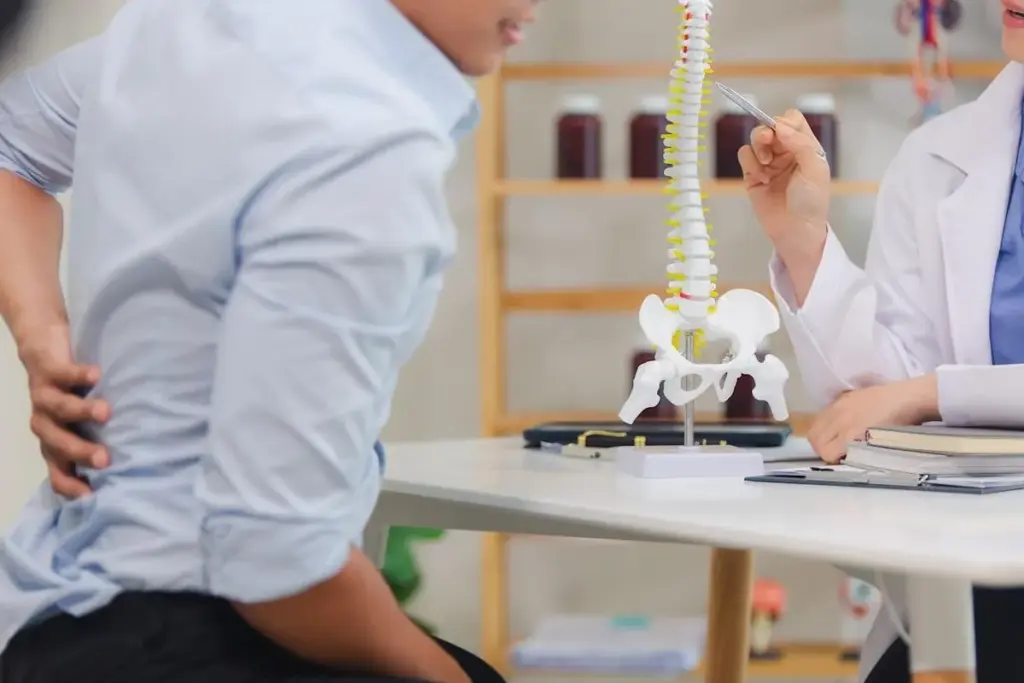
The thoracic spine, with its 12 vertebrae, is key in supporting the ribcage. It also helps with breathing movements. This part of the spine is closely tied to the ribcage, affecting both posture and breathing.
Distinctive Features of Thoracic Vertebrae
Thoracic vertebrae stand out because of their unique features. They have costal facets and transverse processes. These parts connect with the ribs at the costovertebral joints.
Costovertebral Joints: Connection to Ribs
The costovertebral joints link the thoracic vertebrae to the ribs. These joints allow the ribs and spine to move together. This movement is essential for breathing.
Role in Respiration and Trunk Stability
The thoracic spine is vital for breathing. It forms the structure that lets the chest expand and contract. It also helps keep the torso stable and maintains good posture.
Common Thoracic Vertebrae Issues
Issues like kyphosis and scoliosis can affect the thoracic vertebrae. Kyphosis is when the spine curves too much outward. Scoliosis is an abnormal sideways curve. Both can cause pain, discomfort, and breathing problems if not treated.
|
Condition |
Description |
Potential Complications |
|---|---|---|
|
Kyphosis |
Excessive outward curve of the thoracic spine |
Back pain, breathing difficulties |
|
Scoliosis |
Abnormal lateral curvature of the spine |
Back pain, uneven shoulders, respiratory issues |
Lumbar Spine: The 5 Vertebrae of the Lower Back
The lumbar region of the spine has five vertebrae. These vertebrae are bigger and stronger than others. They help support the body’s weight and allow for movement.
Why Lumbar Vertebrae Are Larger and Stronger
Lumbar vertebrae are built to handle a lot of weight. This is why they are larger and stronger. They face stresses like compression and flexion, making their strength key to spinal health.
Weight-Bearing Functions
The main job of lumbar vertebrae is to carry the upper body’s weight. They spread this weight to the pelvis and legs. This is important for keeping posture and doing activities like walking and lifting.
Common Lumbar Spine Problems
The lumbar spine faces many issues because of its weight-bearing role. Two common problems are herniated discs and lumbar stenosis.
Herniated Discs
A herniated disc happens when the soft center of the disc leaks out. This can cause pain, numbness, and weakness in the lower back and legs.
Lumbar Stenosis
Lumbar stenosis is when the spinal canal in the lumbar region narrows. This can press on nerves, causing pain, numbness, and weakness in the back and legs.
The Sacrum: 5 Fused Vertebrae Forming a Crucial Spinal Structure
The sacrum is a key part of the spine, made from five fused vertebrae. It sits at the spine’s base, between the hip bones. It’s vital for the spine’s structure.
Composition of the Sacrum Bone
The sacrum is a single, large bone made from five fused sacral vertebrae. This fusion happens in late teens to early twenties. It’s shaped like a triangle, with its base up and apex down.
The Process of Sacral Vertebrae Fusion
Fusion of the sacral vertebrae starts around 18 and ends in the mid-twenties. During this time, the vertebrae merge into one solid bone.
Anatomical Features of the Sacrum
The sacrum has key features. It has a sacral canal and sacral foramina. These allow nerves to pass through.
Sacral Canal
The sacral canal continues the spinal canal. It’s a path for the cauda equina, a bundle of nerve roots from the spinal cord’s lower end.
Sacral Foramina
The sacral foramina are openings on the sacrum’s sides. They let nerves exit and innervate the lower body.
|
Feature |
Description |
|---|---|
|
Sacral Canal |
Continuation of the spinal canal |
|
Sacral Foramina |
Openings for nerves to pass through |
Functions of the Sacrum in Body Mechanics
The sacrum is key in transferring forces from the spine to the pelvis and legs. It also supports muscles and ligaments.
The Sacroiliac Joint: Connecting Spine to Pelvis
The sacrum connects with the pelvis through the sacroiliac joint. This joint is vital for force transfer and pelvis stability.
In conclusion, the sacrum is essential for the skeletal system. Its unique structure and features enable it to perform critical functions.
The Coccyx: 3-5 Fused Vertebrae Forming the Tailbone
The coccyx, also known as the tailbone, is at the base of the spine. It’s made from 3-5 vertebrae that fuse together. This forms a small, triangular bone with key functions in our body.
Structure and Development
The coccyx forms from the merging of small vertebrae. This happens in late teens to early twenties. It becomes a solid bone that muscles, tendons, and ligaments attach to.
Evolutionary Significance
The human coccyx comes from our ancient tail. It doesn’t act as a tail anymore. But, it helps with posture and supports pelvic floor muscles.
Coccyx Injuries and Coccydynia
Coccyx injuries, like fractures or strains, can cause coccydynia, or tailbone pain. This pain can come from trauma, repeated strain, or other reasons. It makes the person a lot of discomfort.
Spinal Cord Protection: How Vertebrae and Discs Safeguard Nervous Function
It’s important to know how vertebrae and discs protect the spinal cord. The spinal cord is key to our nervous system. Keeping it safe is vital for our health.
The Vertebral Canal as a Protective Pathway
The vertebral canal is a tunnel made by vertebrae. It protects the spinal cord from harm. This tunnel is a major part of our body’s defense.
Intervertebral Discs: Structure and Function
Intervertebral discs are soft cushions between vertebrae. They help absorb shock, keeping the spinal cord safe. These discs have a tough outer layer and a soft center.
Spinal Nerves and Their Exit Points
Spinal nerves branch out from the spinal cord. They carry signals to and from the body. These nerves are vital for our body’s communication.
The Relationship Between Vertebral Health and Neurological Function
The health of vertebrae and discs affects our nervous system. Damage can cause problems by pressing on the spinal cord or nerves.
|
Component |
Function |
Impact on Spinal Cord |
|---|---|---|
|
Vertebrae |
Form the vertebral canal |
Protects the spinal cord |
|
Intervertebral Discs |
Act as shock absorbers |
Reduces impact on the spinal cord |
|
Spinal Nerves |
Transmit signals |
Enable neurological function |
In conclusion, vertebrae and discs are vital for the spinal cord’s protection. Keeping them healthy is key to our nervous system’s function and overall health.
Conclusion: The Engineering Marvel of the Human Spine
The human spine is a true marvel of anatomy. It has 33 vertebrae that work together. They provide support, flexibility, and protect the spinal cord.
Its structure is complex, with different parts for different functions. This allows us to move freely while keeping our nervous system safe.
This amazing design shows how well our bodies are made. Each part of the spine is important for our posture, movement, and protection. Learning about the spine helps us see how vital it is to take care of it.
FAQ
What is the difference between the spinal cord and the vertebral column?
The spinal cord is made of nervous tissue. The vertebral column is a bony structure that protects it.
How many vertebrae are in the human spine?
Children have 33 vertebrae. Adults have 24 movable ones. The sacrum and coccyx are fused vertebrae.
What are the five regions of the spine?
The spine has five regions: cervical, thoracic, lumbar, sacrum, and coccyx.
What is the function of the vertebral column?
The vertebral column supports and protects the spinal cord.
What is the sacrum composed of?
The sacrum is made of 5 fused vertebrae.
What is the role of the thoracic spine in respiration and trunk stability?
The thoracic spine is key for breathing and keeping the trunk stable. It connects to the ribs.
Why are lumbar vertebrae larger and stronger?
Lumbar vertebrae are bigger and stronger because they bear weight.
What is the coccyx, and what is its evolutionary significance?
The coccyx, or tailbone, is made of 3-5 fused vertebrae. It’s a remnant of a tail.
How do vertebrae and intervertebral discs protect the spinal cord?
Vertebrae and discs protect the spinal cord. They form a protective pathway and absorb shock.
What is the relationship between vertebral health and neurological function?
Vertebral health affects neurological function. The vertebrae and discs protect the spinal cord and nerves.
What are some common conditions that affect the cervical spine?
Cervical spondylosis and whiplash injuries are common in the cervical spine.
What are some common issues affecting the thoracic vertebrae?
Issues with the thoracic vertebrae include problems with the costovertebral joints and trunk stability.
National Center for Biotechnology Information. Evidence-Based Medical Insight. Retrieved from https://www.ncbi.nlm.nih.gov/books/NBK4412/