
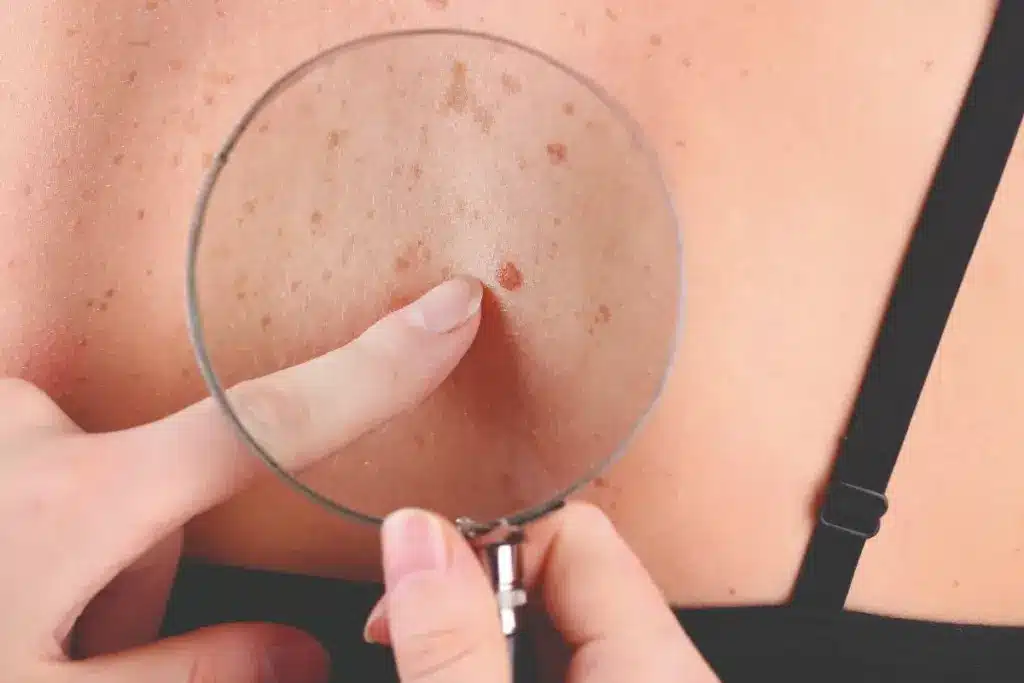
Nearly 100,000 Americans are diagnosed with skin cancer each year. A big part of these cases are linked to malignant moles.
It’s important to know what a mole should not look like. A normal mole is usually symmetrical, has a clear border, and is the same color all over.
If a mole doesn’t match these traits, it might be a sign of a serious problem. Knowing what a mole should look like helps spot issues early.
Key Takeaways
- Understanding a normal mole’s traits is key for catching skin cancer early.
- A malignant mole is different because it’s not symmetrical, has an irregular border, and has different colors.
- Knowing what a mole is helps find skin problems early.
- Early detection is vital to avoid serious skin cancer complications.
- Doing regular self-checks can help find abnormal moles early.
Understanding Normal Moles
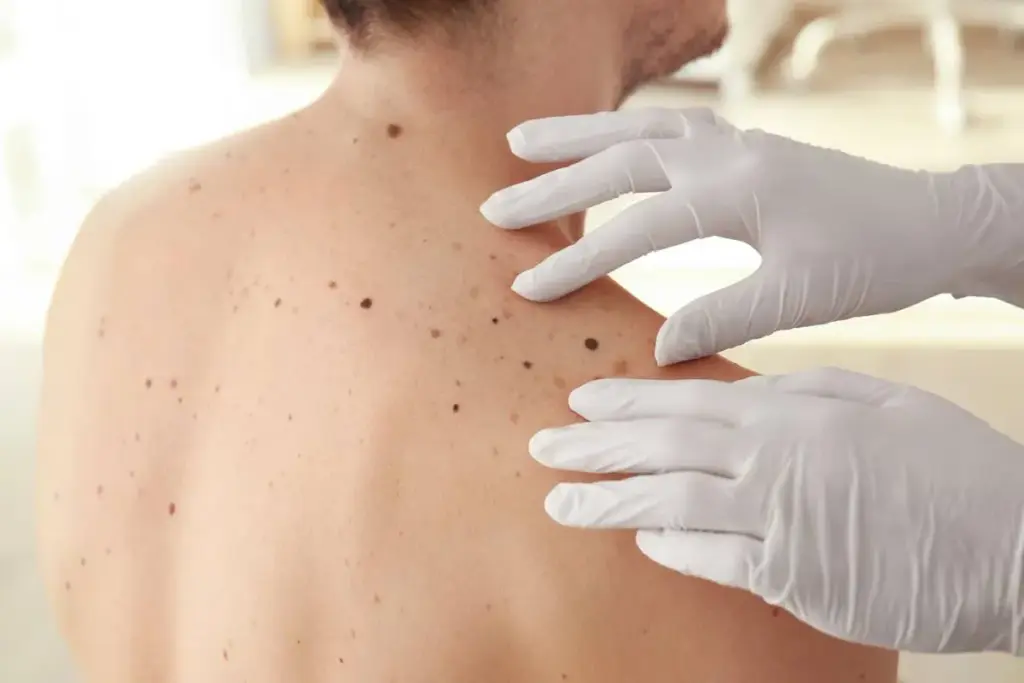
Knowing what a normal mole looks like is key to spotting skin problems early. Moles are common on our skin. Knowing their usual look helps us catch any odd changes.
What is a mole?
A mole, or nevus, is a skin growth from melanocytes, cells that make pigment. Moles can be flat or raised and range in color from pink to dark brown or black.
Common characteristics of normal moles
Normal moles usually have these traits:
- Uniform color
- Symmetrical shape
- Clear boundaries
- A diameter usually less than 6mm
Even though most moles are harmless, any change in their appearance could signal a problem.
Where moles typically appear
Moles can pop up anywhere, but they’re most common on sun-exposed areas like the face, neck, and hands. Below is a table showing where and how normal moles look.
|
Location |
Typical Characteristics |
|---|---|
|
Face |
Often uniform in color, may be flat or raised |
|
Neck and Hands |
Commonly appear as brown spots, may be slightly raised |
|
Back and Chest |
Can vary in size and color, often appear in groups |
Knowing where and how moles should look on your body helps you spot any unusual changes that might need a doctor’s visit.
The Importance of Monitoring Your Moles

Checking your moles regularly is key to keeping your skin healthy. Moles are common but can sometimes signal a serious issue. The American Academy of Dermatology says checking moles often can spot early signs of trouble.
Why Mole Monitoring Matters
Monitoring moles is important for catching changes early. “The sooner melanoma is found, the better the treatment chances,” says Medical Expert, a dermatologist. Changes in size, shape, color, or texture could mean trouble, so regular checks are a must.
How Often to Check Your Moles
It’s best to check your moles every month. Look for any new or changing moles. The ABCDE rule can help: Asymmetry, Border irregularity, Color variation, Diameter increase, and Evolving shape or size. If you see any of these, see a dermatologist.
Use a mirror to check your skin from head to toe, including hard spots like the back of your neck and the soles of your feet. You might also want a partner or family member to check areas you can’t see well.
Documenting Changes Over Time
Keeping track of mole changes is essential. Take clear, well-lit photos of your moles and note any changes. This helps your dermatologist spot issues more easily. Any fast growth or odd shapes should be reported to your doctor.
Being proactive about mole checks can greatly lower your risk of skin problems. Regular monitoring and keeping records can give you peace of mind and might even save your life.
The ABCDE Rule for Identifying Malignant Moles
The ABCDE rule helps spot the difference between harmless moles and those that might be cancerous. It focuses on five key traits to check when looking at moles. This helps people know when to see a doctor.
Asymmetry: When Halves Don’t Match
A normal mole looks symmetrical. If you draw a line down the middle, both sides should look the same. Asymmetry means the mole might be cancerous. Moles that are not even or have uneven halves need a doctor’s check-up.
Border: Irregular, Ragged, or Blurred Edges
Moles with irregular borders could be cancerous. Look for edges that are notched, ragged, or blurry. Benign moles have smooth, even edges.
Color: Multiple Colors or Uneven Distribution
Benign moles usually have one color. Moles with multiple colors or uneven color might be melanoma. Watch out for moles with different shades of brown, black, or even red, white, or blue patches.
Diameter: Larger than 6mm
Moles bigger than a pencil eraser (about 6mm) might be cancerous. While size isn’t the only sign, bigger moles need a closer look.
Using the ABCDE rule helps spot moles that might be cancerous. It’s important to catch skin cancer early for effective treatment.
Warning Signs That a Mole May Be Malignant
Knowing the signs of a possibly malignant mole is key for catching skin cancer early. Moles are common and usually harmless, but some can turn into melanoma, a serious skin cancer. It’s important to watch for any changes.
Rapid growth or change
A mole that grows or changes fast is a red flag. Changes in size, shape, or color could mean it’s becoming malignant. Keep an eye on your moles and report any changes.
“If you notice a mole that’s changing, don’t wait – consult a dermatologist,” advises skin cancer experts.
Bleeding or crusting
Moles that bleed or crust over might be malignant. If you see a mole bleeding or crusting, see a dermatologist. Bleeding or oozing can be a sign of skin cancer, and early check-ups are vital.
Itching or pain
Itching or pain around a mole is a warning sign. While it doesn’t always mean the mole is malignant, it’s best to get it checked. Some people feel discomfort or tenderness when a mole is becoming malignant.
Inflammation around the mole
Inflammation or redness around a mole could mean it’s becoming malignant. If the skin around a mole is inflamed or red, seek medical help. Redness or swelling can be a sign of skin cancer, and a dermatologist can check it out.
Being alert to these signs can help you catch skin cancer early. Regular self-exams and yearly visits to a dermatologist are important for healthy skin.
Visual Guide: What Does Melanoma Look Like
Knowing the signs of melanoma is key. This section offers a detailed guide to spot its look.
Melanoma is a serious skin cancer. It can look different. Knowing how it looks helps catch it early and treat it well.
Early-stage Melanoma Appearance
In the beginning, melanoma can look like a normal mole. But, there are signs to watch for. Look for asymmetry, irregular borders, and multiple colors.
The ABCDE rule helps spot moles that might be cancerous: – A: Asymmetry – B: Border irregularity – C: Color variation – D: Diameter (larger than 6mm) – E: Evolving size, shape, or color
Advanced Melanoma Characteristics
As melanoma gets worse, it shows more obvious signs. It might bleed, crust, or hurt.
|
Characteristic |
Description |
|---|---|
|
Bleeding or Crusting |
Advanced melanoma may bleed or develop a crust, indicating a more serious stage. |
|
Pain or Itching |
Melanomas can become painful or itchy as they progress. |
|
Inflammation |
The area around the melanoma may become inflamed, red, or swollen. |
Different Types of Melanoma and Their Visual Traits
There are many types of melanoma, each with its own look. Knowing these differences helps identify the type of melanoma.
- Superficial Spreading Melanoma: Often appears as a flat, irregularly shaped mole with varying colors.
- Nodular Melanoma: Typically presents as a raised, dome-shaped nodule that can be black or have other colors.
- Lentigo Maligna Melanoma: Usually occurs on sun-damaged skin, appearing as a large, flat patch with irregular borders and multiple colors.
By knowing these visual traits, you can spot melanomas early. If you see anything suspicious, get medical help right away.
Blackish Moles: When to Be Concerned
It’s important to know the difference between harmless black moles and those that might be cancerous. Black moles, or melanocytic nevi, are common skin growths found anywhere on the body. While most are harmless, changes in their look can signal a health problem.
Normal Black Moles vs. Concerning Ones
Normal black moles are usually the same color and have a clear edge. They can be round or oval and flat or raised. But, moles that are not normal might look different.
Key characteristics of concerning black moles include:
- Asymmetry: One half of the mole doesn’t match the other.
- Border irregularity: The edges are ragged, notched, or blurred.
- Color variation: The mole has multiple colors or an uneven distribution of color.
- Diameter: The mole is larger than 6mm in diameter.
- Evolution: Changes in size, shape, or color over time.
Signs of Pigment Changes That Warrant Attention
Changes in a mole’s color can mean it might be cancerous. It’s important to watch moles for any changes, such as:
- Darkening or lightening of the mole.
- Appearance of new colors or shades within the mole.
- Spread of pigment from the mole into the surrounding skin.
If you see any of these changes, you should see a dermatologist. Catching skin cancer early is key to treating it well.
Moles Under the Skin: Identifying Hidden Dangers
Subcutaneous moles are hidden under the skin and can be risky if not watched closely. They grow under the skin and are hard to see, making them tricky to find and diagnose.
Characteristics of Subcutaneous Moles
Subcutaneous moles are found under the skin’s surface. They don’t always show signs like irregular shapes or colors like other moles do. But, they can grow or change, which is a concern.
Key characteristics to watch for include:
- Location beneath the skin’s surface
- Potential for growth or change
- Lack of typical surface symptoms
When Deep Moles Become Problematic
Most subcutaneous moles are harmless, but some can turn cancerous. It’s important to keep an eye on them for any changes. Look for signs like bigger size, pain, or swelling.
|
Signs of Possible Cancer |
Description |
|---|---|
|
Rapid Growth |
A sudden increase in size |
|
Pain or Discomfort |
New onset of pain or tenderness |
|
Inflammation |
Redness or swelling around the mole |
Knowing these signs can help catch problems early. This could stop serious health issues before they start.
Abnormal Mole Locations That Raise Concern
Moles can pop up anywhere on the body. But some spots are more worrying than others. Even though most moles are harmless, their location can hint at a higher risk of cancer or other problems.
Hidden Areas Often Overlooked
Some spots, like the scalp, behind the ears, and between the toes, are easy to miss. Moles in these hidden areas can be a big worry. They might not be noticed until they cause trouble.
It’s key to check these spots regularly for any signs of trouble. Use a mirror or get someone to help you see these hard-to-reach places.
Moles in Sensitive or Unusual Locations
Moles in sensitive or odd places, like the palms, soles, or under nails, are harder to keep an eye on. These spots are at higher risk because they get irritated easily. They’re also less likely to be harmless moles.
Knowing about moles in these areas and watching them closely is vital. The table below highlights important points for moles in different spots.
|
Location |
Concern Level |
Action |
|---|---|---|
|
Scalp, behind ears |
High |
Regular self-examination |
|
Palms, soles, under nails |
High |
Professional evaluation |
|
Other areas |
Variable |
Monitor for changes |
The Ugly Duckling Sign: Spotting the Outlier
The “ugly duckling sign” is a simple yet effective way to spot moles that might be cancerous. It’s based on the idea that abnormal moles look different from others on your skin.
Identifying Moles That Don’t Match Others
To use the “ugly duckling sign,” look at the moles on your body. Find any mole that looks different from the others in size, shape, color, or texture. This could be your “ugly duckling.”
Key characteristics to look out for include:
- Asymmetry
- Irregular borders
- Multiple colors or uneven color distribution
- Larger diameter
- Changes in elevation or texture
Why Different-Looking Moles Warrant Attention
Moles that look different might be more likely to be cancerous. The “ugly duckling sign” is a helpful tool in dermatology for finding moles that could be cancerous.
|
Characteristics |
Benign Moles |
Malignant Moles |
|---|---|---|
|
Symmetry |
Symmetrical |
Asymmetrical |
|
Border |
Regular |
Irregular |
|
Color |
Uniform |
Multiple or uneven |
If you find a mole that looks very different from others, see a dermatologist. Catching skin cancer early is important for effective treatment.
Skin Cancer Images: Recognizing Different Types
Skin cancer comes in many forms. It’s important for doctors and people to know how to spot them through pictures. This helps in catching it early and treating it right.
Melanoma Pictures and Identification
Melanoma is the most serious skin cancer. It starts in the cells that make melanin. It’s key to catch it early for the best treatment.
Melanoma can look like a new mole or a change in an old one. The ABCDE rule helps: Asymmetry, Border that’s not even, Color that’s not the same, Diameter bigger than 6mm, and it’s changing in size, shape, or color.
Basal Cell Carcinoma Visual Guide
Basal cell carcinoma (BCC) is the most common skin cancer. It grows slowly and can spread locally. It often shows up on sun-exposed parts like the face, ears, and neck.
Look for a shiny bump, a pink or red patch, or a sore that won’t heal. It’s not usually deadly but can damage the area if not treated.
Squamous Cell Carcinoma Appearance
Squamous cell carcinoma (SCC) is another common skin cancer. It starts in squamous cells and can look like a firm, red nodule or a flat sore with a scaly crust.
SCC is more aggressive than BCC and can spread if not treated quickly. It often shows up in sun-exposed areas like the ears, face, and hands.
Rare Skin Cancers and Their Presentation
While melanoma, BCC, and SCC are common, there are rarer types like Merkel cell carcinoma and dermatofibrosarcoma protuberans (DFSP). These have unique looks and need special diagnosis.
|
Type of Skin Cancer |
Common Appearance |
Typical Locations |
|---|---|---|
|
Melanoma |
Asymmetric mole, irregular borders, multiple colors |
Anywhere, but often on sun-exposed areas |
|
Basal Cell Carcinoma |
Shiny bump, pink or red patch, open sore |
Face, ears, neck |
|
Squamous Cell Carcinoma |
Firm, red nodule, flat sore with scaly crust |
Ears, face, hands |
Learning to spot different skin cancers through pictures is important. Regular self-checks and doctor visits help keep your skin healthy.
Understanding the Sinister Meaning Behind Certain Mole Changes
Mole changes can be small but very important. They often show serious skin problems. Knowing these changes helps catch problems early.
Subtle Changes That Indicate Malignancy
Some mole changes mean trouble. Look for asymmetry, where the mole doesn’t look even. Also, watch for irregular borders, like rough edges.
Another sign is color variation. If the mole has different colors or looks uneven, it’s a warning.
Medical Expert, a dermatologist, says, “Seeing many colors or odd colors in a mole is a big warning sign. It means you should see a doctor right away.”
The Progression from Benign to Malignant
Turning from a harmless mole to a cancerous one is a serious change. It happens when genes change and the environment affects the skin. UV exposure is a big risk because it damages skin cells, leading to cancer.
“Finding skin cancer early makes treatment better. Watching moles for changes is very important.”
Timeline of Concerning Changes
Mole changes can happen fast or slow, from weeks to years. Rapid changes are a big worry and need quick doctor visits. It’s key to note any changes, big or small, to track them.
Understanding mole changes helps protect your skin. Regular checks and knowing the signs are vital for catching skin cancer early.
Risk Factors That Increase Chances of Malignant Moles
Several factors can increase the risk of getting malignant moles. These include genetics, environment, and physical traits. Knowing these risks helps identify who might be more at risk. It also ensures they take steps to prevent it.
Family History of Skin Cancer
Having a family history of skin cancer, like melanoma, raises your risk. If your relatives have had skin cancer, watch your moles closely.
Sun Exposure Patterns
UV radiation from the sun or tanning beds is a big risk. Severe sunburns, even as a kid, increase your risk. Wearing protective clothes and using sunscreen can help.
Fair Skin and Other Physical Traits
Fair skin, light hair, and eyes make you more vulnerable to UV damage. This raises your risk of malignant moles. Also, having many freckles or burning easily instead of tanning is risky.
Number of Moles on Your Body
Having many moles on your body increases your risk of one becoming malignant. It’s key to check all moles often. See a dermatologist if you notice any changes.
Knowing these risk factors helps protect your skin. Regular skin checks and visits to a dermatologist are vital. They help catch and treat problems early.
When to See a Dermatologist About a Suspicious Mole
A suspicious mole can worry you. Seeing a dermatologist early can help find and treat skin problems quickly.
Timeframes for Medical Evaluation
Notice any mole changes? Like an odd shape, different colors, or it’s getting bigger? You should see a dermatologist right away. The American Academy of Dermatology says check your skin every month and see a pro if you spot anything odd.
Key signs that warrant immediate attention include:
- Asymmetry
- Irregular borders
- Multiple colors or uneven color distribution
- Diameter larger than 6mm
- Evolution or change over time
What to Expect During a Skin Check
A dermatologist will look at your skin closely, even in places you can’t see yourself. They might use a special tool called a dermatoscope to check your moles up close.
|
Procedure |
Description |
|---|---|
|
Visual Examination |
A thorough visual inspection of the skin |
|
Dermatoscopy |
Using a dermatoscope to examine moles closely |
|
Biopsy |
Removing a sample of skin for further examination if necessary |
Preparing for Your Appointment
To get the most from your visit, prepare well. Here’s how:
- Write down any mole changes you’ve seen.
- Be ready to talk about your health history, including skin issues or family cancer history.
- Don’t wear makeup or lotions on the day of your visit. They can get in the way.
- Bring any important medical records or biopsy results.
“Early detection is key to treating skin cancer effectively. Regular skin checks can help identify problems early.”
Being proactive about your skin health and knowing when to see a dermatologist can greatly improve your chances of catching and treating skin cancer early.
Diagnostic and Treatment Options for Abnormal Lesions
Diagnosing abnormal lesions requires a mix of looking at them and using advanced tests. Dermatologists use different methods to figure out how serious a lesion is. They then decide the best way to treat it.
Visual Examination Techniques
Looking at the lesion is the first step. Dermatologists use tools like dermatoscopes to examine it closely. They look for signs of cancer, like irregular shapes or different colors.
Biopsy Procedures Explained
If a visual check shows concerns, a biopsy might be needed. This involves taking a tissue sample from the lesion. There are several biopsy types, like shave or punch biopsies. The choice depends on the lesion’s size, location, and how serious it is.
Treatment Approaches for Different Types of Skin Cancer
Treatment varies based on the diagnosis. For cancers like melanoma, treatments include surgery or Mohs surgery. Sometimes, treatments like immunotherapy are used.
Follow-up Care After Treatment
After treatment, it’s important to follow up. Patients should check themselves regularly and see their dermatologist often. This helps catch any new problems early.
Conclusion
Knowing what a mole should not look like is key to spotting skin problems early. A mole that looks mostly normal can be a worry if it’s not symmetrical or has uneven edges.
In this article, we’ve talked about why it’s important to watch your moles. We’ve also discussed the signs that might mean a mole is not good. Knowing what melanoma looks like can help catch it early and treat it right.
Being aware of the risks for bad moles, like family history or too much sun, helps you protect your skin. Regular visits to a dermatologist can catch any mole changes that might be a problem.
Keeping up with your skin health is very important. This way, you can lower your risk of skin cancer and get help fast if you need it.
FAQ
What is a normal mole, and how can I identify one?
A normal mole is a benign growth on the skin. It’s usually round, symmetrical, and evenly colored. Moles are often less than 6mm in diameter and have a smooth border.
How often should I check my moles for changes?
Check your moles monthly for size, shape, color, or texture changes. Also, have a professional skin check annually or as advised by your dermatologist.
What is the ABCDE rule, and how does it help identify malignant moles?
The ABCDE rule helps spot potentially malignant moles. It stands for Asymmetry, Border irregularity, Color variation, Diameter larger than 6mm, and Evolving. If a mole shows any of these signs, it may be malignant.
What are the warning signs that a mole may be malignant?
Warning signs include rapid growth, bleeding, itching, pain, or inflammation. If you notice these symptoms, see a dermatologist.
What does melanoma look like, and how can I identify it?
Melanoma can look like a new or changing mole. Early-stage melanoma is a small, asymmetrical patch or mole with irregular borders and multiple colors. Advanced melanoma grows in size and becomes more irregular.
Are blackish moles always a cause for concern?
Not all blackish moles are a concern. But, if they show irregular characteristics like asymmetry, border irregularity, or color variation, consult a dermatologist.
What are subcutaneous moles, and when can they become problematic?
Subcutaneous moles are under the skin. They’re usually benign but can be problematic if they grow or change. If you notice changes or discomfort, see a dermatologist.
What are the risk factors that increase the chances of developing malignant moles?
Risk factors include a family history of skin cancer, excessive sun exposure, fair skin, and many moles on your body.
When should I see a dermatologist about a suspicious mole?
If you notice changes or irregularities in a mole, see a dermatologist as soon as possible. The timing depends on the severity of the symptoms.
What can I expect during a skin check with a dermatologist?
A dermatologist will visually examine your skin, including your moles, for irregularities or changes. They may perform a biopsy if needed.
What are the diagnostic and treatment options for abnormal lesions?
Diagnostic options include visual examination and biopsy procedures. Treatment varies by the type and severity of skin cancer. It may include surgical removal, topical treatments, or other therapies.
References
National Center for Biotechnology Information. Evidence-Based Medical Insight. Retrieved from https://www.ncbi.nlm.nih.gov/books/NBK560606/