
Creatine is a top choice for boosting athletic performance and muscle growth. Many are unsure if they should take it every day or just on workout days. This debate is common among those who work out and athletes.Should i take creatine everyday or just on workout days?’ Our simple guide gives the best, proven answer for amazing results and muscle saturation.
Consistent daily supplementation is key to maximizing performance gains and muscle growth. Research shows that taking 3 to 5 grams of creatine daily is best. This is true whether it’s a training or rest day.
Studies prove creatine is safe and effective for both short and long-term use. It helps increase muscle strength and growth. The International Society of Sports Nutrition says up to 30 grams of creatine daily for up to five years is safe.
Key Takeaways
- Creatine supplementation enhances athletic performance and muscle development.
- Daily creatine intake of 3 to 5 grams is recommended for optimal benefits.
- Consistent daily supplementation is more important than specific timing.
- Creatine is safe for both short-term and long-term use.
- The International Society of Sports Nutrition supports the safety of creatine supplementation up to 30 grams daily for up to five years.
Understanding Creatine: What It Is and How It Works
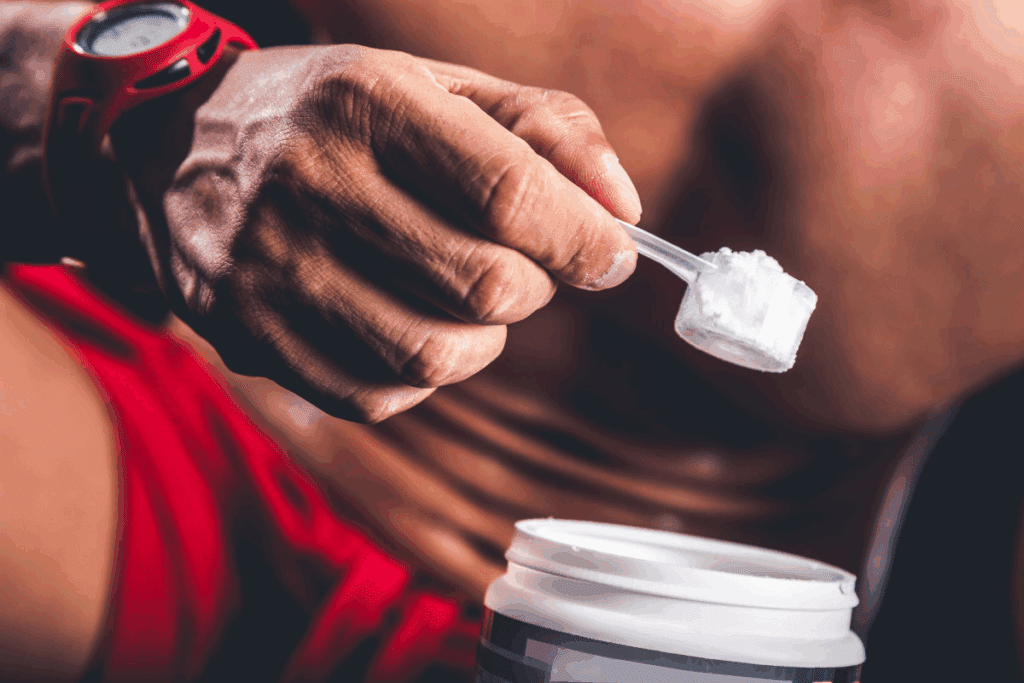
Creatine is more than a supplement; it’s a scientifically-backed aid for energy during intense activities. It’s not just for building muscle. It also boosts athletic performance.
The Science Behind Creatine as an Energy Source
Creatine increases phosphocreatine in muscles. Phosphocreatine helps quickly refill ATP, the body’s energy, during intense efforts. This means athletes can work harder and longer.
Key Benefits: Better energy, improved muscle performance, and longer endurance in intense activities.
How Creatine Enhances Athletic Performance and Muscle Development
Creatine’s benefits come from quick ATP replenishment. High-intensity exercise depletes ATP fast. Creatine helps refill it faster, leading to better performance and muscle growth.
Aspect | Without Creatine Supplementation | With Creatine Supplementation |
ATP Regeneration | Slower regeneration, limiting high-intensity efforts | Faster regeneration, enabling longer and more intense workouts |
Muscle Performance | Limited by quicker onset of fatigue | Improved performance and endurance |
Muscle Development | Less effective due to limited intensity and endurance | Greater muscle development due to increased intensity and endurance |
Knowing how creatine works helps athletes and fitness fans decide if it’s right for them. It’s key for better performance and muscle growth.
The Evidence-Based Benefits of Creatine Supplementation
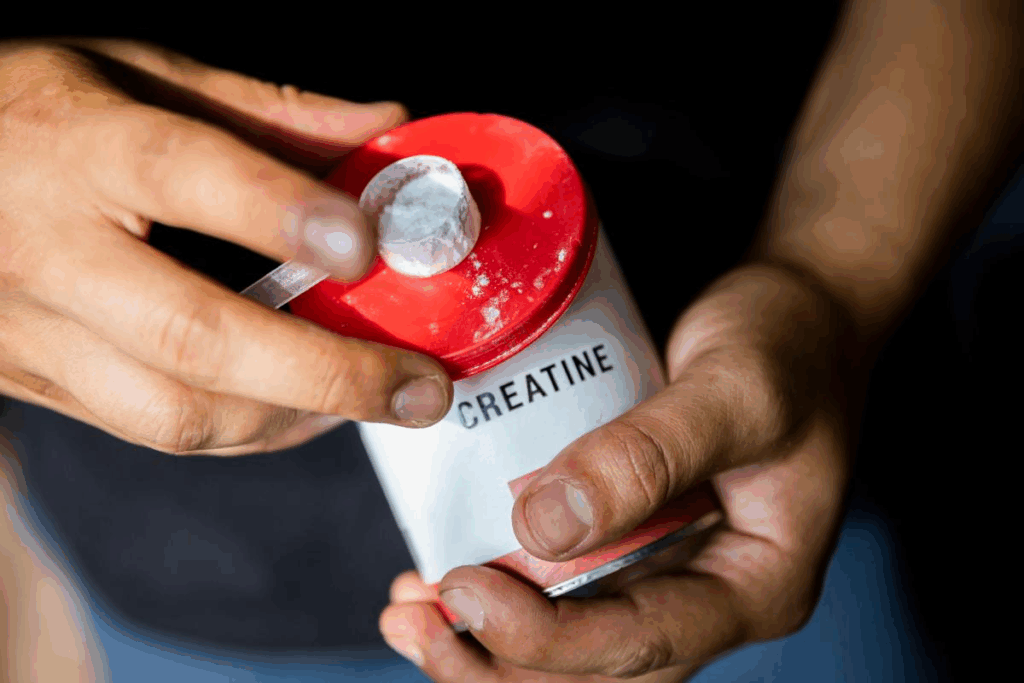
Creatine supplements have been studied a lot. They help both athletes and non-athletes. Scientists have learned a lot about how creatine works and its benefits.
Muscle Growth and Strength Gains
Creatine helps increase muscle strength and endurance. It boosts the amount of phosphocreatine in muscles. This lets people do more intense workouts, leading to bigger muscles over time.
Studies show athletes who take creatine get stronger and more powerful. For example, a study in the Journal of Strength and Conditioning Research found a 10-15% boost in strength. This is because creatine lets athletes do more reps and sets at higher intensities, helping muscles grow.
Improved Exercise Recovery and Performance
Creatine also helps with exercise recovery. It reduces muscle soreness and fatigue. This means athletes can train more often and harder.
A study in the Journal of Sports Sciences found creatine cuts down muscle soreness after hard workouts. This helps athletes recover faster and train better in the next sessions.
Non-Athletic Benefits of Creatine
Creatine isn’t just for athletes. It might also help people who aren’t athletes. It could protect the brain and help older adults keep their muscle and strength.
A study in the Journal of Gerontology showed creatine helps older adults get stronger. This is important for staying functional and avoiding falls.
Benefit | Description | Population |
Muscle Growth | Increased muscle mass due to enhanced workout intensity | Athletes, Bodybuilders |
Strength Gains | Improved maximal strength and power output | Athletes, Powerlifters |
Improved Recovery | Reduced muscle soreness and fatigue | Athletes, Individuals with High Physical Activity |
Non-Athletic Benefits | Neuroprotective effects, maintenance of muscle mass and strength | Older Adults, Individuals with Neurological Conditions |
Should I Take Creatine Everyday or Just on Workout Days?
Research shows the best time to take creatine, helping athletes choose wisely. Many wonder if they should take it every day or just on workout days. This question is key for those wanting to get the most out of creatine.
The Research-Backed Answer: Daily Supplementation is Optimal
Studies prove that taking creatine daily is better than just on workout days. Keeping muscle creatine levels high is key for good performance and recovery. Daily supplementation keeps muscle creatine stores full, so athletes can perform well every day.
Research says creatine boosts muscle creatine phosphate, which helps with high-intensity exercises. Daily use keeps creatine phosphate levels high. This lets athletes work harder and recover faster.
Why Rest Days Are Important for Creatine Intake
Even though daily creatine is best, rest days are also vital. Rest days help muscles recover and grow. Taking creatine on these days keeps muscle levels high.
During rest days, the body fixes and builds muscle. Keeping creatine levels high supports this process. This means athletes are ready to perform well on their next workout day.
- Daily creatine supplementation maintains muscle saturation levels.
- Rest days are important for muscle recovery and growth.
- Continuing creatine on rest days supports the recovery process.
In summary, the research backs up taking creatine every day, not just on workout days. This approach helps athletes stay consistent and reach their training goals.
The Science of Creatine Absorption and Muscle Saturation
To get the most out of creatine, you need to know how it works in your body. Creatine is popular for boosting athletic performance and building muscle. But, how well your body absorbs and uses it matters a lot.
How Your Body Processes and Stores Creatine
When you take creatine, your body absorbs it into your blood. Then, it goes to your muscles. There, it turns into phosphocreatine, a high-energy compound. This helps your muscles work harder and longer.
Studies show that regular creatine use can raise muscle creatine levels by up to 20%. But, this can change based on your starting levels and other factors.
The 1-2% Daily Breakdown Rate and Its Implications
Creatine breaks down at a rate of 1-2% per day into creatinine. Your kidneys then get rid of it. This shows why you need to keep taking creatine to keep your muscles full.
To keep your muscles at their best, you must keep adding creatine. If you don’t, your muscle performance will start to drop. So, it’s important to understand and manage how much creatine your body breaks down each day.
By taking creatine every day, you help keep your muscles full of this important compound. This supports your strength and endurance as you keep getting better.
Optimal Creatine Dosage Protocols
To get the most from creatine, knowing the right dosage is key. Many studies have looked into how much to take. They all agree on the best ways to dose creatine.
Standard Daily Maintenance Dosage (3-5g)
The usual daily dose of creatine is 3 to 5 grams. This amount helps keep muscles full and boosts performance. Consistency is key. Taking it every day keeps your muscles ready for action and helps them grow.
Loading Phase vs. Consistent Daily Intake
Some research says starting with a loading phase can quickly fill up muscle creatine. You take 20 grams a day for 5-7 days. Then, you switch to 3-5 grams a day for upkeep. But, others think just taking 3-5 grams daily is just as good, even if it takes longer to get there.
Adjusting Dosage Based on Body Weight and Activity Level
While the standard dose is a good start, some studies suggest tailoring it to your body and activity level. For athletes, taking 0.3 grams per kilogram of body weight daily might be better. People who are more active might need more to keep their muscles full.
In short, while 3-5 grams a day is widely accepted, adjusting for body weight and activity can make creatine work even better for you.
Timing Your Creatine Intake for Maximum Benefits
To get the most out of creatine, knowing when to take it is key. While timing isn’t everything, there are ways to make it work better.
Pre-Workout vs. Post-Workout Consumption
There’s a long debate on whether to take creatine before or after working out. Studies show both methods can be good, but being consistent is more important than when you take it.
Taking creatine pre-workout might boost your performance by raising muscle creatine levels before you start. Taking it post-workout could help with recovery by filling up muscle creatine stores after they’ve been used up.
Timing | Potential Benefits |
Pre-Workout | Enhances performance, increases muscle creatine levels |
Post-Workout | Aids in recovery, replenishes muscle creatine stores |
Best Practices for Creatine Timing on Rest Days
On rest days, when to take creatine isn’t as important. But, it’s essential to keep a regular daily routine to keep muscle creatine levels high.
“Consistency is key when it comes to creatine supplementation. Taking it at the same time every day helps maintain muscle saturation.”
It’s best to take creatine with a meal or snack that has carbs and protein. This helps it get absorbed better.
Why Consistency Matters More Than Exact Timing
The most important thing about creatine is being consistent, not the exact timing. Taking it every day keeps muscle creatine levels up, helping with both performance and recovery.
By focusing on consistency in your creatine routine, you can get the most out of this powerful supplement.
Safety Considerations and Possible Side Effects
When thinking about creatine supplements, it’s important to look at their safety and side effects. Creatine is seen as safe by many, but it can have some downsides.
Common Side Effects and How to Minimize Them
Some people might feel side effects from creatine, but these are usually mild and short-lived. You might get stomach cramps, diarrhea, or muscle cramps. To lessen these, drink lots of water and take your daily dose in smaller parts throughout the day.
Strategies for Minimizing Side Effects:
- Drink plenty of water all day
- Split your daily creatine dose into smaller parts
- Take creatine with food to ease stomach issues
Long-Term Safety of Daily Creatine Use
Many studies have looked into creatine’s long-term safety, and most agree it’s safe for most people. The key to safe use is staying well-hydrated.
Study Duration | Daily Dose | Reported Side Effects |
1 year | 3-5 grams | Minimal; similar to placebo |
2 years | 3-5 grams | No significant side effects |
5 years | 3-5 grams | Rare; mostly related to hydration status |
In summary, while creatine is mostly safe, knowing about possible side effects and how to avoid them is key. Long-term studies show it’s safe when used correctly.
Common Myths and Misconceptions About Creatine Supplementation
Creatine is a key supplement for many athletes. It’s important to know the truth about it. Many myths have stopped people from using it to its full advantage.
Myth: “Only Take Creatine on Training Days”
Some think you should only take creatine when you’re working out. But studies show that taking it every day is better. Consistency is key for the best results.
“Taking creatine on non-training days keeps muscle creatine levels high,” a study in the Journal of the International Society of Sports Nutrition found.
Myth: “Creatine Causes Dehydration and Kidney Problems”
Many believe creatine leads to dehydration and kidney issues. But research proves it’s safe for most people. It doesn’t harm kidneys or cause dehydration when used correctly.
- Creatine doesn’t lead to dehydration if you drink enough water.
- It doesn’t harm kidney function in healthy people.
Myth: “Creatine Is Only for Bodybuilders and Strength Athletes”
Some think creatine is only for bodybuilders and strength athletes. But it helps many types of athletes. It boosts endurance, supports HIIT, and even helps with brain function.
Creatine’s versatility makes it great for many people, from pros to fitness enthusiasts.
In summary, knowing the truth about creatine can help you decide if it’s right for you. It’s safe and effective for athletes and fitness lovers.
Conclusion: The Verdict on Daily Creatine Supplementation
We’ve looked into the good points and best ways to use creatine. The facts show that taking it daily boosts sports performance and muscle growth.
Learning how creatine works and adding it to your daily routine can enhance its effects. It’s great for athletes and fitness lovers alike, helping you reach your targets.
Our study confirms that daily creatine use is a straightforward and effective way to support your fitness path. It’s safe and proven to work, so we suggest adding it to your daily supplements.
FAQ
Should I take creatine every day or only on workout days?
We suggest taking creatine every day. This keeps your muscle creatine stores high. It helps with consistent performance and recovery.
What is the optimal daily dosage of creatine?
The best daily dose is 3 to 5 grams. It boosts athletic performance and muscle growth.
Is it necessary to take creatine on rest days?
Yes, taking creatine on rest days is key. It keeps your muscles ready for the next workout.
Can I take creatine daily for an extended period?
Yes, creatine is safe for long-term use. It’s okay for both short and long periods.
What are the common side effects of creatine supplementation, and how can I minimize them?
Side effects include stomach cramps, diarrhea, and muscle cramps. Stay hydrated and follow the dosage to avoid these.
Should I take creatine before or after my workout?
Timing isn’t as important as consistency. Both pre- and post-workout have benefits. Just stick to a routine.
Is creatine supplementation only beneficial for athletes and bodybuilders?
No, it also helps non-athletes, like older adults and those with certain health issues.
Can creatine cause dehydration and kidney problems?
No, there’s no scientific proof that creatine causes dehydration or kidney issues. But, drink plenty of water while taking it.
How does creatine work, and what are its benefits?
Creatine boosts phosphocreatine in muscles, helping with quick ATP recovery. It improves muscle growth, strength, and recovery. It also helps non-athletes.
Can I adjust my creatine dosage based on my body weight and activity level?
Yes, you can adjust your dosage based on your body and activity level. But, 3 to 5 grams daily works for most people.
References
National Center for Biotechnology Information. Evidence-Based Medical Guidance. Retrieved from https://pubmed.ncbi.nlm.nih.gov/23258572/



 Departments
 Related Videos
 Our Doctors
 News
News