
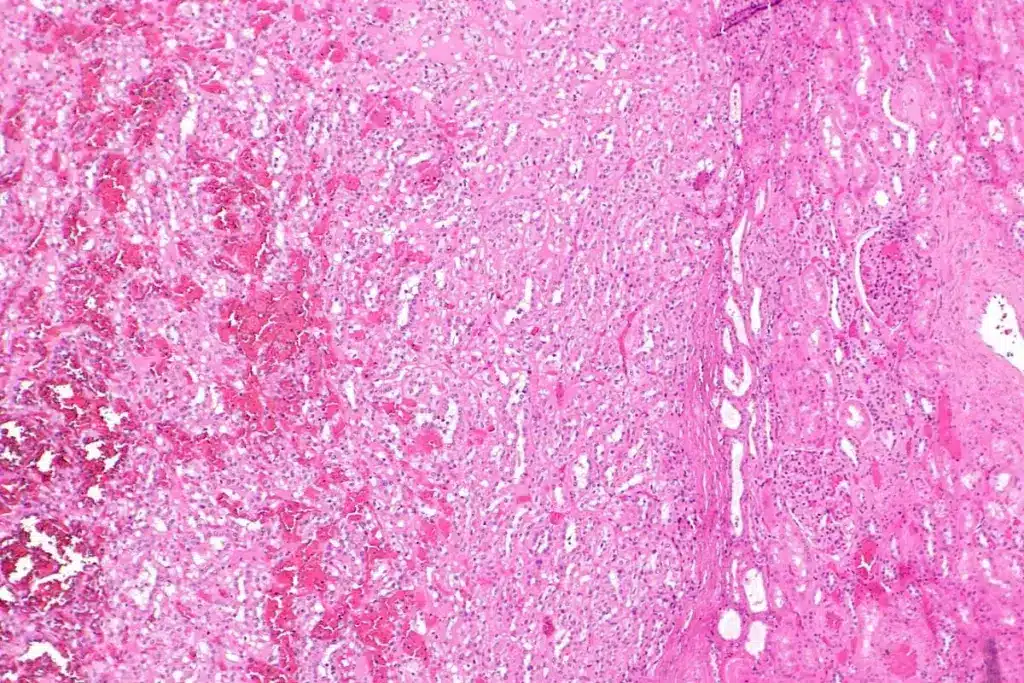
In the United States, thousands are diagnosed with skin cancer each day. Melanoma is the most deadly form. Listing the 5 classic warning signs of malignant melanoma using the ABCDE mnemonic (Asymmetry, Border, Color, Diameter, Evolving).
Melanoma starts in the melanocytes, the cells that produce melanin. Melanin is the pigment that gives skin its color. Knowing the warning signs is key for early detection and treatment.
Key Takeaways
- Melanoma is a serious form of skin cancer that originates in melanocytes.
- Early detection is critical for effective treatment.
- Recognizing the warning signs can save lives.
- Skin cancer is a significant health concern in the United States.
- Melanin is the pigment responsible for skin color.
Understanding Melanoma and Its Significance

Melanoma is a serious skin cancer that starts in the melanocytes. These cells make melanin. This cancer grows fast and can spread if caught late.
Melanoma often appears on sun-exposed skin like arms, back, face, and legs. While we don’t know all causes, UV light is a big risk. It can damage melanocytes’ DNA, leading to cancer.
What is Melanoma and How Does It Develop?
Melanoma happens when melanocytes grow out of control due to genetic changes. This can form a tumor. Both genes and the environment, like UV light, play a part in its development.
UV light damages melanocytes’ DNA. Over time, these cells get more mutations. This leads to melanoma.
The Role of Melanin in Skin Cancer
Melanin helps protect the skin from UV damage. It acts like a natural sunscreen. But, people with less melanin, like those with fair skin, are at higher risk of melanoma.
|
Factor |
Role in Melanoma Development |
|---|---|
|
UV Exposure |
Damages melanocyte DNA, increasing cancer risk |
|
Melanin |
Provides natural protection against UV radiation |
|
Genetic Predisposition |
Increases susceptibility to melanoma |
Knowing how melanin and other factors lead to melanoma is key. By understanding these risks and protecting our skin from UV, we can lower our melanoma risk.
The ABCDE Rule: 5 Critical Warning Signs of Melanoma
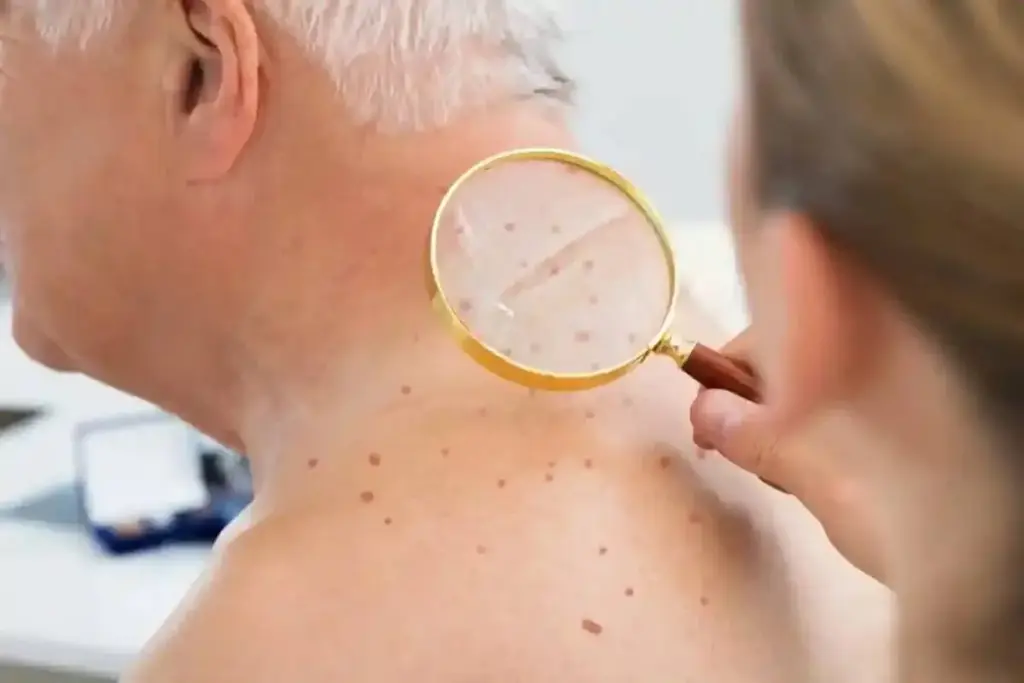
The ABCDE rule is a simple guide to spot melanomas by looking at moles. It helps remember key signs of melanoma. This can lead to early detection and save lives.
A – Asymmetry: When Half the Mole Doesn’t Match
Asymmetry is a key warning sign of melanoma. If a mole is not symmetrical, it’s a problem. Benign moles usually are symmetrical. To check, draw a line through the mole’s middle. If the halves don’t match, worry.
Key characteristics to look out for:
- Irregular shapes
- Uneven boundaries
- Differing colors within the mole
B – Border Irregularity: Uneven or Notched Edges
Border irregularity means the mole’s edges are uneven. Melanomas often have this, unlike benign moles. Checking the edges can tell you a lot.
Signs of border irregularity include:
- Edges that are not smooth
- Notches or scallops around the border
- A blurred or undefined edge
C – Color Variation: Multiple Colors Within One Mole
Color variation is another warning sign. Benign moles are usually one color, but melanomas can have many. Seeing multiple colors in one mole is a big red flag.
Colors to be cautious of:
- Multiple shades of brown
- Black or dark areas within the mole
- Red, pink, white, or blue discoloration
D – Diameter: Size Matters in Melanoma Detection
The size of a mole is also important. Melanomas are often bigger than benign moles. A size over 6mm is suspicious. But, size alone isn’t enough to tell.
E – Evolving: Changes That Signal Danger
Evolving means changes in a mole’s size, shape, or color over time. Melanomas change, while benign moles stay the same. Watching for changes is key.
Changes to watch for:
- Growth or expansion
- Changes in color or texture
- New symptoms such as itching or bleeding
Knowing the ABCDE rule and checking your skin regularly can help catch melanoma early. This makes treatment more effective.
Beyond ABCDE: Additional Warning Signs of Melanoma
Spotting melanoma is more than just using the ABCDE rule. Knowing other warning signs is key for early detection and treatment. The ABCDE criteria are a good start, but other signs can also point to melanoma.
The “Ugly Duckling” Sign
A spot that looks different from others on your skin is a key sign. It’s called the “ugly duckling” sign. This means a melanoma will look unlike other moles. When checking your skin, look for any mole that seems out of place.
Symptoms Beyond Visual Changes
While looking at your skin is important, melanoma can also show up in other ways. You might feel itching, tenderness, or pain in a mole. Sometimes, a mole can get inflamed or bleed. These signs mean you should check it out more closely.
Melanoma can show up anywhere on your body, even in places not exposed to UV light. This makes it vital to check all your skin, not just the usual spots.
Warning Signs by Melanoma Type
Each type of melanoma has its own signs. For example, acral lentiginous melanoma often shows up on palms or soles. Nodular melanoma grows fast and might not follow the ABCDE rule. Knowing these differences helps catch it early.
|
Melanoma Type |
Common Characteristics |
|---|---|
|
Acral Lentiginous Melanoma |
Appears on palms or soles, often with a flat appearance |
|
Nodular Melanoma |
Rapid growth, can be raised and firm to the touch |
|
Lentigo Maligna Melanoma |
Typically found in sun-damaged areas, often in older adults |
Knowing these extra signs and the different types of melanoma helps you spot problems early. This way, you can get medical help fast.
Early Stage Melanoma: Catching It Before It Spreads
Finding melanoma early is key to saving lives. Most people have moles, and almost all are harmless. Knowing the signs of early-stage melanoma can greatly improve treatment results.
Visual Characteristics of Early Melanoma
Early melanoma shows subtle changes that can be missed. It’s important to watch moles for any changes in size, shape, color, or texture. A normal mole is usually an evenly colored brown, tan, or black spot on the skin.
Early melanoma may have different colors, be uneven, or have an irregular edge. Paying attention to these signs is vital, as they can mean melanoma is developing.
Distinguishing Between Normal Moles and Melanoma
Telling a normal mole from melanoma can be tough, even for doctors. Yet, some signs can point to melanoma. Here are some key differences:
|
Characteristics |
Normal Moles (Nevi) |
Early Stage Melanoma |
|---|---|---|
|
Symmetry |
Usually symmetrical |
Often asymmetrical |
|
Border |
Regular border |
Irregular, notched, or scalloped border |
|
Color |
Uniform color |
Variation in color, including shades of brown, black, and sometimes pink or red |
|
Diameter |
Typically smaller |
Often larger, but can be small |
|
Evolving |
Stable over time |
Changes in size, shape, or color over time |
Knowing these differences and checking your skin often can help catch it early. If you see anything odd, see a dermatologist right away.
Risk Factors for Developing Malignant Melanoma
Knowing the risk factors for malignant melanoma is key to preventing and catching it early. This serious skin cancer can be influenced by genetics, environment, and personal factors.
UV Light Exposure: Natural and Artificial Sources
UV light is a big risk for melanoma. This includes sunlight and artificial sources like tanning lamps and beds. Too much UV light can harm the skin, leading to DNA damage and cancer.
Reducing UV Exposure: To lower risk, use sunscreen, wear covering clothes, and stay in the shade, mainly during peak sun hours.
Genetic and Personal Risk Factors
Genetics are a big part of melanoma risk. People with a family history of melanoma are at higher risk. Certain genetic conditions, like atypical mole syndrome, also increase risk.
Being fair-skinned, having light hair and eyes, and a history of sunburns, even as a child, are also risk factors.
|
Risk Factor |
Description |
Prevention/Reduction Strategy |
|---|---|---|
|
UV Light Exposure |
Natural sunlight and artificial sources like tanning beds |
Use sunscreen, wear protective clothing, seek shade |
|
Family History |
Having close relatives with melanoma |
Regular skin checks, awareness of changes |
|
Fair Skin, Light Hair, Light Eyes |
Increased susceptibility to UV damage |
Extra caution with sun protection |
Misconceptions About Melanoma Risk
Many think melanoma only affects fair-skinned people. But it can happen to anyone. Another myth is that melanoma can’t be prevented. By avoiding UV light and knowing your risk, you can lower your chances.
By understanding these risks and taking steps to prevent them, you can reduce your chance of getting malignant melanoma.
Types of Melanoma: Knowing What to Look For
Melanoma is not just one disease but a group of cancers that affect the skin. It’s important to know the different types of melanoma for diagnosis and treatment. Each type looks different, grows in its own way, and can be more or less serious.
The various melanoma types are classified by how they look and grow. The most common types are superficial spreading melanoma, nodular melanoma, lentigo maligna melanoma, and acral lentiginous melanoma.
Superficial Spreading Melanoma
Superficial spreading melanoma is the most common, making up about 70% of cases. It grows outward, spreading across the skin’s surface. This makes it easier to spot early.
Nodular Melanoma: The Most Aggressive Form
Nodular melanoma is very aggressive and grows quickly into the skin. It looks like a new bump or nodule and is often dark. Because it grows fast, it’s often caught later, making it more dangerous.
Lentigo Maligna Melanoma
Lentigo maligna melanoma happens in older people on sun-damaged skin, often on the face. It starts as lentigo maligna, a type of melanoma in situ. If not treated, it can become invasive. Early detection is key.
Acral Lentiginous and Other Rare Types
Acral lentiginous melanoma occurs on the palms, soles, or under the nails and is not related to UV exposure. Other rare types include desmoplastic melanoma and uveal melanoma. Knowing about these rare forms is important for good skin health.
|
Type of Melanoma |
Characteristics |
Common Locations |
|---|---|---|
|
Superficial Spreading Melanoma |
Grows outward, visible growth pattern |
Trunk, arms, legs |
|
Nodular Melanoma |
Aggressive, grows vertically |
Anywhere on the body |
|
Lentigo Maligna Melanoma |
Occurs on sun-damaged skin, often on the face |
Face, specially in older individuals |
|
Acral Lentiginous Melanoma |
Occurs on palms, soles, or under nails |
Palms, soles, nail beds |
Diagnosis and Staging of Melanoma
Diagnosing melanoma involves looking at the skin and using special tools. It’s important to get it right so the right treatment can be chosen.
Professional Skin Examinations
A doctor will first look at your skin for any odd moles or spots. They might use a special tool called a dermatoscope for a better look.
Key aspects of a professional skin examination include:
- Visual inspection of the skin
- Use of dermatoscopy for closer examination
- Assessment of moles and lesions for suspicious characteristics
Biopsy Procedures and What to Expect
If a mole looks odd, a doctor might take a sample. This can be done in a few ways, like removing the whole mole or just taking a piece of it.
It’s essential to follow the healthcare provider’s recommendations regarding the biopsy procedure.
Understanding Melanoma Staging
After finding out if you have melanoma, the next step is to figure out how far it has spread. This means looking at how thick the melanoma is, if it’s in the lymph nodes, and if it’s in other parts of the body.
|
Stage |
Description |
|---|---|
|
0 |
Melanoma in situ, where cancer cells are confined to the outer layer of skin |
|
I |
Early-stage melanoma, where the cancer is relatively thin |
|
II |
Melanoma that is thicker but has not spread to lymph nodes |
|
III |
Melanoma that has spread to lymph nodes |
|
IV |
Advanced melanoma that has spread to distant organs or lymph nodes |
Advanced Diagnostic Techniques
Tools like sentinel lymph node biopsy and molecular testing help doctors make treatment plans. They give more information than just looking at the skin.
Knowing the diagnosis and stage of melanoma is key to treating it well. Doctors use skin checks, biopsies, and new tests to give the best care for melanoma patients.
Treatment Approaches for Melanoma
Understanding the treatment options for melanoma is key. These include surgery, immunotherapy, and targeted therapy. The right treatment depends on the melanoma’s stage, the patient’s health, and the tumor’s characteristics.
Surgical Options and Recovery
Surgery is often the first step in treating melanoma, mainly in its early stages. The goal is to remove the melanoma and some surrounding tissue. This ensures all cancer cells are gone. The surgery type varies based on the melanoma’s thickness and location.
Surgical procedures may include:
- Wide excision: Removing the melanoma along with a margin of normal skin.
- Sentinel lymph node biopsy: Identifying and removing the first lymph node to which cancer cells are likely to spread.
- Lymph node dissection: Removing multiple lymph nodes if cancer has spread.
Immunotherapy and Targeted Treatments
Immunotherapy boosts the body’s immune system to fight cancer cells. Targeted therapy uses drugs that target specific cancer cell characteristics, stopping their growth and division.
“Immunotherapy has revolutionized the treatment of melanoma, giving new hope to patients with advanced disease.” –
A leading oncologist
Examples of immunotherapies include:
- Checkpoint inhibitors: Drugs that release the brakes on the immune system, allowing it to attack cancer cells more effectively.
- Interleukin-2 (IL-2): A cytokine that stimulates the immune system.
Radiation and Chemotherapy Approaches
Radiation therapy uses high-energy rays to kill cancer cells or slow their growth. Chemotherapy uses drugs to kill cancer cells. While not as common for melanoma, they are used for advanced cases.
|
Treatment Type |
Description |
Use in Melanoma |
|---|---|---|
|
Radiation Therapy |
High-energy rays to kill cancer cells |
Used for melanoma that has spread or can’t be removed surgically |
|
Chemotherapy |
Drugs to kill cancer cells |
Less commonly used; may be considered for advanced melanoma |
Clinical Trials and Emerging Therapies
Clinical trials offer new treatments not yet widely available. These include new immunotherapies, targeted therapies, and combination treatments.
Joining a clinical trial is an option for advanced melanoma or when standard treatments fail. It’s important to discuss the benefits and risks with a healthcare provider.
Conclusion: Taking Action Against Melanoma
Knowing what melanoma is and its warning signs is vital. Melanoma, a serious skin cancer, can be deadly if not found early. We’ve looked at the important signs, risk factors, and types of melanoma in this article.
Early detection is essential for treating melanoma well. Knowing the signs and risk factors helps people act against melanoma. Regular self-checks and doctor visits can greatly improve treatment results.
By staying informed and alert, people can keep their skin healthy and lower melanoma risk. Awareness and learning are strong weapons against this disease. Start taking care of your skin today and encourage others to do the same.
FAQ
What is melanoma?
Melanoma is a serious skin cancer. It grows in cells that make melanin. This leads to a tumor that doesn’t stop growing.
What are the warning signs of melanoma?
Look for signs like asymmetry and irregular borders. Also, watch for color changes and size increases. The “ugly duckling” sign and other symptoms are important too.
What is the ABCDE rule?
The ABCDE rule helps spot melanoma. It stands for asymmetry, border irregularity, color variation, diameter, and evolving. These signs might mean you have melanoma.
What is the role of UV light exposure in melanoma development?
UV light, from the sun or artificial sources, increases melanoma risk. It damages melanocyte DNA, leading to melanoma.
How is melanoma diagnosed?
Doctors use skin exams, biopsies, and advanced tests to diagnose melanoma. A biopsy removes tissue for a microscope check.
What are the different types of melanoma?
Melanoma types include superficial spreading, nodular, lentigo maligna, and acral lentiginous. Each type has its own features and treatment needs.
What are the treatment options for melanoma?
Treatments include surgery, immunotherapy, targeted treatments, radiation, and chemotherapy. The right treatment depends on the melanoma’s stage and type.
Can melanoma be prevented?
While you can’t prevent all melanomas, you can lower your risk. Avoid too much UV light, wear protective clothes, and seek shade. Early detection is key.
What is the significance of early detection in melanoma?
Early detection is vital for effective treatment. Early-stage melanoma is highly treatable, improving survival chances. Regular self-exams and professional checks help catch it early.
What is the difference between a normal mole and melanoma?
Normal moles are symmetrical, smooth, and uniform. Melanoma is often asymmetrical, has irregular borders, and varies in color. Changes in size, shape, or texture are warning signs.
References
Centers for Disease Control and Prevention. Evidence-Based Medical Insight. Retrieved from https://www.cdc.gov/cancer/skin/basic_info/melanoma.htm