
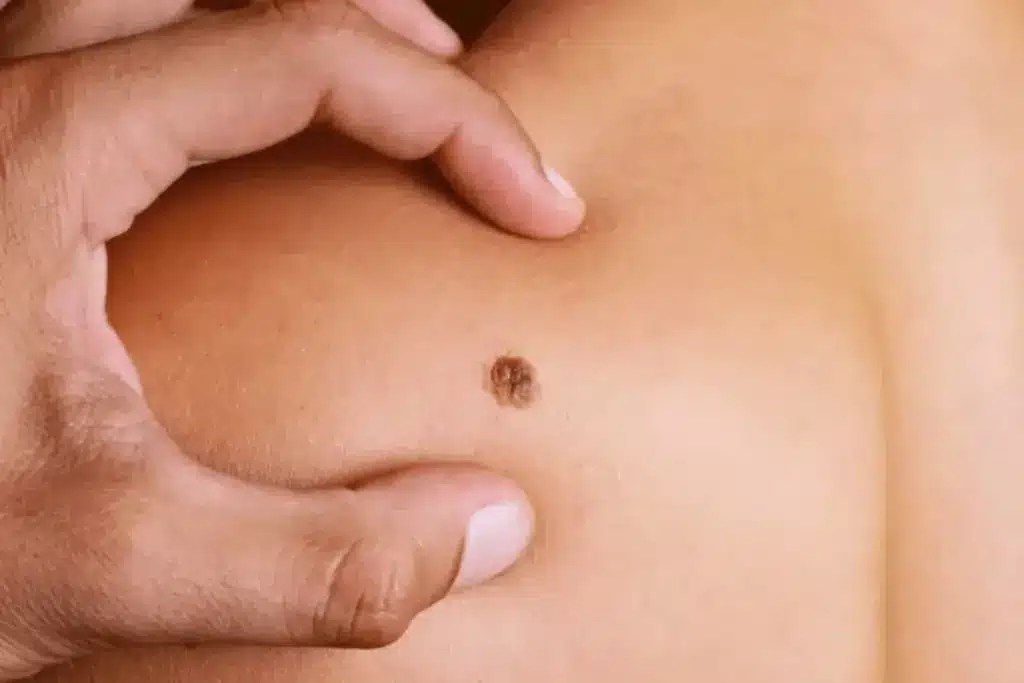
A recent study found that for every 1000 extra biopsies, 6.9 more cases of melanoma were diagnosed. This shows how complex the link between biopsy rates and finding cancer is.
Knowing how many skin biopsies show cancer is key for both patients and doctors. A biopsy is a vital tool to figure out if a skin spot, possibly a benign mole or something more serious like melanoma, is cancerous.
Key Takeaways
- The rate of melanoma is closely tied to how many biopsies are done.
- Not every biopsy finds cancer; many are not cancerous.
- Doctors usually decide to do a mole biopsy based on the mole’s look and behavior.
- Telling a benign mole from melanoma is key for the right treatment.
- Getting a mole biopsied can give a clear answer, making patients feel better.
Understanding Skin Biopsies and Their Purpose
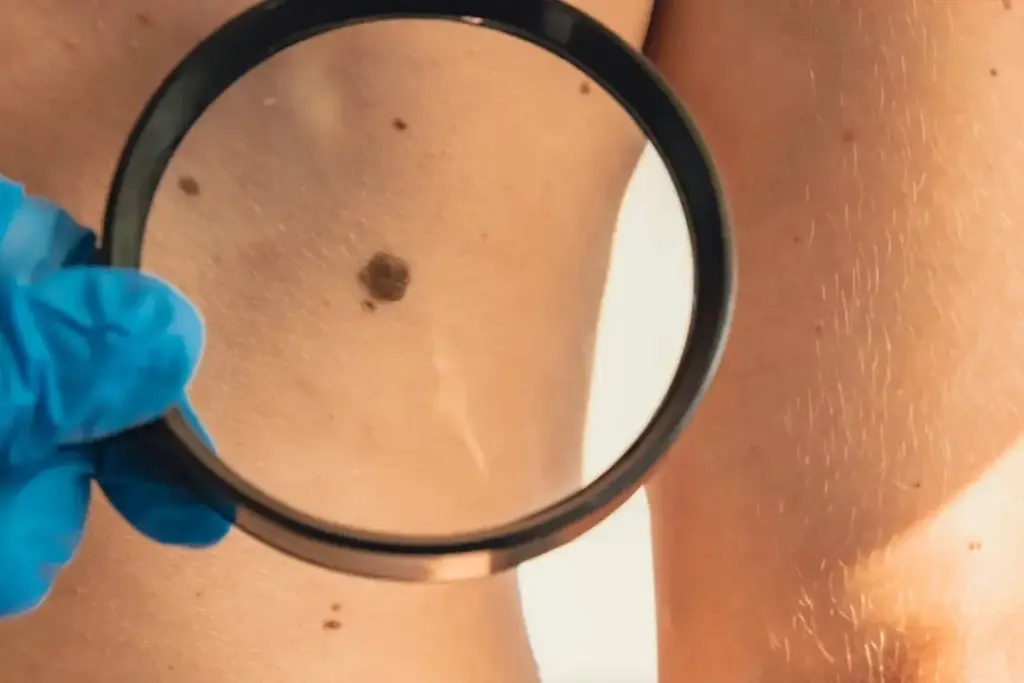
To find out if a skin lesion is cancerous, doctors often do a skin biopsy. This is a medical procedure where they remove a skin sample for a microscope check.
What is a skin biopsy?
A skin biopsy is a tool doctors use to check skin lesions or odd spots. It helps figure out if a spot is cancer or not. They take a small skin sample, which a pathologist then looks at.
Common reasons doctors order skin biopsies
Doctors do skin biopsies for many reasons, like:
- To find out if skin cancer or precancer is present
- To figure out the cause of skin symptoms like rashes or spots
- To watch changes in moles or other skin growths
A study looked at 80,368 biopsy results. It found 23% were melanocytic lesions. This shows how important biopsies are for skin health.
Types of skin biopsies performed
There are several types of skin biopsies, including:
- Shave biopsy: A surface biopsy that takes off the top skin layers.
- Punch biopsy: Uses a circular tool to take a deeper skin sample.
- Excisional biopsy: Removes the whole lesion or a big skin sample.
Each biopsy type is used based on the skin lesion’s location and type.
Knowing about the different skin biopsy types and their uses can make patients feel more ready for the test.
The Statistics: How Often Skin Biopsies Reveal Cancer
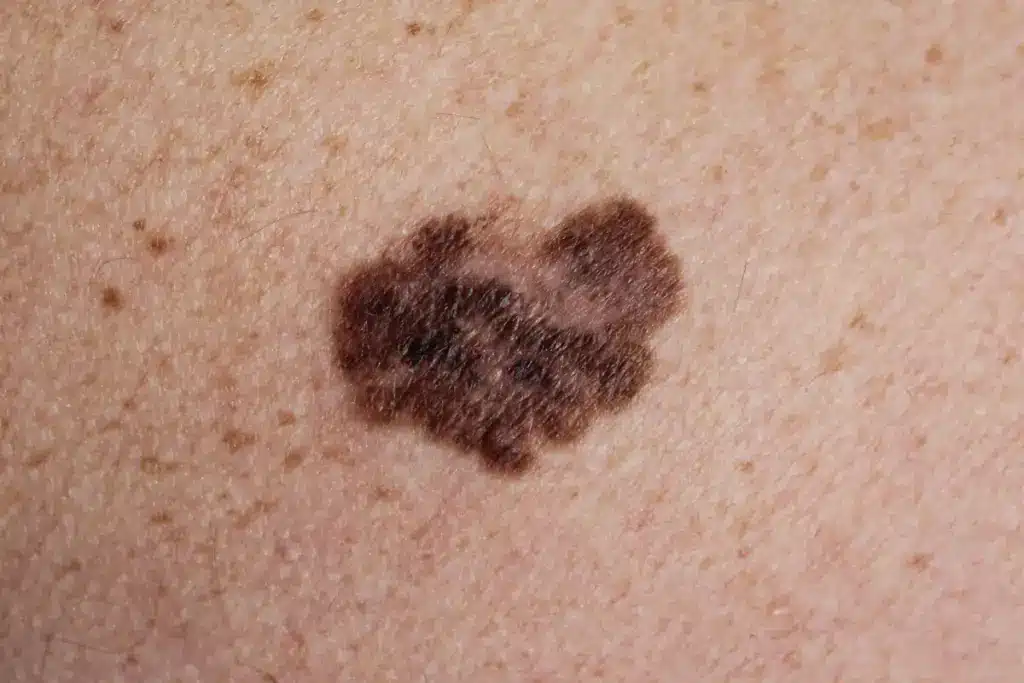
Learning about skin biopsy results can help us understand cancer detection better. Skin biopsies are key in finding cancer in suspicious spots.
Overall Percentage of Cancerous Findings
Studies show that the rate of cancer found in skin biopsies varies a lot. A big part of biopsies find skin cancer, with melanoma being a big worry.
Variation by Biopsy Type and Location
The type and where the biopsy is done can change cancer detection rates. For example, biopsies on the face or sun-exposed areas might find more cancer because of UV damage.
|
Biopsy Type |
Cancer Detection Rate |
|---|---|
|
Shave Biopsy |
15% |
|
Punch Biopsy |
25% |
|
Excisional Biopsy |
40% |
Factors Affecting Cancer Detection Rates
Many things can change how often cancer is found in skin biopsies. These include the patient’s age, sun exposure history, and family cancer history. Also, atypical moles can make finding cancer more likely.
Knowing these stats and factors helps us see why regular skin checks and biopsies are so important for early cancer detection.
Recognizing the Difference Between Benign Moles and Cancerous Lesions
It’s important to know if a mole is harmless or could be cancer. Most moles are not harmful, but some might show signs of melanoma or other cancers. Knowing the signs of benign moles and cancerous ones can help keep your skin healthy.
Characteristics of Benign Moles
Benign moles usually have the same color and a clear edge. They can be round or oval and flat or raised. Most people have 10 to 40 moles on their body, found anywhere.
These moles are usually safe and don’t need to be removed unless they bother you or you want them gone for looks.
Warning Signs That a Mole Might Be Cancerous
Changes in a mole can mean skin cancer. Look out for these signs:
- Asymmetry: One half of the mole doesn’t match the other.
- Border: The edges are irregular, ragged, or blurred.
- Color: The color is not uniform and may include shades of black, brown, or tan.
- Diameter: The mole is larger than 6mm in diameter.
- Evolving: The mole is changing in size, shape, or color.
These signs follow the ABCDE rule, a helpful guide for spotting cancerous moles.
The ABCDE Rule for Melanoma Detection
The ABCDE rule is a simple way to remember signs of melanoma. Look for asymmetry, irregular borders, color changes, size, and evolving changes. If a mole shows any of these, see a dermatologist right away.
The Benign Mole: What Makes It Non-Cancerous
Benign moles are common on human skin. Knowing what they look like is key to telling them apart from cancerous ones. These growths are usually harmless and can pop up anywhere on the body.
Cellular Characteristics of Benign Moles
Benign moles are made of cells called melanocytes, which make pigment. The cells in these moles are usually the same and organized. This is different from cancerous moles.
Common Types of Benign Moles
There are several types of benign moles, including:
- Congenital moles: Present at birth
- Acquired moles: Appear later in life
- Dysplastic moles: Atypical moles that can be a sign of increased risk for melanoma
Natural Evolution of Benign Moles Throughout Life
Benign moles can change over time. This can be due to hormonal changes. For example, moles may darken or lighten during pregnancy.
Childhood Moles vs. Adult Moles
Moles in children can act differently than those in adults. Knowing this is important for skin care.
How Pregnancy and Hormones Affect Moles
Hormonal changes during pregnancy can make moles look different. It’s important to watch these changes to make sure they’re not a worry.
Understanding benign moles helps keep skin healthy. It also reduces worry about skin cancer.
When Should You Consider Biopsying a Mole?
Knowing when to get a mole biopsy is key for catching skin problems early. A mole biopsy can tell if a mole is cancerous or not.
Changes that warrant medical attention
Changes in a mole’s look can mean it might need a biopsy. The ABCDE rule is a good guide: Asymmetry, Border irregularity, Color variation, Diameter increase, and Evolving size or shape. If you see any of these, see a dermatologist right away.
Risk factors that increase the need for biopsy
Some things make you more likely to need a mole biopsy. These include a family history of skin cancer, a personal history of it, and UV radiation exposure. Being fair-skinned or having a history of sunburns also raises your risk.
Discussing concerns with your dermatologist
If a mole worries you, talk to a dermatologist. They can check the mole and suggest a biopsy if needed. Tell them about any changes and your risk factors.
The Mole Biopsy Procedure: What to Expect
Understanding what happens during a mole biopsy can make it less scary. A mole biopsy is a simple test to see if a mole is cancerous or not.
Preparation for a Mole Biopsy
Your doctor will clean the area around the mole before the biopsy. They might also give you a local anesthetic to numb the skin. This keeps you comfortable during the procedure.
Step-by-Step Explanation of the Procedure
The biopsy takes a sample of the mole using different methods. These include shave biopsy, punch biopsy, or excisional biopsy. The method chosen depends on the mole’s size, location, and the doctor’s suspicion of cancer.
Post-Biopsy Care and Healing
After the biopsy, the area might be dressed with a bandage. You might feel some minor discomfort. Your doctor will tell you how to care for the wound and what to expect while it heals.
Results from the mole biopsy will come in a few days to a week. Then, your doctor will talk to you about the findings and what to do next.
Understanding Mole Biopsy Results
Getting to know your mole biopsy results is key. It involves waiting for the results and understanding the pathology report.
Timeframe for Receiving Results
It usually takes 7 to 10 business days to get mole biopsy results. But, this time can change based on the lab and the test’s complexity.
Interpreting Pathology Reports
Pathology reports give detailed info about your biopsy. They tell you about the tissue type, any abnormalities, and your diagnosis.
Common Terminology in Biopsy Results
Biopsy results use terms you might not know. It’s important to understand these words to get your diagnosis.
Benign Findings
Benign results mean your mole is not cancerous. This is the most common result of mole biopsies.
Atypical or Dysplastic Findings
Atypical or dysplastic moles show abnormal cell growth. They are not cancerous but could become cancerous. You’ll need to keep an eye on them.
Malignant Findings
Malignant results mean your mole is cancerous, usually melanoma. You’ll need treatment, like removing the mole and nearby tissue.
|
Result Type |
Description |
Next Steps |
|---|---|---|
|
Benign |
Non-cancerous mole |
Monitoring |
|
Atypical/Dysplastic |
Abnormal cell growth, not cancerous |
Regular check-ups |
|
Malignant |
Cancerous mole, typically melanoma |
Surgical removal and further treatment |
Levels of Atypical Moles: From Mild to Severe
Atypical moles can range from mild to severe. These moles, also known as dysplastic nevi, show unusual cell growth. Knowing the level of atypia helps figure out the risk of cancer.
Mild Atypia: What it Means
Mild atypia means the mole cells are mostly normal but show some odd traits. These moles need regular checks for any changes.
Moderate Atypia: Increased Monitoring
Moderate atypia shows more abnormal cell growth. People with these moles should see their dermatologist more often.
Severe Atypia: When it Approaches Melanoma
Severe atypia means the mole cells look a lot like melanoma cells. In such cases, removing the mole is often advised to stop melanoma from developing.
Follow-up Procedures for Different Atypia Levels
Follow-up actions depend on the atypia level. Mild atypia needs regular checks. Moderate atypia requires more visits to the dermatologist. Severe atypia usually means removing the mole.
|
Atypia Level |
Characteristics |
Recommended Action |
|---|---|---|
|
Mild |
Some abnormal cell characteristics, largely benign |
Regular monitoring |
|
Moderate |
Higher level of abnormal cell growth |
Frequent dermatological check-ups |
|
Severe |
Significant abnormalities, resembles melanoma |
Mole removal |
Dermatologists say it’s key to understand and sort atypical moles by their atypia level. This helps in skin care and cancer prevention.
“The classification of atypical moles into different levels of atypia is a critical step in managing the risk of melanoma.”
– Dermatological Expert
Identifying Non-Malignant Moles: Visual Guide
It’s important to know the signs of non-malignant moles to tell them apart from cancerous ones. Benign moles can look different, and knowing what they usually look like can help you relax.
Common appearances of benign moles
Benign moles are usually the same color and have clear edges. They can be flat or raised and are often round or oval. Most benign moles are less than 6mm in diameter.
How to distinguish normal variation from concerning changes
Benign moles can change, but some changes need a doctor’s check. The ABCDE rule helps: Asymmetry, Border irregularity, Color variation, Diameter increase, and Evolving shape or size.
- Asymmetry: One half of the mole doesn’t match the other.
- Border irregularity: The edges are ragged or blurred.
- Color variation: The color is not uniform and may include shades of brown, black, or even patches of red, white, or blue.
- Diameter: The mole is larger than 6mm in diameter.
- Evolving: The mole is changing in size, shape, or color.
Examples of non-malignant moles with unusual appearances
Some benign moles can look unusual, making them hard to tell from cancerous ones.
Congenital nevi characteristics
Congenital nevi are moles you’re born with. They can be any size or color and might not look round. Large congenital nevi have a higher risk of developing into melanoma, but most are benign.
Dysplastic nevi appearance
Dysplastic nevi are moles that look like melanoma. They often have odd shapes and colors. While they can be benign, they need to be watched closely.
|
Mole Type |
Characteristics |
Concern Level |
|---|---|---|
|
Common Benign Mole |
Uniform color, distinct border, round or oval |
Low |
|
Congenital Nevus |
Present at birth, varied size and color |
Moderate to High |
|
Dysplastic Nevus |
Irregular border, varied color |
Moderate |
Abnormal Mole Biopsy Results: What Happens Next
Abnormal mole biopsy results don’t always mean cancer. But they do need careful thought and maybe more action. It’s important to understand what these results mean to know what to do next.
Understanding Different Types of Abnormal Results
Abnormal mole biopsy results can mean different things. Some might show dysplastic nevi, which are moles that look a bit off but aren’t cancer. Others might have atypical cells or even melanoma. The exact diagnosis depends on the biopsy.
Follow-up Procedures and Additional Testing
After getting abnormal mole biopsy results, your doctor might suggest more tests. These could be more biopsies, imaging, or a detailed look at the area. The aim is to find and deal with any bad cells.
Treatment Options Based on Biopsy Findings
Treatment for abnormal mole biopsy results varies by diagnosis. For some, monitoring is advised, with regular check-ups to watch for changes. Others might need more serious treatments.
Wide Local Excision
Wide local excision is a surgery that removes the mole and some healthy tissue around it. It’s often chosen when there’s a chance of melanoma or if the cells are spread out.
Mohs Surgery
Mohs surgery is a precise way to remove skin cancers, like melanoma. It involves taking off skin layers and checking them until no cancer is found.
Monitoring Protocols
For less serious issues, your doctor might suggest a monitoring protocol. This means regular check-ups to watch for any changes in the mole or skin. It helps catch problems early.
Prevention and Regular Monitoring of Skin Lesions
Early detection is key in fighting skin cancer. It starts with regular self-exams and professional checks. Being proactive about skin health can lower the risk of advanced skin cancer.
Self-Examination Techniques
Regular self-exams are a simple yet effective way to watch your skin. Check your skin monthly for new or changing moles. The ABCDE rule helps: Asymmetry, Border irregularity, Color variation, Diameter increase, and Evolving size or shape.
When to Schedule Professional Skin Checks
Self-exams are important, but don’t forget professional checks. Dermatologists recommend annual exams for adults, more often for those with skin cancer history or many moles.
Documentation and Tracking Changes
Keep a record of moles and skin lesions. Use photos or a skin tracking app. Documenting changes helps dermatologists during exams.
Technology Aids for Mole Monitoring
Technology helps monitor skin health. Apps and devices track mole changes and alert users.
“Using technology to monitor our skin health can be a game-changer in early detection and prevention.”
These tools are great for those with many moles or skin cancer history.
Conclusion: Taking Control of Your Skin Health
Learning about skin biopsies and mole characteristics helps people take care of their skin. Knowing the difference between a harmless mole and a possible cancerous one lets them make smart choices about their skin. This knowledge is key to good skin health.
A benign mole is usually safe, but changes in it could mean melanoma. Getting a mole biopsied is a simple way to check for skin cancer early. It’s important to watch for changes in moles and skin lesions regularly.
Being aware of what a healthy mole looks like and when to see a dermatologist is important. Regular skin checks and keeping track of mole changes can help catch problems early. Understanding mole biopsy results and what they mean can also help manage skin health.
Being informed and careful about skin health can lower the risk of skin cancer. By being aware and getting professional advice, people can have healthier, happier skin.
FAQ
What is a skin biopsy?
A skin biopsy is a procedure where a skin sample is taken. It’s then looked at under a microscope to find out what’s wrong, like cancer.
How often are skin biopsies cancerous?
A portion of skin biopsies reveal cancer, but many do not. The exact number depends on the type of biopsy and where it’s taken from.
What are the characteristics of benign moles?
Benign moles are usually even and the same color. They have a clear edge and don’t grow or change shape.
How can I differentiate between a benign mole and a cancerous lesion?
Use the ABCDE rule to spot cancerous moles. Look for Asymmetry, an irregular Border, Color changes, Diameter growth, and Evolving shape or size.
What does it mean if a mole biopsy shows atypia?
Atypia means abnormal cell growth. Mild atypia might need watching, but moderate to severe atypia could mean more tests or treatment.
What are the levels of atypia in moles?
Atypia levels range from mild to severe. Mild shows some abnormal cells. Moderate shows more, and severe is very abnormal, close to melanoma.
How long does it take to receive mole biopsy results?
Results from a mole biopsy usually come in a few days to a couple of weeks. This depends on the lab and how complex the test is.
What happens if my mole biopsy results are abnormal?
If your biopsy shows something odd, you might need more tests or treatment. This depends on what’s found and what your doctor says.
How can I monitor my moles for changes?
Check your moles regularly and see a doctor for skin checks. Apps can also help track mole changes and spot issues early.
What are the common appearances of non-malignant moles?
Non-malignant moles can look different. They might be flat or raised, and have various colors or textures. Knowing these can help spot changes.
When should I consider biopsying a mole?
Get a mole biopsied if it changes size, shape, color, or texture. Also, if you have a family history of skin cancer or get a lot of sun.