It’s important to know the signs of a cancerous rash early. A rash that doesn’t heal in four weeks could be cancer. Look for sores, red or dark patches, lumps, or ulcers.
At Liv Hospital, we stress the need to catch these signs early. Our experts say early detection makes treatment much more effective.
Key Takeaways
- Identify a cancerous rash by its persistence and failure to heal.
- Early recognition is key for effective treatment.
- Liv Hospital offers top care for patients with potentially cancerous rashes.
- See a doctor if you notice unusual skin changes.
- Acting fast can greatly improve your chances of recovery.
Recognizing Cancerous Rashes: Key Visual Indicators
It’s important to know how to spot cancerous rashes early. This can help in treating skin cancer quickly. These rashes can look different, so it’s key to understand their signs.
Persistent Sores and Non-Healing Wounds
A common sign of cancerous rashes is sores that won’t heal. These sores might bleed or ooze. They could be a sign of skin cancer.
If you have a sore that doesn’t heal in a few weeks, see a dermatologist. It’s very important.
Unusual Color Patterns and Textures
Cancerous rashes can also show unusual colors and textures. Look out for lesions with odd shapes, colors, or sizes bigger than a pencil eraser. Any new or changing skin spots could be a sign of skin cancer.
Staying alert to skin changes can help catch skin cancer early. This can lead to better treatment outcomes.
Common Characteristics of Malignant Skin Lesions
It’s important to know the signs of cancerous skin lesions early. Malignant skin lesions often show certain traits. These can hint at skin cancer, like basal cell carcinoma or squamous cell carcinoma.
Bleeding, Crusting, and Scabbing
Bleeding, crusting, or scabbing are warning signs. These happen when the lesion grows and hurts the skin around it. If a skin lesion keeps bleeding, crusting, or scabbing, see a doctor.
Itching and Pain as Warning Signs
Itching and pain can also be signs. These symptoms might mean different things, but if they don’t go away, it could be skin cancer. Watch for any changes in how your skin feels. If it keeps itching or hurting, get it checked by a doctor.
In summary, knowing the signs of malignant skin lesions is key. Look out for bleeding, crusting, scabbing, itching, and pain. Regular skin checks and quick action for any unusual spots are important. They help treat skin cancer effectively.
The Difference Between Normal Rashes and Cancerous Lesions
It’s important to know the difference between normal rashes and cancerous lesions. This knowledge helps in early detection and treatment. Some skin conditions are harmless, but others might signal skin cancer. It’s key to spot the differences.
Benign Skin Conditions That Mimic Cancer
Some harmless skin conditions look like cancerous lesions. This makes it hard to tell them apart. These include:
- Seborrheic keratoses: benign growths that can appear as dark, wart-like lesions
- Dermatitis: inflammation of the skin that can cause redness, itching, and crusting
- Psoriasis: an autoimmune condition that can cause scaly, red patches
These conditions can look like cancer, so a doctor’s check is vital.
Key Differentiating Factors
So, how do we tell normal rashes from cancerous lesions? Here are some important points:
- Persistence: Cancerous lesions often stay or grow, unlike harmless ones that might go away.
- Appearance: Cancerous lesions have odd shapes, colors, or textures.
- Symptoms: They might bleed, crust, or scab. Harmless ones might itch or hurt.
Knowing these differences helps people know when to see a doctor for a suspicious rash or lesion.
Basal Cell Carcinoma: Appearance and Characteristics
Basal cell carcinoma looks different from other skin issues. It’s a common skin cancer found in areas that get a lot of sun.
Pearly, Translucent, or Shiny Nodules
One key sign of basal cell carcinoma is pearly, translucent, or shiny bumps. These bumps are small and might bleed. They can look like harmless growths, so it’s important to get them checked by a doctor.
Flat, Flesh-Colored or Brown Lesions
Basal cell carcinoma can also show up as flat, flesh-colored or brown spots. These spots might look like scars or harmless growths. It’s important to watch for any changes in these spots because they can give clues about what they are.
To understand basal cell carcinoma better, let’s look at some key features:
|
Characteristic |
Description |
|---|---|
|
Pearly Nodules |
Shiny, translucent bumps that can bleed easily |
|
Flat Lesions |
Flesh-colored or brown, may resemble scars |
|
Bleeding or Crusting |
Lesions may bleed or crust, indicating possible cancer |
Finding basal cell carcinoma early is key to better treatment. We suggest regular skin checks and quick action if you notice anything unusual.
Squamous Cell Carcinoma: Visual Identification
Squamous cell carcinoma is a common skin cancer. It has clear signs that help doctors diagnose it. Let’s look at these signs to spot this condition.
Firm, Red Nodules and Scaly Patches
Squamous cell carcinoma shows up as firm, red nodules or scaly patches on the skin. These can pop up on areas that get a lot of sun, like the face, ears, and hands. The nodules might hurt when you touch them, and the scaly patches can feel rough and crusty.
Ulceration and Crusting Patterns
Another sign of squamous cell carcinoma is ulceration and crusting patterns. The lesions might bleed or ooze, forming a crust that looks like a scab. It’s important to watch any sores or wounds that don’t heal, as they could be signs of this skin cancer.
- Look for lesions that are firm to the touch
- Check for red nodules or scaly patches
- Monitor for ulceration and crusting patterns
Knowing these visual signs helps us spot squamous cell carcinoma. If we see these signs, we should get medical help right away.
Melanoma: The ABCDE Rule for Detection
The ABCDE rule is a key guide for spotting melanoma, a serious skin cancer. It helps people and doctors spot warning signs by checking moles for certain traits.
Asymmetry, Border, Color, Diameter, and Evolution
The ABCDE rule is an easy-to-remember acronym. It stands for Asymmetry, Border, Color, Diameter, and Evolution. Each letter points to a mole trait that might mean melanoma.
- Asymmetry: If a mole isn’t symmetrical, it could be melanoma. Try drawing a line through it; if the halves don’t match, it’s asymmetrical.
- Border: Moles with jagged or irregular edges might be cancerous.
- Color: Moles with many colors or odd colors like black, brown, or red, white, or blue are suspicious.
- Diameter: Melanomas are usually bigger than a pencil eraser (about 6mm).
- Evolution: Changes in size, shape, or color are warning signs. If a mole is changing, it’s a sign something’s wrong.
Atypical Presentations of Melanoma
While the ABCDE rule is helpful, some melanomas don’t follow it. For example, amelanotic melanomas are colorless and can look like pink or flesh-colored spots. This makes them tricky to spot with the ABCDE rule alone.
Knowing the ABCDE rule and that some melanomas don’t fit it is key for early detection. Regular skin checks and visits to a dermatologist are vital. They help catch melanoma and other skin cancers early, when they’re easier to treat.
Skin Cancer in Different Body Locations
Skin cancer isn’t just about sunburned spots. It can pop up in unexpected places too. Knowing the signs in different spots is key.
Sun-Exposed Areas: Face, Neck, and Arms
The face, neck, and arms get a lot of sun. This makes them prime spots for skin cancer. Basal cell carcinoma and squamous cell carcinoma often show up here. It’s important to check these areas often for new or changing spots.
Hidden Areas: Scalp, Between Toes, and Genital Regions
But skin cancer can also hide in places like the scalp, between toes, and in the genital area. These spots are easy to miss. So, make sure to check them well during your skin exams.
|
Body Location |
Type of Skin Cancer |
Common Characteristics |
|---|---|---|
|
Face, Neck, Arms |
Basal Cell Carcinoma, Squamous Cell Carcinoma |
Persistent sores, unusual color patterns, bleeding |
|
Scalp |
Melanoma, Squamous Cell Carcinoma |
New or changing moles, scaly patches |
|
Between Toes, Genital Regions |
Melanoma |
Unusual pigmentation, non-healing sores |
Knowing about skin cancer in both sun spots and hidden areas helps catch it early. This can lead to better treatment results.
Inflammatory Breast Cancer: Skin Manifestations
Inflammatory breast cancer is a rare and aggressive form of breast cancer. It shows through distinct skin symptoms. Understanding these symptoms is key to early detection and treatment.
One of the main signs is the skin looking like an orange peel, called Peau d’Orange. This happens because the tumor blocks lymphatic vessels. It makes the skin look dimpled.
Orange Peel Texture (Peau d’Orange)
The orange peel look comes from lymphedema caused by the tumor. It blocks lymphatic drainage. This symptom is a big warning sign that needs immediate medical help.
Redness, Swelling, and Warmth
Inflammatory breast cancer also causes redness, swelling, and warmth in the breast. These can look like a breast infection. But in this case, they show the disease’s aggressive nature.
We stress the need to recognize these skin signs for timely diagnosis and treatment. If you or someone you know has these symptoms, seek medical help right away.
Skin Cancer: Global and U.S. Statistics
Skin cancer is the most common cancer worldwide. It’s a serious issue that affects many people. The numbers show how big of a problem it is for health care globally and in the U.S.
There are different types of skin cancer, like basal cell carcinoma, squamous cell carcinoma, and melanoma. Knowing how common these are helps us find better ways to prevent and treat them.
Prevalence and Incidence Rates
More and more people are getting skin cancer every year. In the U.S., over 1 million cases are diagnosed each year. Around the world, the numbers are even higher, affecting people of all skin types and ethnicities.
In the U.S., skin cancer cases have gone up a lot in recent years. The American Cancer Society says one in five Americans will get skin cancer by age 70. This shows how important it is to be aware and take steps to prevent it.
Lifetime Risk Factors
Many things can increase your chance of getting skin cancer. Being exposed to UV radiation from the sun or tanning beds is a big risk. People who have had sunburns, kids in particular, are more at risk. Also, those with fair skin, light hair, and certain genetic conditions are more likely to get it.
Knowing these risk factors helps us prevent skin cancer. By using sunscreen, wearing protective clothes, and staying out of the sun when it’s strongest, we can lower our risk.
Precancerous Skin Conditions: Early Warning Signs
Precancerous skin conditions like actinic keratosis and dysplastic nevi are early signs of skin cancer. Catching and treating them early can stop them from turning into serious skin cancers.
Actinic Keratosis and Solar Keratosis
Actinic keratosis, or solar keratosis, comes from too much UV radiation. It shows up as rough, scaly patches on sun-exposed spots like the face and hands. Early treatment can stop these spots from becoming cancerous.
Dysplastic Nevi and Atypical Moles
Dysplastic nevi are abnormal moles that might turn into melanoma, a serious skin cancer. They are usually bigger and have odd shapes and colors. Watching these moles for changes is key for catching melanoma early.
|
Condition |
Characteristics |
Risk |
|---|---|---|
|
Actinic Keratosis |
Rough, scaly patches on sun-exposed areas |
Can develop into squamous cell carcinoma |
|
Dysplastic Nevi |
Irregularly shaped and colored moles |
Potential precursor to melanoma |
A study shows, “Early detection and removal of dysplastic nevi can greatly lower melanoma risk” (Source: Journal of Dermatology). We stress the need for regular skin checks and knowing about these conditions to stop skin cancer.
Skin Cancer in Different Skin Tones
It’s important to know how skin cancer shows up in different skin tones. Skin cancer can happen to anyone, not just those with fair skin. We must look for skin cancer in all kinds of skin to catch it early.
Presentation in Darker Skin Types
In darker skin types, skin cancer looks different. For example, melanoma, a serious skin cancer, often shows up in hidden spots like the soles or palms. This can make it hard to spot, leading to late diagnosis. We need to know these differences to help everyone get the right care.
Location Variations by Ethnicity
Where skin cancer appears can also vary by ethnicity. Some ethnic groups face certain types of skin cancer more often. For example, acral lentiginous melanoma is common in people of African and Asian descent. It shows up on palms, soles, or under nails, making it key to watch for in diverse groups.
By understanding these differences, we can better find and treat skin cancer in all skin tones and ethnicities. This helps improve health outcomes for everyone.
Uncommon Presentations of Skin Cancer
Some skin cancers, like amelanotic melanoma, are tricky to spot. They can lead to late diagnosis and treatment. This might affect how well a patient does. We’ll look at two rare cases: amelanotic melanoma and subungual melanoma.
Amelanotic Melanoma: Cancer Without Pigment
Amelanotic melanoma is a rare type of melanoma. It doesn’t have the usual melanoma color. This makes it hard to tell it’s cancer just by looking at it. The main signs are:
- Non-pigmented or lightly pigmented lesions
- Flesh-colored or pink appearance
- Potential for aggressive behavior
To find amelanotic melanoma, doctors need to be very careful. They often use special tools and biopsies to make a diagnosis.
Subungual Melanoma: Cancer Under the Nails
Subungual melanoma is found under the nail. It can look like nail problems or fungal infections. Key signs are:
- Pigmentation or discoloration under the nail
- Nail plate deformation or destruction
- Potential for delayed diagnosis due to its hidden location
It’s very important to catch subungual melanoma early. We need to watch for nail changes, even in people at low risk.
When to Seek Medical Attention for a Suspicious Rash
If you notice a suspicious rash, it’s important to know when to see a doctor. Skin cancer can show up in many ways. Knowing the warning signs is key for early treatment.
Red Flag Symptoms Requiring Immediate Evaluation
Some symptoms mean you should see a doctor right away. These include:
- Changes in the size, color, or texture of a mole or lesion
- A new growth or sore that doesn’t heal within a few weeks
- Bleeding, crusting, or scabbing on a lesion
- Itching, pain, or tenderness on a mole or lesion
- A rash on the feet or other areas that are exposed to the sun or experience repeated irritation
Looking at skin cancer pictures can help you spot some signs. But, a doctor’s diagnosis is always needed.
What to Expect During a Dermatological Examination
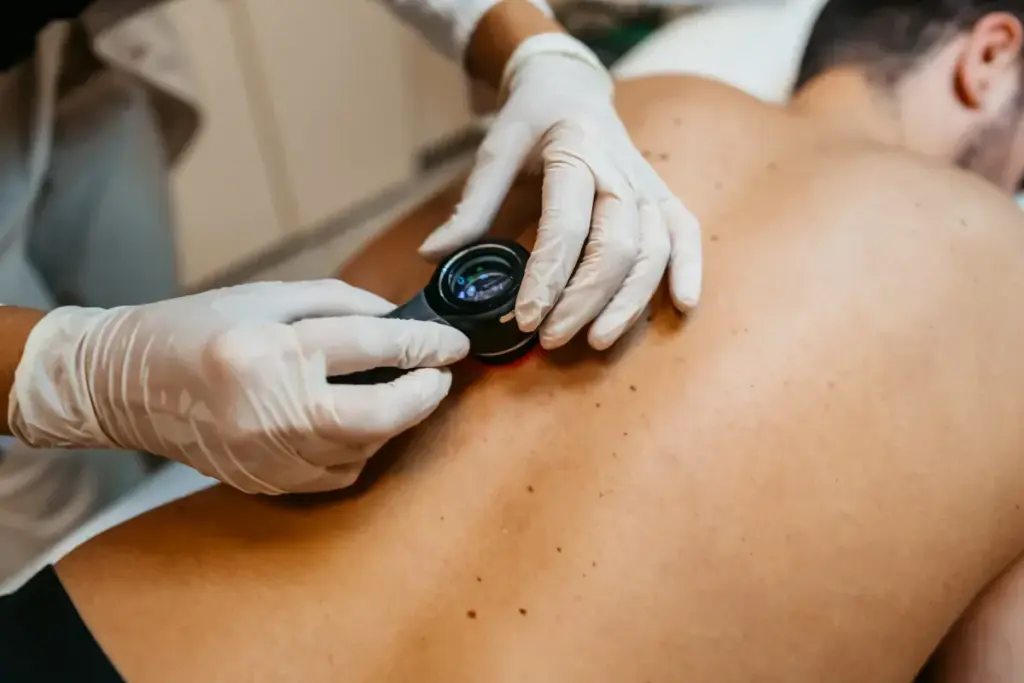
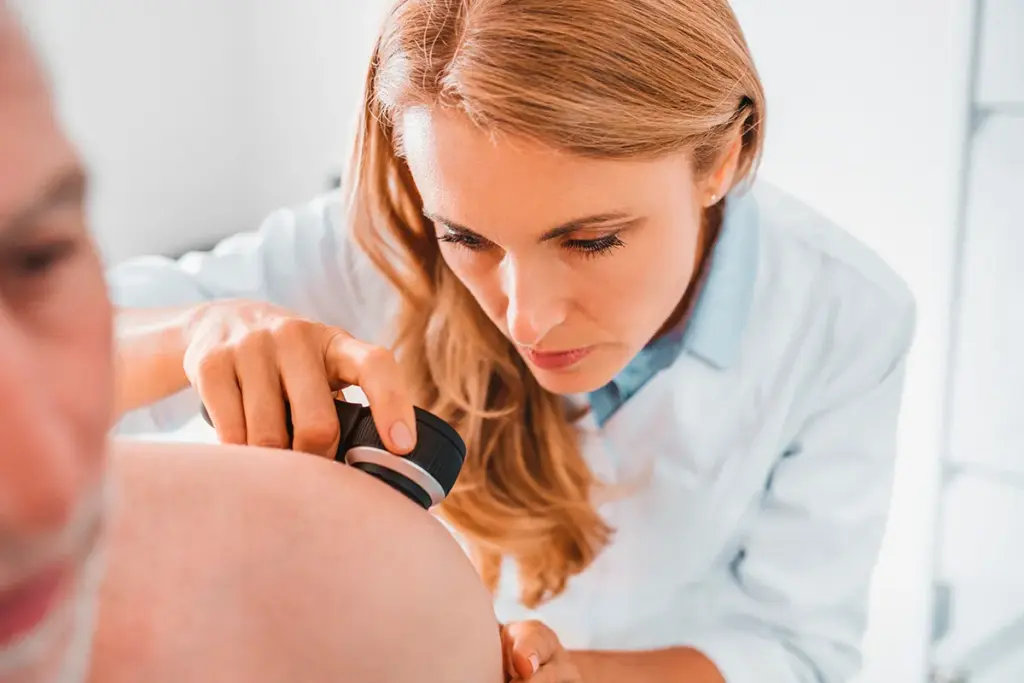
A dermatologist will carefully check your skin, focusing on any suspicious spots. They might use a dermatoscope to look at lesions closely. If a spot looks suspicious, they might take a biopsy to check for cancer.
Be ready to talk about your health history. This includes any past skin issues or risks like UV exposure.
Diagnostic Procedures for Suspicious Skin Lesions
Healthcare professionals use many tools to check if a skin lesion is cancer. They start by looking closely at the lesion. They look for signs that might mean it’s skin cancer.
Visual Examination and Dermoscopy
The first step is a visual check. A doctor will look at the size, shape, color, and texture of the lesion. Dermoscopy is a tool that lets them see more details without hurting the skin.
They look at:
- Asymmetry and irregular borders
- Color variation and intensity
- Diameter and elevation
- Evolution or changes over time
Biopsy Types and Procedures
If the lesion looks suspicious, a biopsy is done. There are different biopsies, like shave, punch, and excisional. The type chosen depends on the lesion’s size, location, and depth.
Biopsy procedures involve:
- Preparing the skin with antiseptic solution
- Administering local anesthesia to minimize discomfort
- Removing a sample of the suspicious tissue
- Sending the sample to a laboratory for histopathological examination
The biopsy results tell if the lesion is cancer. They also show the type and stage of skin cancer. This info helps decide the best treatment.
Treatment Options and Survival Rates
Early detection and treatment are key to improving survival rates for skin cancer patients. When caught early, skin cancer is very treatable. This highlights the need for regular skin checks and knowing the signs of skin cancer.
Early Detection and Treatment Success
The success of skin cancer treatment depends on when it’s detected. Early-stage skin cancers are treated with simpler methods like surgery or topical treatments. Basal cell carcinoma and squamous cell carcinoma, the most common types, have high cure rates if caught early.
According to the National Cancer Institute, early detection greatly improves treatment outcomes.
Modern Approaches to Skin Cancer Management
Modern skin cancer management includes treatments like immunotherapy and targeted therapy. These new methods offer hope for patients with advanced skin cancer. For example, immunotherapy drugs help the body fight cancer cells, showing promise in treating melanoma.
It’s important for patients to understand the different treatment options. By combining early detection with modern treatments, we can greatly improve survival rates and quality of life for skin cancer patients.
Conclusion: The Importance of Regular Skin Checks
Regular skin checks are key to catching skin cancer early. Knowing what cancerous rashes look like helps us protect our skin. This knowledge lets us act fast to keep our skin healthy.
Things that increase your risk of skin cancer include UV rays, your genes, and past skin cancers. Spotting these risks and watching your skin for changes can help a lot. This way, we can get better treatment sooner.
It’s smart to check your skin yourself often and see a dermatologist every year. This is even more important if you’ve had skin cancer before. Being careful and taking action can lower skin cancer rates and keep our skin in good shape.
FAQ
What are the common signs of a cancerous rash?
A cancerous rash might look like a sore that won’t heal in four weeks. It could be red, dark, or have lumps. Look out for unusual colors, textures, and signs like bleeding or scabbing.
How can I differentiate between a normal rash and a cancerous lesion?
Cancerous lesions often look different. They might be asymmetrical, have irregular borders, and unusual colors. They can also cause itching, pain, and bleeding. A doctor can tell the difference between a normal rash and cancer.
What does basal cell carcinoma look like?
Basal cell carcinoma looks like pearly, translucent, or shiny nodules. It can also be flat and flesh-colored or brown. These signs need medical attention.
How can I identify squamous cell carcinoma?
Squamous cell carcinoma looks like firm, red nodules or scaly patches. It can also cause ulcers and crusting. Spotting these signs early is key.
What is the ABCDE rule for detecting melanoma?
The ABCDE rule checks for asymmetry, border, color, diameter, and evolution. Melanoma can look different, so watch for any skin changes.
Can skin cancer occur in hidden areas of the body?
Yes, skin cancer can hide in places like the scalp, between toes, and in the genital area. It’s not just in sun-exposed spots like the face and neck.
What are the skin manifestations of inflammatory breast cancer?
Inflammatory breast cancer makes the breast look like an orange peel. It causes redness, swelling, and warmth. These signs need immediate doctor’s attention.
How common is skin cancer globally and in the U.S.?
Skin cancer is a big health issue worldwide and in the U.S. The rates vary. Knowing this can help spread awareness and prevent it.
What are precancerous skin conditions, and how can they be managed?
Precancerous conditions like actinic keratosis and dysplastic nevi can be caught and treated. Early action is key to preventing cancer.
Can skin cancer present differently in various skin tones?
Yes, skin cancer looks different in different skin tones, including darker skin. It also varies by ethnicity. Being aware of these differences is important.
What are uncommon presentations of skin cancer?
Uncommon skin cancers include amelanotic melanoma and subungual melanoma. These are hard to diagnose, so getting medical help is critical.
When should I seek medical attention for a suspicious rash?
See a doctor if you have a rash that won’t heal, unusual colors, or bleeding. A skin check can figure out what’s going on.
What diagnostic procedures are used for suspicious skin lesions?
Doctors use visual checks, dermoscopy, and biopsies to diagnose skin cancer. These methods help find and identify the cancer type.
What are the treatment options for skin cancer?
Treatment for skin cancer depends on the type and stage. Catching it early and using modern treatments have improved survival chances.
Why are regular skin checks important?
Regular skin checks are vital for catching skin cancer early. They help spot suspicious spots and ensure timely medical care.
References:
- Cancer Research UK. (n.d.). Skin cancer: Symptoms. Retrieved from https://www.cancerresearchuk.org/about-cancer/skin-cancer/symptoms
- Cancer Research UK. (n.d.). Photos of skin cancer. Retrieved from https://www.cancerresearchuk.org/about-cancer/skin-cancer/symptoms/photos
- National Cancer Institute. (n.d.). Skin cancer screening (PDQ®)–Patient version. Retrieved from https://www.cancer.gov/types/skin/patient/skin-screening-pdq
- Cancer Research UK. (n.d.). Skin cancer campaign. Retrieved from https://www.cancerresearchuk.org/health-professional/awareness-and-prevention/be-clear-on-cancer/skin-cancer-campaign
- Cancer Research UK. (n.d.). Treatment for skin cancer. Retrieved from https://www.cancerresearchuk.org/about-cancer/skin-cancer/treatment