

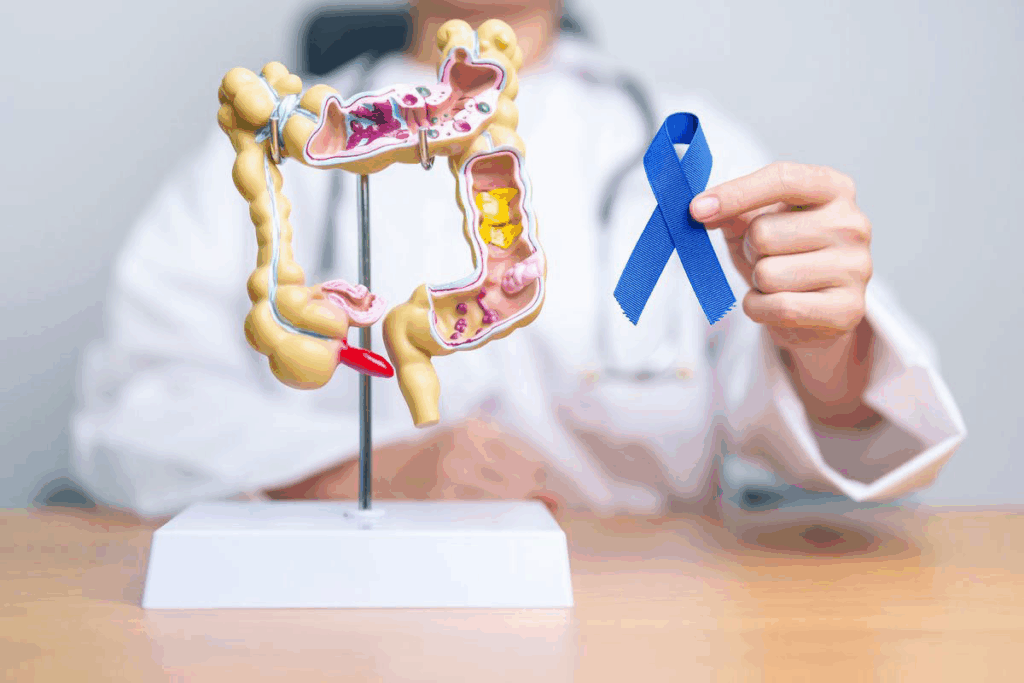
Knowing the bowel‘s anatomy is key for doctors to find and fix digestive problems.
We know how vital it is to label the small intestine right. At Liv Hospital, we aim to give top-notch care for the gut. Getting labeling right is a big part of that.
This guide will show you how to label the small intestine. It covers its parts and what they do. By following this guide, doctors and students can get better at their jobs.
Key Takeaways
- Understand the anatomy of the small intestine and its sections.
- Learn how to accurately label the duodenum, jejunum, and ileum.
- Enhance your knowledge of gastrointestinal care and clinical practice.
- Improve diagnosis and treatment of digestive disorders.
- Master the skills required for complete gastrointestinal care.
Understanding the Small Intestine: Anatomy and Function

The small intestine is key to our digestive system. It’s where most of our nutrient absorption happens. It’s about 6.9 meters long in men and 7.1 meters in women, making it a big part of our gut.
The small intestine has three main parts: the duodenum, jejunum, and ileum. Each part does something different in digestion. Knowing about these parts helps us understand how the function of the bowel works.
The Role of the Small Intestine in Digestion
The small intestine’s main job is to digest and absorb nutrients from our food. It gets partially digested food from the stomach. Then, it breaks it down with enzymes from the pancreas and bile from the liver.
The walls of the small intestine have tiny projections called villi. These increase the surface area for nutrient absorption. This shows how important the human bowel system is for our health.
Anatomical Position and Relationships
The small intestine is in the abdominal cavity, surrounded by other digestive organs. It’s between the stomach and the large intestine, playing a big role in digestion. The duodenum, the first part, is close to the stomach and pancreas.
Knowing how the small intestine relates to other organs is key. Its position and structure help it work well with the rest of the gut. This is important for bowel functioning.
In summary, the small intestine is a complex and vital part of our digestive system. Its anatomy and function are closely linked, helping our body absorb nutrients for health. Understanding the small intestine’s role and its connections with other organs is essential for grasping the human bowel system.
Essential Materials for Labeling the Small Intestine

To start labeling the small intestine, you need the right tools and a good workspace. Accurate labeling is all about using the right tools in the right place.
Recommended Labeling Tools and Resources
For effective small intestine labeling, use these tools and resources:
- Interactive Diagrams: Online platforms with interactive bowel diagrams for digital labeling.
- Printable Labels: Downloadable diagrams and sheets for manual labeling.
- Labeling Software: Special software for anatomical labeling with drag-and-drop labels and customizable diagrams.
“Digital tools have changed how we label anatomy,” says Medical Expert, a top medical educator. “Interactive diagrams and labeling software make learning and teaching anatomy fun and engaging.”
“The key to effective labeling is combining accurate knowledge with the right tools.”
Medical Expert, Anatomist
Preparing Your Workspace for Effective Labeling
Creating a good workspace is key for labeling. Here’s how to set it up:
- Clear Workspace: Keep your workspace clean and free of distractions.
- Good Lighting: Make sure the lighting is good to avoid eye strain and improve visibility.
- Comfortable Seating: Use ergonomic chairs to prevent getting tired during long labeling sessions.
With the right tools and a well-prepared workspace, labeling the small intestine becomes easier and more accurate. This method helps us understand the small intestine’s anatomy better and improves our labeling skills.
The Small Intestine Labeled: Key Structures to Identify
To label the small intestine correctly, you need to know its outside and inside parts. This part of the digestive system is key for absorbing nutrients and keeping the gut healthy.
External Features and Landmarks
The small intestine winds through the belly, divided into three parts: the duodenum, jejunum, and ileum. Knowing these sections and how they connect is essential for understanding the small intestine’s anatomy. The duodenum, the first part, links to the stomach and is tucked behind the peritoneum.
The jejunum and ileum, the rest of the small intestine, hang in the belly by the mesentery. This tissue gives blood and support.
Internal Structures and Mucosal Surface
The inside of the small intestine is designed for absorbing nutrients. It has a folded mucosa with villi and microvilli. Villi increase the surface area for nutrient absorption. Microvilli are tiny projections on the villi’s surface, helping even more with absorption.
The mucosa also has lymphoid tissue, like Peyer’s patches in the ileum. These are important for the immune system.
Understanding the small intestine’s internal parts is key to knowing how nutrients are absorbed. The complex anatomy of its mucosal surface is vital for digestion and absorption. It’s a critical area to study in bowel anatomy.
Step-by-Step Guide to Labeling the Duodenum
To label the duodenum, first learn about its anatomy and role in digestion. It’s the first and shortest part of the small intestine. It plays a key role in breaking down food.
The duodenum is about 25-30 cm long. It’s the most fixed part of the small intestine. This makes it very important to label correctly.
Identifying the Four Parts of the Duodenum
The duodenum has four parts, each with its own features and connections. Let’s explore how to identify them:
- The first part (superior part) starts at the stomach’s pylorus and is near the liver.
- The second part (descending part) gets bile and pancreatic juice from the ampulla of Vater.
- The third part (horizontal part) crosses the midline and is near the superior mesenteric vessels.
- The fourth part (ascending part) ends at the duodenojejunal flexure, where it meets the jejunum.
Marking Key Duodenal Features and Connections
When labeling the duodenum, mark its key features and connections. These include:
- The hepatoduodenal ligament, which connects the duodenum to the liver.
- The ampulla of Vater, where bile and pancreatic ducts empty into the duodenum.
- The duodenojejunal flexure, marking the junction between the duodenum and jejunum.
By following these steps and understanding the duodenum’s anatomy, professionals and students can accurately label it. This improves their knowledge and diagnostic skills.
Techniques for Labeling the Jejunum Accurately
Labeling the jejunum correctly is key for learning and medical use. It’s about 2.5 meters long and has lots of blood vessels and lymphatic supply. This makes it important for studying how nutrients are absorbed and for understanding gut health.
Distinguishing Characteristics of the Jejunum
The jejunum stands out because of its thick walls and many plicae circulares. These circular folds help with nutrient absorption. To label it right, you need to spot these special features.
Key features include:
- A thicker wall than the ileum
- More plicae circulares
- A richer blood supply
Proper Labeling of Jejunal Blood Supply and Lymphatics
The jejunum gets its blood from the superior mesenteric artery. This artery splits into jejunal arteries. These arteries make arcades that feed the jejunum. It’s important to label these blood vessels well to grasp the jejunum’s vascular layout.
Structure | Description |
Jejunal Arteries | Branches of the superior mesenteric artery |
Arterial Arcades | Formed by anastomosing jejunal arteries |
Lymphatic Vessels | Follow the arterial supply and drain into mesenteric lymph nodes |
By correctly labeling these parts, we can learn more about the jejunum’s complex anatomy. This helps us understand its role in digestion better.
How to Label the Ileum and Ileocecal Junction
The ileum is a key part of the small intestine. It’s the last section and connects to the large intestine. This connection is important for digestion.
Identifying Ileal Anatomy and Peyer’s Patches
The ileum has Peyer’s patches, which help with the immune system. These patches are more common in the ileum. Knowing where they are is important.
The ileum has thin walls and lots of blood vessels. These help absorb nutrients. Its surface also has circular folds to increase absorption.
Marking the Ileocecal Valve and Junction
The ileocecal junction is where the ileum meets the cecum, the start of the large intestine. The ileocecal valve controls the flow from the small to the large intestine. It’s key to understanding digestion.
To mark the junction, find where the ileum ends and the cecum starts. This spot is important for health and can be affected by some diseases.
By labeling the ileum and its junction, we learn more about digestion and health. This includes Peyer’s patches and the ileocecal valve.
Labeling Microscopic Structures: Villi and Microvilli
The small intestine’s mucosa is covered with villi and microvilli. These are key for absorbing nutrients well. They make the small intestine’s surface area bigger, helping nutrients get absorbed better.
Techniques for Microscopic Labeling
To label the small intestine’s tiny structures, we use several methods:
- Histological staining to see villi and microvilli
- Microscopy, like light and electron microscopy, to look at these structures closely
- Immunohistochemistry to spot specific cells and proteins in nutrient absorption
Identifying Cell Types and Absorption Surfaces
The small intestine’s lining has different cells:
- Enterocytes absorb nutrients
- Goblet cells make mucus to protect the lining
- Paneth cells help keep the gut microbiome healthy
Knowing about these cells and their roles in absorbing nutrients is important. The absorption surfaces of the small intestine, like villi and microvilli, work together to help absorb essential nutrients.
By accurately labeling and understanding these tiny structures, we can better appreciate how nutrients are absorbed. This helps us understand the small intestine’s complex function and its role in our overall health.
Clinical and Educational Applications of Small Intestine Labeling
Labeling the small intestine is key in medical education and practice. Knowing its anatomy helps in diagnosing and treating gut issues.
Accurate labeling makes complex structures easier to understand. In medical school, it helps students learn about digestion and health.
Medical Education and Training Uses
Labeling the small intestine is a basic skill in medical school. It’s important for:
- Understanding the small intestine’s structure and function
- Improving accuracy in diagnosing gut disorders
- Helping healthcare teams communicate better
With correct labeling, teachers can make learning materials for all students.
Clinical Relevance in Gastrointestinal Disorders
In real-world medicine, labeling the small intestine is critical. It helps in diagnosing and treating diseases like Crohn’s and celiac.
Condition | Clinical Relevance | Labeling Importance |
Crohn’s Disease | Inflammation and damage to the small intestine | Accurate labeling helps identify affected areas |
Celiac Disease | Immune reaction to gluten causing small intestine damage | Precise labeling aids in assessing mucosal damage |
Small Intestine Obstruction | Blockage preventing normal bowel movements | Clear labeling assists in locating the obstruction |
Understanding the importance of small intestine labeling helps doctors improve care. This leads to better patient outcomes.
Conclusion
Learning to label the small intestine is key for doctors and students. It helps us understand its role in our body’s digestive system.
Getting the small intestine’s parts right is important. It shows us how it works in digestion and keeps our gut healthy.
We’ve given you a detailed guide to learn this skill. It covers what you need, the main parts, and how to label them step by step.
Using these methods, doctors and students can get better at their jobs. This leads to better care for patients and better health results.
We aim to help you become experts in the gut’s anatomy. Accurate labeling of the small intestine is a big part of that.
FAQ
What is the function of the small intestine in the human body?
The small intestine is key in digestion. It absorbs nutrients from our food into the bloodstream. It breaks down carbs, proteins, and fats into smaller pieces for our body to use.
What are the different sections of the small intestine?
The small intestine has three main parts: the duodenum, jejunum, and ileum. Each part does something different. The duodenum gets bile and pancreatic juice. The jejunum absorbs most nutrients. The ileum absorbs vitamin B12 and bile salts.
How is the small intestine positioned within the abdominal cavity?
The small intestine is in the abdominal cavity. It’s surrounded by organs like the stomach, liver, and colon. It’s long and folded to fit in the space.
What are the key structures that need to be labeled in the small intestine?
You need to label its length and position. Also, the mucosa, villi, and microvilli are important. Plus, the blood supply and lymphatics.
What is the role of villi and microvilli in the small intestine?
Villi and microvilli increase the surface area for absorption. Villi are like fingers, and microvilli are tiny on them. They help absorb nutrients into the bloodstream.
How does the small intestine relate to other digestive organs?
The small intestine works with the stomach, liver, and pancreas. It gets digestive enzymes and bile from them. These help break down food into smaller pieces for absorption.
What is the clinical relevance of labeling the small intestine?
Labeling the small intestine helps diagnose and manage diseases like Crohn’s and celiac. It’s key for healthcare professionals to understand its anatomy and function for effective treatment.
What are Peyer’s patches, and where are they located?
Peyer’s patches are clusters of lymphoid cells in the ileum. They’re important for the immune system. They help detect and respond to pathogens in the gut.
How is stool formed, and what is the role of the bowel in this process?
Stool is formed in the large intestine. Water is absorbed, and waste is prepared for elimination. The bowel, including the small and large intestine, is key. The small intestine absorbs nutrients, and the large intestine absorbs water and forms stool.
What is the bowel, and what are its functions?
The bowel includes the small and large intestine. It absorbs nutrients, prepares waste for elimination, and houses gut bacteria. These bacteria are vital for our health.
References:
National Center for Biotechnology Information. Small Intestine Labelling: A Step-by-Step Anatomical Guide. Retrieved from https://www.ncbi.nlm.nih.gov/books/NBK470311/

























