Stand Up MRI: A Comfortable Option for Claustrophobic Patients 4
Did you know traditional MRI machines can be uncomfortable for many? This is because they are closed in. But, Stand Up MRI technology has come up with a solution. It lets patients scan in an open, upright position. Get the definitive answer: how close to your face is an MRI? Understand patient proximity, especially compared to a stand up mri clearly. Stand Up MRI: A Comfortable Option for Claustrophobic Patients
Knowing what MRI stands for – Magnetic Resonance Imaging – is a start. But, the real change comes with Stand Up MRI. It’s making medical imaging more open and less scary.
Key Takeaways
Stand Up MRI technology offers a more open and upright scanning position.
MRI stands for Magnetic Resonance Imaging.
This technology improves patient comfort during scans.
It’s an innovative approach to medical imaging.
Patients can benefit from a less intimidating scanning experience.
What is an MRI and How Does it Work?
MRI scans use strong magnetic fields and radio waves to create detailed images of the body. They are non-invasive and help doctors see inside without surgery.
The Science Behind Magnetic Resonance Imaging
MRI scans work by using nuclear magnetic resonance. Patients are placed in a strong magnetic field. This field aligns hydrogen atoms in their body.
Radio waves then disturb these atoms, causing them to send signals. The MRI machine picks up these signals to create images.
MRI technology has improved a lot. It now offers better images and more accurate diagnoses. The magnetic field’s strength, measured in Tesla, is key to image quality. Modern machines can have fields up to 3.0 Tesla, making images clearer.
Common Uses for MRI Scans
MRI scans help diagnose many medical conditions. They are great for seeing soft tissues like organs and tendons. These are hard to see on X-rays or CT scans.
Some common uses include:
Checking for musculoskeletal injuries, like torn ligaments or herniated discs.
Looking at the brain and spinal cord for conditions like multiple sclerosis or tumors.
Examining organs like the heart, liver, and kidneys for any problems.
Both open MRI and closed MRI machines are used. The choice depends on the patient’s comfort and the scan’s needs. Closed machines give better images but can be scary for those with claustrophobia. Open machines are more comfortable but might not offer the same quality.
Traditional Closed MRI Machines: Design and Experience
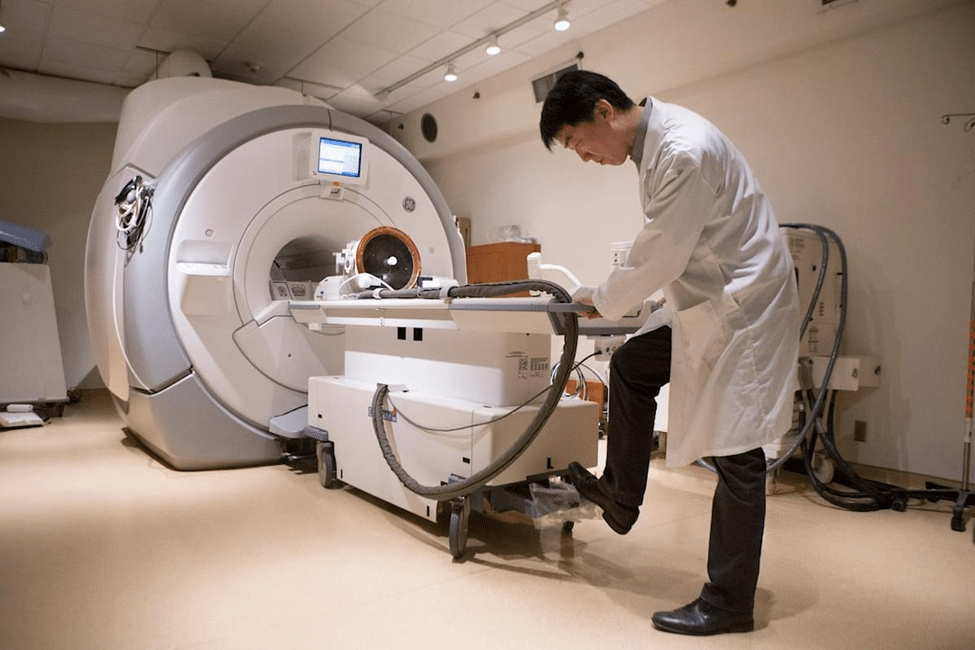
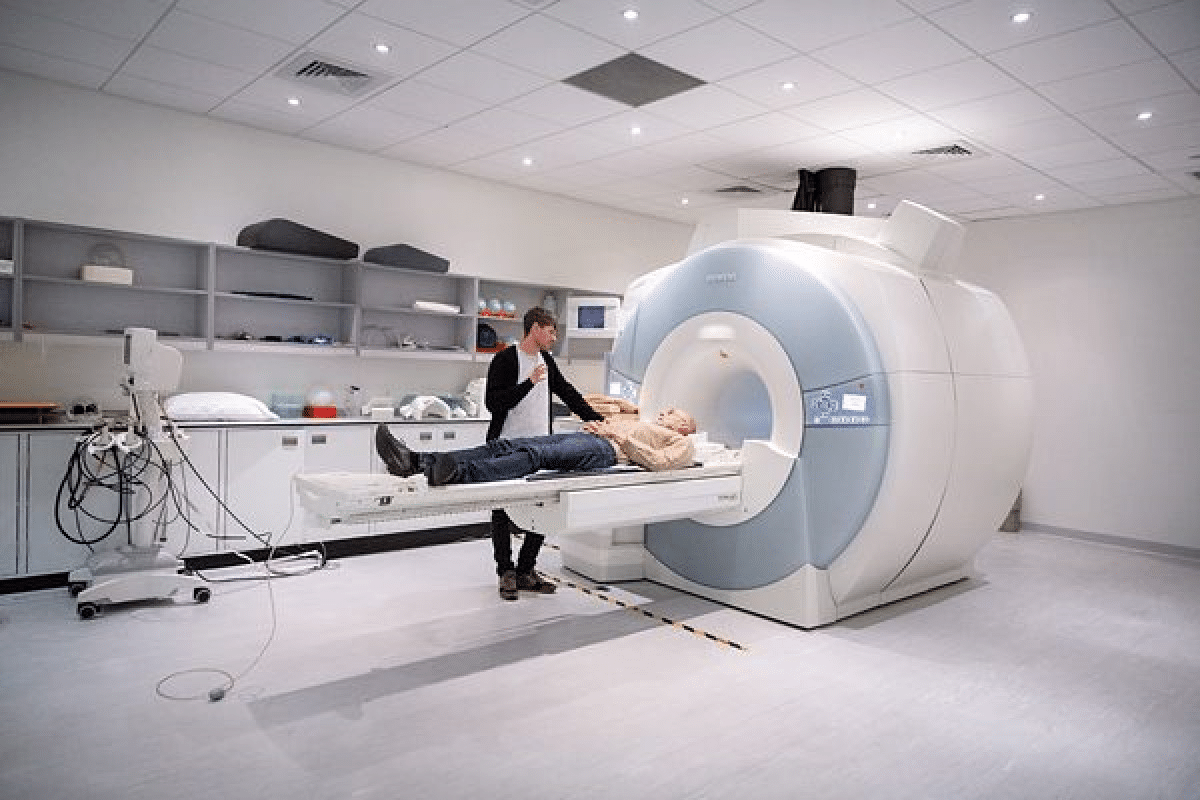
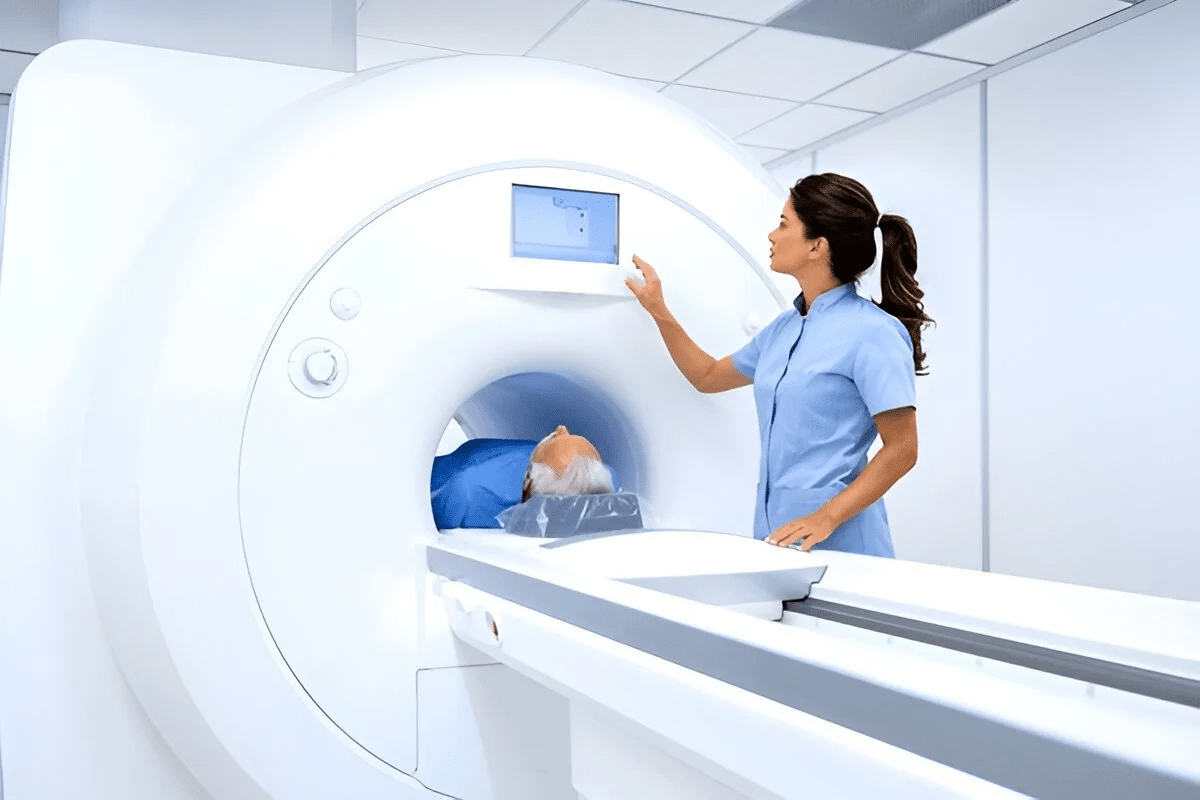
Traditional closed MRI machines fully enclose patients, causing anxiety for those with claustrophobia. They are shaped like a cylinder, with a tunnel for the patient to slide into during scanning.
Physical Characteristics of Closed MRIs
These machines have a long, enclosed tube around the patient. The tube is about 60-70 cm (24-28 inches) wide. This can be very confining for bigger patients or those who get anxious in tight spaces.
Exact Measurements: How Close the Machine Gets to Your Face
The distance from the patient’s face to the machine’s cover is just a few centimeters. This close space can make claustrophobia and discomfort worse.
The Psychological Impact of Limited Space
The enclosed design of closed MRI machines can deeply affect patients, mainly those with claustrophobia. Feeling trapped can make it hard for patients to stay calm during the scan. This might lead to the need for sedation or using open MRI machines instead.
Unlike open MRI machines or an MRI scanner without cover, closed MRI machines offer detailed images. But, they come at the cost of patient comfort and the risk of anxiety from claustrophobia.
The Evolution of MRI Technology
MRI technology has seen big changes, like the creation of open and upright MRI systems. These new systems have changed how we do medical imaging. They make scans more comfortable and efficient for patients.
From Early Designs to Modern Machines
Old MRI systems were mostly closed-bore, which was a problem for people with claustrophobia. Now, we have more open and friendly designs for patients.
A radiologist says “Open MRI machines have changed the game for patients with claustrophobia.”
“The shift towards more open and upright MRI designs reflects a broader trend in medical imaging towards patient-centered care.”
The table below shows how early and modern MRI designs differ:
Feature
Early MRI Designs
Modern MRI Designs
Bore Design
Closed-bore
Open-bore, upright, and stand-up designs
Patient Comfort
Limited space, potentially claustrophobic
More open, reducing anxiety and discomfort
Diagnostic Capability
High-quality images, limited by design constraints
High-quality images, with improved patient positioning options
Addressing Patient Comfort Concerns
Today’s MRI machines, like open and upright ones, focus on comfort. They give more room and flexibility, making scans less stressful.
Modern MRI designs offer:
Less claustrophobia
Better comfort for patients
More accurate scans with better positioning
As MRI tech keeps getting better, we’ll see more ways to make scans easier and more accurate.
What Does an Open MRI Look Like?
Open MRI technology has changed how MRI scans are done. It makes scans more comfortable without losing image quality. This is great for people who get anxious or uncomfortable in tight spaces.
Design Features of Open MRI Machines
Open MRI machines are bigger and more open than old MRI systems. They have a wider space or an open side. This makes patients feel more at ease during scans.
The open design makes it easy for patients to get in and out. It’s good for those who have trouble moving.
They have more room around the body, which helps with claustrophobia.
Some open MRI machines are even more comfortable. They have less noise and softer tables.
Face Clearance and Spatial Dimensions
Open MRI machines have more space for the face and body. This is different from old MRI machines, where the face is very close. Open MRI systems are more relaxed for patients.
The size of open MRI machines can vary. But they usually have more room than old MRI machines. This extra space is good for bigger patients or when more room is needed for positioning.
Visual Comparison with Closed MRIs
They are more open and less tight. This makes a big difference in how patients feel during scans.
Closed MRI machines look like tunnels and can make some patients anxious.
Open MRI machines are more open and welcoming.
This shows how open MRI technology is better for comfort and access.
In summary, open MRI machines are a big step forward. They make MRI scans more comfortable and accessible for more people. Their design, with more space and face clearance, makes them a good choice for many patients.
Stand up MRI: Revolutionary Vertical Scanning Technology
The Stand Up MRI is a big leap in medical imaging. It lets patients be scanned while standing or sitting upright. This makes scans more natural and comfy, which might help in getting better diagnoses.
Functionality of Stand Up MRI Machines
Stand Up MRI machines scan patients in an upright position. They use a special vertical magnetic field. This field is great for looking at body parts when they’re under weight, like the spine and joints.
These machines work differently than regular MRI machines. They have a vertical magnetic field instead of a horizontal one. This lets patients be scanned in a more natural way. It might make diagnoses for some conditions more accurate.
The Mechanics Behind Vertical Positioning
The vertical setup in Stand Up MRI machines is made possible by a special gantry. This gantry lets patients stand or sit comfortably during the scan. It’s designed to work with the vertical magnetic field, making the scan safe and effective.
Key Features:
Vertical magnetic field
Weight-bearing imaging capability
Comfortable standing or sitting position for patients
Face and Body Clearance Measurements
Stand Up MRI machines have a big plus: they give lots of space around the patient’s face and body. This open design helps avoid claustrophobia and discomfort during the scan.
The amount of space varies by the machine’s maker and model. The exact amount can affect how comfy the patient feels and the overall scan experience.
The Stand Up MRI technology is a big step up in diagnostic imaging. It offers a more comfy and possibly more accurate option than traditional MRI machines for some patients and conditions.
Proximity to Your Face: Comparing Different MRI Types
Different MRI machines vary in comfort, mainly because of how close they are to the face. This is key for those who get anxious or claustrophobic during scans.
Exact Measurements in Closed MRIs
Closed MRI machines are tight, which can be uncomfortable. The gap between the face and the machine is small, often just a few inches. For example, some have a bore diameter of about 24 inches, making it feel very enclosed.
Spatial Freedom in Open MRIs
Open MRI machines offer more room. They have a bigger gap between the magnetic surfaces, sometimes over 16 inches tall. This openness helps reduce claustrophobia.
Face Clearance in Stand Up MRIs
Stand Up MRI machines are different, letting patients stand or sit upright. They have a lot of space, making them comfortable for those who hate tight spaces.
Which Option Provides the Most Comfortable Experience
The Stand Up MRI is often the most comfortable, followed by open MRI machines. Closed MRIs, though they provide great images, are less comfy because they’re so tight. A study found that open MRI patients felt less anxious than those in closed MRI machines.
“The open design of the MRI machine was a game-changer for my patients with claustrophobia,” said a radiologist with over a decade of experience.
In the end, the right MRI type depends on what each patient needs and feels comfortable with.
Open MRI vs. Closed MRI: A Detailed Look
MRI scans are key for doctors to diagnose health issues. Knowing the difference between open and closed MRI machines is important. The choice depends on comfort, image quality, and medical needs.
Design and Spatial Differences
Closed MRI machines have a tunnel-like design that surrounds the patient. Open MRI machines, by contrast, have a more open design. Some open MRI models have a larger bore or are open on the sides.
Patient comfort is greatly affected by the design. Closed MRI machines can be tough for those with claustrophobia. Open MRI machines offer more space, helping to reduce anxiety.
Image Quality Considerations
Image quality is a key difference between open and closed MRI machines. Closed MRI machines often have a stronger magnetic field, leading to clearer images. Open MRI machines, while improving, may not match the closed machines’ image quality.
Feature
Closed MRI
Open MRI
Magnetic Field Strength
Typically 1.5T or 3T
Often 0.5T or 1T
Image Resolution
Higher
Lower to Medium
Patient Comfort
Less Comfortable for Claustrophobic Patients
More Comfortable, Open Design
Patient Experience Variations
The experience with MRI machines varies a lot. Closed MRI machines can make anxious patients uncomfortable. Open MRI machines, with their open design, are more comfortable for these patients.
But, the choice between open and closed MRI depends on more than just comfort. The medical condition being checked also matters. For some conditions, the higher image quality of closed MRI machines is needed.
When Doctors Recommend One Over the Other
Doctors look at many factors when choosing between open and closed MRI. For patients with claustrophobia or those who are larger, an open MRI is often recommended. For conditions needing high-quality images, a closed MRI is preferred.
The decision balances patient comfort with the need for detailed images. Healthcare providers carefully consider each patient’s needs to choose the best MRI type.
Disadvantages of Open MRI Technology
Open MRI technology has some downsides that affect its use and comfort. It’s more comfortable for many patients, but there are big limitations.
Magnetic Field Strength Limitations
One big problem with Open MRI is its magnetic field strength. These machines have a weaker field than traditional MRI systems. This can make the images less clear.
A study in the Journal of Magnetic Resonance Imaging found a problem. “The lower field strength of open MRI systems can result in reduced signal-to-noise ratio, potentially impacting diagnostic accuracy.”
MRI Type
Magnetic Field Strength (Tesla)
Typical Use
Closed MRI
1.5 – 3.0
General Imaging, Detailed Studies
Open MRI
0.5 – 1.0
Patients with Claustrophobia, Weight-Bearing Imaging
Image Resolution Concerns
Open MRI machines have lower image resolution than closed MRI systems. This is because of their weaker magnetic field.
Experts say, “image resolution is key for accurate diagnosis, even in tough cases.” A stronger field means clearer images.
Availability and Cost Factors
Open MRI machines are less common than closed MRI systems. This makes them harder to find. Also, the cost of an Open MRI scan can vary a lot, depending on where you are and who you see.
“The cost and availability of Open MRI scans can be a significant factor for patients considering this option.”
In summary, Open MRI technology has its benefits. But, its weaknesses, like lower magnetic field strength and image resolution, and cost and availability issues, must be thought about carefully.
Claustrophobia and MRI Scans: Finding Solutions
Claustrophobia, or the fear of being in small spaces, can make MRI scans hard. Many people get anxious at the thought of being in a closed MRI machine. This makes it tough to get through the scan.
Why Traditional MRIs Trigger Anxiety
Traditional MRI machines are great for clear images but are scary for those with claustrophobia. Their closed design can lead to panic, anxiety, and discomfort. This often makes it hard to finish the scan.
Key factors that contribute to MRI-related anxiety include:
The enclosed nature of traditional MRI machines
The loud noises produced during the scanning process
The need to remain very quiet for a long time
How Alternative MRI Designs Help Claustrophobic Patients
Alternative MRI designs, like open and stand-up machines, are better for claustrophobic patients. They offer more space, which reduces anxiety and discomfort.
Open MRI machines have a design that feels less closed. Stand-up MRI machines let patients stand or sit, making the scan more comfortable.
MRI Type
Design Features
Benefits for Claustrophobic Patients
Traditional Closed MRI
Enclosed tube
Limited comfort for claustrophobic patients
Open MRI
Open design, more space
Reduced anxiety, more comfort
Stand-up MRI
Upright scanning position
Less confinement, more comfort
Sedation Options and Other Coping Strategies
For some, sedation is an option to manage anxiety during the MRI. It can help patients relax and feel less scared.
Other ways to cope include:
Breathing exercises to calm the mind and body
Listening to music or white noise during the scan
Having a companion present for support
The Patient Experience During a Stand Up MRI
The Stand Up MRI technology makes getting an MRI scan more comfortable. It’s great for people who don’t like traditional MRI machines or have claustrophobia.
What to Expect Before, During, and After
Before your Stand Up MRI, you’ll get instructions. You might need to remove clothes or jewelry and avoid metal. During the scan, you’ll stand up in the machine. It’s open on both sides, making you feel less trapped.
The scan itself is quick, lasting 15 to 45 minutes. Afterward, you can go back to your usual activities without waiting long.
Positioning and Comfort Considerations
Stand Up MRI machines let patients stand or be upright. This makes them more comfortable and allows for scans while standing. It’s good for checking muscle and bone health.
How you’re placed in the machine depends on the scan you need. The open design helps you feel less anxious and uncomfortable.
Real Patient Testimonials
Many patients like their Stand Up MRI experience. They say it’s more comfortable and open. For example, a patient might say, “I was amazed at how easy it was to undergo a Stand Up MRI. The staff were friendly, and the machine was much more comfortable than I expected.”
“The Stand Up MRI was a game-changer for me. I had been putting off an MRI for years due to claustrophobia, but this was a completely different experience.”
Aspect
Stand Up MRI
Traditional MRI
Patient Position
Standing/Upright
Lying Down
Claustrophobia Risk
Lower
Higher
Scan Time
15-45 minutes
15-90 minutes
The Stand Up MRI is more comfortable and less scary for patients. It’s a good choice for those needing MRI scans.
How Long Does an Open MRI Take Compared to Other Types?
MRI scan times vary, affecting patient comfort and how quickly doctors can get results. Knowing how long an MRI takes is important for both patients and doctors.
Duration Factors for Traditional MRIs
Traditional closed MRI machines usually take 15 to 90 minutes for a scan. The time needed depends on:
The type of examination being performed
The number of sequences required
The need for contrast agents
Patient preparation and cooperation
A routine brain MRI might take 20-30 minutes. But a more complex spinal MRI could take up to 60 minutes or more.
Time Considerations for Open and Stand Up MRIs
Open MRI machines offer a more comfortable experience for those who fear closed spaces. They usually take 15 to 90 minutes for a scan. Their open design can make it easier to position patients, speeding up the process.
Stand-up MRI machines, which allow for weight-bearing scans, might have slightly different times. They can take 15 to 60 minutes, depending on the exam’s needs.
Factors That May Extend Scan Time
Several things can make an MRI scan longer, no matter the machine:
Patient movement: If a patient moves during the scan, it might need to be done again, adding time.
Complexity of the examination: More detailed scans, like those needing multiple sequences or contrast agents, take longer.
Technical issues: Problems with the equipment or quality control checks can also delay the scan.
Knowing these factors can help patients prepare for their MRI scans. It can also help them understand how long their diagnostic procedures might take.
Image Quality Comparisons Across MRI Types
MRI image quality is key in medical diagnostics. Different MRI types have their own strengths and weaknesses. The clarity of MRI images is vital for making accurate diagnoses and treatment plans.
Magnetic Field Strength and Image Resolution
The magnetic field strength of an MRI machine greatly impacts its image quality. Machines with higher field strengths, like 1.5 Tesla or 3 Tesla, produce clearer images. Closed MRI machines often have stronger fields than open MRI machines, leading to more detailed images.
Diagnostic Accuracy Considerations
How well MRI images help diagnose conditions depends on their quality. The magnetic field strength, coil technology, and software algorithms all play a role. High-field MRI machines are usually chosen for complex cases because of their superior image quality.
MRI Type
Magnetic Field Strength
Image Resolution
Diagnostic Accuracy
Closed MRI
1.5T or 3T
High
High
Open MRI
0.5T to 1.5T
Medium
Medium
Stand Up MRI
0.6T to 1T
Medium to High
High for specific conditions
The table shows how different MRI types compare in image quality and diagnostic accuracy. Closed MRI machines usually have the best image resolution and accuracy. Yet, other MRI types also have benefits and are better for certain medical needs and patient situations.
Medical Conditions Best Diagnosed with Stand Up MRIs
Upright MRI scans are great for diagnosing conditions affected by gravity. This includes weight-bearing joint issues and some spinal conditions. Stand Up MRI machines can image patients in a weight-bearing position. This gives insights that traditional MRI scans can’t.
Weight-Bearing Joint Issues
Weight-bearing joints like knees and hips face stress and strain. This stress is best seen when a patient is upright. Stand Up MRI machines are top-notch for diagnosing these joint problems, including:
Meniscus tears and ligament sprains in the knee
Labral tears and cartilage degeneration in the hip
Ankle instability and stress fractures
These machines provide images that help doctors understand joint damage. They can then plan the best treatments.
Spinal Conditions
Stand Up MRI technology is also great for spinal conditions. Imaging the spine upright reveals issues not seen in traditional MRI scans. Some spinal conditions that benefit include:
Condition
Description
Benefit of Stand Up MRI
Spinal Stenosis
Narrowing of the spinal canal
Visibility of nerve compression in weight-bearing position
Spondylolisthesis
Slippage of one vertebra over another
Accurate measurement of slippage in upright position
Scoliosis
Abnormal curvature of the spine
Assessment of curvature and flexibility in weight-bearing state
Other Specialized Applications
Stand Up MRI machines have uses beyond joint and spinal issues. They help evaluate neurological conditions and check blood vessel patency upright. Their versatility makes them valuable in many medical fields.
Stand Up MRI Locations Across the United States
Stand Up MRI technology is now available in many parts of the United States. Cities like New York and Miami have seen a big increase in these centers. This makes it easier for more people to get this advanced diagnostic tool, improving their experience.
Major Centers in New York
New York has several Stand Up MRI centers. They serve the needs of its large population. Some key places include:
Bronx: Offers Stand Up MRI services with the latest technology.
Brooklyn: Makes it easy for locals and visitors to get Stand Up MRI scans.
Staten Island: Provides advanced MRI diagnostics to the local community.
Florida Locations
Florida also has many Stand Up MRI centers. This ensures that people all over the state can use this new technology. Some notable spots are:
Fort Lauderdale: A major center for medical diagnostics, including Stand Up MRI.
Miami: Offers Stand Up MRI services to a wide range of people.
Tallahassee: Provides diagnostic services to the capital city’s residents.
Ormond Beach: Serves the local community with Stand Up MRI technology.
Here’s a comparison of Stand Up MRI locations in New York and Florida:
Location
City
State
Stand Up MRI Center
Bronx, Brooklyn, Staten Island
New York
Stand Up MRI Center
Fort Lauderdale, Miami, Tallahassee, Ormond Beach
Florida
These locations offer reduced anxiety and improved diagnostic experiences. Stand Up MRI is great for those who are claustrophobic or need weight-bearing scans.
Insurance Coverage and Cost Considerations for Different MRI Types
Different MRI scans have different costs and insurance coverage. It’s important for patients to know these differences when they need an MRI for diagnosis.
Typical Costs for Standard, Open, and Stand Up MRIs
The cost of an MRI scan varies by the type of machine. Standard MRI machines are usually closed systems. Their costs differ from open MRI or Stand Up MRI machines. Standard MRI costs range from $800 to $2,500.
Open MRI costs are slightly different, ranging from $1,000 to $3,000. This is because of the special equipment needed. Stand Up MRI costs can also vary, sometimes being higher than open MRIs due to advanced technology.
It’s key for patients to check with their healthcare provider or the MRI facility for exact costs.
Insurance Approval Processes
Insurance coverage for MRI scans varies among providers and policies. Most plans cover MRI scans when they are medically necessary. But, the coverage can vary. Patients should check their insurance coverage before getting an MRI scan.
The approval process starts with a doctor’s recommendation. Then, the insurance provider reviews it. Some insurance companies need pre-approval for certain MRI scans, mainly if they’re not standard.
Questions to Ask Your Provider
Before getting an MRI scan, patients should ask their healthcare provider several questions. This helps understand costs and insurance coverage:
What type of MRI machine is recommended and why?
What are the estimated costs for the MRI scan?
Is the MRI scan covered under my insurance plan?
Are there any out-of-pocket expenses I should be prepared for?
Are there alternative MRI options that might be more cost-effective?
Understanding the costs and insurance for different MRI scans helps patients make better decisions about their care.
Conclusion: Choosing the Right MRI for Your Needs
Choosing the right MRI technology is all about what each patient needs. We’ve looked at the differences between closed MRI machines, open MRI machines, and stand-up MRI technology. Each has its own benefits.
There are many things to think about when picking an MRI. How comfortable the patient will be, the medical condition being checked, and the quality of the images needed are all important. These factors help decide which MRI is best.
Knowing how different MRI machines work helps both patients and doctors make better choices. By focusing on each patient’s needs, doctors can give the most accurate diagnosis. This ensures patients get the best care possible.
In the end, picking between closed, open, or stand-up MRI machines depends on a careful look at the patient’s condition and what they prefer. This ensures the best results for everyone involved.
FAQ
What does MRI stand for?
MRI stands for Magnetic Resonance Imaging. It’s a way to see inside the body without surgery.
What is the difference between an open MRI and a closed MRI?
Open MRI machines are more open, giving patients more room. Closed MRI machines are fully enclosed, which might worry those who are afraid of tight spaces.
How long does an open MRI take?
An open MRI scan can last anywhere from 15 to 90 minutes. This depends on the scan type and the body part being checked.
Are open MRI machines as effective as closed MRI machines?
Open MRI machines can make high-quality images. But, their quality can vary. Closed MRI machines might give clearer images because of their stronger fields.
What are the benefits of a Stand Up MRI?
Stand Up MRI machines scan patients while they’re standing. This is good for checking on spinal or joint problems that gravity affects.
How close does the MRI machine get to your face?
MRI machines can get very close to your face, depending on the type. Open MRI machines have more space. Stand Up MRI machines are designed to be farther away from your face.
Can claustrophobic patients undergo an MRI?
Yes, claustrophobic patients can get an MRI. They can use open MRI machines or get sedated. Some places also offer Stand Up MRI as an option.
What is the cost of different types of MRI scans?
MRI scan costs change based on the type, where you are, and your insurance. Open MRI and Stand Up MRI scans are usually pricier than traditional closed MRI scans.
Are Stand Up MRI machines widely available?
Stand Up MRI machines are not as common as regular MRI machines. But, you can find them in many places in the U.S., like New York and Florida.
How does the image quality of an open MRI compare to a closed MRI?
Open MRI image quality has gotten much better. But, closed MRI machines often have better images because of their stronger fields.
What medical conditions are best diagnosed with a Stand Up MRI?
Stand Up MRI is great for checking on weight-bearing joints, spinal issues, and other problems that are affected by posture or weight.
Can I get an MRI with insurance?
Many insurance plans cover MRI scans. But, what’s covered can change based on your plan and if the scan is needed. Always check with your insurance first.
What should I expect during a Stand Up MRI?
During a Stand Up MRI, you’ll be scanned while standing or sitting upright. This lets doctors see weight-bearing structures clearly.