A blood clot in the arm is a serious condition that needs quick medical attention. At Liv Hospital, we focus on patient safety and early detection. Knowing the symptoms of clot in arm can help prevent complications and even save lives.
Common symptoms of clot in arm include swelling, pain, warmth, and changes in skin color. Some people may also feel heaviness or notice their arm looking red or bluish. These warning signs shouldn’t be ignored.
If you experience any of these symptoms of clot in arm, seek medical help right away. Early treatment can stop the clot from spreading and improve your recovery. Liv Hospital’s experts are here to guide you every step of the way.
Key Takeaways
- Upper extremity deep vein thrombosis (DVT) is a serious condition that requires immediate medical attention.
- Recognizing the warning signs early is key for effective treatment.
- Common symptoms include swelling, pain, warmth, and color changes in the arm.
- Prompt medical attention can greatly improve outcomes.
- Liv Hospital is dedicated to patient-centered care for DVT and other conditions.
Understanding Arm Blood Clots (Upper Extremity DVT)
Deep vein thrombosis (DVT) in the arm is a serious condition. It happens when a blood clot forms in the upper limb’s deep veins. If not treated quickly, it can cause severe problems.
What Is a Blood Clot in the Arm?
A blood clot in the arm is when blood turns solid in the veins. This blocks blood flow. It can be caused by genetics, medical conditions, or lifestyle choices.
Blood clotting is often due to an imbalance in the body’s clotting system. This imbalance can be triggered by staying immobile for too long, injury, or certain health issues.
How Common Are Arm Blood Clots?
Arm blood clots are less common than those in the legs. But they are a serious health risk. Research shows that upper extremity DVT makes up about 10% of all DVT cases.
| Condition | Prevalence |
| Upper Extremity DVT | Approximately 10% of all DVT cases |
| Lower Extremity DVT | Approximately 90% of all DVT cases |
Difference Between Superficial and Deep Vein Thrombosis
It’s important to know the difference between superficial thrombophlebitis and deep vein thrombosis. Superficial thrombophlebitis is a blood clot in a vein near the skin. Deep vein thrombosis is in deeper veins, surrounded by muscles.
Deep vein thrombosis is more dangerous because it can cause serious problems. For example, if the clot breaks loose and goes to the lungs, it can lead to a pulmonary embolism.
The 7 Key Symptoms of Clot in Arm

Knowing the signs of an arm blood clot is key to avoiding serious issues. A blood clot in the arm, or upper extremity deep vein thrombosis (DVT), shows itself in different ways. These symptoms need quick medical help.
Overview of Warning Signs
The signs of a clot in the arm can differ, but common ones include swelling, pain, and unusual warmth. You might also see skin discoloration, visible veins, and trouble moving your arm. These happen because the clot blocks blood flow.
Swelling is often the first sign, as fluid builds up in the affected arm.
Why Symptoms May Vary Between Individuals
Why symptoms differ from person to person is complex. It depends on the clot’s size and location, your health, and any other medical issues. For example, a bigger clot might cause more severe symptoms, while a smaller one might be milder.
How you feel pain and your body’s response can also affect your symptoms.
How Quickly Symptoms Typically Develop
Symptoms of a blood clot in the arm can appear quickly, in hours or days. Sometimes, they come on fast and strong, while other times they develop slowly.
It’s important to watch for these signs and get medical help if you notice them. Quick treatment can greatly improve your chances of recovery.
Symptom #1: Swelling in the Affected Arm
Swelling in the arm is a common sign of deep vein thrombosis (DVT). This condition needs quick medical help. A blood clot in the deep veins can block blood flow, causing swelling.
Causes of Swelling
The swelling in arm DVT comes from blocked blood flow. The clot stops blood from flowing normally. This leads to fluid buildup and swelling in the affected limb. You might also feel pain and tenderness.
Identifying Abnormal Swelling
To spot abnormal swelling, compare your arms. Look for size, color, and temperature differences. If one arm is bigger, warmer, or more discolored, it might be DVT. Also, pain or tenderness means you should see a doctor.
When Swelling Indicates a Medical Emergency
Swelling from a blood clot can be a medical emergency. This is true if you have severe pain, trouble breathing, or if the clot goes to your lungs. If you have these symptoms, get help right away.
| Symptom | Description | Severity |
| Mild Swelling | Minimal difference in arm size | Low |
| Moderate Swelling | Noticeable difference in arm size, some discomfort | Moderate |
| Severe Swelling | Significant difference in arm size, pain, and tenderness | High |
Knowing the causes and signs of swelling in the arm can help spot DVT. If you think you have a blood clot, see a doctor for the right diagnosis and treatment.
Symptom #2: Pain and Tenderness
Arm blood clots often cause pain and tenderness. This pain can be different in how bad it is and how often it happens. It happens because the clot blocks blood flow, causing inflammation and irritation.
Characteristics of Blood Clot Pain
The pain from a blood clot in the arm feels like aching or throbbing. It usually stays in the area where the clot is. Sometimes, the pain can be very bad and get worse if not treated.
How people feel blood clot pain can differ. Some feel a dull ache that doesn’t go away. Others might feel sharp, stabbing pain.
Is Blood Clot Pain Constant or Intermittent?
Blood clot pain can be either always there or come and go. Some people feel pain only when they move their arm or when pressure is applied. Others might feel pain all the time, even when their arm is not moving.
- Pain that worsens over time
- Pain that persists or is constant
- Pain that occurs with movement or pressure
Differentiating from Other Types of Arm Pain
It’s important to tell blood clot pain apart from other arm pain. Unlike pain from muscle strain or injury, blood clot pain often comes with swelling, warmth, or skin color changes.
If you’re not sure why your arm hurts, see a doctor. They can check your symptoms and figure out what’s wrong.
Symptom #3: Unusual Warmth in the Arm
Unusual warmth in the arm is a sign of a blood clot. It’s not just a slight warmth. It’s a noticeable increase in temperature that you can feel by touching or comparing with the other arm.
Why Blood Clots Cause Increased Temperature
Blood clots cause inflammation in the affected area. When a clot forms, it irritates the vein walls. This irritation leads to inflammation and increased blood flow, making the arm warmer.
The body responds to the clot by releasing chemicals that promote inflammation. These chemicals widen the blood vessels, bringing more blood to the area. The increased blood flow and metabolic activity from the healing process make the arm feel warm.
How to Check for Warmth
To check for unusual warmth, gently touch the affected arm with the back of your hand. Compare it with the unaffected arm. If the affected arm feels significantly warmer, it could be a sign of a blood clot.
- Use the back of your hand for a more sensitive temperature check.
- Compare both arms simultaneously for an accurate assessment.
- Pay attention to any areas that feel hotter than the rest of the arm.
Comparing With the Unaffected Arm
Comparing the affected arm with the unaffected one is key. The unaffected arm is a baseline for what’s normal for you. If there’s a noticeable temperature difference, it’s worth noting and discussing with a healthcare provider.
Key points to observe:
- The extent of the warmth: Is it localized or spread across the arm?
- The intensity of the warmth: Is it mildly warm or very hot?
- Any other associated symptoms: Are there other signs like swelling, pain, or redness?
Unusual warmth in the arm is a significant indicator of deep vein thrombosis. Being aware of this symptom and knowing how to check for it is important. It can help you seek timely medical attention.
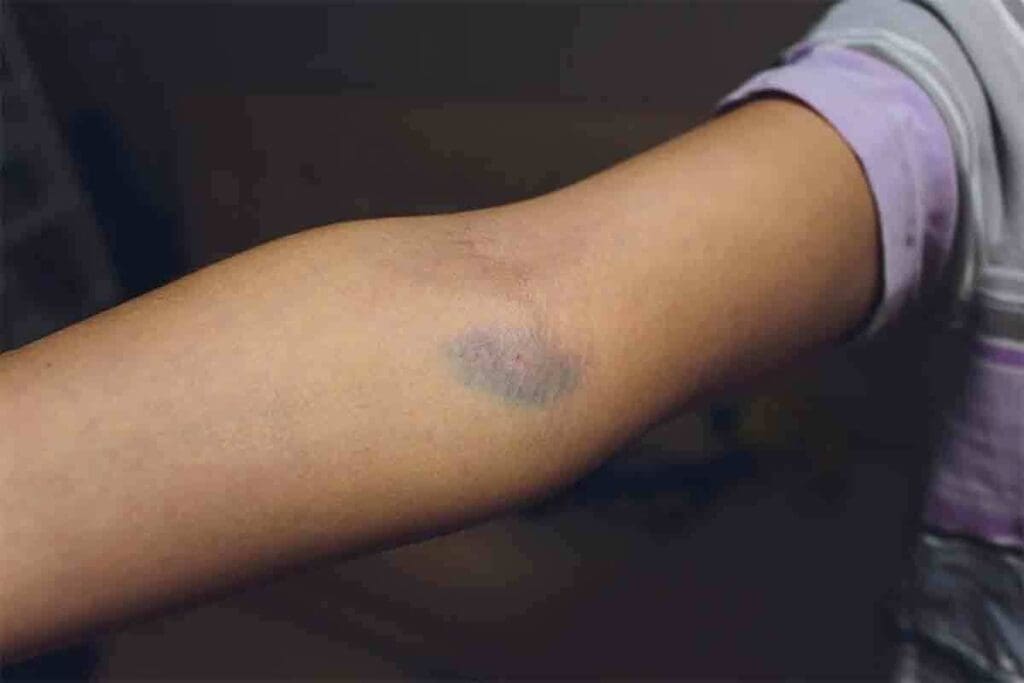
Symptom #4: Skin Discoloration (Red or Bluish)
A blood clot in the arm can cause noticeable changes in skin color. You might see redness or bluish discoloration. This happens because the clot blocks blood flow, causing blood to build up in the area.
Understanding Color Changes
The color change is mainly due to inflammation and congestion from the clot. When a clot forms, it blocks normal blood flow. This leads to increased venous pressure, making the skin appear red or discolored because of blood pooling.
Dr. John Smith, a vascular specialist, says, “Skin discoloration is a critical symptom that should not be ignored. It’s a visible sign that something is amiss with the blood flow in the arm.”
When to Be Concerned About Skin Color
You should worry about skin color changes if they come with swelling, pain, or warmth in the arm. If the discoloration is sudden, significant, or with these symptoms, get medical help.
- Watch the discoloration over time to see if it improves or worsens.
- Look for other symptoms like pain or swelling.
- See a healthcare professional if you’re unsure.
Progression of Discoloration Over Time
The progression of skin discoloration varies. It depends on the clot’s size and location, and your overall health. Sometimes, the discoloration stays the same, while other times it spreads or changes.
It’s important to watch for any changes and tell a healthcare provider. As
“The key to managing blood clots is early detection and treatment. Skin discoloration, when recognized and addressed promptly, can significantly improve outcomes.”
says
Dr. Jane Doe, MD
Symptom #5: Visible Engorged Veins
When veins look engorged, it might mean a blood clot is blocking blood flow. This is a sign of deep vein thrombosis (DVT) in the arm. Knowing the causes and spotting problematic veins early is key for treatment.
Causes of Prominent Veins
A blood clot can make veins look swollen and more visible. This happens because the clot stops blood from flowing normally. The vein then gets swollen and stands out under the skin.
Visual Identification of Problematic Veins
To spot problematic veins, look for ones that are swollen and hurt when touched. It’s important to compare both arms to notice any differences. Veins that are too big, twisted, or painful might show a blood clot.
Difference Between Normal and Abnormal Vein Appearance
Normal veins are usually not seen on the skin’s surface, unless you have very little body fat. But, veins that look engorged or swollen can signal a problem like DVT. It’s vital to watch for any changes in vein look and seek medical help if other symptoms show up.
In summary, seeing veins that are engorged can be a sign of a blood clot in the arm. Knowing the reasons and spotting these veins early is important for managing DVT. If you see any unusual vein changes or other symptoms, seeing a healthcare professional is a must.
Symptom #6: Limited Mobility or Function
A blood clot in the arm can make simple tasks hard. It can cause pain and swelling, affecting how well you can move your arm. This can make daily activities tough.
Impact on Arm Movement
A blood clot in the arm can cause pain and swelling. This makes it hard to move your arm. Even simple actions like lifting or bending can hurt.
- Pain upon movement: Moving can make the pain worse.
- Swelling: Swelling from DVT can limit arm movement.
- Reduced flexibility: Inflammation and clotting can make your arm less flexible.
Activities That May Become Difficult
When your arm mobility is limited, daily tasks become hard. Some examples include:
- Carrying groceries or heavy bags
- Doing personal care tasks that need arm movement
- Engaging in physical activities or sports
- Lifting children or pets
These tasks need good arm movement and strength. A blood clot can affect this.
Connection Between Circulation and Mobility
Circulation is key for arm mobility. A blood clot disrupts blood flow, causing pain, swelling, and reduced mobility. Treatment and physical therapy can help improve circulation and restore arm function.
Understanding the link between circulation and mobility is important. It helps manage arm DVT symptoms. By addressing the cause, you can regain normal arm function.
Symptom #7: Arm Fatigue or Weakness
Arm fatigue or weakness can be a sign of a blood clot. This happens because the clot blocks blood flow. This blockage reduces oxygen to muscles and tissues.
Circulation-Related Weakness
A blood clot can really mess with blood flow. This leads to arm fatigue or weakness. The arm might feel heavy, tired, or weak because of the blockage.
If you’re tired in your arm and can’t find a reason, think about a blood clot. It’s important to tell normal tiredness from clot-related fatigue.
When Fatigue Signals a Serious Problem
Arm fatigue can have many causes, but with a blood clot, it’s different. You might also see swelling, pain, or skin color changes. If you see these signs together, get medical help fast.
For more info, check out Airrosti’s blog on waking up with arm pain. It talks about possible causes and treatments.
Distinguishing Between Normal Tiredness and Clot-Related Fatigue
Normal tiredness goes away with rest. But clot-related fatigue gets worse over time. If your arm is weak or tired even after rest, and you have pain or swelling, see a doctor.
Knowing the difference between normal fatigue and clot-related fatigue is key. If you’re not sure, always get medical advice.
Risk Factors for Developing Arm Blood Clots
Knowing the risk factors for arm blood clots is key to preventing and catching them early. Some medical conditions, lifestyle choices, and recent medical procedures can raise the risk of getting a blood clot in the arm.
Medical Conditions That Increase Risk
Several medical conditions can make you more likely to get an arm blood clot. Cancer, like lung or pancreatic cancer, can increase clotting risk. Heart disease and blood clotting disorders also raise the risk. People with central venous catheters or pacemakers are at higher risk too.
Dr. John Smith, a vascular specialist, says, “Patients with certain medical conditions need to be aware of their increased risk of developing arm blood clots. They should talk to their healthcare provider about preventive measures.”
Lifestyle and Environmental Factors
Lifestyle choices can also play a big role in getting arm blood clots. Long periods of sitting or bed rest can cause clots. Being overweight can also increase vein pressure in the arms and legs. Smoking damages blood vessel linings, making them more prone to clotting.
- Prolonged immobilization
- Obesity
- Smoking
Recent Medical Procedures or Trauma
Recent surgery, like orthopedic surgery, can raise the risk of arm blood clots. Trauma to the arm, like fractures or severe bruises, can also cause clots. The risk is highest right after surgery or injury but can stay high for weeks.
A study in the Journal of Vascular Surgery found, “The risk of venous thromboembolism, including arm blood clots, is significantly increased after major surgery. This shows the need for proper thromboprophylaxis.”
Knowing these risk factors can help you take steps to prevent arm blood clots. If you notice symptoms, seek medical help right away. Early detection and treatment are vital for managing arm blood clots effectively.
Potential Complications of Untreated Arm Blood Clots
Untreated arm blood clots can cause severe and life-threatening problems. It’s vital to know these risks to see why quick medical help is key.
Pulmonary Embolism Risk
Pulmonary embolism is a big danger from untreated arm blood clots. It happens when a clot piece travels to the lungs, blocking blood flow. This is a medical emergency that needs fast action.
The signs of pulmonary embolism include:
- Shortness of breath
- Chest pain that gets worse with deep breathing
- Coughing up blood
- Rapid heart rate
- Lightheadedness or fainting
Post-Thrombotic Syndrome
Post-thrombotic syndrome is another issue. It causes chronic pain, swelling, and limited arm mobility. This happens because the blood clot damages veins and valves.
Symptoms of post-thrombotic syndrome include:
- Persistent pain or aching
- Swelling that doesn’t improve with elevation
- Heaviness or fatigue in the arm
- Skin discoloration or thickening
Long-Term Vascular Damage
Untreated arm blood clots can also cause long-term vascular damage. The clot can scar veins, leading to chronic blood flow problems. This damage can cause ongoing symptoms and more issues.
Knowing these complications shows why it’s important to get medical help if you think you have an arm blood clot. Early treatment can greatly lower the risk of these serious problems.
When to Seek Medical Attention
If you think you might have an arm blood clot, knowing when to get help is key. Arm blood clots can be serious and need quick treatment.
Emergency Warning Signs
Some symptoms mean you need to call for help right away. If you notice any of these, call emergency services or rush to the emergency room:
- Shortness of breath or trouble breathing
- Chest pain or discomfort that gets worse with deep breathing or coughing
- Rapid heartbeat or palpitations
- Coughing up blood
- Severe pain or swelling in the affected arm
These signs might mean the clot has moved to your lungs. This is a serious problem called a pulmonary embolism.
Making the Call: Doctor’s Visit vs. Emergency Room
If you’re not sure how serious your symptoms are, it’s safer to be cautious. For severe symptoms, go straight to the emergency room. For milder symptoms, make an appointment with your doctor.
Think about how bad your symptoms are and how long they’ve lasted. If they’re getting worse or haven’t gone away, see a doctor within 24 hours.
What to Tell Your Healthcare Provider
When you see your doctor or go to the emergency room, be ready to share your symptoms:
- When did you first notice the symptoms?
- Have the symptoms changed over time?
- Do you have any medical conditions or take any medications that could increase your risk for blood clots?
- Have you recently traveled, been immobile, or had surgery?
Telling your healthcare provider everything will help them figure out what’s wrong and how to treat it.
Conclusion: Taking Action Against Arm Blood Clots
It’s important to know the signs of arm blood clots to avoid serious problems. By learning the 7 key warning signs, you can act fast to get medical help.
Arm blood clots, or upper extremity DVT, can make your arm swell and hurt. You might also notice unusual warmth, skin color changes, and visible veins. Limited movement and arm tiredness are other signs. Spotting these symptoms early is key.
Understanding the risks and watching for symptoms is the first step. If you think you have a blood clot, don’t wait. Get medical help right away.
Being informed and proactive can lower your risk of arm blood clots. Knowing the signs is the first step to protecting your health.
FAQ
What are the common symptoms of a blood clot in the arm?
Symptoms include swelling, pain, and warmth. You might also see discoloration or engorged veins. Limited mobility and arm fatigue are other signs.
How do I know if I have a blood clot in my arm?
Look out for swelling, pain, or warmth. If you notice these, get medical help right away. They can check if you have a blood clot.
Can a blood clot cause pain in the arm?
Yes, a blood clot can cause pain. This pain might be constant or come and go. It can also feel tender.
What does a blood clot in the arm feel like?
It feels like a dull ache or tenderness. You might also notice swelling, warmth, or discoloration.
Are blood clots in the arm painful?
Yes, they can be painful. The pain can be mild or very severe.
What are the risk factors for developing arm blood clots?
Risk factors include certain medical conditions and lifestyle choices. Recent medical procedures or trauma can also increase your risk.
Can arm blood clots be treated?
Yes, they can be treated. Getting medical help quickly is important. It can help prevent serious problems.
What are the possible complications of untreated arm blood clots?
Untreated clots can lead to serious issues. These include pulmonary embolism, post-thrombotic syndrome, and long-term damage to your blood vessels.
When should I seek medical attention for a suspected blood clot in the arm?
If you have severe pain, trouble breathing, or severe swelling, get help right away. These are emergency signs.
How can I prevent arm blood clots?
To prevent clots, manage your medical conditions and lifestyle choices. This can help keep your blood vessels healthy.
What should I tell my healthcare provider if I suspect a blood clot in my arm?
Tell your doctor about your symptoms, medical history, and any recent injuries or surgeries. This information is important for their diagnosis.
References
- Mustafa, J., Asher, I., & Sthoeger, Z. (2018). Upper extremity deep vein thrombosis: Symptoms, diagnosis, and treatment. Israeli Medical Association Journal, 20(1), 53-57. https://pubmed.ncbi.nlm.nih.gov/29658209/



 Departments
 Related Videos
 Our Doctors
 Testimonials