Did you know over 50 million Americans have allergies? Food allergies affect about 1 in 13 kids and 1 in 10 adults.testing for allergic reactionsAllergic: Can It Return After Immunotherapy?
Allergy tests are key to finding out what causes hypersensitivity reactions. The best test depends on the allergy type and the person’s situation.
Knowing about different allergy tests is important for the right treatment. This article will look at skin and blood tests. It aims to find the most accurate test for you.
Key Takeaways
- Allergy tests help identify specific allergens causing reactions.
- The most accurate allergy test depends on the type of allergy.
- Skin tests and blood tests are common methods used.
- Understanding the different types of allergy tests is essential.
- The right diagnosis is key to effective treatment.
The Science Behind Allergic Reactions
It’s important to understand how allergies work to treat them well. Allergies happen when our immune system sees harmless things like pollen or foods as threats. This makes our body release chemicals that can cause symptoms.
How the immune system responds to allergens
When an allergen gets into our body, our immune system sees it as foreign. This leads to an immune response. Chemicals like histamine are released, causing blood vessels to widen and muscles to tighten. The histamine allergy test helps find out if someone has an allergy by checking histamine levels.
Allergies are a major public health issue, affecting millions of people worldwide. This shows how vital it is to know how our immune system reacts to allergens.
“The immune system’s response to allergens is a complex process involving multiple cell types and chemical mediators.”
Common symptoms and severity levels
Allergic reactions can be mild, like hives and itching, or very serious, like anaphylaxis. How severe a reaction is depends on the allergen, how much of it we’re exposed to, and how sensitive we are. Symptoms can include sneezing, a runny nose, and itchy eyes. In bad cases, it can lead to trouble breathing, a fast heart rate, and low blood pressure.
|
Symptom |
Mild |
Moderate |
Severe |
|---|---|---|---|
|
Hives |
Localized |
Widespread |
Widespread with intense itching |
|
Respiratory Issues |
Mild congestion |
Moderate congestion |
Difficulty breathing |
|
Cardiovascular Issues |
None |
Rapid heartbeat |
Drop in blood pressure |
The allergy panel test helps find out what’s causing an allergic reaction. Knowing the symptoms and how severe they are is key to diagnosing and treating allergies. This might involve different types of allergy testing.
Methods for Testing for Allergic Reactions

Allergy testing has changed a lot over time. Now, there are many ways to find out what causes allergic reactions. This change helps doctors give better treatments to people with allergies.
Evolution of allergy diagnostics
Diagnosing allergies has improved a lot. At first, doctors mostly used patient history and physical checks. But these methods had their limits. Now, we have skin prick tests and blood tests that are much more accurate.
A leading allergist said,
“The advancement in allergy testing has been remarkable, allowing us to pinpoint the exact cause of an allergic reaction.”
Overview of current testing approaches
Today, we have a few ways to test for allergies. These include skin prick tests, intradermal allergy testing, and blood tests. Skin prick tests put a small amount of allergen on the skin to see how it reacts. Intradermal testing injects a small amount of allergen into the skin.
Blood tests check the level of IgE antibodies in the blood. These are linked to allergic reactions. The right test depends on the patient’s situation and what they think might be causing the allergy.
Importance of healthcare provider supervision
It’s very important to have a healthcare provider watch over allergy testing. They can understand the results better, knowing the patient’s history and symptoms. The American Academy of Allergy, Asthma, and Immunology says,
“Proper diagnosis and treatment of allergies require the expertise of a healthcare professional.”
This makes sure the testing is done right and safely. It also helps the patient know how to handle their allergies.
Skin Prick Tests: Procedure and Reliability
Diagnosing allergies often involves a simple yet effective procedure known as the skin prick test. This method has become a cornerstone in allergy diagnosis due to its relatively quick and straightforward nature.
How Skin Prick Tests Are Performed
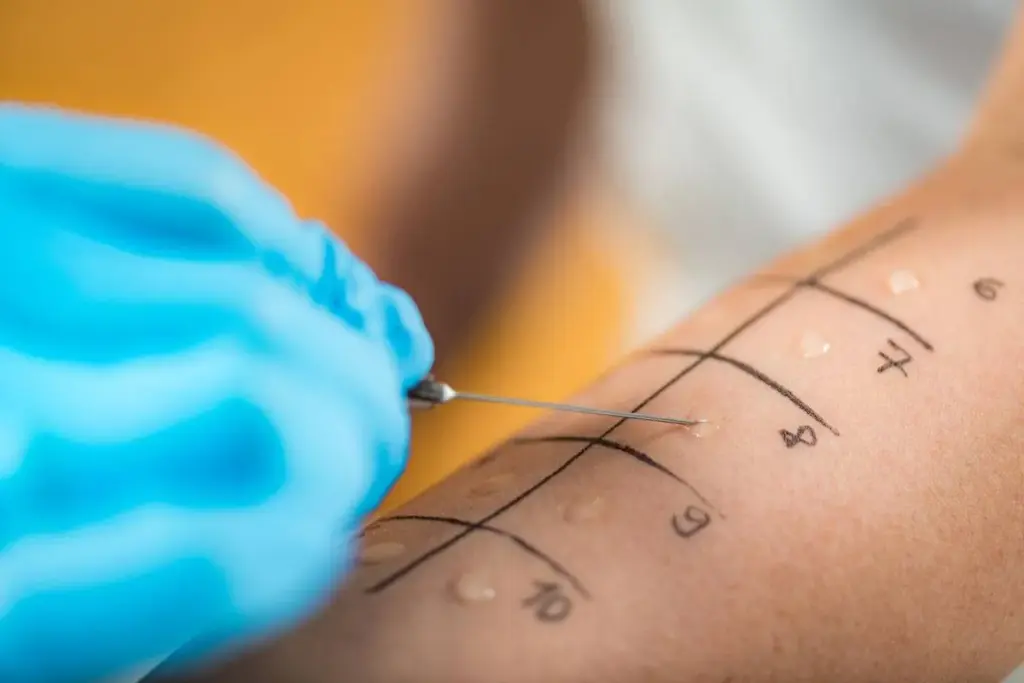
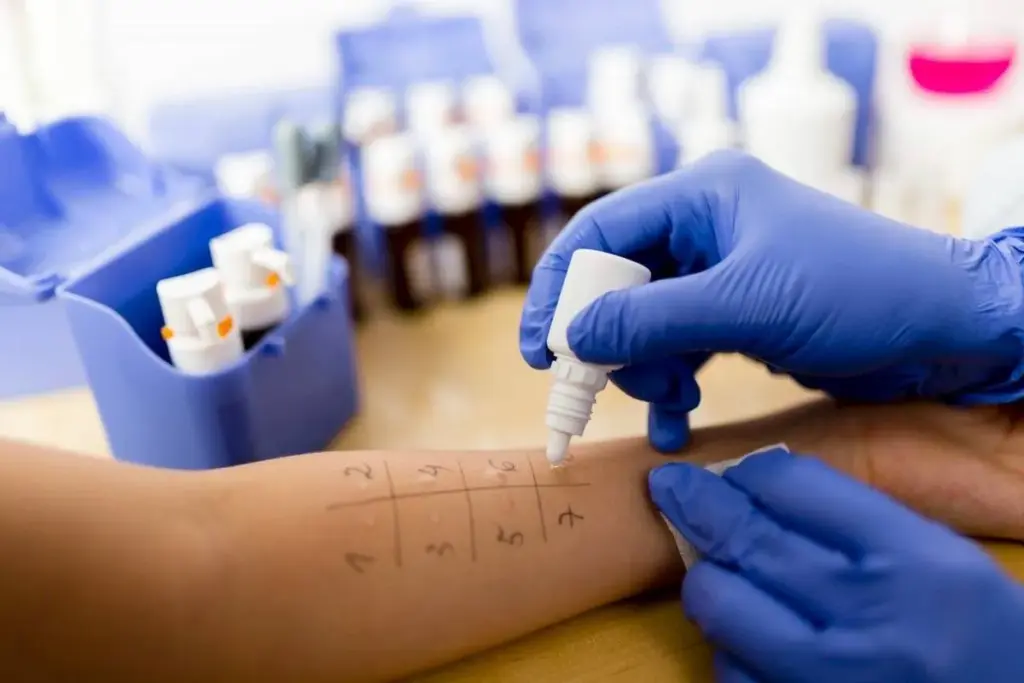
Skin prick tests involve applying small amounts of possible allergens to the skin, usually on the forearm or back. The skin is then pricked with a small lancet, allowing a tiny amount of the allergen to enter the skin. This procedure is generally well-tolerated and causes minimal discomfort. The test area is observed for a reaction, usually within 15-20 minutes.
- The skin is cleaned and marked for the allergen application.
- A small drop of each allergen is placed on the skin.
- The skin is pricked through the drop with a lancet.
- The area is observed for signs of an allergic reaction, such as redness, swelling, or itching.
Reading and Interpreting Results
The results of a skin prick test are read based on the presence and size of the reaction at the test site. A larger reaction typically indicates a greater sensitivity to the allergen. The healthcare provider interprets the results in the context of the patient’s medical history and symptoms.
Accuracy Rates and Possible Limitations
Skin prick tests are generally considered accurate for diagnosing allergies, with high sensitivity for many common allergens. There is a risk of false positives or false negatives. Factors such as skin condition, medications, and the quality of the allergen extract can influence test accuracy. It’s essential to discuss the results with a healthcare provider to understand their implications fully.
Intradermal Allergy Testing: When and Why It’s Used
When skin prick tests don’t give clear answers, doctors might use intradermal allergy testing. This test injects small amounts of allergens into the skin’s dermal layer. It helps see how the body reacts to these allergens.
Procedure and Technique Differences
Intradermal testing is different from skin prick tests. Instead of just placing allergens on the skin, it injects them into the dermis. This makes it more sensitive and is great for finding allergies to specific things, like certain medicines or venom.
A healthcare professional does the test in a clinic. They clean the skin, inject the allergen, and watch for reactions over time.
Specific Allergens Detected
This test is great for finding allergies to things skin prick tests can’t catch. It’s often used for drug allergies, like to penicillin, and for insect venom. It gives more precise results for these allergies.
Accuracy Considerations and False Positives
Intradermal testing is very accurate but has its limits. One big worry is getting false-positive results, where it says you’re allergic when you’re not. The test’s accuracy can be affected by the allergen’s strength, how it’s done, and the patient’s health.
To avoid false positives, doctors look at the test results with the patient’s history and symptoms in mind. It’s also important for patients to follow any instructions from their doctor to get the best results.
Blood Tests for Allergies: The IgE Connection
Blood tests are key in diagnosing allergies. They measure IgE antibodies in response to allergens. This helps doctors understand and treat allergies.
How Specific IgE Blood Tests Work
Specific IgE blood tests find IgE antibodies against certain allergens. When someone is allergic, their body makes IgE antibodies. This leads to allergic reactions. Doctors use these tests to find out what allergens cause reactions.
“The measurement of specific IgE antibodies in the blood is a cornerstone in the diagnosis of allergic diseases,” a study says. This method helps doctors create treatment plans that fit each person’s needs.
RAST vs. ELISA vs. ImmunoCAP Testing Methods
There are several IgE blood testing methods, like RAST, ELISA, and ImmunoCAP. Each has its own benefits and is used for different allergens.
- RAST is an older method but helped start modern allergy testing.
- ELISA is good for finding and measuring IgE antibodies against many allergens.
- ImmunoCAP is known for its accuracy and is often used for its sensitivity.
A clinical review says, “ImmunoCAP testing has high accuracy for many allergens. It’s a top choice in many clinics.”
When Blood Tests Are Preferable to Skin Tests
Blood tests are better in some cases where skin tests don’t work. For example, people with severe skin conditions or on certain medications might need blood tests.
Blood tests are a good alternative for diagnosing allergies when skin tests can’t be used. They help find specific allergens and guide treatment, improving patient care.
Food Allergy Diagnosis: Gold Standards and Alternatives
It’s key to know the gold standards and alternatives for diagnosing food allergies. Healthcare providers and patients need to understand the different methods used. Each method has its own strengths and weaknesses.
Oral Food Challenges: The Definitive Test
Oral food challenges are the top choice for diagnosing food allergies. They involve eating small amounts of the suspected allergen under a doctor’s watch. The accuracy of oral food challenges is high, making them a trusted tool. But, they need careful monitoring because of the risk of serious reactions.
Elimination Diets as Diagnostic Tools
Elimination diets are another way to diagnose food allergies. They involve removing suspected allergenic foods from the diet for 2-4 weeks. If symptoms get better, foods are slowly added back to see if reactions happen. This method is less invasive but depends on the patient’s cooperation and observation.
Component Resolved Diagnostics for Food Allergies
Component resolved diagnostics test for specific proteins in foods that cause allergies. This method gives detailed info on the exact food allergy. It helps in making specific diets and understanding if an allergy can be outgrown. It’s great for figuring out different allergies to the same food.
|
Diagnostic Method |
Accuracy |
Invasiveness |
|---|---|---|
|
Oral Food Challenges |
High |
High |
|
Elimination Diets |
Moderate |
Low |
|
Component Resolved Diagnostics |
High |
Low |
Each method has its role in diagnosing food allergies. The choice of test depends on the patient’s situation and the suspected allergen.
Comparing Accuracy: Which Allergy Test Performs Best?
It’s key to know how accurate different allergy tests are. This helps in finding the right treatment. The test’s accuracy can change based on the method used and the patient’s health.
Sensitivity and Specificity Explained
Two important terms in testing accuracy are sensitivity and specificity. Sensitivity shows how well a test finds people with allergies. Specificity shows how well a test finds people without allergies. A test with high sensitivity but low specificity might give false positives. This means people might avoid foods they don’t need to.
On the other hand, a test with high specificity but low sensitivity might miss real allergies. This could put people at risk.
Skin prick tests are good at ruling out allergies when they’re negative. But, they can sometimes show false positives. This is more likely if someone has allergies or if the test isn’t done right.
Head-to-Head Comparisons of Major Testing Methods
It’s important to compare how different allergy tests work. Skin prick tests, intradermal tests, and blood tests each have their own strengths and weaknesses. Skin prick tests are good for diagnosing quick allergic reactions. But, intradermal tests might be better for delayed reactions.
Studies show that test accuracy can change based on the allergen and the person’s health. For example, blood tests are very specific but might not be as good as skin prick tests for some allergens.
Factors That Influence Test Accuracy
Many things can affect how accurate an allergy test is. The test’s quality, the healthcare provider’s skill, and the patient’s health are all important. Things like skin condition, medications, and other health issues can really affect test results. For example, some medicines can make skin prick tests show false negatives.
To get the most accurate results, it’s important to pick the right test for the person. And it’s key to follow the right testing and interpretation steps.
The Practical Experience: What to Expect When Getting Tested
Knowing what to expect during an allergy test can help reduce anxiety. Allergy testing helps find out what allergens cause reactions in people.
Preparing for your appointment
Before your test, you should stop certain medications that might affect the results. This includes antihistamines and some antidepressants. Your doctor will tell you which medicines to avoid and for how long.
Also, wear comfortable clothing that makes it easy to access your forearm or back. These areas are where tests are usually done.
The testing process step-by-step
The first step is usually a skin prick test. A small amount of an allergen is placed on your skin, and then it’s pricked with a lancet. This is done for several allergens.
Then, the skin is watched for reactions like redness, swelling, or itching. These signs can show if you’re allergic. Sometimes, intradermal testing is used if the skin prick test isn’t clear.
Pain levels and discomfort: What’s really involved
The idea of getting tested for allergies might seem scary, but it’s not painful. The skin prick might feel a bit like a minor scratch. Some people might feel a little itchiness or redness afterward, but it usually goes away fast.
It’s important to follow your doctor’s advice to make the test as comfortable as possible. This helps get accurate results.
By knowing what happens during an allergy test, you can prepare better. This makes the whole experience less scary and more manageable.
Conclusion: Making Informed Decisions About Allergy Testing
It’s important to know how to test for allergies. The allergy panel test is a detailed tool. It helps doctors find and measure allergies.
We’ve looked at various ways to test for allergies. These include skin prick tests, blood tests, and more. Each method has its own benefits and drawbacks. The right test depends on your health history and symptoms.
Knowing about these tests helps you make smart choices about your health. Working with your doctor, you can find the best treatment. Getting the right diagnosis is key to managing allergies and living better.
FAQ
What is a hypersensitivity test skin?
A hypersensitivity test skin, also known as a skin prick test, is used to check for allergic reactions. It involves pricking the skin with a small amount of an allergen. This helps observe the body’s reaction.
What is an allergy panel test?
An allergy panel test checks for many allergens at once. It can be done through blood tests or skin prick tests. It helps find specific allergies.
How accurate is the IgE blood allergy test?
The IgE blood allergy test is very accurate for finding specific IgE antibodies in the blood. These antibodies are linked to allergic reactions. But, its accuracy can change based on the testing method used.
What are the different types of allergy testing?
There are several allergy testing types, like skin prick tests, intradermal allergy testing, and blood tests. Each type has its own benefits. They are used to detect different allergies.
Does allergy testing hurt?
Allergy testing, like skin prick tests and intradermal testing, might cause minor discomfort. This can include redness, itching, or swelling at the test site. But, this discomfort is usually short-lived and mild.
How do I get allergy tested?
To get allergy tested, you should talk to a healthcare provider. They will look at your symptoms and medical history. They will then decide the best testing approach for you.
What is intradermal allergy testing?
Intradermal allergy testing involves injecting a small amount of an allergen into the skin. It checks the body’s reaction. This test is more sensitive than skin prick tests and is used when skin prick tests are not clear.
What is the most accurate food allergy test?
The oral food challenge is the most accurate test for food allergies. It involves eating small, controlled amounts of the suspected food allergen. This is done under medical supervision to see how the body reacts.
Are blood tests or skin tests better for allergy diagnosis?
Both blood tests and skin tests have their own benefits. Blood tests are good when skin tests are not possible. They show specific IgE levels. Skin tests, on the other hand, give immediate results and are often cheaper.
How do I prepare for an allergy test?
To prepare for an allergy test, you might need to stop certain medications. This includes antihistamines. You should also be ready to talk about your medical history and symptoms with your healthcare provider.
References
National Center for Biotechnology Information. Evidence-Based Medical Insight. Retrieved from https://pubmed.ncbi.nlm.nih.gov/28583143/