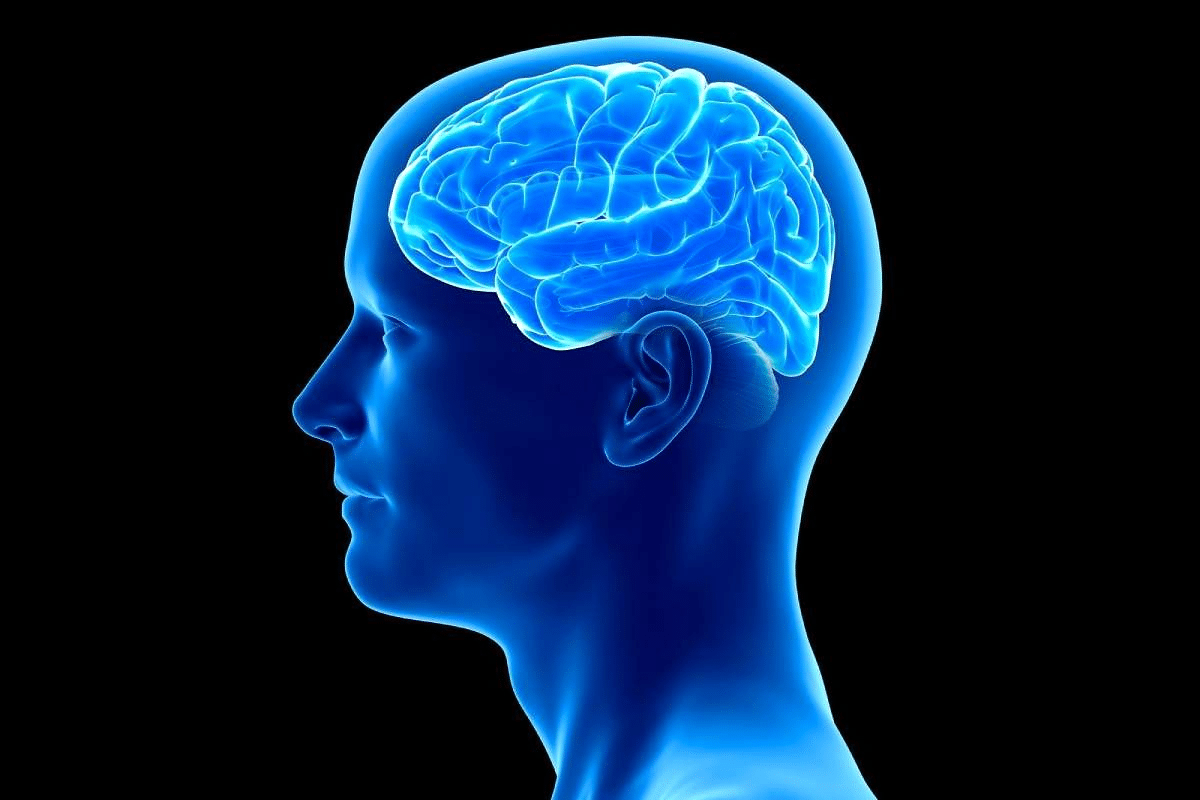
The human brain is a complex and detailed organ. It acts as the body’s control center. It handles everything from movement to complex thinking. Knowing how the brain is structured helps us understand its amazing abilities.
The brain has three main parts: the cerebrum, cerebellum, and brainstem. The cerebrum is the biggest part. It deals with sensory information and movement control. The cerebellum helps with movement and balance. The brainstem manages essential functions like breathing and heart rate.
It’s important to know about these key parts to understand how the brain works. By looking at the cerebrum, cerebellum, and brainstem, we can see how complex the human brain is.
Key Takeaways
- The brain is divided into three main parts: cerebrum, cerebellum, and brainstem.
- The cerebrum is the largest part of the brain, responsible for processing sensory information.
- The cerebellum coordinates movement and balance.
- The brainstem regulates vital functions such as breathing and heart rate.
- Understanding brain anatomy is essential for appreciating its functions.
Understanding Brain Anatomy: An Overview
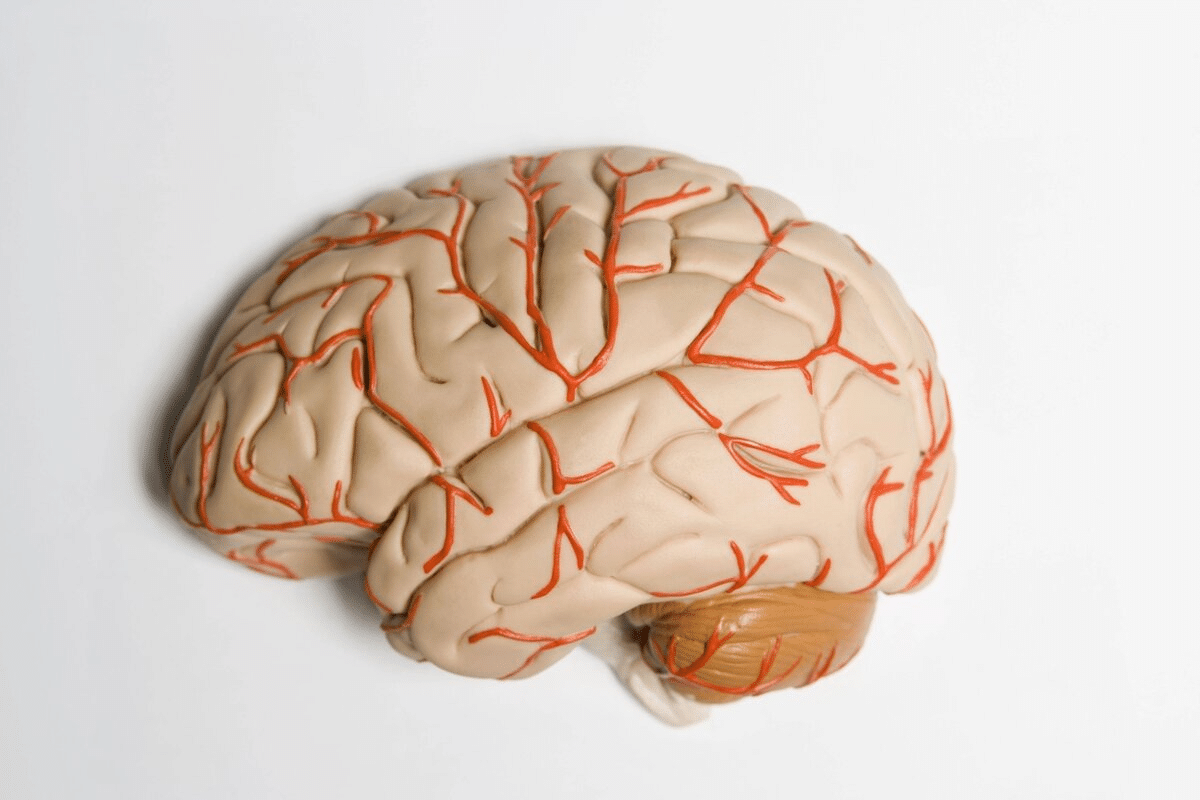
The brain and spinal cord make up the central nervous system. They control our body’s functions. They also handle sensory information and send signals to muscles and glands.
The Brain’s Role in the Nervous System
The brain is at the top of the nervous system. It helps the body react to things, process information, and move. The nervous system has two main parts: the central nervous system (CNS) and the peripheral nervous system (PNS).
The brain’s structure is very detailed. It handles sensory input, controls movement, and manages many body processes. It even controls heart rate, digestion, and hormone levels. The brain’s ability to change and adapt, called neuroplasticity, is key for learning and memory.
“The brain is a complex organ that controls the body’s functions, and understanding its anatomy is essential for grasping how it operates.” Medical Expert, Neuroscientist
Basic Brain Organization and Development
The brain is organized into three main parts: the cerebrum, cerebellum, and brainstem. The cerebrum is the biggest part. It handles sensory information, controls movement, and manages complex thinking.
|
Brain Region |
Primary Functions |
|---|---|
|
Cerebrum |
Sensory processing, movement control, higher cognitive functions |
|
Cerebellum |
Coordination, balance, motor learning |
|
Brainstem |
Regulation of basic life functions, such as breathing and heart rate |
Brain development starts early in life and goes on into adulthood. Knowing how it develops helps us understand its structure and function.
What Are the Most Important Parts of the Brain and Their Functions
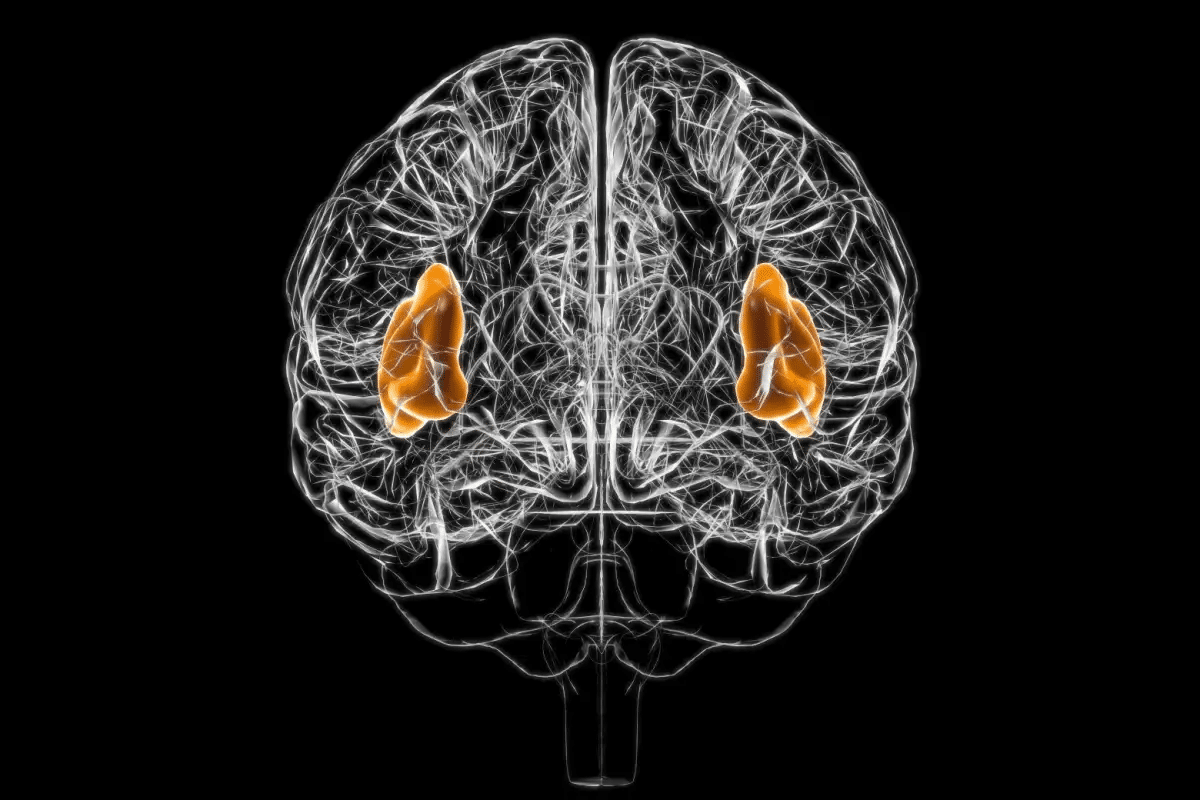
The human brain is divided into three main sections. Each section has its own role. They work together to control our body’s functions, from basic needs to complex thinking.
The Three Major Divisions of the Brain
The brain is mainly split into the cerebrum, cerebellum, and brainstem. Each part has its own function. They all play a key role in how the brain works.
- The cerebrum is the biggest part. It handles sensory info, movement, and higher thinking like thoughts and memories.
- The cerebellum is at the back. It helps with movement, like balance and speech, making our movements smooth.
- The brainstem connects the cerebrum to the spinal cord. It controls basic life functions like breathing and heart rate.
How Brain Parts Communicate and Work Together
The brain’s parts talk to each other through neural networks. These networks help the brain use information from different senses. They also help the brain respond to its environment.
“The brain is a complex organ, and its various parts work together in a highly coordinated manner to enable us to think, move, and respond to our environment.”
The cerebrum, cerebellum, and brainstem work together. They control both actions we choose, like walking, and actions we don’t choose, like breathing.
|
Brain Region |
Primary Functions |
|---|---|
|
Cerebrum |
Processes sensory information, controls movement, manages higher-level cognitive functions |
|
Cerebellum |
Coordinates voluntary movements, maintains posture and balance |
|
Brainstem |
Regulates basic life functions such as breathing, heartbeat, and blood pressure |
In conclusion, the brain’s main parts work together to control our body. Knowing about these parts and their roles helps us understand the brain’s complexity.
The Cerebrum: The Largest and Most Complex Brain Region
The cerebrum is the biggest part of the brain and handles complex thinking. It has two sides: the left and the right. Each side does different things.
Structure and Composition of the Cerebrum
The cerebrum has the cerebral cortex on the outside and white matter underneath. The cerebral cortex deals with senses, movement, and thinking. It handles things like thoughts, feelings, and memories.
The cerebrum is split into two halves: the left and the right. Each half does different things. They work together thanks to the corpus callosum.
Cerebral Hemispheres and Corpus Callosum
The left hemisphere is good at language, logic, and analysis. The right hemisphere is better at spatial skills, recognizing faces, and understanding music and art. The corpus callosum connects them, letting them work together.
The Cerebral Cortex and Higher Functions
The cerebral cortex is divided into areas for different tasks. These areas include the frontal, parietal, temporal, and occipital lobes. They handle things like:
- Processing sensory information
- Controlling movement and motor functions
- Managing higher cognitive processes such as thought, emotion, and memory
The brain’s complexity lets us think and act in amazing ways. Knowing how the cerebrum works helps us understand ourselves and the world.
The Four Lobes of the Cerebrum and Their Specialized Functions
The cerebrum is the biggest part of the brain. It’s split into four lobes: frontal, parietal, temporal, and occipital. Each lobe has its own job. Together, they help us think, move, and understand the world.
Frontal Lobe: Personality, Decision-Making, and Movement
The frontal lobe is at the brain’s front. It handles important thinking tasks. It helps us make decisions, solve problems, and control our movements.
This lobe also shapes our personality and emotions. Damage here can change how we behave and think.
Parietal Lobe: Spatial Awareness and Sensory Processing
The parietal lobe is near the brain’s center. It deals with touch and knowing where we are in space. It helps us move around and understand math and space.
Temporal Lobe: Sound Processing and Memory Formation
The temporal lobe is on the brain’s sides. It’s key for hearing and remembering things. It has the hippocampus, which helps create new memories.
This lobe also helps us understand language and emotions. Damage here can make memory and language hard.
Occipital Lobe: Visual Processing and Interpretation
The occipital lobe is at the brain’s back. It’s all about seeing. It helps us make sense of what we see.
Damage here can cause vision problems or blindness. It’s vital for seeing shapes, colors, and movement.
In summary, the cerebrum’s four lobes are essential for our thinking and actions. Knowing about them helps us understand how our brain works.
The Cerebellum: Coordination Center of the Brain
The cerebellum is located under the cerebrum. It’s key for motor coordination and learning new skills. It helps regulate movement, balance, and posture.
Anatomy and Structure of the Cerebellum
The cerebellum has three main parts: the vermis, the anterior lobe, and the posterior lobe. It connects to the brainstem through the cerebellar peduncles, which are nerve fiber bundles.
The cerebellum’s structure is complex. It has different regions for various functions. The cerebellar cortex is the outer layer. It processes sensory information and coordinates motor responses.
Functions in Movement, Balance, and Motor Learning
The cerebellum is vital for motor coordination. It makes sure movements are smooth and precise. It does this by combining sensory info from proprioception and vision.
It also plays a big role in balance. It helps keep posture and prevents falls. It adjusts muscle tone to keep the body upright.
Lastly, the cerebellum is involved in motor learning. It helps us learn new motor skills. Through practice, it makes motor responses more efficient and accurate.
|
Function |
Description |
|---|---|
|
Motor Coordination |
Ensures smooth and precise movements by integrating sensory information. |
|
Balance |
Maintains posture and prevents falls by adjusting muscle tone. |
|
Motor Learning |
Acquires new motor skills through practice and repetition, refining motor responses. |
In summary, the cerebellum is a vital part of the brain. It coordinates movement, keeps balance, and helps with motor learning. Its complex structure and specialized areas make these functions possible.
The Brainstem: Gateway to Vital Functions
The brainstem connects the brain to the spinal cord. It’s key for managing life’s essential processes. It controls breathing, heart rate, and blood pressure.
Medulla Oblongata: Regulating Basic Life Functions
The medulla oblongata is at the brainstem’s bottom. It handles involuntary actions like breathing, heart rate, and blood pressure. It keeps the body’s automatic functions running smoothly.
“The medulla oblongata is vital for our very existence, controlling functions that we cannot consciously influence.” It’s essential for the autonomic nervous system, which controls involuntary actions.
Pons: The Bridge of Neural Pathways
The pons is above the medulla oblongata. It has nuclei that send signals from the forebrain to the cerebellum. It also handles sleep, swallowing, hearing, and more. It connects different brain parts.
Midbrain: Connecting and Coordinating
The midbrain, or mesencephalon, deals with hearing and vision. It has nuclei and tracts for sensory integration and motor control. It’s key for the body’s auditory and visual responses.
Experts say,
“The midbrain is a critical structure for the integration of sensory inputs and the coordination of movement.”
This shows its vital role in brain functions.
In summary, the brainstem, with its parts—the medulla oblongata, pons, and midbrain—is vital. It controls essential functions and helps with neural communication for survival.
Deep Brain Structures and Their Critical Roles
Deep in our brains, structures work hard to keep us alive and active. They handle tasks like sending sensory info, controlling body states, making memories, and handling emotions.
The Thalamus: The Brain’s Relay Station
The thalamus is like a messenger, sending sensory info to the right brain parts. It’s key for staying awake, sleeping, and alert. The thalamus transmits signals to the brain’s surface, making it vital for our nervous system.
The Hypothalamus: Regulator of Homeostasis
The hypothalamus keeps our body in balance, managing temperature, hunger, and thirst. It controls our body’s automatic functions, keeping everything stable.
The Hippocampus: Memory Formation and Storage
The hippocampus is essential for making and storing memories. It helps turn short-term memories into long-term ones. Damage here can make it hard to form new memories, seen in some brain disorders.
The Amygdala: Emotional Processing Center
The amygdala handles emotions, like fear and anxiety. It triggers our response to danger, playing a big role in how we react emotionally. It’s key for our survival and happiness.
In summary, deep brain structures like the thalamus, hypothalamus, hippocampus, and amygdala are vital for brain functions. Knowing their roles helps us understand the brain’s complex workings.
Modern Understanding of Brain Function Through Neuroimaging
Modern neuroimaging has greatly improved our understanding of the brain. It lets us see the brain working in real time. Medical Expert, “Neuroimaging has changed how we see the brain from static to dynamic.”
Advanced Imaging Technologies in Neuroscience
Neuroimaging uses tools like fMRI, PET, and MEG. These help researchers map brain activity and study how brain areas talk to each other. For example, fMRI shows which brain parts work during tasks and when we’re just resting.
These advanced tools have been key in neuroscience. A study in Neuron said, “Neuroimaging has changed how we study the brain. It lets us see brain activity without hurting it.”
Functional Connectivity and Neural Networks
Neuroimaging has shown us how brain areas connect and form networks. These networks are important for thinking and acting. The default mode network, for instance, is active when we’re not focused on tasks.
Knowing about these networks helps us understand how our brains work. As
“The brain is a complex system, and understanding its function requires a complete look at its networks and how they work together.”
This knowledge is important for understanding brain and mental health issues. These problems often involve network problems.
By improving neuroimaging and studying its findings, researchers can learn more about the brain. This can lead to new ways to treat brain-related problems.
Conclusion: The Remarkable Integration of Brain Structures
The brain’s complex functions come from the work of many brain areas. These include the cerebrum, cerebellum, brainstem, and deep brain structures. Knowing how these parts work together is key to understanding brain function.
The brain’s networks help us think, move, and feel emotions. This shows how well the brain can coordinate and process information. By studying brain functions and structures, we learn about the complex ways humans behave and think.
FAQ
What are the three main parts of the brain?
The brain has three main parts: the cerebrum, cerebellum, and brainstem. The cerebrum is the biggest part. It handles sensory info, movement, and thinking skills. The cerebellum helps with movement and balance. The brainstem controls basic needs like breathing and heart rate.
What is the largest part of the brain?
The cerebrum is the biggest part of the brain. It deals with sensory info, movement, and thinking.
What are the four lobes of the cerebrum?
The cerebrum has four lobes: frontal, parietal, temporal, and occipital. Each lobe handles different sensory info and body functions.
What is the role of the cerebellum in movement?
The cerebellum helps with movement and balance. It’s also key in learning new motor skills and combining sensory info for movement.
What is the function of the brainstem?
The brainstem controls basic survival needs like breathing and heart rate. It’s made up of the medulla oblongata, pons, and midbrain. These work together to keep basic life functions going and help different brain areas talk to each other.
What are the deep brain structures and their functions?
Deep brain structures include the thalamus, hypothalamus, hippocampus, and amygdala. The thalamus sends sensory info. The hypothalamus controls body states. The hippocampus makes memories. The amygdala deals with emotions.
How do different brain regions communicate?
Brain regions talk to each other through complex networks. This lets them share info for thinking, moving, and feeling.
What is the role of neuroimaging in understanding brain function?
Neuroimaging, like fMRI, helps map brain areas and study how they work together. It gives insights into brain networks and helps us understand how the brain works.
What body system is the brain part of?
The brain is part of the nervous system. This system controls and coordinates the body’s functions.
How many parts of the brain are there?
It’s hard to count exactly, but the brain has major regions like the cerebrum, cerebellum, brainstem, and deep structures. Each has its own functions and sub-regions.
Reference
National Center for Biotechnology Information. Brain Anatomy: Structure, Functions, and Key Parts. Retrieved from https://www.ncbi.nlm.nih.gov/books/NBK551718/