We are dedicated to top-notch healthcare for everyone, including international patients. Oral cancer inside the cheek, or buccal mucosa carcinoma, is a big worry worldwide. It’s getting more common. Research shows it starts when cells in the mouth change, often in the thin cells lining the lips and mouth.tumour in cheekBladder Tumour Grading: Cancer Stages & Classification
Knowing the signs of oral cancer inside cheek is key to catching it early. As a top medical place, we stress the need to know and check yourself often. Look out for lumps or spots that don’t go away.
Key Takeaways
- Oral cancer inside the cheek is a significant global health concern.
- Buccal mucosa carcinoma is a type of oral cancer that affects the inside of the cheek.
- Early detection is critical for effective treatment.
- Regular self-examination can help spot symptoms early.
- Knowing the signs of cheek cancer is vital for quick medical help.
Understanding Buccal Mucosa Carcinoma

It’s important to know about buccal mucosa carcinoma for early treatment. This cancer happens in the buccal mucosa, the lining of the cheeks. It’s a type of oral cancer.
Definition and Anatomy of the Buccal Mucosa
The buccal mucosa protects the inside of the mouth. It’s full of blood vessels and helps keep the mouth healthy. Its anatomy includes thickness and minor salivary glands, which can lead to cancer.
Cancer here can make eating, speaking, and swallowing hard. Knowing about its anatomy helps doctors treat it better.
Types of Oral Cancer Affecting the Cheek
Oral cancer comes in many forms, with squamous cell carcinoma being the most common. It makes up over 90% of cases, making it a big worry for doctors.
Other cheek cancers include:
- Veruccous carcinoma, a low-grade malignancy
- Adenoid cystic carcinoma, from salivary gland tissue
- Mucoepidermoid carcinoma, another salivary gland cancer
Squamous cell carcinoma is very common and can grow fast if not treated quickly.
| Type of Oral Cancer | Prevalence | Characteristics |
|---|---|---|
| Squamous Cell Carcinoma | More than 90% | Most common type, potentially aggressive |
| Veruccous Carcinoma | Less common | Low-grade malignancy |
| Adenoid Cystic Carcinoma | Rare | Originates from salivary gland tissue |
About 59,660 new cases of oral and oropharyngeal cancer are expected in the U.S. each year. This shows why early detection is key.
Knowing about cheek cancer helps people spot signs early. This makes it easier to get medical help fast.
Prevalence and Epidemiology of Cheek Cancer

Cheek cancer’s spread shows a complex pattern worldwide. It’s a big part of oral cancer, key for health efforts and risk groups.
Statistics in the United States
In the U.S., oral cancer, including cheek cancer, is a big worry. Each year, about 54,000 new cases of oral or throat cancer are found. Cheek cancer is a big part of these numbers.
Many things can raise the risk of oral cancer, like smoking, drinking, and HPV. The American Cancer Society says men get it more than women. The risk goes up after 40.
“Globally, there were 389,846 new cases of mouth and oral cancer reported in 2022, underscoring the significant global burden of this disease.”
Global Incidence and Geographic Variations
Cheek cancer’s spread changes a lot by place. In Asia and the Pacific, it’s more common because of habits like chewing betel quid.
| Region | Incidence Rate of Oral Cancer (per 100,000) |
|---|---|
| South Asia | 12.6 |
| Western Europe | 6.3 |
| North America | 7.1 |
| Pacific Islands | 14.2 |
The table shows how oral cancer rates differ by region. South Asia and the Pacific Islands have the highest rates. These differences come from local risks and customs.
Knowing these numbers and patterns helps make better health plans to fight cheek cancer worldwide.
Early Warning Signs of a Tumor in Cheek
It’s key to spot early signs of a cheek tumor for quick medical help. Oral cancer in the cheek shows up in different ways. Knowing these signs can help a lot with treatment.
Visual Changes to the Inner Cheek
One early sign of a cheek tumor is a change in the inner cheek’s look. This might include:
- A white or reddish patch that doesn’t heal
- An open sore that lasts
- Visible thickening or a lump
Persistent Lumps and Texture Changes
A lasting lump or thickening in the cheek is a big warning sign. Also, if the inner cheek lining gets rougher or uneven, it could mean a tumor.
| Symptom | Description |
|---|---|
| Persistent Lump | A lump or thickening that doesn’t resolve on its own |
| Texture Change | Roughening or unevenness of the inner cheek surface |
Pain and Sensory Symptoms
Pain or discomfort in the cheek, like when chewing or swallowing, might mean a tumor. Some people might feel numbness or tingling in the cheek or nearby areas.
We stress the need to watch for these symptoms and get medical help if they don’t go away. Finding a cheek tumor early can greatly improve treatment results and life quality.
Advanced Symptoms of Oral Cancer on Inside of Cheek
Advanced oral cancer inside the cheek shows clear symptoms that change daily life. As it grows, it causes big changes in health and happiness.
Progressive Physical Changes
Oral cancer getting worse leads to clear physical changes in the mouth. These include:
- Significant swelling or thickening of the cheek lining
- Visible ulcers or growths that are painful and persistent
- Changes in the color of the mucosa, becoming either whiter or redder
- Numbness or tingling sensations due to nerve involvement
“The progression of oral cancer can lead to severe symptoms that are not only painful but also debilitating.” Medical experts say knowing these symptoms is key for early treatment.
Functional Impairments and Quality of Life Impact
The symptoms of advanced oral cancer can make it hard to use the mouth. Patients might find it tough to:
- Chew or swallow because of pain or blockage
- Speak clearly because of changes in the mouth
- Eat or drink without pain, leading to poor nutrition
Medical studies show that if oral cancer spreads to lymph nodes, it can cause neck swelling. This is a big step in the disease’s growth.
These problems can make life hard for patients. They make simple tasks hard. We need to think about these effects when looking at the impact of advanced oral cancer.
Identifying Cancerous vs. Non-Cancerous Cheek Lumps
It’s important to know if a cheek lump is cancerous or not. This knowledge helps doctors treat it quickly and effectively. Knowing the difference can make a big difference in treatment success.
Characteristics of Benign Cheek Conditions
Benign cheek conditions are not cancerous. They don’t spread to other tissues. Canker sores are a common example. They are small, painful, and heal in a few weeks.
Other benign lumps or swelling might not be harmful. They could be from irritation, infection, or other non-cancerous reasons.
Benign cheek lumps often have these traits:
- They are small
- They might hurt or feel tender
- They don’t last long
- They don’t change the tissue around them much
Warning Features of Malignant Cheek Tumors
Malignant cheek tumors are cancerous. They can spread to other parts of the body. It’s important to know the signs of a malignant tumor.
Look out for these warning signs:
- A lump that doesn’t go away or gets bigger
- Pain or numbness that doesn’t make sense
- Changes in how the surface looks or feels
- It’s hard to swallow or open your mouth
Here’s a comparison to help you understand the difference:
| Characteristics | Benign Conditions | Malignant Tumors |
|---|---|---|
| Persistence | Temporary, often resolves on its own | Persistent, may grow over time |
| Pain | May be painful, often if irritated | May cause pain or numbness as it grows |
| Surface Changes | Typically no big changes | May show changes in texture or color |
If you see any unusual or lasting lumps or changes on your cheek, see a doctor. Early diagnosis is key to effective treatment.
Risk Factors for Developing Buccal Cancer
Many things can increase your chance of getting buccal cancer. These include lifestyle choices and genetics. Knowing about these risks helps prevent and manage the disease.
Tobacco and Alcohol Use
Using tobacco, like smoking or chewing tobacco, raises your risk of buccal cancer. Drinking alcohol, and even more so with tobacco, increases this risk even more. The combination of tobacco and alcohol is known to raise the risk of oral cancers, including buccal cancer.
Betel Quid and Areca Nut Chewing
In some Asian areas, chewing betel quid and areca nut is common. It’s a risk factor for buccal cancer. These habits cause chronic irritation to the mouth, which can lead to cancer.
Age, Gender, and Genetic Factors
Age is a big risk factor, with buccal cancer more common in older people. Gender also matters, with some studies showing men are at higher risk. Genetic factors, like a family history of cancer, can also up your risk.
Human Papillomavirus (HPV) and Other Risks
HPV, a virus, is linked to a higher risk of oral cancers, including buccal cancer. Poor oral hygiene, diet, and certain jobs can also be risks.
When to Seek Medical Attention for Cheek Abnormalities
Abnormalities in the cheek can be unsettling. It’s important to know when to see a healthcare professional. If you notice unusual changes like sores, lumps, or color changes, it’s time to seek medical help.
Concerning Symptoms That Warrant Immediate Evaluation
Certain symptoms mean you should see a doctor right away. These include:
- Persistent sores or ulcers that don’t heal in two weeks
- Unusual lumps or swellings that hurt or grow
- Changes in color or texture of the cheek lining
- Pain or discomfort that doesn’t go away or gets worse
- Difficulty swallowing or opening the mouth
If you notice any of these symptoms, seeing a healthcare professional quickly is important.
| Symptom | Description | Action |
|---|---|---|
| Persistent Sores | Sores that don’t heal in two weeks | Seek medical attention |
| Unusual Lumps | Lumps or swellings that are painful or growing | Consult a doctor |
| Color Changes | Changes in the color or texture of the cheek lining | Get evaluated |
Preparing for Your Doctor’s Appointment
Before your doctor’s visit, prepare by gathering important information. This includes:
- Listing your symptoms and when they started
- Noting any changes in your overall health
- Making a list of medications you’re taking
- Preparing questions to ask your doctor
Being prepared will help you have a productive talk with your healthcare provider. Early detection and diagnosis are key to effectively addressing cheek abnormalities.
Understanding Gum Cancer: An Overview
Gum cancer is a serious condition that can be life-threatening. It’s important to understand it well for early detection and treatment. We will look into its definition, how common it is, and who it affects most.
Definition and Prevalence in the United States
Gum cancer is a type of oral cancer that affects the gums. It makes up less than 10 percent of oral cavity cancer cases in the United States. Even though it’s not very common, knowing about gum cancer is key for early treatment.
Squamous Cell Carcinoma: The Most Common Type
The most common type of gum cancer is squamous cell carcinoma. It starts in the squamous cells of the gum tissue. This cancer is aggressive and can spread if not treated quickly.
Age and Demographic Patterns
The average age for oral cancer, including gum cancer, is 63. But it can happen at any age. Men are more likely to get gum cancer than women. Knowing this can help find who’s at risk.
| Demographic Factor | Pattern Observed |
|---|---|
| Age | Average age at diagnosis is 63 |
| Gender | Men are more likely to be diagnosed than women |
| Prevalence | Less than 10% of oral cavity cancer cases |
Visual Characteristics of Gum Cancer
Knowing how gum cancer looks is key to catching it early. Gum cancer can show up in different ways. It’s important to spot the various types of lesions and gum tissue changes.
White Patches (Leukoplakia)
White patches, or leukoplakia, are a common sign of gum cancer. These patches look thick, white, or gray on the gums. They often come from long-term irritation and might turn cancerous over time. It’s important to watch these patches closely. Any changes or if they don’t go away, you should see a doctor.
Red Lesions (Erythroplakia)
Red lesions, or erythroplakia, are another sign of gum cancer. They look like red, velvety patches on the gums. These are more likely to be cancerous than white patches. Spotting erythroplakia early is critical for treatment.
Mixed Red and White Lesions
Mixed red and white lesions, or speckled leukoplakia, have both white and red parts. They show a high risk of cancer. Seeing these mixed lesions means you need to see a doctor right away.
Spotting these signs early is vital in catching gum cancer. The main signs include:
- White patches or leukoplakia
- Red lesions or erythroplakia
- Mixed red and white lesions
Knowing these signs can help you get medical help quickly. If your gums look different, see a doctor for a check-up.
Common Physical Signs of Gum Cancer
Changes in the gums can signal gum cancer, a serious condition. Spotting these signs early is key for treatment. We’ll look at the common signs of gum cancer.
Swelling and Lumps on the Gums
Swelling or lumps on the gums are clear signs of gum cancer. These swellings or lumps might start painless but can hurt as the disease grows. A cancerous lump on gum is a big warning sign. It’s vital to get any unusual growths checked by a doctor.
Swelling and lumps can have these traits:
- Painless or painful swelling
- Visible lumps or bumps on the gum surface
- Swollen areas that do not resolve on their own
Ulcers and Non-Healing Sores
Ulcers or sores on the gums that won’t heal are common signs of gum cancer. These sores can bleed easily and hurt. If a sore lasts more than two weeks, see a dentist or doctor. Tumors in the mouth gum show up as sores or ulcers that won’t heal with usual treatments.
Ulcers and non-healing sores have these features:
- Persistent sores that last more than two weeks
- Bleeding or crusting over of the sore
- Pain or discomfort in the affected area
Crater-like Depressions
Gum cancer can also cause crater-like depressions or erosions on the gums. These signs mean the disease is advanced and need quick medical help. If you see these signs, along with swelling or ulcers, get a thorough check-up.
Knowing these signs and getting medical help early can greatly improve treatment results.
Diagnostic Procedures for Cheek Cancer
To diagnose cheek cancer, we use a mix of clinical checks and advanced tests. When someone shows signs of cheek cancer, we start a detailed process. This helps us confirm if there’s cancer and how far it has spread.
Initial Screening and Physical Examination
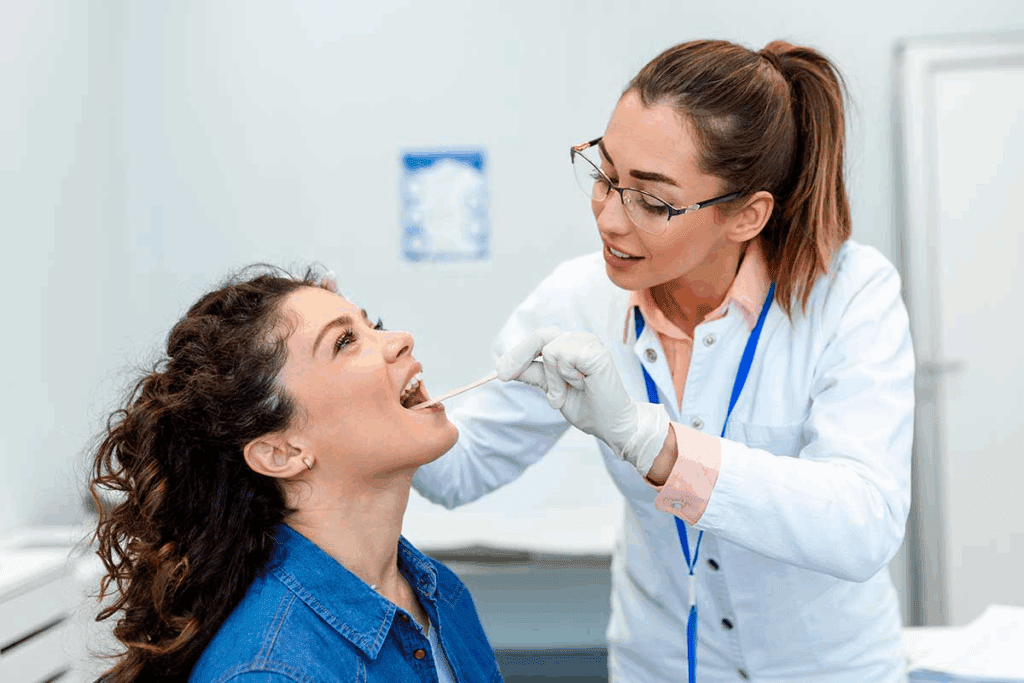
The first step is a detailed oral check. We look closely at the inside of the cheek for any odd spots or lumps. We also feel the area to see if it’s sore or hard.
Biopsy and Tissue Analysis
If we find something odd, we do a biopsy. This means taking a small piece of tissue for a closer look. There are a few ways to do this:
- Incisional Biopsy: We take a bit of the suspicious tissue.
- Excisional Biopsy: We remove the whole area that looks odd.
Then, a pathologist checks the tissue to see if it’s cancer.
Advanced Imaging Techniques
After finding cancer, we use special scans to see how far it has spread. These scans include:
- Computed Tomography (CT) Scan: Gives detailed pictures of the head and neck.
- Magnetic Resonance Imaging (MRI): Shows clear images of soft tissues.
- Positron Emission Tomography (PET) Scan: Helps find if cancer has spread to other places.
These scans help us understand the cancer’s stage and plan the best treatment.
By using both clinical checks and advanced tests, we can accurately find and stage cheek cancer. This lets us create a treatment plan that fits the patient’s needs.
Treatment Options for Inner Cheek Cancer
Treating inner cheek cancer is complex. It depends on the cancer’s stage and the patient’s health. A good treatment plan uses many methods to get the best results.
Surgical Approaches
Surgery is often the first step for early-stage inner cheek cancer. The goal is to remove the cancer and keep healthy tissue. Wide local excision is a common method to do this.
After surgery, reconstructive surgery might be needed. This helps fix the cheek’s shape and function. Grafts or flaps are used for this.
Radiation Therapy Protocols
Radiation therapy is also key in treating inner cheek cancer. It’s often used with surgery. External beam radiation therapy (EBRT) and brachytherapy are the main types.
- EBRT uses beams from outside the body to target the tumor.
- Brachytherapy places radioactive material close to the tumor.
Chemotherapy and Targeted Treatments
Chemotherapy is used for advanced stages or with other treatments. Cisplatin and 5-fluorouracil are common drugs.
Targeted therapies are also being explored. They aim to harm cancer cells less and help healthy cells more.
Multidisciplinary Treatment Planning
Inner cheek cancer treatment needs a team effort. This team includes surgeons, radiation oncologists, and more. They create a treatment plan that fits the patient’s needs.
A team approach is vital. It ensures all aspects of care are considered. This teamwork is key to the best treatment outcomes.
Prevention and Self-Examination Techniques
To lower the risk of oral cancer, it’s key to take preventive steps and learn self-examination. Early detection is vital, just like with other cancers. By using preventive strategies, you can greatly reduce your risk.
Lifestyle Modifications to Reduce Risk
Changing your lifestyle can help prevent oral cancer. Quitting tobacco products is a big step, as tobacco is a major risk factor. Also, limiting alcohol consumption is important, as too much alcohol increases risk. Good oral hygiene, like brushing and flossing, helps in early detection.
Other changes include avoiding betel quid and areca nut chewing, which are risk factors. Using lip balm with SPF protects against lip cancer. Eating fruits and veggies provides nutrients and antioxidants that help prevent cancer.
How to Perform a Thorough Oral Self-Examination
Doing a regular oral self-examination is a key step in early detection. Start by using a mirror in a bright area. Look at your lips, cheeks, gums, and tongue for any unusual changes.
Check for white or red patches, lumps, or thickening. Also, examine your tongue for color or texture changes. Feel your mouth with your fingers for lumps or thickening on the floor of your mouth.
If you find any lasting changes or abnormalities, see a healthcare professional. Regular self-exams and dental check-ups can greatly improve your chances of early detection and treatment.
Conclusion: Taking Action Against Oral Cancer
Oral cancer can show up inside the cheek. Being aware and catching it early is key. Regular dental visits help spot symptoms early, saving lives.
It’s vital to be proactive about our mouth health. Watch for any mouth changes like lumps or pain. If you notice something odd, see a doctor right away.
Knowing about oral cancer helps us catch it early. By understanding risks and taking care of our mouths, we can lower our risk. Let’s all look out for our health and support awareness efforts.
Together, we can fight oral cancer. Let’s take action today for our health and the health of those we care about.
FAQ
What is buccal mucosa carcinoma?
Buccal mucosa carcinoma is a type of oral cancer. It affects the lining of the cheeks, known as the buccal mucosa. It’s a big health issue worldwide because it’s becoming more common.
What are the common types of oral cancer that affect the cheek?
The most common type of oral cancer in the cheek is squamous cell carcinoma. Other types can also happen, but squamous cell carcinoma is the most common.
What are the early warning signs of a tumor in the cheek?
Early signs include changes you can see, lumps that don’t go away, texture changes, and pain or discomfort in the inner cheek. Spotting these signs early is key for getting medical help on time.
How can I identify if a cheek lump is cancerous or non-cancerous?
Cancerous cheek lumps often have warning signs like an irregular shape, firmness, and staying the same. Benign lumps are usually softer and can move. But, only a doctor can say for sure.
What are the risk factors for developing buccal cancer?
Risk factors include using tobacco and alcohol, chewing betel quid and areca nut, age, gender, genetic factors, and HPV infection. Changing your lifestyle can lower your risk.
When should I seek medical attention for cheek abnormalities?
See a doctor right away if you notice lumps, pain, or trouble swallowing. Writing down your symptoms and medical history before your appointment can help.
What are the diagnostic procedures for cheek cancer?
Procedures include initial screening, physical check-ups, biopsy, and scans like CT or MRI. These help doctors accurately diagnose cheek cancer.
What are the treatment options for inner cheek cancer?
Treatment options include surgery, radiation, chemotherapy, and targeted treatments. A team of doctors usually creates the best treatment plan.
How can I reduce my risk of developing oral cancer?
Lower your risk by quitting tobacco, drinking less alcohol, and avoiding betel quid and areca nut. Regularly checking your mouth can also help catch problems early.
How do I perform a thorough oral self-examination?
Look for unusual changes in your mouth, including the inner cheeks, tongue, and gums. Check for lumps, white or red patches, and pain. If you find anything odd, see a doctor.
What is the significance of oral cancer awareness?
Knowing about oral cancer is key for catching it early and preventing it. Being aware of risks and symptoms helps people get medical help quickly, which can improve treatment results.
References
World Health Organization. Evidence-Based Medical Guidance. Retrieved from
https://www.who.int/news-room/fact-sheets/detail/oral-health