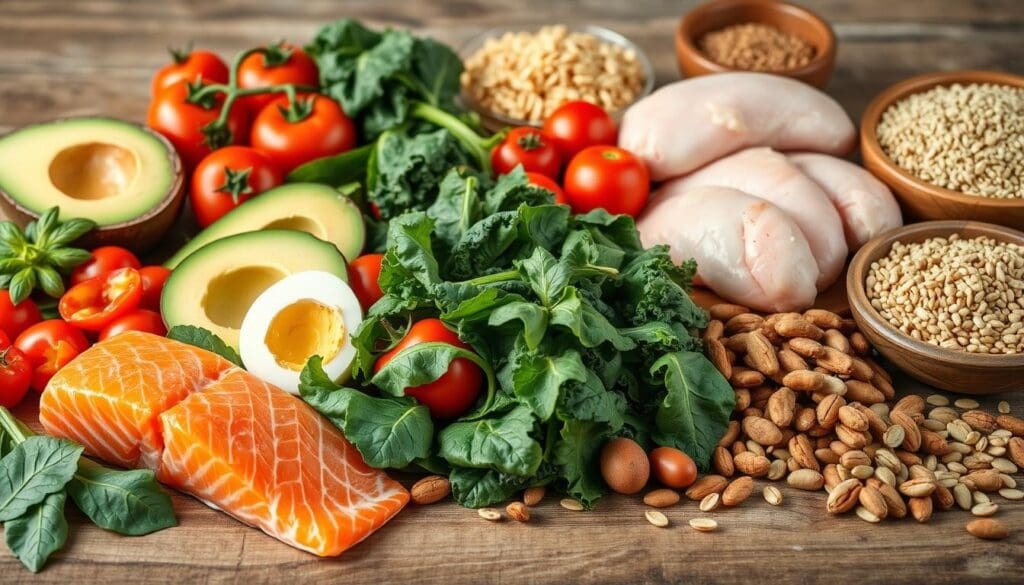
We know how important a balanced diet is for overall health. Vitamin B and folic acid are vital for energy production, nerve health, and heart well-being. They play a key role in making red blood cells and supporting multiple bodily functions.
Eating foods rich in vitamin B and folic acid, such as meat, fish, eggs, leafy greens, and fortified cereals, helps boost energy and maintain optimal health. According to the NHS, including these foods in your diet prevents deficiencies and supports long-term well-being.
Key Takeaways
- Vitamin B12, B6, and folic acid are key for energy and nerve health.
- Eating foods rich in these vitamins boosts our energy.
- Not getting enough of these vitamins can cause serious health problems.
- Eating a balanced diet with foods like meat, fish, eggs, and leafy greens is important.
- Fortified breakfast cereals are also a good source of these vitamins.
The Essential Role of B Vitamins and Folic Acid in Your Health
B vitamins, like B12, B6, and folic acid, are key for many body functions. They are not made by our bodies. So, we need to get them from food or supplements.
How B12, B6, and Folic Acid Support Red Blood Cell Formation
Creating red blood cells is vital and depends on B12, B6, and folic acid. B12 and folic acid help make DNA, which is needed for red blood cells. Without enough of these, we can get anemia, causing tiredness and weakness.
- B12 is key for making red blood cells.
- Folic acid helps avoid megaloblastic anemia.
- B6 is good for the nervous system and helps with red blood cells too.
The Impact on Energy Metabolism and Nervous System Health
B vitamins are important for energy metabolism. B12 and B6 help turn food into energy. They also keep our nervous system healthy. A lack of B12 can cause numbness and tingling in hands and feet.
“B vitamins are vital for brain health and can help prevent cognitive decline.”
Understanding Different Names: Cobalamin, Pyridoxine, and Folate
It’s important to know B vitamins have different names. Cobalamin is Vitamin B12, pyridoxine is Vitamin B6, and folate is natural folic acid. Knowing these names helps find foods and supplements with these vitamins.
| Vitamin | Alternative Name | Food Sources |
| B12 | Cobalamin | Meat, fish, eggs, dairy products |
| B6 | Pyridoxine | Meat, fish, poultry, legumes |
| Folic Acid | Folate | Leafy greens, legumes, fortified cereals |
Recommended Daily Intake and Possible Concerns
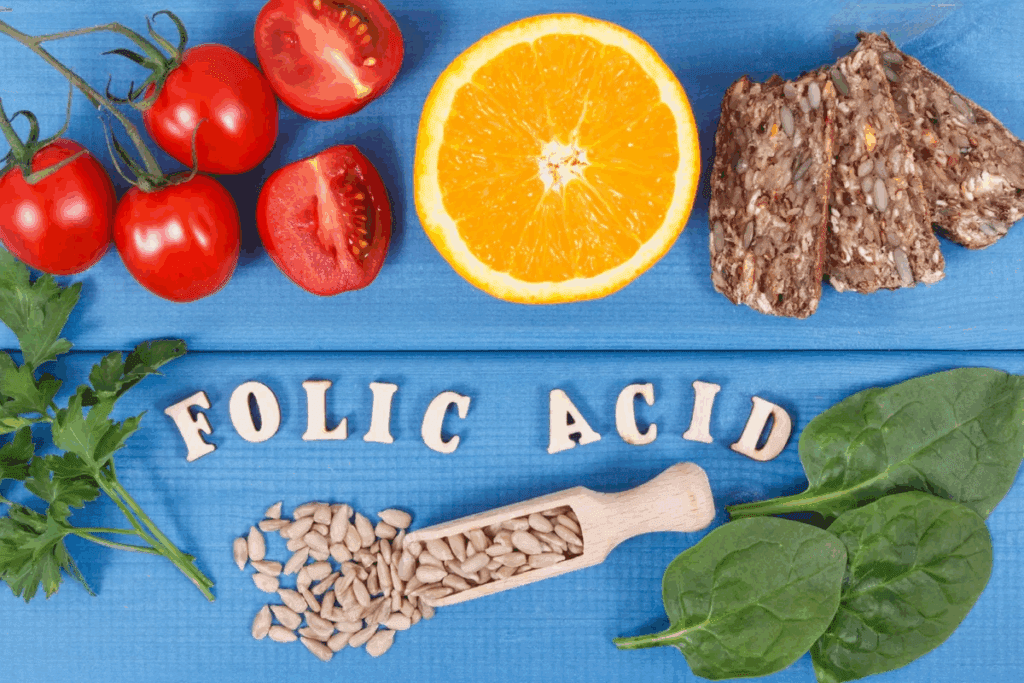
It’s important to know how much vitamins B12, B6, and folic acid we need. Knowing the right amount helps keep us healthy and avoid deficiencies.
How Much B12, B6, and Folic Acid Do You Need Daily?
Our daily needs change with age and health. Adults should get about 2.4 micrograms of vitamin B12 each day. For vitamin B6, adults need 1.3 to 1.7 milligrams. Folic acid intake should be around 400 micrograms for adults. We can get these from food or supplements if needed.
Can You Take Too Much Vitamin B? Understanding Toxicity Risks
While vitamins B12, B6, and folic acid are good for us, too much can harm. Too much vitamin B6 can cause peripheral neuropathy, leading to numbness or weakness in hands and feet. Too much folic acid can hide vitamin B12 deficiency symptoms, risking neurological damage. Always talk to a doctor before starting supplements.
Special Requirements During Pregnancy and Aging
Our vitamin needs change at different times. During pregnancy, we need more folic acid, 600 micrograms a day, to prevent birth defects. As we get older, our bodies absorb vitamin B12 less well. This might mean we need more or supplements. Knowing these needs helps us stay healthy.
Learning about vitamins B12, B6, and folic acid helps us make better choices. This supports our health and well-being.
Salmon: A Powerhouse of B12 and B6
Salmon is not just tasty; it’s also full of vitamins B12 and B6. These vitamins are key for our bodies. Adding salmon to your meals can help boost your B vitamin intake.
Nutritional Profile
A 3.5-ounce serving of cooked salmon is packed with nutrients. It has thiamine, riboflavin, niacin, pantothenic acid, pyridoxine (B6), and cobalamin (B12). You get about 4.8μg of B12 and 0.6mg of B6 from it. This makes it a great choice for increasing your B vitamin intake.
Wild vs. Farmed Salmon
Wild and farmed salmon have different nutritional profiles. Wild salmon often has better fatty acids and more nutrients than farmed salmon. But, both can be healthy if eaten in moderation.
Simple Preparation Methods
To keep salmon’s nutrients, use simple cooking methods. Grilling, baking, or poaching are good choices. Avoid overcooking to keep the vitamins intact.
Adding salmon to your meals means you’re getting more B vitamins, like B12 and B6. Whether it’s wild or farmed, the right cooking method is key to keeping its nutrients.
Beef Liver: Nature’s Most Concentrated Source of B Vitamins
Beef liver is unmatched in its B vitamin content. It’s a top choice for those looking to boost their B vitamins. This organ meat is packed with vitamins B12 and B6, making it great for a healthy diet.
The Impressive B Vitamin Content
A 3-ounce serving of beef liver is a powerhouse. It offers 70.7 micrograms of vitamin B12 and 0.9 milligrams of vitamin B6. This amount meets over 1,000% of the daily B12 needs and about 50% of B6 needs. It’s perfect for those wanting to boost their B vitamin levels.
Overcoming the Taste Barrier: Cooking Tips for Liver
Beef liver’s strong taste can be a challenge. But, there are ways to make it more enjoyable. Slice it thinly and cook it fast to soften its flavor. Marinating it in lemon juice or vinegar can also help.
Adding onions, garlic, or herbs to your liver dishes can make them taste better. These ingredients can mask the liver’s strong taste.
How Often Should You Include Liver in Your Diet?
How often to eat beef liver depends on your health goals. Most people do well with it once or twice a week. It’s important to mix it with other healthy foods for a balanced diet.
Talking to a healthcare provider or nutritionist can help figure out the right amount for you. They can guide you on how to include liver in your meals.
Eggs: Complete Protein with Essential B Vitamins
Eggs are a complete protein source, packed with B vitamins. They are rich in vitamin B12 and B6. This makes them great for boosting your B vitamin intake.
Distribution of B Vitamins in Yolks vs. Whites
Eggs have different B vitamins in the yolk and white. The yolk is full of vitamin B12, folate, and other B vitamins. The egg white has riboflavin (B2) and niacin (B3). Eating whole eggs gives you all the B vitamins.
Impact of Cooking Methods on Vitamin Content
Cooking eggs can change their vitamin levels. Boiling can reduce vitamins like folate and vitamin B6. To keep more nutrients, try poaching or lightly scrambling eggs.
Combining Eggs with Folate-Rich Foods for Complete Nutrition
Eating eggs with foods high in folic acid is smart. Foods like leafy greens or legumes are good choices. This mix boosts your B vitamin intake and supports health.
For instance, scrambled eggs with spinach are a great breakfast. They give you vitamin B12 from eggs and folate from spinach. This combo is packed with nutrients, making eggs a key part of a balanced diet.
Greek Yogurt: Probiotic Benefits with B12 and B6
Greek yogurt is a nutritional powerhouse. It offers probiotic benefits and is rich in vitamins B12 and B6. As a fermented dairy product, it has beneficial bacteria that supports gut health. Its B vitamins, B12 and B6, make it a great addition to a balanced diet.
Enhancing B Vitamin Bioavailability through Fermentation
The fermentation process in Greek yogurt boosts its nutritional value. Fermentation increases the bioavailability of B vitamins, making them easier for the body to absorb. This process also enhances the yogurt’s probiotic properties, aiding digestion and gut health.
“The art of fermentation not only preserves food but also enriches it with beneficial compounds,” says experts. This highlights the importance of traditional practices in modern nutrition.
Comparing Vitamin Content Across Different Yogurt Types
Not all yogurts are the same when it comes to B vitamins. Greek yogurt is known for its high levels of B2 (riboflavin) and B12. But, the vitamin content can change based on the milk type and if it’s fortified with vitamins.
When comparing different yogurts, always check the nutrition label. This will tell you the specific B vitamin content.
- Plain Greek yogurt: High in B2 and B12
- Flavored yogurts: May contain added sugars but can be a good source of B vitamins
- Fortified yogurts: May have extra B vitamins
Creative Ways to Enhance Yogurt’s Nutritional Profile
To get the most from Greek yogurt, try different ways to include it in your diet. Layer it with fresh fruits and nuts for a quick breakfast or snack. Mixing it with spinach and other leafy greens boosts folate, adding to its B vitamins.
Using Greek yogurt as a base for smoothies or in recipes can also improve your meals’ nutritional value. By adding Greek yogurt to your diet, you can enjoy its probiotic benefits and support your overall nutrition.
Spinach and Leafy Greens: Top Sources of Vitamin B and Folic Acid
Spinach and other leafy greens are packed with folate, a key vitamin for health. They are among the best folate sources, making them vital for a balanced diet.
Folate Content Comparison
Different leafy greens have different folate levels. Let’s look at some common ones:
| Leafy Green | Folate Content per Cup (cooked) |
| Spinach | 262 mcg |
| Kale | 177 mcg |
| Collard Greens | 134 mcg |
Spinach leads with a lot of folate per cup when cooked.
Raw vs. Cooked: Maximizing Nutrient Retention
Cooking can change folate levels in leafy greens. Raw greens are good, but cooking them briefly boosts folate absorption. Steaming is best to keep folate levels high.
“Steaming leafy greens is an effective way to preserve their nutritional value, including folate.”
Combining Greens with B12 Foods for Synergistic Benefits
Leafy greens are full of folate but lack vitamin B12. Pairing them with B12-rich foods like meat, fish, or fortified cereals balances B vitamins.
For instance, a spinach salad with grilled salmon is tasty and nutritious. It combines folate from spinach with B12 from salmon.
Adding a variety of leafy greens to your diet and pairing them with B12 foods ensures you get all essential B vitamins.
Chickpeas and Legumes: Plant-Based Protein with B6 and Folate
Chickpeas and legumes are great for those who want plant-based B vitamins. Legumes include beans, lentils, and peas. They are packed with B vitamins like B6 and folate.
Nutritional Profile
Chickpeas are a nutritional powerhouse. One cup has about 1.1mg of vitamin B6 and 282μg of folate. These vitamins help with energy and making red blood cells.
Vitamin B6 is key for brain and immune health. Folate helps prevent birth defects and keeps the heart healthy.
Nutritional Highlights of Chickpeas:
- Rich in B6 and folate
- High in plant-based protein
- Good source of dietary fiber
Dried vs. Canned: Nutritional Considerations
People often pick between dried and canned chickpeas. Dried ones need soaking and cooking, taking time but less salt. Canned ones are quick but might have more sodium.
Tips for Choosing:
- Opt for low-sodium canned options
- Rinse canned legumes before use to reduce sodium
- Consider cooking dried legumes in bulk for convenience
Beyond Hummus: Diverse Ways to Enjoy Chickpeas
Hummus is just the start for chickpeas. They’re great in salads, stews, and curries. Roasting them makes a crunchy snack. They also add moisture and nutrition to baked goods.
Creative Ideas:
- Add chickpeas to your favorite salad for a protein boost
- Make a hearty chickpea stew for a comforting meal
- Roast chickpeas with spices for a crispy snack
Tuna: Affordable Source of Vitamin B12 and B6
Looking to boost your B vitamins without spending a lot? Tuna is a great pick. It’s packed with Vitamin B12 and B6 and can be prepared in many ways.
Fresh vs. Canned: Comparing B Vitamin Content
Fresh versus canned tuna is a common debate. Both are good for B vitamins, but there are differences. Fresh tuna has more Vitamin B12 and B6 than canned. Yet, canned tuna is cheaper and easier to use.
A 3-ounce serving of fresh tuna has about 2.2 micrograms of Vitamin B12 and 0.4 milligrams of B6. Canned tuna, the same size, has 1.4 micrograms of B12 and 0.2 milligrams of B6.
Balancing Benefits with Mercury Concerns
But, tuna also has mercury, a harmful substance. Mercury can harm your health if it builds up in your body. Some tuna, like albacore and bluefin, have more mercury than others, like skipjack and canned light tuna.
“To get the most from tuna and avoid mercury, mix up your choices. The FDA says adults should eat 2-3 servings of low-mercury fish each week.”
Quick Meal Ideas Featuring Tuna
Tuna is very flexible and can be used in many dishes. Here are some quick ideas:
- Tuna salad sandwiches: Mix canned tuna with mayonnaise, chopped onions, and diced celery, served on whole-grain bread.
- Seared tuna steaks: Season fresh tuna steaks with salt, pepper, and your favorite herbs, then sear in a hot pan.
- Tuna salad bowls: Combine canned tuna with mixed greens, cherry tomatoes, and a citrus vinaigrette.
Adding tuna to your meals can give you Vitamin B12 and B6 benefits. Plus, it makes your meals tasty and healthy.
Fortified Cereals: Convenient Way to Boost B Vitamin Intake
Adding fortified cereals to your diet can help you get enough B vitamins. Many breakfast cereals are now enriched with B vitamins. This makes them a great choice for boosting your B vitamin intake.
Reading Labels: What to Look for in Fortified Products
When picking a fortified cereal, always read the labels. Look for cereals with B12, B6, and folic acid. These are key B vitamins. Make sure the cereal provides at least 20% DV per serving for these vitamins.
Also, check the ingredient list and nutrition facts. Some cereals may have too much sugar or salt. Choose cereals made from whole grains and are low in added sugars and sodium.
Natural vs. Synthetic B Vitamins in Cereals
The debate on natural vs. synthetic B vitamins is ongoing. Some say natural forms are better, while others believe synthetic forms work just as well. In fortified cereals, B vitamins are often synthetic but can be beneficial.
People who are vegan or have dietary restrictions may benefit from synthetic B vitamins in cereals. This is because synthetic B vitamins can be a reliable source of B12, found mainly in animal products.
Pairing Cereals with Other Foods for Complete Nutrition
To get complete nutrition, pair fortified cereals with other nutrient-rich foods. Adding fruits, nuts, or seeds can make the meal more nutritious. Nuts or seeds add healthy fats and protein, while fruits add fiber and natural sweetness.
Pairing cereals with foods high in folate, like leafy greens or legumes, is also good. This helps balance your B vitamin intake and ensures you get all the nutrients you need.
Lentils: Budget-Friendly Source of Folate and B6
Lentils are a nutritional powerhouse. They offer a budget-friendly way to boost your folate and vitamin B6 intake. As a type of legume, lentils are rich in essential nutrients. They come in various colors, including red, green, and black, each with its unique characteristics.
Nutritional Profile
Lentils are an excellent source of folate and vitamin B6. One cup of cooked lentils provides about 358μg of folate and 0.4mg of vitamin B6. These nutrients are important for energy metabolism, nerve function, and the formation of red blood cells.
Here’s a breakdown of the nutritional content of lentils:
| Nutrient | Amount per Cup |
| Folate | 358μg |
| Vitamin B6 | 0.4mg |
| Protein | 18g |
| Fiber | 16g |
Comparing Red, Green, and Black Lentils
While all lentils are nutritious, there are some differences. Red lentils are softer and cook more quickly. They’re ideal for soups and stews. Green lentils hold their shape better and are often used in salads and side dishes. Black lentils, also known as beluga lentils, have a slightly sweeter flavor and are great for adding texture to various dishes.
Time-Saving Preparation Methods
Preparing lentils can be quick and easy, even for busy lifestyles. Here are some tips:
- Rinse lentils before cooking to remove any debris.
- Use a pressure cooker to reduce cooking time.
- Saute onions, garlic, and spices before adding lentils for extra flavor.
- Cook a large batch and store leftovers for future meals.
By incorporating lentils into your diet, you can enjoy a boost in folate and vitamin B6 intake. You’ll also benefit from their high protein and fiber content. Whether you’re looking to enhance your nutritional profile or simply seeking new recipe ideas, lentils are a versatile and nutritious choice.
Clams and Shellfish: Unexpected Superfoods Rich in B12
Clams and other shellfish are often overlooked but are packed with vitamin B12. They offer a lot of vitamin B12 and other important nutrients. This makes them great for a balanced diet.
Nutritional Superiority of Clams
Clams stand out for their vitamin B12 content. A 3-ounce serving can give you over 1,000% of the daily needed vitamin B12. They are among the top sources of this vitamin.
Clams get their high vitamin B12 from their diet. As filter feeders, they take in water and absorb nutrients, including vitamin B12, from the microorganisms they filter.
Key Nutritional Benefits of Clams:
- High in vitamin B12
- Rich in iron and other minerals
- Good source of protein
- Low in fat
Addressing Safety and Sustainability Concerns
Clams and shellfish are nutritious but have safety and sustainability concerns. They can pick up toxins from their environment. It’s important to buy them from trusted sources and clean waters.
It’s also key to consider sustainability. Overfishing and harmful fishing practices can damage marine ecosystems. Choosing sustainably sourced shellfish helps protect the ocean.
Simple Preparation Methods for Shellfish Skeptics
If you’re new to cooking clams and shellfish, start with simple recipes. Steaming is a good method that keeps nutrients intact. You can also add them to pasta, soups, and stews for extra flavor and nutrition.
Try steaming clams with garlic and lemon for a tasty dish. This method enhances the clams’ natural flavors and adds a fresh citrus taste.
- Rinse the clams under cold water, scrubbing them clean.
- Steam the clams with minced garlic and a squeeze of lemon until they open.
- Serve with crusty bread to soak up the flavorful broth.
Adding clams and other shellfish to your diet boosts vitamin B12 intake and offers many nutritional benefits. Whether you’re an experienced cook or new to shellfish, there are many easy and tasty ways to include them in your meals.
Conclusion: Building a Balanced Diet for Optimal B Vitamin Nutrition
We’ve looked at foods high in Vitamin B6, B12, and folic acid. These are key for good health. Eating a variety of these foods helps meet your B vitamin needs.
Adding salmon, beef liver, eggs, Greek yogurt, spinach, chickpeas, tuna, fortified cereals, lentils, and clams to your diet is smart. This ensures you get enough B vitamins. For more on B vitamins, check out scientific research.
Choosing the right foods can boost your health. B vitamins from different sources are easy to add to your meals. This helps keep you healthy and feeling great.
FAQ
What are the main functions of Vitamin B12, B6, and folic acid in the body?
Vitamin B12, B6, and folic acid are key for energy, nerve health, and heart health. They help make red blood cells and support the nervous system.
What are some other names for Vitamin B12, B6, and folic acid?
Vitamin B12 is also called cobalamin. Vitamin B6 is known as pyridoxine. Folic acid is a type of folate.
How much Vitamin B12, B6, and folic acid should I take daily?
Daily needs change with age and health. Adults usually need 2.4μg of B12, 1.3-1.7mg of B6, and 400μg of folic acid.
Can you take too much Vitamin B?
Yes, too much Vitamin B can be harmful. Knowing the safe amounts and talking to a doctor is important.
What are some food sources rich in Vitamin B12, B6, and folic acid?
Salmon, beef liver, eggs, Greek yogurt, spinach, chickpeas, tuna, fortified cereals, lentils, and clams are good sources.
Are there any differences in nutritional content between wild and farmed salmon?
Yes, wild salmon often has more B12 and B6 than farmed salmon. But the difference can vary.
How can I incorporate beef liver into my diet despite its strong taste?
Try sautéing it with onions and garlic. Or mix it with other meats to hide the taste.
How do cooking methods affect the Vitamin B content in eggs?
Boiling or poaching eggs better keeps B vitamins than frying.
What are the benefits of choosing Greek yogurt over other types of yogurt?
Greek yogurt has more protein and often more B12 and B6. This is because of the fermentation process.
How can I maximize nutrient retention when cooking leafy greens like spinach?
Steaming or sautéing for short times keeps more folate than boiling.
Are there any concerns with consuming tuna due to mercury levels?
Yes, some tuna has high mercury. It’s best to mix your fish and choose lower-mercury types.
How can I ensure I’m getting enough B vitamins from fortified cereals?
Look at the labels for B vitamin amounts. Choose cereals fortified with many B vitamins.
What are some time-saving ways to prepare lentils?
Use a pressure cooker or pre-soaked lentils to cook faster.
Are clams and other shellfish safe to consume?
Yes, but get them from trusted sources. Cook them well to avoid illness.
How can I combine foods to achieve a balanced intake of B vitamins and folic acid?
Pair eggs with leafy greens or salmon with chickpeas. This mix provides essential nutrients.
What are some good sources of folic acid?
Spinach, kale, chickpeas, and lentils are full of folate.
Is it better to consume B vitamins through food or supplements?
Supplements can help, but eating a variety of whole foods is best. This way, you get all the B vitamins you need.
References:
- NHS. (2025). Vitamin B12 or folate deficiency anaemia – Treatment. NHS.uk.
https://www.nhs.uk/conditions/vitamin-b12-or-folate-deficiency-anaemia/treatment