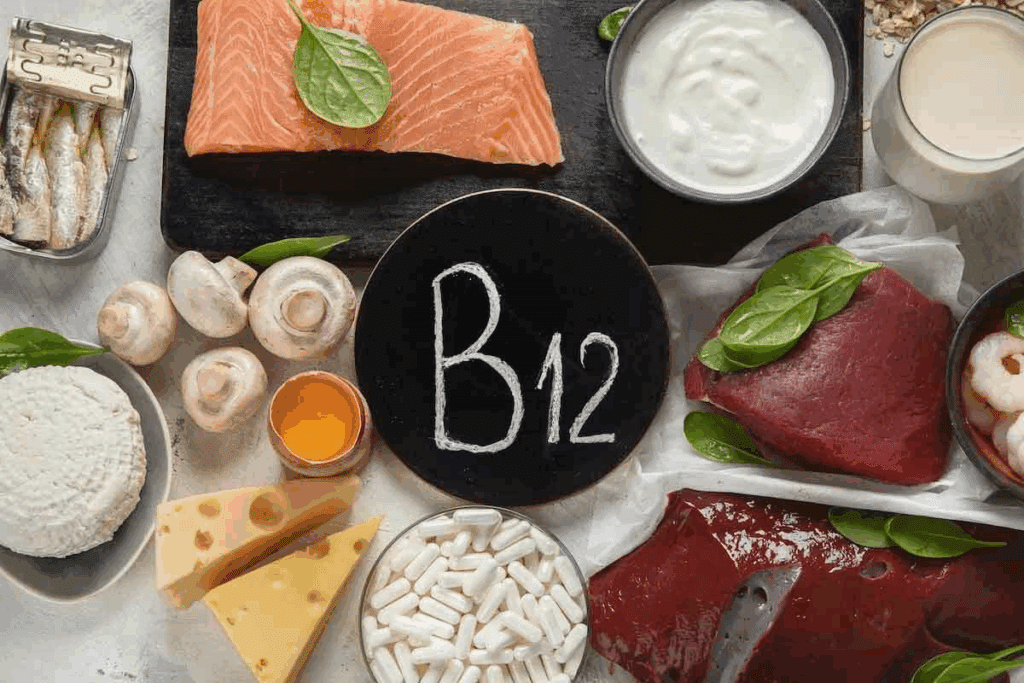
Maintaining enough vitamin B12 and folate is key togood health. These nutrients help make red blood cells, support the brain, and help DNA grow. Folate is also very important for a baby’s growth during pregnancy.Find the best vitamin B12 and folate supplements and foods to improve energy and blood health.
At Liv Hospital, we know a balanced diet is vital. It helps avoid deficiencies and boosts health. In this article, we’ll look at the top 15 foods high in vitamin B12 and folate. We’ll talk about their benefits and how to add them to your meals.
Key Takeaways
- Understand the importance of vitamin B12 and folate for overall health.
- Discover the top 15 foods rich in these essential nutrients.
- Learn how to incorporate these foods into your diet for optimal benefits.
- Explore the role of vitamin B12 in red blood cell formation and neurological function.
- Recognize the significance of folate for fetal development during pregnancy.
The Critical Roles of Vitamin B12 and Folate in Your Body

Vitamin B12 and folate are key for many body functions. They help with nerve health and cell growth. These vitamins are vital for our health and support many bodily processes.
How B12 Supports Nerve Function and DNA Synthesis
Vitamin B12 is important for our nervous system. It helps make myelin, which protects nerve fibers. This makes sure nerve signals can travel well. It also helps cells divide and grow.
Vitamin B12 is very important for our nerves. Without enough, we might feel numb or tingle in our hands and feet. It also helps make fatty acids and energy, which are key toour health.
Folate’s Essential Role in Cell Division and Fetal Development
Folate is key fotoell growth and division. It’s very important during fast growth times, like when a baby is growing inside a mother. It helps prevent serious birth defects.
Folate is also needed for making nucleic acids and fixing DNA. Without enough, cells can grow abnormally, causing health problems.
| Vitamin | Primary Functions | Consequences of Deficiency |
| Vitamin B12 | Nerve function support, DNA synthesis | Neurological symptoms, anemia |
| Folate | Cell division, fetal development | Birth defects, anemia |
In conclusion, vitamin B12 and folate are vital for our health. They help with nerve health, cell division, and fetal development. It’s important to get enough of these vitamins through food or supplements to avoid health problems.
Health Benefits of Adequate B12 and Folate Intake
Adequate vitamin B12 and folate intake is key to good health. These nutrients help with many body functions, like making red blood cells and keeping the nervous system healthy.
Preventing Anemia and Supporting Red Blood Cell Formation
Vitamin B12 and folate are important for making red blood cells. Without enough, we can get anemia, which makes us tired, weak, and short of breath. Eating enough B12 and folate helps prevent anemia and keeps red blood cells healthy.
Here’s how B12 and folate help with red blood cell formation:
| Vitamin | Role in Red Blood Cell Formation | Consequences of Deficiency |
| Vitamin B12 | Essential for DNA synthesis in red blood cells | Anemia, fatigue, weakness |
| Folate | Critical for DNA synthesis and repair | Anemia, birth defects |
Enhancing Cognitive Function and Nervous System Health
B12 and folate are also good for our nervous system. B12 helps make myelin, which protects nerve fibers. Folate is important for our brain and can help prevent depression.
Reducing Birth Defect Risk and Supporting Pregnancy
Folate is very important during pregnancy. It helps prevent brain and spine defects in babies. Vitamin B12 also supports the nervous system and red blood cell formation during pregnancy.
In short, enough B12 and folate are vital for avoiding anemia, improving brain function, and lowering birth defect risks. Knowing their importance helps us keep our health in check.
Animal-Based Foods Rich in Vitamin B12
Looking to boost your vitamin B12 intake? Animal-based foods are a great choice. These foods are packed with vitamin B12, essential for staying healthy.
We’ll look at some top animal-based sources of vitamin B12. We’ll see how they boost our health.
Beef Liver: The Ultimate B12 Powerhouse
Beef liver is a top source of vitamin B12. A 3-ounce serving of cooked beef liver offers over 70 micrograms of vitamin B12. It’s also rich in iron, vitamin A, and more.
Clams and Shellfish: Exceptional Marine Sources
Clams and shellfish are tasty and full of vitamin B12. Clams are a standout, with a 3-ounce serving providing a lot of vitamin B12. Mussels and oysters are also good choices.
Sardines: Sustainable and Nutrient-Dense
Sardines are small, oily fish rich in vitamin B12 and omega-3s. They’re a sustainable seafood option. A serving of sardines meets a big part of your daily vitamin B12 needs.
Beef and Lamb: Red Meat B12 Sources
Red meats like beef and lamb are good for vitamin B12. They’re not as high as organ meat,s but they add a lot to your diet. Eating them in moderation is key.
| Food | Vitamin B12 Content per 3 oz Serving |
| Beef Liver | 70 mcg |
| Clams | 84 mcg |
| Sardines | 8 mcg |
| Beef | 2.5 mcg |
| Lamb | 2.4 mcg |
Eating these animal-based foods helps us get enough vitamin B12. This supports our health and well-being.
Dairy and Fish Sources of B12
Looking to boost your vitamin B12 intake? Dairy products and fish are great options. They not only offer vitamin B12 but also other essential nutrients for health.
Milk and Yogurt: Daily Dairy B12 Sources
Milk and yogurt are top choices for vitamin B12. A cup of milk or a yogurt serving can meet a lot of your daily B12 needs. Plus, they’re full of calcium, which is key for strong bones.
Cheese: Concentrated Dairy B12
Cheese is another dairy product packed with vitamin B12. Types like cheddar and Swiss have more B12. Adding cheese to your diet can be a tasty way to get enough B12.
Salmon and Trout: Omega-3s Plus B12
Fatty fish like salmon and trout are great for vitamin B12 and omega-3s. These nutrients are vital for heart health and brain function. Eating these fish often can boost your nutrition.
Plant-Based and Fortified B12 Sources
Vitamin B12 is key to health, but hard to get from plants alone. For those who don’t eat meat or dairy, finding good B12 sources is vital. It helps avoid health problems.
There are many plant-based and fortified B12 options. They help meet our daily needs for this important nutrient.
Nutritional Yeast: Vegan B12 Option
Nutritional yeast is a favorite vegan food. It’s packed with protein and fiber and often has B12 added. You can add it to soups, salads, and more to boost flavor.
Make sure to check the nutritional yeast label for B12. Some brands have much more B12 than others.
Fortified Plant Milks and Cereals
Many plant milks and cereals have B12 added. They’re great for those who eat plants. These foods help fill the B12 gap in our diets.
When buying fortified plant milks and cereals, look for labels that say they have B12. Adding them to your diet is an easy way to get enough B12.
Leafy Greens and Vegetables Rich in Folate
Folate is a key B vitamin that helps with cell growth and DNA creation. Eating leafy greens and veggies can give you lots of folate. This supports your body’s health. Let’s look at some top folate-rich foods and how they help keep you healthy.
Spinach and Kale: Folate-Dense Greens
Spinach and kale are full of folate. Spinach is great in salads, smoothies, and cooked meals. Kale is packed with folate and vitamins A, C, and K. Adding these greens to your meals boosts your folate levels.
Broccoli and Asparagus: Versatile Folate Sources
Broccoli and asparagus are tasty and full of folate. Broccoli is not just folate-rich but also has health-boosting compounds. Asparagus supports cell health and is good in many dishes. Both are easy to add to your meals for more nutrition.
Avocados: Healthy Fats with Folate
Avocados are full of healthy fats and folate. They’re good for your heart and keep you feeling full. Enjoy them in salads, as a spread, or on top of dishes for extra folate and nutrition.
| Food | Folate Content (mcg per serving) |
| Spinach (1 cup cooked) | 262 |
| Kale (1 cup cooked) | 177 |
| Broccoli (1 cup cooked) | 168 |
| Asparagus (1 cup cooked) | 262 |
| Avocado (1 medium) | 118 |
Eating these folate-rich foods can greatly improve your health. They help with cell growth and lower health risks. Try to eat a variety of these nutrient-dense foods for better health.
Legumes and Grains High in Folate
Legumes and whole grains are not just high in fiber. They are also packed with folate, making them key for a balanced diet. Folate is vital for DNA repair, cell growth, and division. Adding these foods to your meals boosts your nutrition.
Lentils and Beans: Protein-Folate Powerhouses
Lentils and beans are top folate sources among legumes. They offer a lot of protein, great for those who don’t eat meat. Lentils are flexible and can be used in many dishes. Beans like kidney, black, and pinto are also full of folate and easy to add to your meals.
One cup of cooked lentils has about 358 micrograms of folate, nearly 90% of what you need daily. Beans, like black beans, also have a lot of folate. They’re good for your diet and give you iron and fiber, too.
Fortified Whole Grains: Accessible Folate Sources
Fortified whole grains are a great way to get more folate. Many breakfast cereals and whole-grain products have folic acid added. This makes it easy to get enough folate, even if you can’t get it from natural sources.
When picking fortified whole grains, always check the label. Look for products that give you 100% or more of your daily folate needs. Whole-grain bread and pasta can also be fortified. Choosing these products helps you get more folate and supports your health.
Vitamin B12 and Folate Supplements: Guidelines and Recommendations
For those at risk of deficiency, vitamin B12 and folate supplements are a good solution. They help prevent health problems. People with certain diets, like vegetarians and vegans, might need them more.
When Supplementation Becomes Necessary
Supplements are needed when your diet lacks vitamin B12 and folate. This is true for vegetarians and vegans, as these nutrients are mainly in animal products. Health guidelines suggest talking to a doctor if you’re at risk or have a deficiency.
Choosing the Right Form and Dosage
It’s important to pick the right vitamin B12 and folate supplements. They come in different forms, like cyanocobalamin and methylcobalamin. Your health and needs will decide which one is best. Always talk to a doctor to find out.
Key Considerations:
- The form of vitamin B12 (cyanocobalamin vs. methylcobalamin)
- Individual health status and needs
- Potential interactions with other medications
Recommended Daily Intake for Different Age Groups
The daily intake of vitamin B12 and folate changes with age. Adults need 2.4 mcg of vitamin B12 and 400 mcg of folate. Pregnant and breastfeeding women need more. It’s important to follow health guidelines for the right amount.
Recommended Daily Intake:
| Age Group | Vitamin B12 RDA | Folate RDA |
| Adults | 2.4 mcg | 400 mcg |
| Pregnant Women | 2.6 mcg | 600 mcg |
| Breastfeeding Women | 2.8 mcg | 500 mcg |
Understanding the B-Complex Family: Beyond B12 and Folate
It’s important to know about B-complex vitamins to understand their role in energy and health. The B-complex family has eight essential vitamins. They work together to help with energy, nerve function, and more.
The Eight Essential B Vitamins and Their Functions
The B-complex vitamins include thiamine (B1), riboflavin (B2), niacin (B3), pantothenic acid (B5), vitamin B6, biotin, folate (B9), and vitamin B12. Each vitamin has a special role in keeping us healthy. For example, thiamine (B1) helps with glucose metabolism.
Riboflavin (B2) is key to energy and is found in dairy. Niacin (B3) and pantothenic acid (B5) are important for energy, too. Niacin helps with skin and nerves. Vitamin B6 is important for brain function and making red blood cells.
B6 and Other B Vitamins: Common Food Sources
So, where can we find these B vitamins? Vitamin B6 is found in chicken, fish, and potatoes. Other B vitamins are in different foods. For instance, whole grains have thiamine, riboflavin, and niacin.
To get all B vitamins, eat a variety of foods. Include lean meats, fish, eggs, dairy, whole grains, and legumes. Fortified foods can also help if you have dietary limits.
Potential Risks of Excessive Vitamin B Consumption
Vitamin B is important for our health, but too much can be harmful. It’s part of a complex that includes several vitamins. Taking too much of any one can cause issues.
Can You Take Too Much Vitamin B?
Yes, it’s possible to take too much Vitamin B, mainly from supplements. Vitamin B supplements can have high doses that are more than we need. For example, too much Vitamin B6 can cause nerve problems. Too much niacin (B3) can lead to skin issues and liver damage.
It’s important to know that supplements carry a higher risk of too much intake. Food sources are generally safer because they give us the right amount of vitamins.
Signs of Excess and When to Consult a Healthcare Provider
It’s key to know the signs of too much Vitamin B. Symptoms can vary by vitamin. For instance, too much Vitamin B12 can cause skin rashes and acne. Too much folate can hide a B12 deficiency, leading to nerve damage.
- Numbness or tingling in hands and feet (B6 excess)
- Skin flushing and gastrointestinal issues (Niacin or B3 excess)
- Masking of B12 deficiency symptoms (Folate excess)
If you’re taking Vitamin B supplements and notice these symptoms, see a healthcare provider. They can check if your supplements are causing the issues. They’ll also tell you safe amounts to take.
Talking to a healthcare provider about your supplements is a good idea. They can give advice based on your health and needs.
Conclusion: Creating a Balanced Diet Rich in B12 and Folate
A balanced diet with lots of vitamin B12 and folate is key to good health. We’ve seen how important these nutrients are for our nerves, DNA, and cells.
It’s easy to add foods high in B12 and folate to your meals. Beef liver, clams, and sardines are great for B12. Spinach and kale are full of folate. Don’t forget fortified plant milks and cereals for folic acid.
To stay healthy, eat a variety of foods with B12 and folate. Include dairy, fish, and plant-based options. This helps avoid anemia, keeps your mind sharp, and lowers birth defect risks.
Adding these foods to your diet is a smart health move. A diet full of B12 and folate is vital for feeling your best. We urge you to check out the many options available.
FAQ
What are the best food sources of vitamin B12?
Foods like beef liver, clams, and sardines are packed with vitamin B12. Beef and lamb are also good choices. For those who don’t eat meat, try fortified plant milks and cereals, or nutritional yeast.
What foods are rich in folate?
Spinach, kale, and broccoli are full of folate. Lentils, beans, and avocados are also great sources. Fortified whole grains add to your folate intake.
Can you take too much vitamin B?
Taking too much vitamin B can be harmful. Always talk to a doctor to find out how much you need.
What are the benefits of vitamin B12 and folate?
Vitamin B12 and folate are key for nerve health and DNA. They prevent anemia and support brain function. They’re also vital for a healthy baby during pregnancy.
How much vitamin B12 should you take daily?
Adults need about 2.4 micrograms of vitamin B12 daily. Pregnant and breastfeeding women might need more. Always check with a doctor for your specific needs.
Are there any risks associated with vitamin B12 and folate supplementation?
Taking supplements can be good, but too much is bad. Always follow your doctor’s advice to avoid too much.
What is the B-complex family of vitamins?
The B-complex family has eight vitamins: thiamine, riboflavin, niacin, pantothenic acid, vitamin B6, biotin, folate, and vitamin B12. They help with energy, nerve health, and heart function.
Is vitamin B6 the same as niacin?
No, vitamin B6 and niacin are different. Vitamin B6 helps with energy and nerves. Niacin is important for skin, hair, and cholesterol.
Can I get enough vitamin B12 and folate from my diet alone?
Eating a variety of whole foods can give you enough B12 and folate. But some people, like vegetarians and pregnant women, might need supplements.
References:
- Umekar, M., & Patel, A. K. (2025). Vitamin B12 deficiency and cognitive impairment: a comprehensive review. Frontiers in Neurology, 16, 789512. https://www.sciencedirect.com/science/article/pii/S266645932500040X