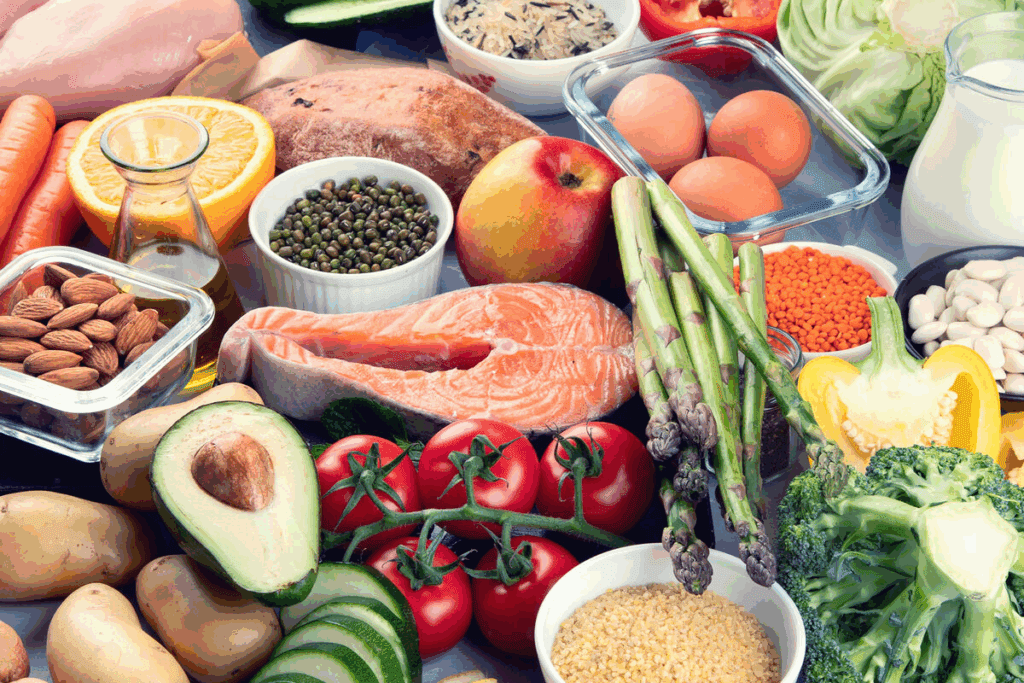
Knowing the basics of a balanced diet is key to making smart food choices. The USDA MyPlate system makes nutrition easy to understand. It helps us build meals that keep us healthy for a long time.Wondering ‘what are the main food groups’? Our simple guide explains the 5 best, essential categories for amazing, healthy eating.
The five main food groups are Fruits, Vegetables, Grains, Protein Foods, and Dairy. These are also key in the Eatwell Guide and Canada’s food guide. They show how important they are for a healthy diet.
By focusing on these groups, we can make a diet that’s good for our health. The 2015-2020 Dietary Guidelines for Americans give us advice on how much to eat each day. This helps us make better choices.
Key Takeaways
- The USDA MyPlate system categorizes food into five main groups: Fruits, Vegetables, Grains, Protein Foods, and Dairy.
- A balanced diet including these groups supports long-term health and wellness.
- Other dietary guidelines, like the Eatwell Guide, also emphasize these categories.
- Understanding daily recommended servings can help in making informed nutrition choices.
- A healthy diet is essential for maintaining overall well-being.
The Foundation of Healthy Nutrition

The Dietary Guidelines for Americans offer a detailed guide for healthy eating. They help us make smart choices about what we eat and how we live.
We follow the 2015-2020 Dietary Guidelines for Americans for basic nutrition rules. These guidelines stress the need to eat a variety of foods from all five basic food groups.
The 2015-2020 Dietary Guidelines for Americans
The 2015-2020 Dietary Guidelines suggest a healthy eating pattern. This pattern includes a mix of nutrient-rich foods. It focuses on:
- Eating a variety of vegetables from all subgroups
- Adding whole fruits to our diet
- Making whole grains the main part of our grain intake
- Choosing lean protein sources
- Picking fat-free or low-fat dairy products
The guidelines say, “a healthy eating pattern includes a variety of nutrient-dense foods across all food groups.” This ensures we get all the nutrients we need for good health.
“A healthy eating pattern is not a rigid prescription, but a flexible framework that can be tailored to meet an individual’s needs and preferences.”
Building Blocks for a Balanced Diet
The five basic food groups are the building blocks for a balanced diet. These groups are:
Food Group | Examples | Nutritional Benefits |
Fruits | Apples, bananas, berries | Vitamins, minerals, antioxidants |
Vegetables | Broccoli, carrots, spinach | Fiber, vitamins, minerals |
Grains | Bread, rice, pasta | Carbohydrates, fiber, B vitamins |
Protein Foods | Meat, poultry, beans, nuts | Protein, vitamins, minerals |
Dairy | Milk, yogurt, cheese | Calcium, vitamin D, protein |
By knowing and using these food groups, we can keep our diet balanced and healthy.
What Are the Main Food Groups? USDA MyPlate System

The USDA MyPlate system has changed how we eat healthy. It groups foods into five main categories. This makes choosing healthy foods easier and more visual.
The MyPlate system is a new way to eat healthy. It’s simpler and easier to understand than the old food pyramid. It helps us know how to balance our meals better.
The Five Essential Food Categories
The USDA MyPlate system divides foods into five main groups: Fruits, Vegetables, Grains, Protein Foods, and Dairy. Each group is important for our health.
- Fruits: Fruits are full of vitamins, minerals, and antioxidants. They’re key to a healthy diet.
- Vegetables: Vegetables give us many nutrients. They’re vital for staying healthy.
- Grains: Grains, like whole grains, give us energy and fiber. They’re important for our bodies.
- Protein Foods: This group includes meat, poultry, seafood, beans, peas, eggs, and nuts. They help build and repair muscles.
- Dairy: Dairy products are full of calcium and vitamin D. They’re good for our bones.
Evolution of Nutritional Guidelines in America
Nutritional guidelines in the U.S. have changed a lot. The USDA MyPlate system is the newest version. It builds on older guidelines like the food pyramid.
The changes show we understand nutrition better now. The MyPlate system focuses on five main food groups. This makes it easier to eat healthier.
As we learn more about nutrition, guidelines will keep changing. But the basic idea of eating a balanced diet will always be important.
Fruits: Colorful Sources of Essential Nutrients
Fruits are key to a balanced diet, packed with nutrients and antioxidants. They add variety to our meals with their flavors, textures, and nutrients. Rich in vitamins, minerals, and fiber, fruits are a great choice for a healthy diet.
Fresh, Frozen, Canned, and Dried Options
Fruits come in many forms: fresh, frozen, canned, and dried. Each has its own benefits for a healthy diet. For example, fresh fruits are great for snacking, while canned fruits are easy to add to meals.
- Fresh fruits are rich in antioxidants and fiber.
- Frozen fruits keep nutrients and are available all year.
- Canned fruits are affordable and convenient.
- Dried fruits are a concentrated source of fiber and nutrients.
Nutritional Benefits and Phytonutrients
Fruits are full of essential nutrients like vitamins A and C, potassium, and fiber. They also have phytonutrients, such as antioxidants and flavonoids, which are good for health. Eating a variety of fruits supports overall health and well-being.
Some key benefits of fruits include:
- They help heart health with potassium and fiber.
- Antioxidants in fruits protect against chronic diseases.
- Fruits are low in calories and high in fiber, aiding in weight management.
Recommended Daily Intake: 2 Cups for 2,000 Calorie Diet
The Dietary Guidelines suggest eating 2 cups of fruits daily on a 2,000 calorie diet. You can meet this by adding fruits to your meals and snacks. For instance, have fruit with breakfast, as a mid-morning snack, or as dessert.
“A diet rich in fruits can help support overall health and well-being by providing necessary vitamins, minerals, and fiber.”
By understanding the importance of fruits and adding them to our daily diet, we can improve our health and balance in life.
Vegetables: The Largest Portion of Your Plate
Vegetables should be the biggest part of what you eat. They are full of nutrients, fiber, and phytonutrients. These are key for staying healthy and avoiding chronic diseases.
Vegetable Subgroups and Their Unique Benefits
Vegetables fall into different groups, each with its own health perks. These groups include dark green, red and orange, starchy, and others. Dark green vegetables like spinach and kale are packed with vitamins A, C, and K, and minerals like calcium and iron.
Red and orange vegetables, such as carrots and tomatoes, are full of vitamin A and lycopene. Lycopene is an antioxidant that may lower cancer risk.
What Food Group Are Sweet Potatoes In? Understanding Starchy Vegetables
Sweet potatoes are starchy vegetables in the vegetable group. They are high in complex carbs, fiber, and vitamins and minerals. They give you long-lasting energy and help control blood sugar.
Other starchy vegetables include corn, peas, and winter squash. These foods are not only filling but also rich in nutrients. They are great for a healthy diet.
Meeting the 2.5 Cup Daily Recommendation
Adults should eat about 2.5 cups of vegetables a day, on a 2,000 calorie diet. You can reach this goal by eating a variety of vegetables at meals and snacks.
- Include a side salad or steamed vegetables with your main meals.
- Snack on raw vegetables like carrots and cucumbers.
- Add vegetables to soups, stews, and casseroles.
By focusing on vegetables in your meals, you’ll meet your daily nutritional needs. You’ll also enjoy the many health benefits they offer.
Grains: Carbohydrates for Energy and Fiber
Grains are key for energy and fiber, essential for our daily diet. They offer the carbs our bodies need to work right. Grains come in two types: whole and refined.
Whole Grains vs. Refined Grains
Whole grains have the whole kernel: bran, germ, and endosperm. Think of brown rice, quinoa, and whole-wheat bread. They’re packed with fiber, vitamins, and minerals. Refined grains, like white bread and rice, are mostly empty calories.
Whole grains are better than refined grains because they’re more nutritious.
Choosing whole grains over refined can greatly improve our health. It lowers the risk of heart disease and diabetes.
What Food Group Is Macaroni and Cheese In? Classifying Mixed Foods
Mixed foods like macaroni and cheese are tricky to categorize. They mix grains (macaroni) with dairy (cheese). When sorting mixed foods, we look at the main ingredients and their groups. Knowing what’s in mixed foods helps us make better food choices.
Consuming the Recommended 6 Ounces Daily
We should eat about 6 ounces of grains daily, with half being whole grains. That’s 3 to 4 whole grain servings a day. We can get this by eating oatmeal for breakfast or quinoa with veggies for lunch. Adding whole grains to our diet is important for their health benefits.
Protein Foods: Diverse Sources for Muscle Building
A balanced diet needs a variety of protein foods for muscle growth and repair. Protein is key for building and fixing body tissues. It’s vital for our health.
Animal-Based Protein Options
Animal proteins are complete, meaning they have all nine essential amino acids our bodies can’t make. These include:
- Meat: beef, pork, lamb
- Poultry: chicken, turkey, duck
- Fish and seafood: salmon, tuna, shrimp
- Dairy: milk, cheese, yogurt
- Eggs
These foods are not just high in protein. They also have iron, zinc, and B vitamins.
Plant-Based Alternatives: Beans, Nuts, and Seeds
For those on a plant-based diet or looking for animal protein alternatives, there are many options:
- Legumes: beans, lentils, peanuts
- Nuts and seeds: almonds, chia seeds, hemp seeds
- Soy products: tofu, tempeh, edamame
Plant-based proteins might lack vitamin B12 but are full of fiber, vitamins, and minerals. They’re great for a healthy diet.
Peanut Butter Food Group: Plant Proteins in Your Diet
Peanut butter is a plant-based protein that’s both versatile and nutritious. It’s packed with healthy fats and protein, making it a good choice for a balanced diet.
Protein Source | Protein Content per Serving | Additional Nutrients |
Chicken breast | 31g per 3 oz serving | Niacin, Vitamin B6 |
Black beans | 15g per 1 cup cooked | Fiber, Folate |
Peanut butter | 8g per 2 tbsp | Healthy fats, Vitamin E |
Mixing animal and plant proteins in your diet gives you all the amino acids and nutrients you need. Whether you’re trying to build muscle or just want a balanced diet, protein is key.
Dairy: Essential for Bone Health
Dairy products are key for a diet that supports strong bones. They offer essential nutrients for keeping bones healthy throughout our lives.
Milk, Yogurt, Cheese, and Fortified Alternatives
Dairy comes in many forms like milk, yogurt, and cheese. These are packed with nutrients and can be enjoyed in various ways. For those who can’t have dairy, there are fortified plant-based milks with calcium and vitamin D.
Calcium, Vitamin D, and Other Key Nutrients
Calcium and vitamin D are vital for bone health. Calcium builds and keeps bones strong, while vitamin D helps absorb calcium. Dairy also has protein, potassium, and magnesium, which are good for overall health.
Achieving the 3 Cup Daily Recommendation
The daily dairy intake is 3 cups for a 2,000 calorie diet. It’s easy to reach this by adding dairy to meals and snacks. For instance, a cup of milk at breakfast, yogurt as a snack, and cheese at dinner can help meet this goal.
The 5 Food Groups and Balanced Meal Planning
To make balanced meals, you need to know the five key food groups. Planning meals involves looking at the right amounts of these groups for the best nutrition.
MyPlate Proportions for Optimal Nutrition
The USDA’s MyPlate system suggests filling half your plate with fruits and vegetables. This helps in getting a balanced diet by focusing on these groups.
To use MyPlate effectively, follow this guide:
Food Group | Recommended Proportion |
Fruits and Vegetables | Half your plate |
Grains | Quarter of your plate |
Protein | Quarter of your plate |
Dairy | A serving on the side |
Adjusting Portions Based on Age, Gender, and Activity Level
It’s important to change food amounts based on your age, gender, and how active you are. For example, athletes need more protein for muscle repair and energy.
Here’s a basic guide for adjusting portions:
- Age: Older adults might need fewer calories but more calcium and vitamin D.
- Gender: Women, like those who are pregnant or breastfeeding, have different needs.
- Activity Level: More active people need more calories and protein.
What Food Group Is Water In? Hydration as a Critical Component
Water isn’t in any of the five food groups, but it’s very important for a healthy diet. It helps with digestion and absorbing nutrients.
Drink at least eight glasses of water a day. Adjust this based on your needs and how active you are.
Special Considerations for the 5 Categories of Food
Exploring the five main food groups is important. But, real-world eating can be complex. We must consider special cases that affect our choices.
Navigating Food Group Overlap and Mixed Dishes
Mixed dishes are a challenge. They often have foods from several groups. For example, stir-fry mixes vegetables, proteins, and grains.
Mixed dishes need a careful look. We must focus on the main ingredients and their amounts. A macaroni and cheese dish, for instance, is mostly grains but also has dairy.
“The key to managing mixed dishes is understanding the proportion of each food group they contain.”
Dietary Restrictions and Food Group Alternatives
Dietary restrictions are common. They can be due to health, personal choice, or culture. For those with lactose intolerance, plant-based alternatives can replace dairy.
- Vegetarians and vegans can use beans, nuts, and seeds for protein.
- Those with gluten intolerance can choose gluten-free grains.
Examples of Food Groups in Various Cultural Cuisines
Cultural cuisines show how the five food groups are used in meals. For example:
Cultural Cuisine | Example Dish | Food Groups Represented |
Indian | Vegetable curry with rice | Vegetables, Grains |
Mexican | Tacos with beans, salsa, and avocado | Protein Foods, Vegetables, Grains |
Mediterranean | Grilled fish with quinoa and roasted vegetables | Protein Foods, Grains, Vegetables |
These examples show how cultures balance the five food groups. They offer insights for diverse dietary needs.
Conclusion: Embracing the Five Basic Food Groups for Lifelong Health
The five basic food groups are key to a healthy diet all your life. They include fruits, vegetables, grains, protein foods, and dairy. Knowing their importance helps us make better food choices for our health.
By eating foods from these groups, we get the nutrients we need. This supports our energy and long-term health. Using what we’ve learned, we can improve our eating habits and stay healthy for life.
Adding a variety of foods from these groups to our meals is important. It ensures we get all the nutrients we need. This healthy eating approach benefits not just our health but also our overall well-being.
FAQ
What are the five basic food groups?
The USDA MyPlate system recommends five basic food groups. These are Fruits, Vegetables, Grains, Protein Foods, and Dairy.
What food group are sweet potatoes in?
Sweet potatoes are starchy vegetables. They fall under the Vegetable food group.
What is the peanut butter food group?
Peanut butter is a plant-based protein source. It falls under the Protein Foods group.
What food group is macaroni and cheese in?
Macaroni and cheese can be in two groups. It’s a Grain (macaroni) and a Dairy (cheese) food.
What are the 5 MyPlate food groups?
The 5 MyPlate food groups are Fruits, Vegetables, Grains, Protein Foods, and Dairy.
What food group is water in?
Water doesn’t fit into a specific food group. But it’s vital for staying hydrated and healthy.
How many food groups are there?
The USDA MyPlate system lists five main food groups.
What are the different food groups?
The different food groups are Fruits, Vegetables, Grains, Protein Foods, and Dairy.
What are the 5 categories of food?
The 5 categories of food are Fruits, Vegetables, Grains, Protein Foods, and Dairy.
What are the 5 food types?
The 5 food types are Fruits, Vegetables, Grains, Protein Foods, and Dairy. They are key for good health.
Rewference
Government Health Resource. Evidence-Based Medical Guidance. Retrieved from https://www.usda.gov/about-usda/news/blog/back-basics-all-about-myplate-food-groups