
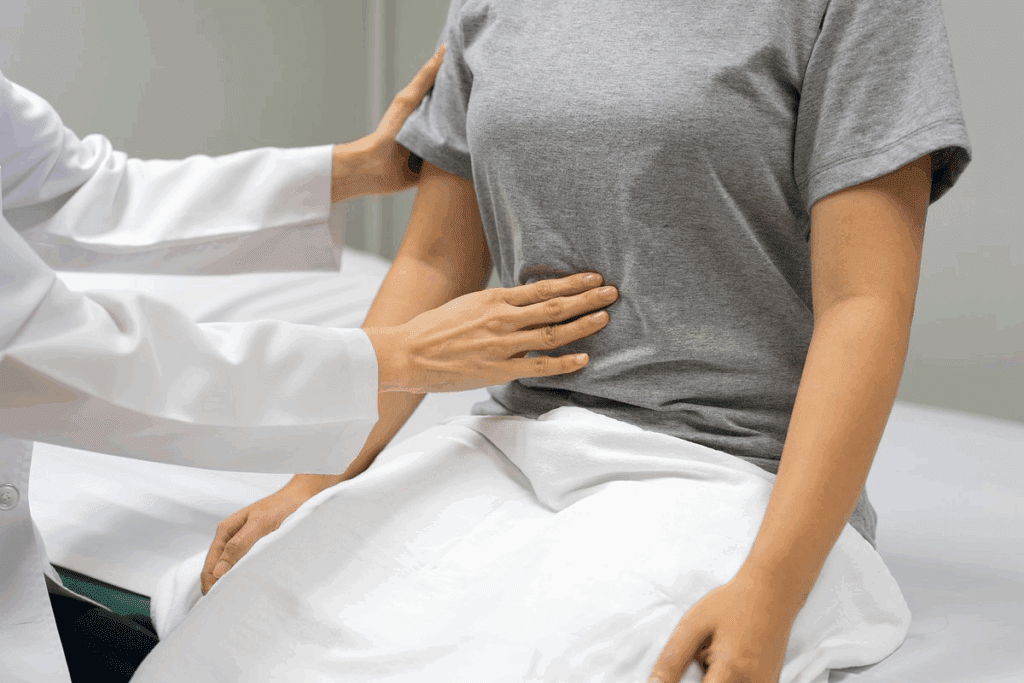
Discover 13 conditions a colonoscopy can diagnose and what can a colonoscopy diagnose
Liv Hospital uses the latest technology and focuses on the patient. This helps find many health issues. A colonoscopy lets patients see how their digestive system is doing and spot problems early.
Key Takeaways
- Colonoscopy is a vital tool for detecting colorectal cancer and other gastrointestinal issues.
- The procedure involves an endoscopic examination of the colon and rectum.
- Liv Hospital uses advanced technology for accurate diagnoses.
- A colonoscopy can reveal various conditions affecting the digestive health.
- Early detection through colonoscopy can significantly improve patient outcomes.
The Purpose and Process of Colonoscopy
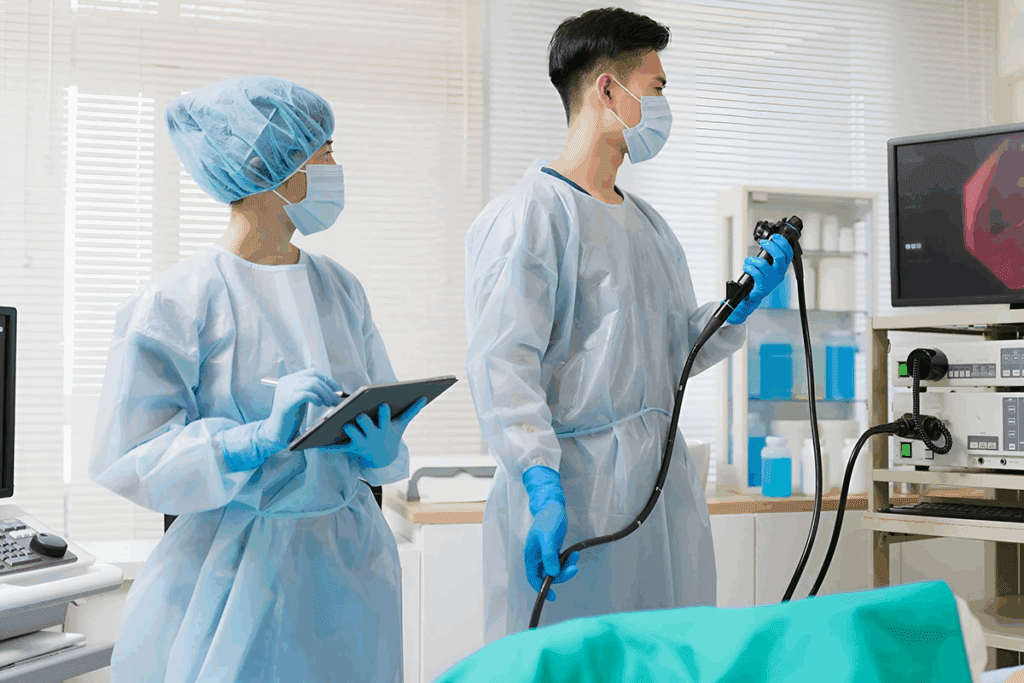
It’s important for patients to know about colonoscopy before they go through it. This procedure lets doctors see inside the colon for problems like polyps, cancer, or inflammation.
How the Procedure Works
A flexible tube called a colonoscope is put into the rectum. It goes through the colon. The tube has a camera and light, so doctors can see the colon on a screen.
The whole process usually takes 30 to 60 minutes. The colonoscope also has a special channel. This channel lets doctors take biopsies or remove polyps.
“Colonoscopy is a powerful tool in the prevention and early detection of colorectal cancer,” says Dr. John Smith, a gastroenterologist. “By identifying and removing precancerous polyps, we can significantly reduce the risk of developing colorectal cancer.”
When Doctors Recommend a Colonoscopy
Doctors suggest a colonoscopy for many reasons. They use it to screen for colorectal cancer, check symptoms like rectal bleeding, and watch conditions like inflammatory bowel disease.
| Risk Factor | Recommendation |
| Family history of colorectal cancer | Screening should start at age 40, or 10 years before the age at which the relative was diagnosed |
| Symptoms like rectal bleeding | Colonoscopy is often recommended to investigate the cause of symptoms |
| Age 50 and above | Routine screening is recommended for adults starting at age 50 |
Knowing when and why a colonoscopy is needed helps patients prepare. It shows how important it is for their health.
Preparing for Your Colonoscopy: The Complete Patient Guide
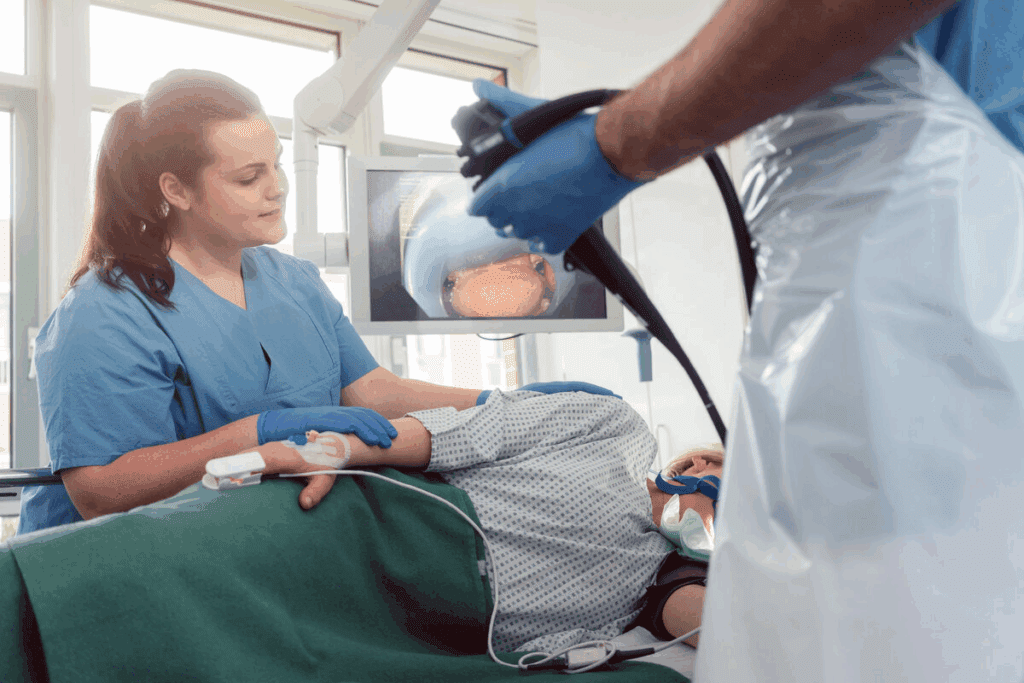
To make sure your colonoscopy goes well, you need to follow a detailed guide. This guide helps make sure your colon is clean. This is key for a clear and accurate check-up.
Dietary Restrictions and Bowel Preparation
Following dietary restrictions and bowel prep is very important. Patients usually eat only clear liquids the day before. This means no solid foods or colored liquids that could mess up the test.
Bowel prep cleans your colon with special medication. Your doctor will tell you which type to use. It’s important to follow these instructions well to clean your colon right.
| Dietary Item | Allowed | Not Allowed |
| Liquids | Clear broths, water, clear juices | Red or purple liquids, milk |
| Foods | None | All solid foods |
| Medications | Discuss with your doctor | Iron supplements, certain diabetes medications |
What Happens During the Procedure
During the colonoscopy, you’ll be sedated to feel less pain. A flexible tube with a camera is put into your rectum to see your colon. The whole thing usually takes 30-60 minutes.
Recovery and Follow-up Care
After the test, you’ll be watched as the sedation fades. It’s best to have someone drive you home. You might feel bloated or gassy, but these feelings go away soon.
Your doctor will give you care instructions after. This includes when you can go back to normal activities and eating. It’s important to follow these to recover well.
What Can a Colonoscopy Diagnose? 13 Key Conditions
Colonoscopy lets doctors see inside the colon. It helps find many health problems in the gut.
Diagnostic Capabilities Overview
A colonoscopy is a detailed test. It lets doctors look at the inside of the colon and rectum. This test can spot many issues, like colorectal cancer and polyps.
It can also find inflammatory bowel disease (IBD) and other gut problems.
The test can do several things:
- Look at the colon’s inside lining
- Find polyps and cancerous spots
- Spot inflammatory diseases like Crohn’s and ulcerative colitis
- Diagnose diverticular disease and other structural issues
Visual vs. Biopsy-Based Diagnoses
Colonoscopy lets doctors see and take tissue samples. Some problems can be seen just by looking, but others need a biopsy.
For example, adenomatous polyps can be seen, but a biopsy is needed to check if they are cancer. IBD might need a biopsy to see how bad the inflammation is.
The Importance of Regular Screening
Regular colonoscopies are key for catching diseases early. They help doctors find problems early and treat them quickly.
Colonoscopy screenings are important because they:
- Find colorectal cancer early, when it’s easier to treat
- Take out polyps that could turn into cancer
- Help manage chronic diseases like IBD
Knowing what a colonoscopy can find helps people see its value for their gut health.
Colorectal Cancer: The Most Critical Detection
Early detection of colorectal cancer is key, and colonoscopy is essential. It’s the top method for finding and stopping colorectal cancer. It spots polyps and cancer early.
Early Warning Signs and Risk Factors
Knowing early signs and risk factors helps prevent and detect colorectal cancer. Key risk factors include:
- Age: Risk increases after 50 years
- Family history of colorectal cancer or polyps
- Personal history of inflammatory bowel disease
- Genetic syndromes such as Lynch syndrome
- Lifestyle factors: diet, physical activity, smoking, and alcohol consumption
Symptoms like changes in bowel habits, blood in the stool, and unexplained weight loss may indicate cancer.
How Cancer Appears During Colonoscopy
During a colonoscopy, cancer can look like a mass, polyp, or ulceration. The look can vary. The procedure also lets doctors take biopsies to confirm cancer.
Early-stage cancer may not always have clear symptoms. This shows why screening is so important.
Survival Rates with Early Detection
Early detection of colorectal cancer greatly improves survival rates. The American Cancer Society says the 5-year survival rate for localized cancer is about 90%. Early detection means better treatment options and a better prognosis.
Regular screening through colonoscopy can prevent colorectal cancer by removing precancerous polyps. This makes colonoscopy a critical tool for public health.
- Localized cancer: 90% 5-year survival rate
- Regional spread: 71% 5-year survival rate
- Distant spread: 14% 5-year survival rate
In conclusion, colonoscopy is vital for detecting and preventing colorectal cancer. By understanding risks, recognizing early signs, and getting regular screenings, people can greatly improve their survival chances.
Polyps: Types and Cancer Risk Assessment
Polyps are often found during colonoscopies. They come in different types and have varying cancer risks. Knowing about these differences helps in assessing cancer risk and planning the right follow-up care.
Adenomatous Polyps (Precancerous)
Adenomatous polyps, or adenomas, are precancerous. They can turn into colorectal cancer if not removed. The chance of an adenomatous polyp becoming cancerous depends on its size, the presence of high-grade dysplasia, and the number of polyps.
Removing adenomatous polyps during a colonoscopy can stop colorectal cancer from developing. This shows why regular screenings are so important.
Hyperplastic Polyps
Hyperplastic polyps are usually non-neoplastic and have a low risk of becoming cancerous. They are often found in the distal colon and rectum. Even though they are usually benign, large hyperplastic polyps or those in certain locations may need closer watch.
Sessile Serrated Polyps
Sessile serrated polyps (SSPs) are a type of serrated polyp that can be hard to spot during a colonoscopy. They have a flat appearance. SSPs can become malignant, so their removal is recommended.
It’s key to understand the characteristics of these polyps for effective management and cancer prevention. Regular colonoscopies and removing potentially precancerous polyps are vital for a complete colorectal cancer prevention plan.
Inflammatory Bowel Disease: Crohn’s and Ulcerative Colitis
Colonoscopy is key in diagnosing inflammatory bowel disease (IBD). It includes Crohn’s disease and ulcerative colitis. These diseases cause chronic inflammation in the gut, leading to pain, diarrhea, and weight loss.
Visual Characteristics of Crohn’s Disease
Crohn’s disease can hit any part of the gut, but it often targets the ileum. A colonoscopy shows Crohn’s through its unique signs, such as:
- Deep ulcers and inflammation
- Cobblestoning appearance due to longitudinal and transverse ulcers
- Narrowing of the intestinal lumen (strictures)
Ulcerative Colitis Appearance and Distribution
Ulcerative colitis (UC) only affects the colon and rectum. Colonoscopy reveals UC through:
- Continuous inflammation starting from the rectum
- Superficial ulcers
- Pseudopolyps
The spread of UC can vary, leading to different classifications.
Biopsy Confirmation and Disease Monitoring
Colonoscopy shows IBD visually, but biopsies confirm the diagnosis and inflammation level. Biopsies help tell Crohn’s from UC and watch for cancer and dysplasia.
| Characteristics | Crohn’s Disease | Ulcerative Colitis |
| Location | Any part of the GI tract | Limited to colon and rectum |
| Nature of Inflammation | Deep ulcers, cobblestoning | Superficial ulcers, continuous inflammation |
| Complications | Strictures, fistulas | Pseudopolyps, dysplasia |
Diverticular Conditions: Diverticulosis and Diverticulitis
It’s important to know about diverticulosis and diverticulitis. They can be managed and treated with the help of colonoscopy results. This condition is common in the U.S., mainly among older adults.
Identifying Diverticular Pockets
Diverticulosis is when small pouches, called diverticula, form in the digestive tract. They usually appear in the colon. A colonoscopy can spot these pouches.
- Diverticula often show up in the sigmoid colon.
- It’s common to find many diverticula.
- Some people with diverticulosis don’t show any symptoms.
Signs of Acute or Chronic Inflammation
When these pouches get inflamed, it’s called diverticulitis. This can happen suddenly or over time. It might cause serious problems.
Signs of diverticulitis include:
- Pain in the lower left abdomen.
- Changes in how often you go to the bathroom.
- Fever and nausea if it’s severe.
Complications and Treatment Planning
Diverticulitis can lead to serious issues like abscesses or holes in the colon. Treatment depends on how bad it is. It might include changing your diet, taking antibiotics, or surgery.
The treatment plan depends on how often and how severe the episodes are.
Regular check-ups and monitoring can help manage these conditions. This can lower the chance of serious problems.
Hemorrhoids and Vascular Abnormalities
Hemorrhoids and vascular issues, like angiodysplasia, can be found through a colonoscopy. These problems can cause a lot of bleeding in the gut. Finding them is very important during the test.
Internal Hemorrhoids Grading
Internal hemorrhoids are divided into four levels based on how bad they are:
- Grade 1: Hemorrhoids that bleed but don’t come out.
- Grade 2: Hemorrhoids that come out when you poop but go back in on their own.
- Grade 3: Hemorrhoids that come out and need to be pushed back in.
- Grade 4: Hemorrhoids that come out and can’t be pushed back in.
Knowing the grade of internal hemorrhoids helps decide how to treat them.
Angiodysplasia and Arteriovenous Malformations
Angiodysplasia means there are weird blood vessels in the gut that can bleed. Arteriovenous malformations (AVMs) are also found during a colonoscopy. They are a mess of blood vessels that can bleed a lot if they burst.
Sources of Gastrointestinal Bleeding
Bleeding in the gut can come from many places, like hemorrhoids, angiodysplasia, and AVMs. Knowing where the bleeding is coming from is key to fixing it. Doctors can see and sometimes fix these problems during a colonoscopy. This helps stop bleeding from happening again.
Intestinal Infections and Inflammatory Conditions
It’s important to know about intestinal infections and inflammatory conditions. Colonoscopy helps diagnose these issues early. This leads to better treatment.
Infectious Colitis
Infectious colitis is when the colon gets inflamed due to infections. A colonoscopy might show the colon as edematous, erythematous, or ulcerated. It also lets doctors take biopsies to find out what’s causing it.
Common causes of infectious colitis include:
- Bacterial infections (e.g., Salmonella, Shigella)
- Viral infections (e.g., Cytomegalovirus)
- Parasitic infections (e.g., Entamoeba histolytica)
Pseudomembranous Colitis
Pseudomembranous colitis is linked to Clostridioides difficile (C. difficile). It shows up as yellowish-white plaques or pseudomembranes in the colon during a colonoscopy.
Microscopic Colitis
Microscopic colitis includes lymphocytic colitis and collagenous colitis. These cause chronic diarrhea. Colonoscopy might not show anything unusual, but biopsies reveal lymphocytic infiltration or a thickened collagen layer.
| Condition | Colonoscopy Findings | Biopsy Findings |
| Infectious Colitis | Edema, erythema, ulcers | Infiltration by inflammatory cells, possible identification of causative agent |
| Pseudomembranous Colitis | Pseudomembranes (yellowish-white plaques) | Presence of C. difficile toxin |
| Microscopic Colitis | Normal mucosa | Lymphocytic infiltration (lymphocytic colitis) or thickened collagen layer (collagenous colitis) |
In conclusion, colonoscopy is key in diagnosing intestinal infections and inflammatory conditions. It lets doctors see the colon’s condition and take biopsies. This helps in making the right diagnosis and treatment plan.
Ischemic Colitis and Radiation Proctitis
Ischemic colitis and radiation proctitis are serious conditions that can be found during a colonoscopy. They affect the colon and rectum. If not treated, they can lead to severe problems.
Identifying Vascular Insufficiency
Ischemic colitis happens when blood flow to the colon stops or is reduced. This causes inflammation and can lead to damage of the colon’s lining. A colonoscopy can show signs of ischemic colitis, such as:
- Pale or dusky mucosa
- Ulcerations or erosions
- Bleeding or hemorrhage
The severity of ischemic colitis can vary. A colonoscopy helps see how bad it is and guides treatment.
Radiation-Induced Damage Assessment
Radiation proctitis is a side effect of radiation therapy, often for pelvic cancers. It damages the rectal lining. A colonoscopy can spot:
- Telangiectasias (dilated blood vessels)
- Mucosal friability
- Ulcerations
- Stricture formation
Knowing the extent of damage is key to choosing the right treatment.
Treatment Options Based on Severity
Treatment for ischemic colitis and radiation proctitis varies with the severity. For ischemic colitis, treatments might include rest, antibiotics, and fixing the cause of the problem. For radiation proctitis, treatments can be topical or endoscopic to stop bleeding.
| Condition | Mild Severity | Moderate to Severe |
| Ischemic Colitis | Conservative management, bowel rest | Hospitalization, possible surgery |
| Radiation Proctitis | Topical treatments, dietary adjustments | Endoscopic treatments, possible surgical intervention |
Early diagnosis through colonoscopy is critical for effective management of both ischemic colitis and radiation proctitis. This shows how important colonoscopy is in gastroenterology.
Structural Abnormalities: Strictures and Obstructions
Structural problems like strictures and obstructions can really hurt your colon health. Colonoscopy is key in finding these issues. These problems can cause mild pain or serious health issues. Finding them early is very important.
Benign vs. Malignant Strictures
Strictures are narrow parts of the colon. They can be harmless or linked to cancer. Benign strictures often come from inflammation or scar tissue. Malignant strictures are usually cancer.
Characteristics of Benign and Malignant Strictures:
| Characteristics | Benign Strictures | Malignant Strictures |
| Appearance | Smooth, concentric narrowing | Irregular, eccentric narrowing |
| Causes | Chronic inflammation, scar tissue | Colorectal cancer |
| Biopsy Findings | No malignant cells | Malignant cells present |
Surgical vs. Endoscopic Management
How to handle strictures and obstructions depends on their cause and severity. For some, endoscopy can help. But, surgery might be needed for more serious cases.
Endoscopic management is less invasive and leads to faster recovery. Yet, surgical intervention is sometimes necessary when endoscopy fails.
Congenital Abnormalities
Certain birth defects, like colonic atresia or Hirschsprung’s disease, can affect the colon. These are rare and might not be found until later in life. Colonoscopy can help diagnose and manage these in adults.
Colonoscopy is very useful for spotting many structural problems. It lets doctors see the colon and find issues. This helps them create the right treatment plans.
Conditions a Colonoscopy Cannot Diagnose
Colonoscopy can spot many health issues, but some are out of its reach. It’s great for checking the colon and rectum. Yet, it has its limits when it comes to finding certain problems.
Can Colonoscopy Detect IBS?
Irritable Bowel Syndrome (IBS) causes belly pain, bloating, and changes in bowel habits. Sadly, colonoscopy can’t find IBS directly. Doctors usually diagnose IBS based on symptoms and by ruling out other diseases. But, colonoscopy can help find other causes of symptoms, like inflammatory bowel disease or structural issues.
Does a Colonoscopy Detect Stomach Cancer?
Colonoscopy looks at the colon and rectum, not the stomach. So, it can’t find stomach cancer. To find stomach cancer, doctors use an upper endoscopy with a biopsy. If stomach cancer is suspected, a gastroenterologist will suggest an upper GI endoscopy.
Alternative Diagnostic Procedures
When colonoscopy can’t help, other tests can. For IBS, doctors use clinical criteria and sometimes blood tests to check for other diseases. For stomach cancer, an upper GI endoscopy is key. It lets doctors see and take samples from the stomach lining.
| Condition | Diagnostic Method | Notes |
| Irritable Bowel Syndrome (IBS) | Clinical diagnosis, symptom-based | Colonoscopy helps rule out other conditions |
| Stomach Cancer | Upper GI Endoscopy with biopsy | Direct visualization and tissue sampling |
| Small Intestine Disorders | Small bowel capsule endoscopy or enteroscopy | For conditions like Crohn’s disease or small bowel tumors |
It’s important to know what colonoscopy can and can’t do. Knowing when to use other tests is key for good care. Doctors need to use many tools to fully understand and treat different gut problems.
Conclusion: The Value of Colonoscopy in Modern Healthcare
Colonoscopy is a key tool in today’s healthcare. It helps find and stop colorectal cancer early. It also spots other issues in the gut.
This test is important because it lets doctors see the colon up close. They can find polyps, cancer, and other problems. This helps in treating them early.
Colonoscopy is a top choice for checking for colorectal cancer. It’s a big part of keeping people healthy. As technology gets better, colonoscopy will keep helping patients with gut issues.
FAQ
Can a colonoscopy detect irritable bowel syndrome (IBS)?
No, a colonoscopy can’t find IBS. IBS is a disorder that doesn’t show up on a colonoscopy. This test looks for structural problems like polyps and cancer.
Does a colonoscopy detect stomach cancer?
No, it’s not for stomach cancer. It checks the colon and rectum. For stomach cancer, doctors use other tests like upper endoscopy.
What diseases can be detected by a colonoscopy?
It can spot many issues. These include colorectal cancer, polyps, and inflammatory bowel disease. It also finds diverticulosis, hemorrhoids, and vascular problems.
What will a colonoscopy reveal?
It can show many things. This includes polyps, cancer, and inflammatory bowel disease. It also helps find the cause of symptoms like bleeding.
Can a colonoscopy detect stomach problems?
No, it’s not for stomach issues. It looks at the colon and rectum. For stomach problems, doctors use other tests.
What can be found during a colonoscopy?
Doctors can find many things. This includes polyps, cancer, and inflammatory bowel disease. They can also find diverticulosis, hemorrhoids, and vascular problems. Biopsies help diagnose conditions like cancer.
Will a colonoscopy show IBS?
No, it won’t show IBS. IBS is a disorder that doesn’t show up on a colonoscopy.
What cancers can a colonoscopy detect?
It can find colorectal cancer. This includes cancers of the colon and rectum.
Can a colonoscopy diagnose irritable bowel syndrome?
No, it can’t diagnose IBS. Doctors usually diagnose IBS based on symptoms and medical history.
What can colonoscopy diagnose?
It can diagnose many conditions. These include colorectal cancer, polyps, and inflammatory bowel disease. It also finds diverticulosis and vascular problems.
Does colonoscopy show stomach cancer?
No, it doesn’t show stomach cancer. Doctors use other tests, like upper endoscopy, to diagnose stomach cancer.
References
Muleta, J., et al. (2024). A rare case of bile leak due to type 2 duct of Luschka injury: Diagnosis and intervention. Journal of Surgical Case Reports. Retrieved from https://academic.oup.com/jscr/article/2024/3/rjae179/7632948