


When you have unexplained pain or suspect an infection, an abdominal CT scan gives doctors a clear look inside your body. It shows your internal health in great detail.what does an abdominal ct scan showHow Serious Is Aortic Atherosclerosis on CT Scan and What Does It Mean?
This tool shows organs, tissues, and blood vessels in amazing detail. It helps doctors quickly find and fix problems, which can save lives.
We use CT scans to see your abdominal organs clearly. This helps us find health issues and plan the best treatment.
Key Takeaways
- A CT scan of the abdomen can show the organs, blood vessels, and bones in your abdominal cavity.
- Abdominal CT scans provide detailed images of abdominal organs and structures.
- This diagnostic tool helps radiologists and physicians diagnose and treat various medical conditions.
- Rapid and accurate diagnosis can guide treatment and potentially save lives.
- Abdominal CT scans are a valuable tool in medical diagnosis and treatment.
Understanding Abdominal CT Scans
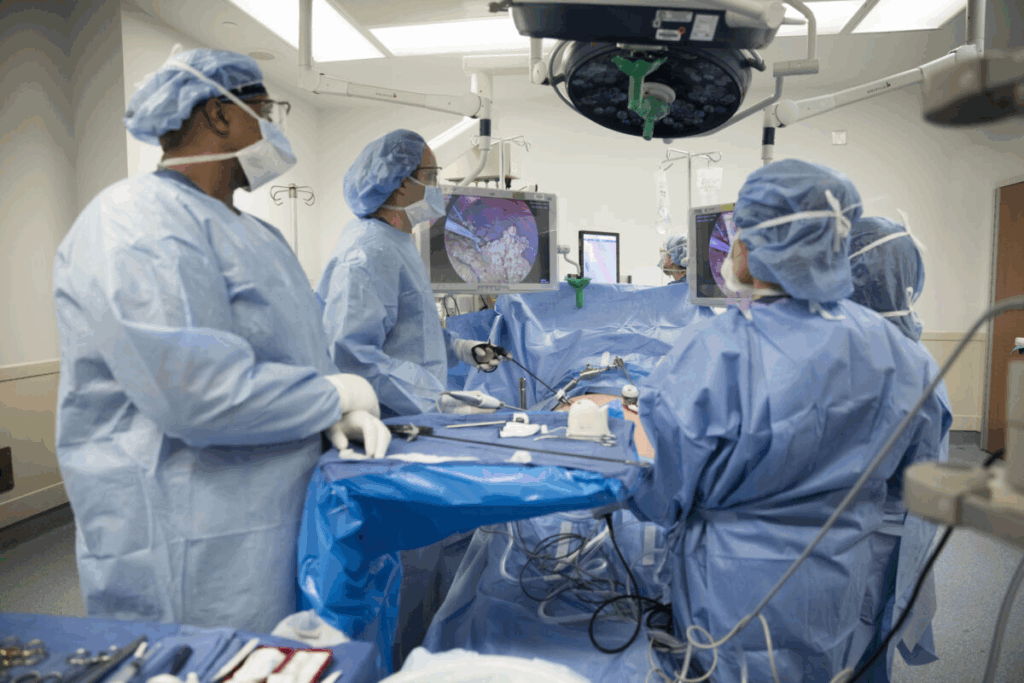
The abdominal CT scan is a cutting-edge imaging method. It uses X-rays to show detailed pictures of the body’s inside. This helps doctors see what’s going on in the abdominal area.
Definition and Basic Principles
A CT scan, or Computed Tomography scan, is a way to see inside the body. It uses X-rays from different angles to make detailed images. These images show the body’s internal structures clearly.
Doctors use CT scans to find many health issues, like injuries or cancers. They’re great for looking at the liver, kidneys, and spleen. They can also spot tumors or cysts.
How CT Technology Creates Cross-Sectional Images

CT technology rotates an X-ray source and detectors around the body. As X-rays pass through, they’re absorbed differently by tissues. A computer then makes an image from these profiles.
This makes cross-sectional images, or slices, that can be seen alone or together. This helps doctors understand complex body structures and find problems.
Advantages Over Traditional X-rays
CT scans offer more detailed views of soft tissues and organs than X-rays. X-rays are good for bones, but CT scans are better for soft tissues. This makes CT scans key for diagnosing abdominal issues.
Key benefits of CT scans include:
- High-resolution imaging of internal structures
- Ability to detect a wide range of conditions, from acute injuries to chronic diseases
- Guiding minimally invasive procedures
Understanding abdominal CT scans shows their vital role in today’s medicine. They help doctors diagnose and plan treatments.
What Does an Abdominal CT Scan Show?
An abdominal CT scan gives a detailed look at the inside of the belly. It shows the organs and structures inside. This scan is key for spotting health problems in the belly area.
Overview of Visible Organs and Structures
Many important organs and structures are seen during a CT scan. These include the liver, kidneys, pancreas, spleen, adrenal glands, stomach, and the gut. It also shows blood vessels and bones in the belly.
The liver and gallbladder are easy to see. This helps doctors check for liver diseases and gallstones. The kidneys and adrenal glands are also seen. This helps find kidney stones, tumors, or other problems.
Three-Dimensional Visualization Capabilities
CT scans are great because they make three-dimensional images of the belly organs. This helps doctors see more clearly. It gives a better view of the anatomy and any problems.
Simultaneous Viewing of Bone, Soft Tissue, and Blood Vessels
Abdominal CT scans show bone, soft tissue, and blood vessels at the same time. This is helpful for finding vascular diseases, bone fractures, or soft tissue injuries.
| Visible Structures | Diagnostic Benefits |
|---|---|
| Liver and Gallbladder | Assessment of liver diseases and gallstones |
| Kidneys and Adrenal Glands | Diagnosis of kidney stones, tumors, or other abnormalities |
| Pancreas and Spleen | Evaluation of pancreatic diseases and splenic injuries |
| Blood Vessels | Detection of vascular diseases and aneurysms |
Major Organs Visualized in Abdominal CT Scans
Abdominal CT scans show detailed images of vital organs. This helps doctors make accurate diagnoses and treatment plans. It’s great for looking at the abdominal cavity, where many organs are close together.
Liver and Gallbladder
The liver and gallbladder are key organs seen in CT scans. The liver’s structure and any problems like tumors or cysts are clear. The gallbladder is checked for gallstones or inflammation.
“CT scans give us high-resolution images,” says Medical Expert, a radiologist. “We can spot even small issues in the liver and gallbladder early on.”
Kidneys and Adrenal Glands
CT scans are great for looking at the kidneys and adrenal glands. They help find kidney stones, cysts, or tumors. They also check the adrenal glands for problems like hyperplasia or tumors.
- Kidney stones and obstructions
- Renal cysts and tumors
- Adrenal gland abnormalities
Pancreas and Spleen
The pancreas and spleen are also seen in CT scans. The pancreas is checked for pancreatitis, cysts, or tumors. The spleen is looked at for swelling, infarction, or other issues.
The American College of Radiology says, “CT scans of the abdomen are key for looking at the pancreas and spleen. They give vital info for diagnosis and treatment.”
Stomach and Intestines
CT scans also give insights into the stomach and intestines. They help find issues like bowel obstructions, inflammatory bowel disease, or tumors in the GI tract.
By looking closely at these organs, doctors can fully understand a patient’s health. This helps them create specific treatment plans.
Vascular Structures Visible on Abdominal CT
Abdominal CT scans are key in diagnosing vascular conditions. They show the blood vessels’ details. This helps doctors spot problems early.
Major Blood Vessels in the Abdomen
The scan is great for seeing the main blood vessels in the abdomen. This includes the abdominal aorta and its branches. The aorta is vital for blood to the organs, and scans help find abdominal aortic aneurysms.
“CT scans are a big help in seeing the aorta and its branches,” says Medical Expert, a top radiologist. “They help us find issues that other methods can’t.”
Detecting Aneurysms and Vascular Abnormalities
CT scans are great at finding aneurysms and other vascular problems. An aneurysm is a dangerous bulge in a blood vessel. Early detection with CT scans can prevent serious issues.
- Detection of aneurysms in the abdominal aorta and other major vessels
- Identification of vascular stenoses or narrowings
- Visualization of vascular malformations
Blood Flow and Perfusion Assessment
Abdominal CT scans also check blood flow and perfusion in organs. This is key for organs like the kidneys and liver. It helps find blood flow issues.
By using CT scan data and clinical info, doctors can make better diagnoses. This leads to more effective treatments. As CT tech gets better, so will our ability to see blood vessels and flow, helping patients more.
Common Conditions Detected by Abdominal CT Scans
Abdominal CT scans can find many health problems. They show detailed images of the belly area. This helps doctors diagnose a lot of conditions correctly.
Tumors and Masses
CT scans are great for finding tumors and masses in the belly. They show how big, where, and if they’ve spread. This info is key for cancer treatment plans. They can spot tumors in organs like the liver, pancreas, kidneys, and adrenal glands.
The scans give detailed images. This helps doctors understand the tumor’s characteristics. It aids in diagnosing and managing cancer.
Infections, Abscesses, and Inflammatory Conditions
CT scans are good at finding infections, abscesses, and inflammation in the belly. They show abscesses as fluid collections with enhancement around them. This helps doctors know how to treat them. It’s also important for guiding antibiotic therapy and drainage procedures.
CT scans can track how these conditions change. They help doctors adjust treatment plans as needed.
Trauma and Internal Injuries
CT scans are key in trauma cases. They quickly show the extent of injuries. They can spot internal bleeding and organ damage. This quick info can save lives by allowing for fast surgery when needed.
The scans give detailed images. This helps doctors understand the injury’s severity. It helps plan the best treatment, whether surgery or not.
Metastatic Spread of Disease
CT scans also find disease spread, like from cancers elsewhere. They spot metastases in lymph nodes, liver, and other organs. This is vital for cancer staging and treatment planning. Accurate detection helps avoid unnecessary surgery and guides systemic treatments.
Liver and Biliary System Findings
Abdominal CT scans are great for spotting liver and biliary system problems. They give clear images that help doctors diagnose many conditions.
Cirrhosis and Fatty Liver Disease
Cirrhosis and fatty liver disease can be seen on CT scans. These scans show how much damage the liver has. Doctors say CT scans are key in treating liver diseases.
“The use of CT scans in liver disease has revolutionized the field of hepatology, enabling precise diagnosis and monitoring of conditions like cirrhosis and fatty liver disease.”
Fatty liver disease looks like low-density areas on CT images. Cirrhosis shows a nodular liver surface and changes in liver shape.
Gallstones and Bile Duct Obstructions
Gallstones and bile duct obstructions can be found with abdominal CT scans. Gallstones look like high-density spots in the gallbladder. Bile duct obstructions cause the ducts to swell, seen on CT scans.
Spotting these issues is key for choosing the right treatment.
Liver Tumors, Cysts, and Hemangiomas
Liver tumors, cysts, and hemangiomas can be seen on CT scans. Liver tumors are masses with different looks. Cysts are fluid-filled and have clear CT features. Hemangiomas, being benign, show specific patterns on contrast-enhanced CT scans.
Knowing what these lesions are helps doctors plan treatment.
Hepatic Vascular Abnormalities
Hepatic vascular problems, like thrombosis and malformations, can be found on CT scans. Contrast-enhanced CT scans are best for seeing liver blood vessels and finding issues.
These findings are vital for managing liver and vascular diseases.
Pancreatic and Splenic Abnormalities
The pancreas and spleen are key organs that can face many issues. These problems can often be spotted with the help of abdominal CT scans. These scans give us vital details about these organs’ health, aiding in diagnosis and treatment.
Acute and Chronic Pancreatitis
Pancreatitis, or inflammation of the pancreas, can be either sudden or long-term. CT scans are great for spotting acute pancreatitis. They show how bad the inflammation is and if there are complications like pseudocysts or abscesses. CT scans help us figure out how severe pancreatitis is and what treatment to use. For chronic pancreatitis, CT scans reveal signs like calcifications, shrinkage, and duct problems.
Pancreatic Cancer and Cystic Lesions
CT scans are key in finding pancreatic cancer and figuring out cysts. They help us see tumors, if they can be removed, and if they’ve spread. CT scans tell us the difference between cyst types, like serous cystadenomas and mucinous cystic neoplasms. Knowing this helps us decide the best course of action.
Splenic Enlargement, Infarcts, and Injuries
The spleen can face issues like getting bigger, having infarcts, or getting hurt. CT scans are very good at spotting these problems. They help us see why the spleen might be enlarged, like because of infection or liver disease. CT scans also show splenic infarcts, which look like wedge-shaped dark spots, and help find injuries from trauma.
Abdominal CT scans give us detailed pictures of the pancreas and spleen. This helps us find and treat many problems with these organs. This skill is key for good patient care.
Kidney and Urinary Tract Findings
Understanding kidney and urinary tract findings on abdominal CT scans is key for diagnosing and managing related conditions. These scans give a detailed view of the kidneys and urinary tract. They help spot various abnormalities.
We will look at how these scans identify kidney stones, urinary obstructions, renal masses, cysts, tumors, infections, and congenital abnormalities.
Kidney Stones and Urinary Obstructions
Kidney stones are a common problem that can cause severe pain. They can also lead to urinary obstructions if not managed properly. Abdominal CT scans are very good at finding kidney stones on CT scan and seeing their size and location.
CT scans can spot even small stones that other imaging might miss. This helps in planning the right treatment.
Urinary obstructions, caused by stones, tumors, or other factors, are also visible on CT scans. We can see the level of obstruction and its effect on the urinary system. This guides interventions to relieve the blockage.
Renal Masses, Cysts, and Tumors
Renal masses, cysts, and tumors are important conditions that CT scans can evaluate. CT scans can tell the difference between benign cysts and potentially malignant masses. This is key for deciding the next steps.
We look at the size, location, and how these lesions enhance to guide further management. This includes kidney findings on CT scan that might show tumors or cysts.
Urinary Tract Infections and Pyelonephritis
Urinary tract infections (UTIs) and pyelonephritis (kidney infection) can be diagnosed and assessed with CT scans. We can spot signs of infection like inflammation, abscesses, or damage to the renal tissue. This helps in choosing the right treatments for urinary tract infections on CT scan.
Congenital Abnormalities
Congenital abnormalities of the kidney and urinary tract, like horseshoe kidney or duplex collecting system, can be found on abdominal CT scans. Knowing about these anomalies is vital for managing related problems and planning surgeries if needed.
| Condition | CT Scan Findings | Clinical Implication |
|---|---|---|
| Kidney Stones | High-density stones visible on CT | Pain management, possible intervention for stone removal |
| Renal Masses/Cysts | Characteristics of the mass/cyst (size, location, enhancement) | Differentiation between benign and malignant lesions, guiding biopsy or surgery |
| Urinary Tract Infections | Signs of inflammation, abscesses | Antibiotic therapy, drainage of abscesses if present |
| Congenital Abnormalities | Anatomical variations (e.g., horseshoe kidney) | Management of related complications, surgical planning |
Gastrointestinal Tract Visualization
CT scans of the abdomen are key for seeing the gastrointestinal tract and finding problems. They give us a detailed look at the GI tract. This helps us diagnose and treat many conditions well.
Bowel Obstructions and Diverticulitis
Abdominal CT scans are great for spotting bowel obstructions and diverticulitis. Bowel obstructions happen when something blocks the intestines. CT scans help find where and why this blockage is happening. They also help decide how to treat it.
Diverticulitis, which is inflammation of the colon, is also diagnosed with CT scans. These scans show how bad the inflammation is and if there are any complications.
- They find out what’s causing the bowel obstruction, like adhesions, hernias, or tumors
- They check how severe diverticulitis is and if there are any complications, like abscesses or perforations
Appendicitis and Inflammatory Bowel Disease
CT scans are very important for diagnosing appendicitis and inflammatory bowel disease (IBD). For appendicitis, CT scans can show if the appendix is swollen and inflamed. They help diagnose IBD by showing how much inflammation there is and if there are any complications.
- They help diagnose appendicitis by showing the appendix and the surrounding tissues
- They check how severe IBD is and if there are any complications, like strictures or fistulas
GI Tract Tumors and Polyps
Abdominal CT scans are key for finding GI tract tumors and polyps. They can spot masses in the GI tract and see how big they are. They also check if the cancer has spread to other parts of the body. For polyps, a special CT scan called CT colonography can find big ones that might turn into cancer.
- They find GI tract tumors and see how big they are
- They find polyps, mainly in the colon, with CT colonography
Hernias and Intestinal Perforations
CT scans are also good for finding hernias and intestinal perforations. Hernias are when part of the intestine bulges through a weak spot. CT scans can spot these and see what’s inside. Intestinal perforations are holes in the intestine. CT scans can find these by looking for air or fluid outside the intestine. This helps decide if surgery is needed right away.
Abdominal CT scans give a full view of the gastrointestinal tract. This helps doctors diagnose and treat many conditions well.
The Abdominal CT Scan Procedure
Before getting an abdominal CT scan, it’s key to know what happens. We’ll cover how to prepare, the difference between scans with and without contrast, what you’ll experience during the scan, and what to do after.
Preparation Requirements
To make your abdominal CT scan go smoothly, you need to prepare. You’ll likely need to fast for a few hours beforehand. Also, take off any metal items like jewelry, glasses, or clothes with metal parts to avoid scan interference.
In some cases, you might drink a contrast material. This helps show different parts of your abdomen more clearly. It’s used to spot abnormalities and get better images for diagnosis.
With and Without Contrast: Differences and Applications
Abdominal CT scans can be done with or without contrast. Contrast, which includes iodine or barium, makes some areas more visible. Scans without contrast are good for finding things like kidney stones or internal injuries.
Scans with contrast are better for looking at blood vessels, finding tumors, and checking the liver, pancreas, and other organs. Whether contrast is used depends on what your doctor wants to see.
What to Expect During the Scan
During the scan, you’ll lie on a table that moves into a big, doughnut-shaped machine. The scan is quick, usually just a few minutes. You’ll need to stay very quiet and might have to hold your breath for a bit.
The machine will move around you, taking detailed pictures of your abdomen. You might hear some sounds, but it won’t hurt.
Duration and Post-Procedure Information
The whole process, from start to finish, takes about 30 minutes to an hour. After it’s done, you can usually go back to your normal day unless your doctor says not to.
If you had contrast, you might be watched for a bit to see if you have any bad reactions. Drinking lots of water is also a good idea to help get the contrast out of your system.
Conclusion
Abdominal CT scans have changed how we diagnose medical issues. They give us detailed images of the inside of the body. This helps us see important organs and any problems they might have.
These scans are key in finding many health issues. They can spot tumors, infections, and injuries. They also help doctors plan the best treatment for patients.
In short, CT scans are essential for diagnosing and treating health problems. They help doctors understand what’s going on inside the body. This leads to better care and results for patients.
FAQ
What does an abdominal CT scan show?
An abdominal CT scan shows detailed images of organs in the belly. This includes the liver, gallbladder, and kidneys. It also shows the pancreas, spleen, stomach, and intestines. Plus, it looks at blood vessels and any problems they might have.
What are the advantages of an abdominal CT scan over traditional X-rays?
CT scans give more detailed pictures than X-rays. This helps doctors diagnose and plan treatments better.
What organs can be visualized using an abdominal CT scan?
CT scans can see major organs in the belly. This includes the liver, gallbladder, and kidneys. They also look at the adrenal glands, pancreas, spleen, stomach, and intestines. Plus, they check blood vessels.
Can an abdominal CT scan detect vascular abnormalities?
Yes, CT scans can find problems with blood vessels. This includes aneurysms. They also check blood flow and how well blood is getting to different parts of the body.
What conditions can be detected using an abdominal CT scan?
CT scans can find many conditions. This includes tumors and infections. They also spot trauma, internal injuries, and when cancer has spread.
How does an abdominal CT scan help diagnose liver and biliary system conditions?
CT scans help find problems with the liver and bile ducts. This includes cirrhosis and gallstones. They also find liver tumors and cysts.
What pancreatic and splenic abnormalities can be detected using an abdominal CT scan?
CT scans can spot problems with the pancreas and spleen. This includes pancreatitis and cancer. They also find cysts and injuries to these organs.
Can an abdominal CT scan diagnose kidney and urinary tract conditions?
Yes, CT scans can find kidney and urinary tract issues. This includes stones and infections. They also spot obstructions and tumors.
How does an abdominal CT scan visualize the gastrointestinal tract?
CT scans can see the GI tract. They find obstructions and infections. They also spot tumors and polyps in the GI tract.
What is the difference between an abdominal CT scan with and without contrast?
A CT scan with contrast uses a special dye to highlight areas. A scan without contrast does not use dye. The choice depends on what the doctor needs to see.
What should I expect during an abdominal CT scan?
During a CT scan, you’ll lie on a table that moves into a scanner. You’ll need to stay very quiet while the scan is done. It usually takes just a few minutes.
How long does it take to get the results of an abdominal CT scan?
Getting the results of a CT scan can take a few hours or days. A radiologist will look at the images and write a report. Your doctor will then share the results with you.
References
National Center for Biotechnology Information. Abdominal CT Scan: Detailed Internal Imaging for Diagnosis. Retrieved from
https://www.ncbi.nlm.nih.gov/pmc/articles/PMC3487073/


 Departments
 Related Videos
 Our Doctors
 News
News


