
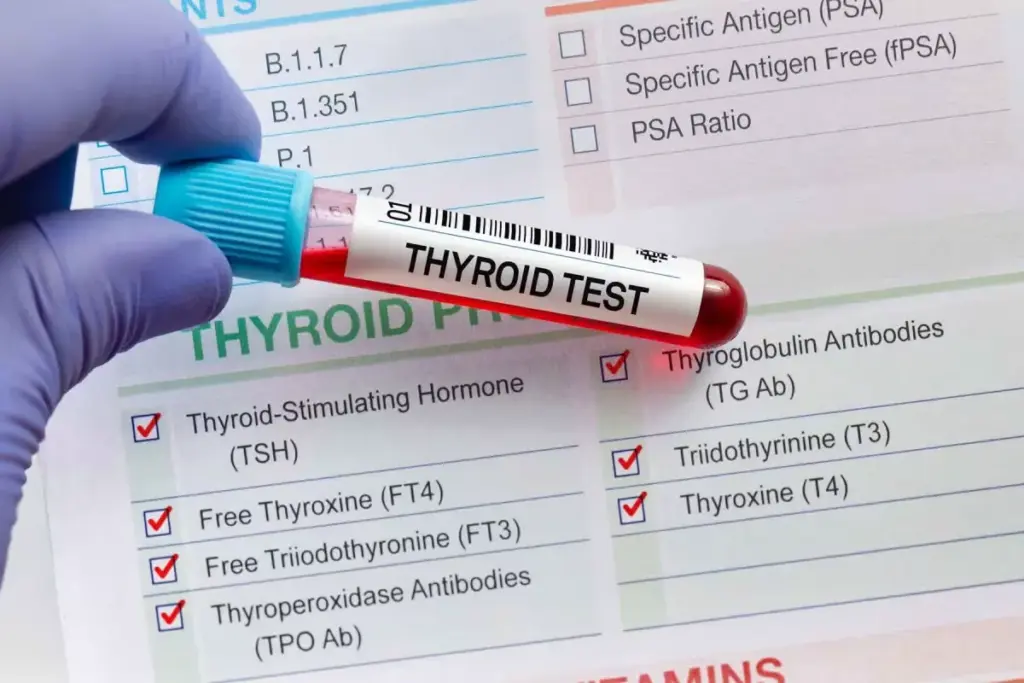
Knowing what high thyroglobulin antibody levels mean is key for your thyroid health. When thyroglobulin antibody levels are too high, it means your immune system is fighting your thyroid gland.
At Liv Hospital, we focus on accurate and timely thyroglobulin antibody testing. We also put our patients first to help them understand their health. High TgAb levels can show you have an autoimmune thyroid condition like Hashimoto’s disease or Graves’ disease.
Key Takeaways
- High thyroglobulin antibody levels can indicate autoimmune thyroid conditions.
- TgAb testing is key for diagnosing and managing thyroid-related disorders.
- Elevated TgAb levels may signal Hashimoto’s disease or Graves’ disease.
- Accurate TgAb testing helps healthcare providers develop effective treatment plans.
- Patient-centered care is essential for understanding and managing thyroid health.
Understanding Thyroglobulin Antibody Tests

The thyroglobulin antibody test is key in checking thyroid health. These antibodies show if you have an autoimmune thyroid disease. Knowing their levels helps doctors diagnose and keep track of your condition.
What Is Thyroglobulin?
Thyroglobulin is a protein made by the thyroid gland. It’s vital for making thyroxine (T4) and triiodothyronine (T3). These hormones control how your body grows, develops, and works.
Purpose of the TgAb Blood Test
The TgAb blood test checks for antibodies against thyroglobulin. High levels might mean you have an autoimmune thyroid disease like Hashimoto’s thyroiditis or Graves’ disease. It helps doctors:
- Diagnose and track autoimmune thyroid diseases
- See if you’re at risk for thyroid problems
- Check if treatment is working for thyroid issues
How the Test Is Performed
The TgAb blood test is a simple one. It takes a blood sample from your arm. Then, the sample goes to a lab for testing. The results show how much thyroglobulin antibodies you have. This helps doctors manage your thyroid health.
| Test Component | Description | Normal/Abnormal Values |
| Thyroglobulin Antibody (TgAb) | Measures antibodies against thyroglobulin | Normal: |
| Thyroglobulin (Tg) | A protein produced by the thyroid gland | Varies depending on thyroid status and TgAb level |
It’s important to understand your TgAb test results. Doctors use them to decide the best treatment and watch your condition over time.
Thyroglobulin Antibody Over 100: What It Indicates
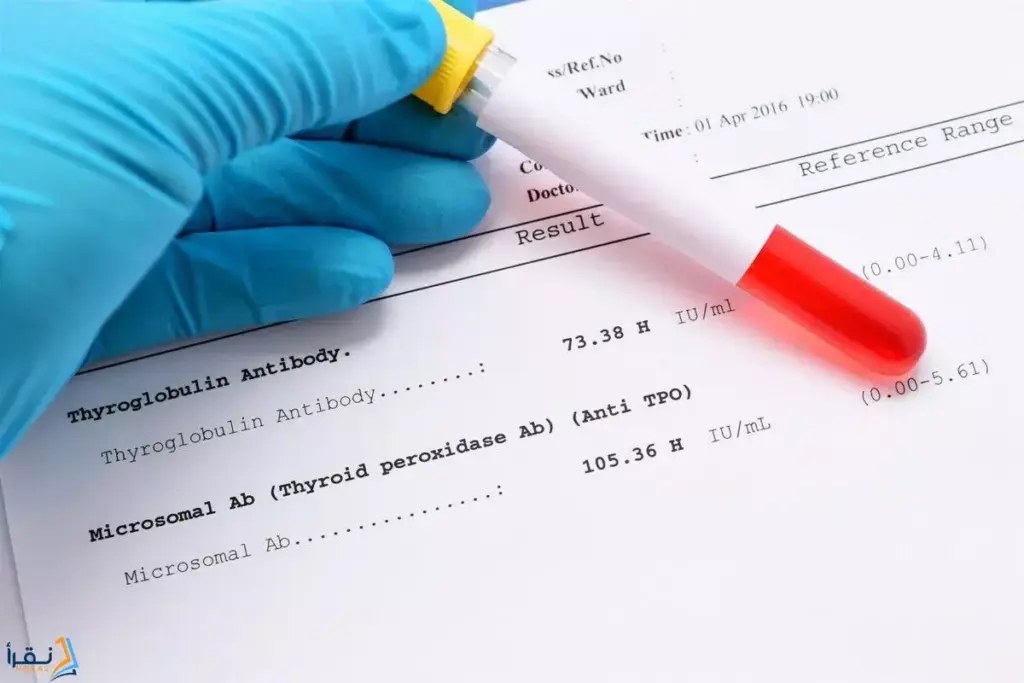
When thyroglobulin antibody (TgAb) levels go over 100 IU/mL, it often means there’s an autoimmune thyroid condition. Knowing what this means is key for diagnosing and treating thyroid issues.
Normal vs. Elevated TgAb Levels
TgAb levels help check for autoimmune thyroid diseases. Levels below a certain point (often seen as normal below 35 IU/mL) are okay. But, levels over 100 IU/mL show a strong immune attack on the thyroid gland.
Elevated TgAb levels point to autoimmune thyroiditis. This is when the immune system attacks the thyroid gland. It can cause hypothyroidism or hyperthyroidism, depending on the disease’s stage and type.
Clinical Significance of TgAb Over 100 IU/mL
TgAb levels over 100 IU/mL are very important. They often show up in patients with Hashimoto’s thyroiditis, a chronic autoimmune condition causing hypothyroidism. These high levels can also be seen in other autoimmune thyroid diseases.
We watch TgAb levels to see how autoimmune thyroid diseases are doing. High levels mean a strong autoimmune attack. This might need closer watching and more treatment.
Understanding Results Over 300 IU/mL
Results over 300 IU/mL are very high and show a strong autoimmune attack. These levels are common in patients with established autoimmune thyroid disease.
- High TgAb levels need more careful monitoring and treatment changes.
- Patients with TgAb over 300 IU/mL should have regular thyroid tests to manage their condition well.
- High TgAb levels highlight the need for a full thyroid check-up.
We use these results to make treatment plans that fit each patient’s needs. This helps manage their thyroid condition the best way possible.
Medical Conditions Associated with High TgAb
High levels of thyroglobulin antibodies are linked to several autoimmune thyroid diseases. It’s important to understand these conditions to provide the best care for patients with thyroid issues.
Hashimoto’s Thyroiditis
Hashimoto’s thyroiditis is an autoimmune disease where the immune system attacks the thyroid gland. This leads to inflammation and often hypothyroidism. High TgAb levels are common in this condition.
The presence of TgAb in Hashimoto’s thyroiditis shows an autoimmune attack on the thyroid gland. Managing this condition often involves thyroid hormone replacement therapy.
Graves’ Disease
Graves’ disease is an autoimmune condition that affects the thyroid gland, causing hyperthyroidism. While TgAb is less common in Graves’ than in Hashimoto’s, it can be significant.
In Graves’ disease, TgAb may play a role in the autoimmune stimulation of the thyroid gland. The main antibody involved is the thyrotropin receptor antibody (TRAb).
Thyroid Cancer Monitoring
TgAb levels are also important in thyroid cancer, mainly for monitoring recurrence after thyroidectomy. The presence of TgAb can affect thyroglobulin (Tg) measurements, making it a key factor in cancer surveillance.
Patients with thyroid cancer and positive TgAb need close follow-up. High TgAb levels can sometimes signal disease recurrence or persistence.
False Positives and Incidental Findings
It’s important to note that high TgAb levels can be found in people without thyroid disease, leading to false positives or incidental findings.
Further testing and clinical correlation are needed to understand the significance of high TgAb levels in people without symptoms.
| Condition | TgAb Level Significance | Clinical Implication |
| Hashimoto’s Thyroiditis | High TgAb levels common | Indicates autoimmune thyroiditis; often associated with hypothyroidism |
| Graves’ Disease | TgAb may be present | Contributes to autoimmune stimulation; less specific than TRAb |
| Thyroid Cancer | TgAb can interfere with Tg measurement | Important for monitoring recurrence; positive TgAb requires careful follow-up |
Conclusion: Managing and Monitoring Thyroglobulin Antibody Levels
Managing and monitoring thyroglobulin antibody (TgAb) levels is key for those with autoimmune thyroid conditions and thyroid cancer. Knowing what a high thyroglobulin ab means helps patients take charge of their health. High TgAb levels can show an immune system overreaction, linked to diseases like Hashimoto’s and Graves’.
Tests for TgAb levels help doctors check if treatments are working. For those with high TgAb, regular checks are vital. This helps avoid serious issues and keeps their condition under control. We work with patients to understand their TgAb levels and create tailored care plans.
Understanding TgAb levels and their meaning is essential for treating thyroid disorders. Managing TgAb levels well is critical for better patient outcomes and a better life quality.
FAQ
What is thyroglobulin antibody?
Thyroglobulin antibody, or TgAb, is an antibody against thyroglobulin. This protein is key for making thyroid hormones. High levels of TgAb might show autoimmune thyroid diseases.
What does a high thyroglobulin antibody mean?
High levels of TgAb mean you might have autoimmune thyroid diseases. This includes Hashimoto’s thyroiditis and Graves’ disease. It can also hint at thyroid cancer.
What is the thyroglobulin ab test used for?
The TgAb test measures antibodies against thyroglobulin in your blood. It’s key for spotting and tracking autoimmune thyroid diseases and thyroid cancer.
What are normal thyroglobulin ab levels?
Normal TgAb levels are usually between 0 and 35 IU/mL. But, this can change based on the lab and test methods. Levels above this might show autoimmune thyroid diseases.
What does it mean if thyroglobulin antibody is over 100?
If TgAb levels are over 100 IU/mL, it’s a big sign. It often points to autoimmune thyroid diseases, like Hashimoto’s thyroiditis.
Can thyroglobulin be high without cancer?
Yes, TgAb levels can go up without cancer. This is common in autoimmune thyroid diseases like Hashimoto’s thyroiditis and Graves’ disease.
What does a thyroglobulin antibody over 300 mean?
A TgAb level over 300 IU/mL is very high. It usually means you have a strong autoimmune thyroid activity. This is often seen in Hashimoto’s thyroiditis.
How is the TgAb test performed?
To do the TgAb test, a blood sample is taken. Then, the lab checks for thyroglobulin antibodies.
What is the clinical significance of high TgAb levels?
High TgAb levels are important. They can show autoimmune thyroid diseases and thyroid problems. Keeping an eye on TgAb levels is key for managing these conditions.
References
https://my.clevelandclinic.org/health/diseases/22781-autoimmune-autonomic-ganglionopathy



 Departments
 Related Videos
 Our Doctors
 News
News