
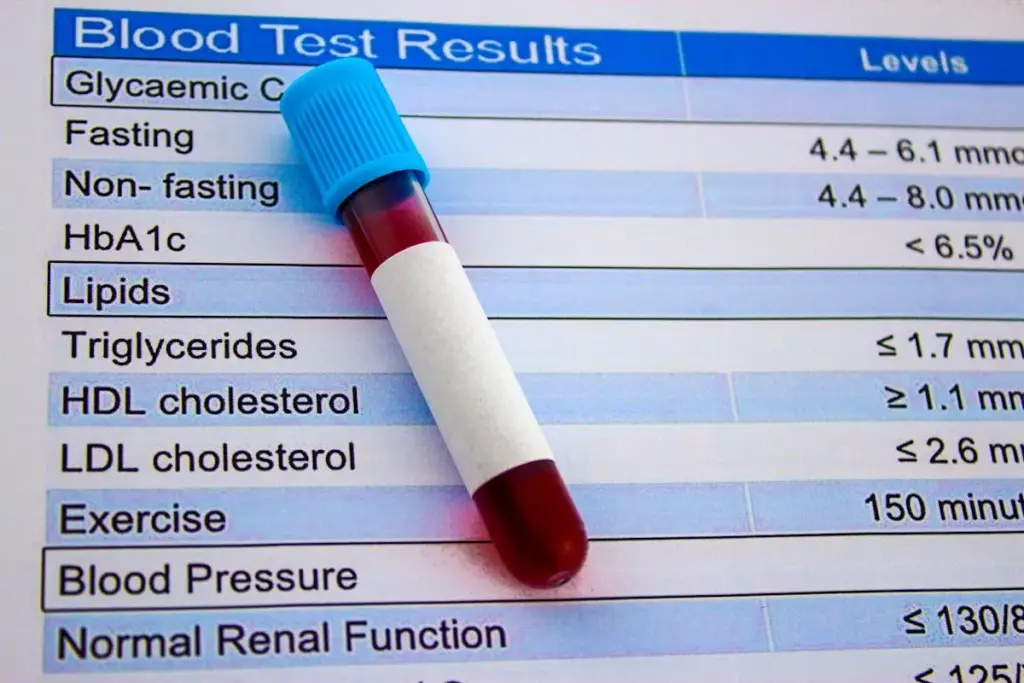
Understanding medical lab results can be tough when you see codes like wbc k ul. At Liv Hospital, we make sure you know what your health reports mean. This way, you can take care of your health with confidence. K/UL
The hite blood cell count unit of measure is key for checking your immune system’s health. It shows how many white blood cells are in your blood. For example, a result of 7.5 means there are 7,500 cells in each microliter.
Your bone marrow makes these cells to keep you safe from infections and allergies. Knowing your lab results helps you understand your health better. We’re here to help you every step of the way.
Key Takeaways
- This unit indicates thousands of cells per microliter of blood.
- It serves as the standard for measuring white blood cell concentration.
- Bone marrow produces these cells to defend against illness and injury.
- Elevated levels often suggest active infection or internal inflammation.
- Clear interpretation of the k ul meaning helps reduce patient anxiety.
- Liv Hospital offers complete support for understanding all lab results.
K/UL Meaning: Understanding the Basic Measurement Unit
White blood cell counts are often reported in K/UL. This unit means thousands of cells per microliter of blood. Knowing this is key to understanding blood test results.
We will look at what K/UL stands for, its role in blood tests, and why it’s the standard for white blood cell counts.
What K/UL Stands For in Blood Tests
K/UL means thousands per microliter. It’s like saying 1,000 cells per microliter of blood. This unit is important for checking white blood cell levels in the blood.
How the K/UL Measurement Works
The K/UL measurement counts white blood cells in a microliter of blood. For example, a WBC count of 4.8 K/UL means there are 4,800 white blood cells per microliter. This helps us see how well our immune system is working and if there are infections or diseases.
Why K/UL Is the Standard Unit for White Blood Cell Counts
The K/UL unit is the standard for white blood cell counts. It’s simple and clear. It makes it easier for doctors to understand blood test results.
Knowing what K/UL means helps us understand our health better. It shows the importance of white blood cell counts in our bodies.
White Blood Cell Counts and Normal K/UL Ranges

White blood cell counts, measured in K/UL, show how well your body fights off infections. These counts help doctors find and track health problems, like infections or immune issues.
Normal WBC Count Range in Adults
For adults, the normal white blood cell count is between 4.5 to 11.0 K/UL. The Leukemia and Lymphoma Society says men should have 5,000 to 10,000 cells per microliter. Women should have 4,500 to 11,000 cells per microliter. But, these numbers can change slightly from one lab to another.
Knowing your WBC count is key. It tells you how well your immune system is working. If your count is in the normal range, your immune system is likely healthy. But, if it’s not, it might mean you have a health problem.
Interpreting Your WBC K/UL Results
Understanding your WBC K/UL results involves looking at your health, medical history, and the lab’s standards. A healthcare professional can give you a better idea of what your results mean for you.
Lab results can differ because of different testing methods and standards. So, if your results are not in the normal range, talk to your doctor. They can explain what it means for you.
Laboratory Variations in Reference Ranges
Different labs use different methods and standards for WBC counts. While the usual range is 4.5 to 11.0 K/UL, some labs might have different ranges.
Your doctor will look at these differences when checking your results. They’ll give you a clear picture of your health. Some people might naturally have counts that are a bit off without any health problems.
M/UL, Polys, and Other Blood Count Measurements
Besides K/UL, other important measurements in blood tests are M/UL for red blood cells and polys for polymorphonuclear neutrophils. These measurements give us a full picture of our health. They help us understand blood test results better.
M/UL for Red Blood Cell Counts
M/UL measures red blood cell counts. The normal range is between 3.91 to 5.83 M/UL, depending on gender. It’s key for diagnosing issues like anemia or polycythemia.
What Are Polys in Blood Tests
Polys, short for polymorphonuclear neutrophils, are vital white blood cells. They fight infections, mainly from bacteria and fungi. A polys blood test shows how many of these cells are in the blood.
Neutrophils, or polys, are about 70% of our white blood cells. They’re our first defense against pathogens.
Absolute Granulocyte Count and Absolute Neutrophil Count
The absolute granulocyte count and absolute neutrophil count show the number of granulocytes and neutrophils. These counts help us see how well our body fights infections.
Here are the normal ranges for different blood count measurements:
| Measurement | Normal Range | Unit |
| White Blood Cell Count | 4.5 – 11 | K/UL |
| Red Blood Cell Count (Male) | 4.32 – 5.72 | M/UL |
| Red Blood Cell Count (Female) | 3.90 – 5.03 | M/UL |
| Polymorphonuclear Neutrophils (Polys) | 1.5 – 8.0 | K/UL |
Conclusion
Knowing about your blood test results, like K/UL for white blood cells, is key to understanding your health. The K/UL measurement shows how many white blood cells you have. It helps doctors find and track health problems.
To get your white blood cell count back to normal, you need to treat the cause. The treatment depends on the health issue causing the imbalance in your blood test.
Learning about K/UL and its role in your white blood cell count helps you on your health path. This knowledge lets you make better choices about your care. It also helps you understand what your blood test results mean.
We’ve seen why it’s important to know about blood test measurements, like white blood cell counts and their normal ranges. With this info, you can work better with your doctor to tackle any health issues.
FAQ
What is the meaning of K/UL on a blood test report?
K/UL means “thousands per microliter,” and it is a unit used to measure the number of cells in your blood, such as white blood cells, where “K” stands for 1,000 and “µL” refers to a microliter of blood.
What is the difference between K/UL and M/UL?
K/UL represents thousands of cells per microliter, while M/UL represents millions of cells per microliter, commonly used for red blood cell counts which are much higher in number.
What are polys in a blood test?
Polys, short for polymorphonuclear cells, usually refer to neutrophils, a type of white blood cell that plays a key role in fighting bacterial infections.
What is an absolute granulocyte count?
The absolute granulocyte count measures the total number of granulocytes (mainly neutrophils, eosinophils, and basophils) in the blood, helping assess immune function and infection risk.
How do you calculate bands on a CBC?
Bands, which are immature neutrophils, are calculated as a percentage of total white blood cells on a differential count and can also be converted into an absolute count by multiplying the total WBC count by the band percentage.
What does /UL mean in lab results?
/UL means “per microliter,” indicating the number of cells or substances present in one microliter of blood.
Why is my white blood cell count K/UL higher than the normal range?
A high white blood cell count may indicate infection, inflammation, stress, medication effects, or in some cases more serious conditions like blood disorders, so further evaluation depends on your symptoms and overall clinical picture.
References
National Center for Biotechnology Information. Evidence-Based Medical Insight. Retrieved from https://www.ncbi.nlm.nih.gov/books/NBK604207/



 Departments
 Related Videos
 Our Doctors
 News
News