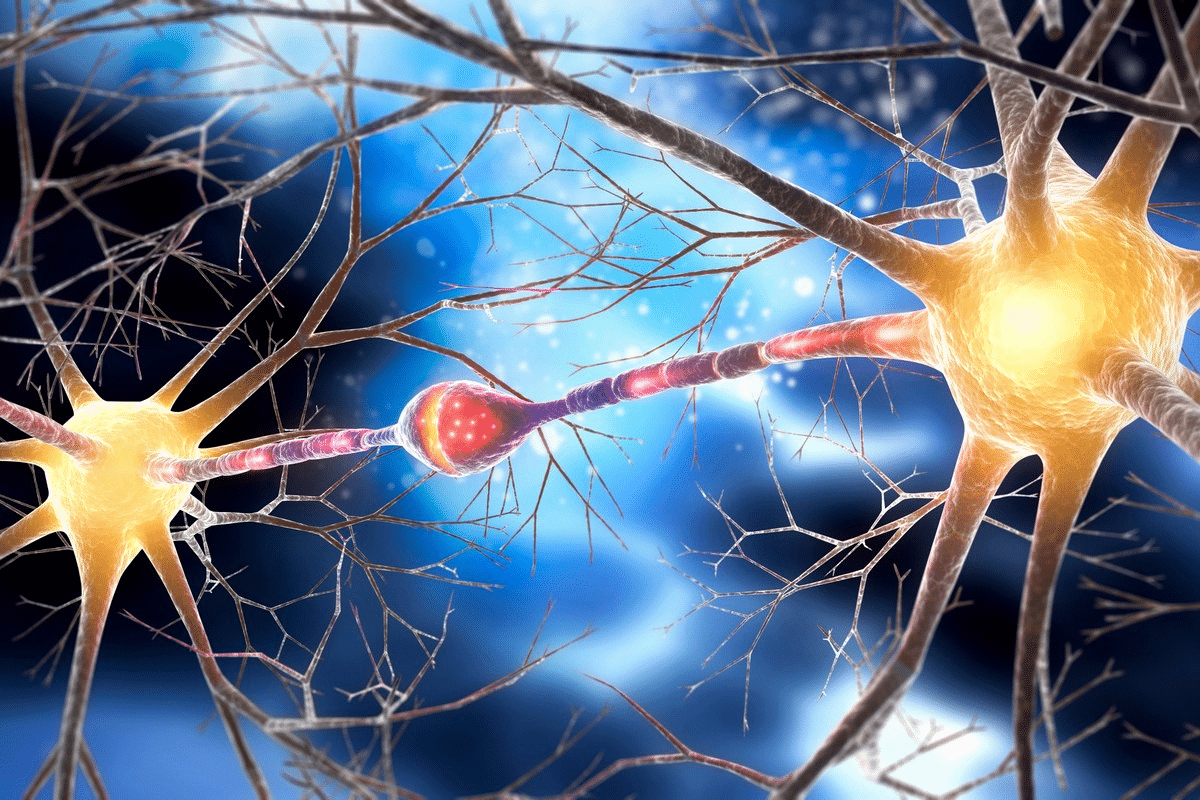
Neurons, also known as nerve cells, are key to the nervous system. They handle and send out electrical and chemical signals all over the body.
The anatomy of neurons is quite detailed. It has five main parts that work together. Knowing these parts is key to understanding how neurons functionwhat does the dendrite do
A neuron has a soma (cell body), dendrites, axon, axon terminals, and axon hillock. The soma neuron is the heart of the cell. It holds the cell’s genetic material.
It’s important to know the components of a neuron. This helps us understand how the nervous system works.
Key Takeaways
- Neurons are the basic units of the nervous system.
- The five main parts of a neuron are soma, dendrites, axon, axon terminals, and axon hillock.
- The soma contains the cell’s genetic material.
- Neurons process and transmit electrical and chemical signals.
- Understanding neuron anatomy is vital for comprehending nervous system functions.
The Fundamental Role of Neurons in the Nervous System
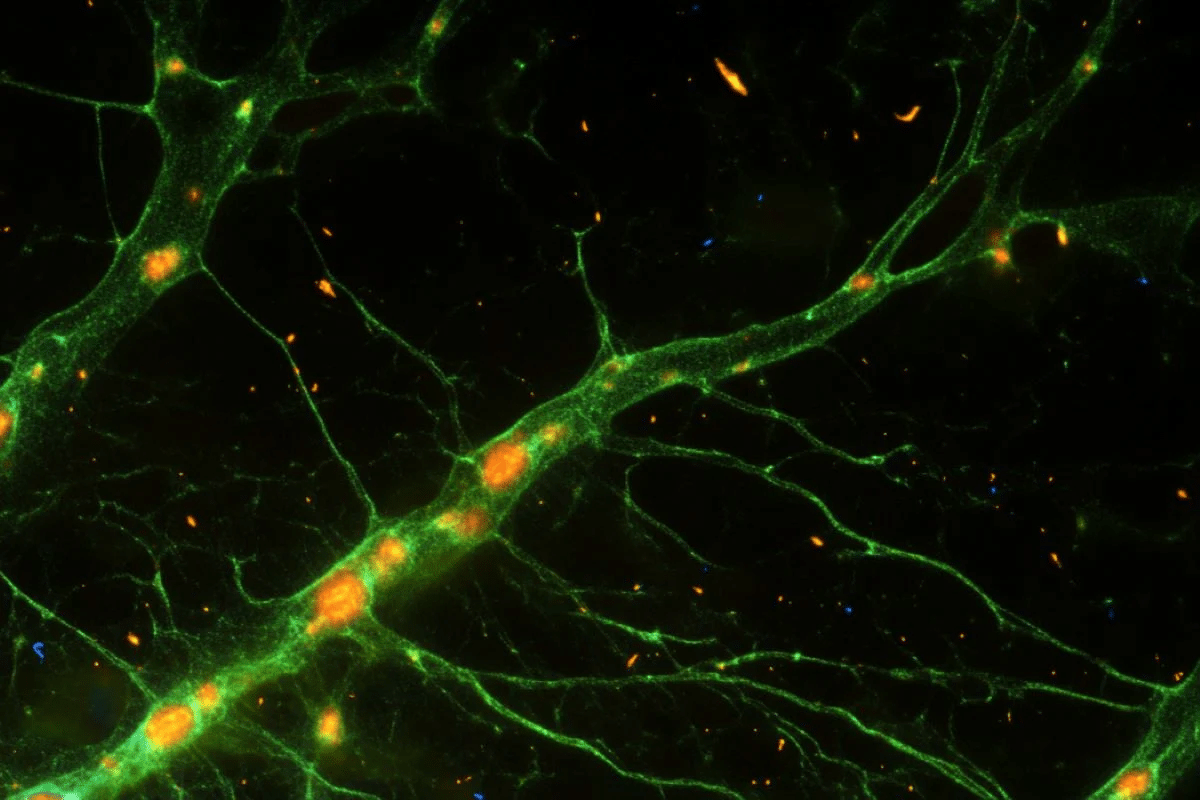
Neurons, or nerve cells, are key to the nervous system’s work. They help send and process information. This lets the body work right.
Definition and Significance of Neurons
Neurons are the basic parts of the nervous system. They are made to send signals fast. Medical Expert, a neuroscientist, says, “Neurons are highly specialized cells that have evolved to facilitate rapid communication within the body.”
They are important for many body functions. This includes simple actions and complex thinking.
“The neuron is the basic unit of the nervous system, and understanding its function is key to understanding how the nervous system works,” as stated in a
recent study published in the Journal of Neuroscience
. This shows how vital neurons are in the nervous system.
Basic Principles of Neural Communication
Neural communication uses electrical and chemical signals. Neurons talk to each other through synapses. This is where chemical signals are passed.
The main steps of neural communication are:
- The generation of action potentials, which are electrical impulses that travel along the length of a neuron.
- The release of neurotransmitters into the synapse, which then bind to receptors on adjacent neurons.
- The integration of signals by the receiving neuron, which determines whether to generate an action.
The way neurons talk to each other is complex. It involves many neurotransmitters and receptors. Knowing this helps us understand how the nervous system works.
Overview: The Five Main Parts of a Neuron
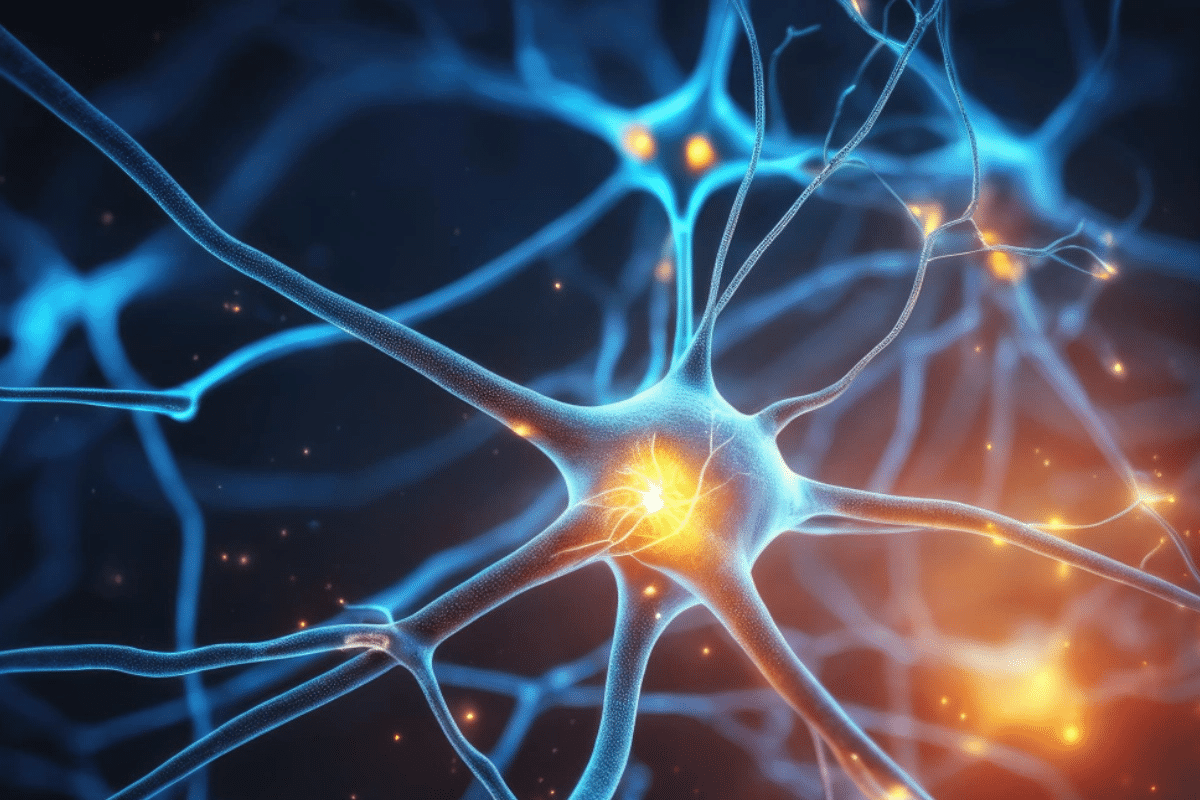
Neurons are the basic units of the nervous system. They have different parts that work together to send information. This structure lets neurons do many important jobs for neural communication.
The five key parts of a neuron are the soma, dendrites, axon, axon hillock, and axon terminals. Each part plays a special role in getting, processing, and sending neural signals.
Structural Organization of Neurons
Neurons are built to send signals well. The soma, or cell body, has the nucleus and most organelles. It’s the neuron’s main metabolic center.
The dendrites are the neuron’s branches that get inputs from other neurons. The axon is a long, thin part that sends signals from the soma to other neurons or to muscles or glands.
Functional Integration Between Components
The parts of a neuron work together well to process and send information. The axon hillock is a key spot that decides if an action signal will be sent.
The axon terminals send out neurotransmitters into the synapse. This lets the signal go to other neurons or to muscles or glands.
|
Neuron Component |
Function |
|---|---|
|
Soma |
Metabolic center, contains nucleus and most organelles |
|
Dendrites |
Receive synaptic inputs from other neurons |
|
Axon |
Carries signals away from soma to other neurons or effectors |
|
Axon Hillock |
Threshold and decision-making junction for action signal generation |
|
Axon Terminals |
Release neurotransmitters into synapse for signal transmission |
The Soma: Command Center of the Neuron
At the heart of every neuron lies the soma, the component responsible for maintaining the cell’s overall health. The soma, also known as the cell body, is the central part of the neuron where the cell’s genetic material is located.
Structure and Components of the Cell Body
The soma contains the nucleus, which houses the cell’s DNA, and various organelles such as mitochondria and ribosomes. These organelles are key for the neuron’s survival and function. They help with energy production and protein synthesis.
The cell body’s structure is designed to support the neuron’s complex functions. It has a rich network of endoplasmic reticulum and Golgi apparatus. These are vital for protein synthesis and modification.
Critical Functions of the Soma
The soma plays a vital role in controlling various cellular processes. It is responsible for maintaining the neuron’s overall health. It regulates gene expression, protein synthesis, and energy production.
- Regulating gene expression to respond to cellular needs
- Synthesizing proteins necessary for neuronal function and maintenance
- Producing energy through mitochondrial activity
By performing these critical functions, the soma ensures that the neuron remains healthy and functional. This enables it to transmit and process information effectively.
What Does the Dendrite Do: Reception and Integration of Signals
Dendrites are special parts of neurons that get, mix, and process signals from other neurons. They look like trees and are key in capturing signals. They also help decide how excited a neuron can get.
Dendritic Structure and Branching Patterns
Dendrites have unique branching patterns, which change between different neurons. The more complex the branching, the more signals a neuron can get.
Dendritic branching patterns can be simple or complex. This affects how well a neuron can mix signals.
Dendritic Spines and Synaptic Connections
Dendritic spines are small bumps on dendrites where most connections happen. They help in learning and remembering things.
The number and size of dendritic spines matter a lot. They help form and keep connections between neurons. This is key to understanding how neurons talk to each other.
|
Feature |
Description |
Function |
|---|---|---|
|
Dendritic Branching |
Complex branching patterns |
Increases synaptic input |
|
Dendritic Spines |
Small membranous protrusions |
Primary sites for synaptic connections |
|
Synaptic Plasticity |
Ability to change synaptic strength |
Critical for learning and memory |
Signal Processing and Integration Mechanisms
Dendrites don’t just get signals; they also process and mix them. They decide if a neuron will send out a signal. This is based on the mix of excitatory and inhibitory signals.
The signal processing mechanisms in dendrites are complex. They use both passive and active properties. This lets dendrites control the flow of information in the neuron.
The Axon: Information Highway of the Neuron
The axon is like a highway for information in the neuron. It carries electrical impulses away from the cell body. This long, cable-like part is key for sending signals across the nervous system, helping with many body functions.
Structural Features and Length Variations
The axon has special features to help it work well. Its length can be short or very long, like from the spinal cord to the toes. The size of the axon also affects how fast signals move.
Axonal structure is designed for sending signals. Inside the axon, there’s a special liquid called axoplasm. It has organelles like mitochondria that give it energy.
Action Potentials and Propagation
The axon creates and sends action potentials, the electrical signals that carry information. This starts at the axon hillock, where signals are combined to decide if an action should happen.
Then, the action potentials move down the axon. This happens through changes in voltage, thanks to special channels. This rapid signal transmission is key for the nervous system to work well.
Myelination and Saltatory Conduction
Many axons have a myelin layer, made by glial cells. This layer makes signals move faster through a process called saltatory conduction. The action potentials jump between special points called nodes of Ranvier.
This myelination process makes signals move quicker and uses less energy. Action potentials only happen at the nodes. This helps the nervous system send signals fast for complex functions.
In short, the axon is vital for the neuron’s function. Its structure and special features like myelination help signals move efficiently. This is how the nervous system works.
The Axon Hillock: Threshold and Decision-Making Junction
The axon hillock is a key part of a neuron. It decides when to send out signals. It’s at the start of the axon, coming out of the cell body, and is great at combining signals.
Strategic Location and Structure
The axon hillock is placed between the cell body and the axon. It has lots of voltage-gated sodium channels. This makes it very good at sending signals.
Key Features of the Axon Hillock:
- High concentration of voltage-gated sodium channels
- Low threshold for action potentials
- Important for combining signals
Role in Action Potentials
The axon hillock is key in starting action potentials. It decides to send out a signal based on the signals it gets.
Integration of Excitatory and Inhibitory Signals
The axon hillock mixes signals from different places. Excitatory signals help start a signal, while inhibitory signals stop it. The mix of these signals decides if a signal goes out.
|
Signal Type |
Effect on Action Potentials |
|---|---|
|
Excitatory |
Promotes generation |
|
Inhibitory |
Suppresses generation |
In summary, the axon hillock is vital for neurons. It decides when to send out signals. Its location, structure, and role are key for how neurons work. This shows what is part of a neuron and its role in anatomy of neurons and what is a neurons function.
Axon Terminals: Synaptic Communication End Points
The axon terminal is a key part of the neuron. It releases neurotransmitters into the synaptic cleft. This is how neurons talk to each other.
Structure of Presynaptic Terminals
Presynaptic terminals, or axon terminals, are complex. They have organelles for making, storing, and releasing neurotransmitters. Synaptic vesicles are small, membrane-bound structures that hold these chemicals.
These terminals also have mitochondria for energy. They have proteins that help vesicles dock and fuse with the membrane.
Neurotransmitter Storage and Release Mechanisms
Storing and releasing neurotransmitters is what axon terminals do. Synaptic vesicles are filled with these chemicals. They are made in the neuron or taken in from outside.
The release of neurotransmitters happens through exocytosis. When an action signal reaches the terminal, calcium ions rush in. This causes the vesicles to fuse with the membrane, releasing the neurotransmitters.
“The release of neurotransmitters is a highly regulated process that involves the coordinated action of multiple proteins and organelles.”
— Medical Expert, Neuroscientist
Types of Synapses and Their Functions
There are many types of synapses, each with its own role. Chemical synapses are the most common. They release neurotransmitters that bind to receptors on the next neuron. Electrical synapses allow direct electrical communication through gap junctions.
Synapses can also be classified by their location and function. For example, excitatory synapses make the next neuron more active. Inhibitory synapses make it less active.
In conclusion, axon terminals are essential for how neurons communicate. Their problems can lead to many neurological disorders. Knowing how they work helps us understand how neurons talk to each other.
Functional Integration: How Neuron Parts Work Together
The different parts of a neuron work together to receive, process, and send signals. This teamwork is key to how neurons function in the nervous system.
Signal Flow Through the Neuron
Signal flow in a neuron is a precise process. It involves the coordinated effort of its parts. The dendrites get inputs from other neurons, which are then processed at the cell body or soma.
Signal Integration: The soma, or command center, sums up these signals. It decides if an action should be taken. If yes, an action signal starts at the axon hillock and travels down the axon.
Temporal and Spatial Summation
Temporal and spatial summation are key for processing complex inputs. Temporal summation deals with quick, successive inputs. Spatial summation combines inputs from different synaptic contacts.
|
Summation Type |
Description |
Function |
|---|---|---|
|
Temporal Summation |
Integration of successive synaptic inputs |
Allows for the detection of high-frequency signals |
|
Spatial Summation |
Integration of inputs from multiple synaptic contacts |
Enhances the ability to detect coincident inputs |
Metabolic Support and Maintenance
The parts of a neuron work together for its upkeep. The cell body makes proteins and organelles for function. The axon and dendrites help keep the neuron’s structure intact.
Metabolic Processes: Neurons need lots of metabolic activity to stay functional. This includes making neurotransmitters, keeping ion balances, and fixing damaged parts.
Neuron Diversity and Specialization
Neurons come in many shapes and sizes, making the nervous system complex and functional. They are not all the same; each type has its own role in the nervous system.
Structural Variations Across Neuron Types
Neurons vary a lot in size, shape, and how many processes they have. For example, multipolar neurons have one axon and many dendrites. They are common in the human nervous system. On the other hand, bipolar neurons have one axon and one dendrite. They are found in special sensory systems like the retina.
The way neurons are structured affects how they work. For instance, some neurons have long dendrites that can connect to many other neurons. The length and covering of axons also affect how fast signals travel.
Functional Adaptations in Different Brain Regions
Neurons in different parts of the brain do different things. For example, neurons in the cerebral cortex help with thinking, acting, and seeing. Neurons in the brainstem control basic needs like breathing and heart rate.
Neurons also have special connections and chemicals that help them work together. Some neurons send signals that excite other neurons, while others send signals that calm them down. This helps control how the brain’s circuits work.
Evolutionary Perspectives on Neuron Design
Neurons have evolved to meet the needs of the nervous system. Over time, more complex neural structures and functions have developed. This has helped organisms adapt to their environments in clever ways.
Looking at how neurons evolved can tell us a lot about their importance. For example, the covering on axons that makes signals travel faster is a trait that evolved in vertebrates. It helps them process information quickly.
Conclusion: The Remarkable Engineering of Neurons
Neurons are key parts of our nervous system. They help control many body functions. To understand neurons, we must know they are special cells that send information to other cells or muscles.
These cells work together to help our bodies and minds function. They have different parts like the soma and axon that help them communicate. This teamwork is what makes the nervous system so complex.
The design of neurons is truly amazing. It lets them send and receive information well. Learning about neurons helps us understand how our bodies work.
FAQ
What is a neuron?
A neuron is a special cell that sends and receives information. It does this through electrical and chemical signals.
What are the main parts of a neuron?
A neuron has five main parts. These are the soma, dendrites, axon, axon hillock, and axon terminals.
What is the function of the soma in a neuron?
The soma is the brain of the neuron. It controls the cell’s processes and keeps it healthy.
What is the role of dendrites in a neuron?
Dendrites get signals from other neurons. They are key in processing and combining these signals.
What is the function of the axon in a neuron?
The axon sends signals to other cells. It does this by creating and spreading action potentials.
What is myelination, and how does it affect signal transmission?
Myelination wraps the axon in a fatty layer. This makes signals travel faster through the nervous system.
What is the axon hillock, and what is its role in action potentials?
The axon hillock is where the axon starts. It decides when to send signals, controlling action potentials.
What are axon terminals, and what is their function?
Axon terminals release chemicals into the synapse. This helps neurons talk to each other.
How do the different parts of a neuron work together?
The parts of a neuron work together to send signals. They also help the neuron stay healthy and work well.
What is the significance of neuron diversity and specialization?
Neurons come in many types. This lets the nervous system handle many different tasks and respond to various stimuli.
What is another name for a nerve cell?
Another name for a nerve cell is a neuron.
Define neuron, axon, and dendrites.
A neuron is a cell that sends and receives information. The axon carries signals away from the cell body. Dendrites receive signals from other neurons.
What is the anatomy of neurons?
The anatomy of neurons includes the soma, dendrites, axon, axon hillock, and axon terminals. These parts work together for the neuron’s function.
What is the structure of the neuron?
The structure of the neuron includes the soma, dendrites, axon, axon hillock, and axon terminals. These parts are specialized for the neuron’s function.
What are the components of a neuron?
The components of a neuron include the soma, dendrites, axon, axon hillock, and axon terminals.
What is the function of neurons in the nervous system?
Neurons are key in the nervous system. They process and send information, enabling complex functions.
Reference
National Center for Biotechnology Information. Brain Anatomy: Structures and Functions. Retrieved from https://www.ncbi.nlm.nih.gov/books/NBK551718/.