

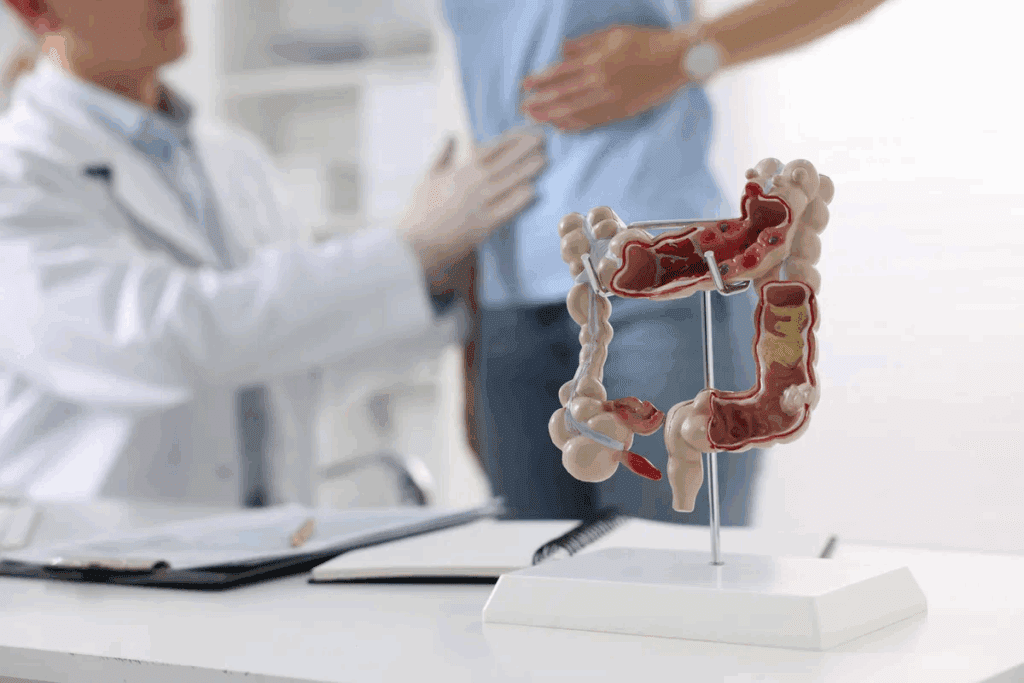
The large intestine, also known as the colon, is key to our digestive system. It’s wider and shorter than the small intestine, about 1.5 meters long in adults.
We often forget the complex functions of the large intestine. It’s vital for absorbing water and electrolytes from the small intestine. It also helps in waste elimination, absorbing sodium and chloride ions, and secreting potassium.
The large intestine is home to a wide variety of microbes. These microbes help in vitamin synthesis, making it essential for our health.
Key Takeaways
- The large intestine absorbs water and electrolytes from the material received from the small intestine.
- It plays a critical role in maintaining electrolyte balance by absorbing sodium and chloride ions.
- The large intestine houses a diverse microbiome that contributes to vitamin synthesis.
- Its functions are essential for transforming liquid waste into manageable feces.
- The large intestine is approximately 1.5 meters in length in adults.
Anatomy and Structure of the Large Intestine

We will explore the anatomy of the large intestine, a key part of the digestive system. The large intestine, also known as the colon, is vital for absorbing water, storing, and eliminating waste.
Size and Location in the Digestive System
The large intestine is about 1.5 meters long. It’s a big part of the digestive tract. It sits in the abdominal cavity, around the small intestine, and connects to it at the ileocecal junction. Knowing its size and location helps us understand its complex functions.
The Four Layers of the Large Intestine
The large intestine has four layers: the mucosa, submucosa, muscular layer, and serosa. The mucosa, the innermost layer, has goblet cells that secrete mucus. This protects the intestinal wall and helps move feces. The submucosa supports the mucosa with blood vessels and nerves. The muscular layer, with circular and longitudinal muscles, helps move contents. The outermost layer, the serosa, is a thin membrane that covers the large intestine.
Haustra: The Characteristic Saccules
The large intestine has haustra, sacculations that give it a unique look. These haustra are formed by the contraction of the muscular layer. They play a key role in moving chyme and absorbing water. The haustra mix intestinal contents and help absorb electrolytes and water.
Understanding the anatomy of the large intestine is key. It includes its size, location, layers, and features like haustra. This knowledge helps us appreciate its role in the digestive system and overall health.
Segments of the Large Intestine

The large intestine is divided into parts like the cecum and colon. These work together to help digest food. Knowing about these parts helps us understand how the large intestine works.
Cecum and Appendix
The cecum is the first part of the large intestine. It’s a pouch-like structure that gets fluid material from the small intestine. The appendix is a small, finger-like part attached to the cecum. Even though it’s small, the appendix might help grow the gut microbiome.
Ascending Colon Function and Location
The ascending colon is on the right side of the abdomen. It’s the first part of the colon. It absorbs water and electrolytes from the small intestine. This starts to concentrate the waste material.
Transverse Colon, Descending Colon
The transverse colon is next and helps absorb and move waste across the abdomen. The descending colon, on the left side, keeps moving waste towards the rectum.
Each part of the large intestine has its own job. Together, they make sure the large intestine can digest food and manage waste.
What Does the Large Intestine Do? Primary Functions
The large intestine is key to our digestive system. It handles important tasks that keep us healthy.
It absorbs water and electrolytes, and makes and stores feces. The large intestine takes in about 1.5 liters of water and important salts every day. This helps keep our body fluids balanced.
Water Absorption Process
Water absorption in the large intestine is vital for staying hydrated. Water absorption happens mainly through osmosis. Water moves from the intestine into the cells lining it, thanks to the absorption of sodium and other solutes.
This helps our body keep the right amount of water. The large intestine’s water absorption prevents dehydration and keeps feces the right consistency.
Electrolyte Balance and Regulation
The large intestine also helps with electrolyte balance and regulation. It takes in sodium and chloride ions and releases potassium. This balance is key for nerve and muscle function.
Keeping electrolytes in check is essential for fluid balance. It ensures our body’s functions work well.
Formation and Storage of Feces
The large intestine is also responsible for making and storing feces. It gets undigested food from the small intestine. By absorbing water and electrolytes, it turns this into feces.
Feces are kept in the rectum until we pass them. The large intestine’s role in making and storing feces is vital for regular bowel movements and good gut health.
In summary, the large intestine’s main jobs are absorbing water, balancing electrolytes, and making and storing feces. These tasks are essential for our health and well-being.
Absorption Mechanisms in the Large Intestine
We will explore how the large intestine absorbs water and essential electrolytes. This is key for keeping our body’s fluid and electrolyte balance right.
Osmosis and Water Movement
Water absorption in the large intestine happens mainly through osmosis. This is when water moves from an area with less solute to one with more. As the intestinal mucosa absorbs electrolytes and other solutes, it creates an osmotic gradient. This gradient helps water move into the intestine.
Active Transport of Electrolytes
The large intestine has special ways to move electrolytes like sodium, chloride, and potassium. These processes are key for keeping electrolyte balance and overall health.
Sodium and Chloride Absorption
Sodium absorption in the large intestine uses sodium-hydrogen antiporters and epithelial sodium channels. Chloride ions move with sodium, keeping things electrically balanced. This is important for keeping sodium and chloride levels right in our bodies.
Potassium Secretion
On the other hand, potassium is secreted into the large intestine’s lumen. This process is influenced by blood potassium levels and how fast intestinal contents move. Potassium secretion helps control potassium levels in our bodies.
The balance of absorption and secretion in the large intestine is vital. It shows how important this organ is for our health.
The Microbiome of the Large Intestine
The large intestine is home to a complex microbiome that plays a key role in our health. This ecosystem is made up of many bacteria. They help with different bodily functions.
Bacterial Populations and Diversity
The large intestine has a rich mix of microorganisms. There are about 100 trillion microbial cells. This diverse population includes various species of bacteria, like Bifidobacterium and Lactobacillus. They are vital for a healthy gut.
Many things affect the diversity of bacteria, like diet and lifestyle. Eating a lot of fiber helps good bacteria grow. But, eating too much processed food can upset this balance.
Fermentation of Undigested Carbohydrates
The large intestine microbiome mainly ferments undigested carbs. This process breaks down complex carbs that the small intestine can’t digest.
This fermentation makes short-chain fatty acids. These acids are energy for the colon’s cells. They also help keep the gut healthy.
Production of Short-Chain Fatty Acids
Short-chain fatty acids, like acetate and butyrate, come from fermenting carbs. These fatty acids are key for the colon’s health. They give energy to colonocytes and help with other bodily functions.
These acids also affect the gut-brain axis. Some studies show they might influence mood and brain function. Plus, they have anti-inflammatory effects, which is good for overall health.
Vitamin Synthesis in the Large Intestine
The large intestine has a secret role: making vitamins with the help of bacteria. It’s home to many microorganisms. These microbes are key in making important vitamins.
Vitamin K Production by Intestinal Bacteria
Vitamin K is vital for blood to clot and for strong bones. Bacteria like Escherichia coli and Bacteroides make vitamin K. They do this by creating menaquinone. Then, the body absorbs this vitamin for use.
B Vitamins Synthesis
The large intestine also helps make B vitamins. Bacteria in the gut make vitamins like biotin, folate, and B12. These vitamins help with energy and nerve health.
Absorption of Bacterial Metabolites
The vitamins made by gut bacteria are absorbed in the large intestine. This happens through diffusion and active transport. These methods help the body get the nutrients it needs.
Motility and Movement in the Large Intestine
The large intestine’s motility is key to its function. It involves complex movements that help process waste. We’ll look at how it moves waste through various mechanisms, ensuring waste moves properly.
Peristalsis and Mass Movements
The large intestine has different types of motility, like peristalsis and mass movements. Peristalsis is the wave-like muscle contractions that move contents. Mass movements are strong contractions that happen a few times a day, usually after eating. They help push contents towards the rectum.
Role of Haustra in Chyme Movement
The haustra, sacculated pouches in the colon wall, are important for moving chyme. As they contract and relax, they mix contents and slowly move them. This helps absorb water and electrolytes.
Neural and Hormonal Regulation
The motility of the large intestine is controlled by neural and hormonal mechanisms. The enteric nervous system, called the “second brain,” manages the muscle contractions. Hormones like gastrin and cholecystokinin also play a role by adjusting contractions based on food presence.
In summary, the large intestine’s motility and movement are complex. They involve peristalsis, mass movements, and haustra, all regulated by neural and hormonal systems. Understanding these processes is key to grasping the digestive system’s functions.
Disorders and Diseases of the Large Intestine
It’s key to know about diseases of the large intestine for good care. This part of our digestive system can get sick in many ways. This affects its work and our health.
Inflammatory Bowel Diseases
Inflammatory bowel disease (IBD) includes Crohn’s disease and ulcerative colitis. These cause long-term inflammation in the gut. Symptoms are diarrhea, belly pain, and losing weight. We’ll look at how to diagnose and treat these issues.
Colorectal Cancer
Colorectal cancer is a big worry globally. It starts from precancerous polyps in the colon or rectum. Catching it early through screening is key to treating it well. We’ll talk about the risks, signs, and treatments for this cancer.
Diverticular Disease
Diverticular disease makes pouches in the colon wall. This can cause diverticulitis, an inflammation of these pouches. Symptoms are belly pain and bowel changes. Knowing the causes and how to manage it is vital.
Functional Disorders (IBS)
Irritable bowel syndrome (IBS) is a gut issue with belly pain and bowel changes without a clear reason. Handling IBS means changing diet, managing stress, and sometimes meds. We’ll cover the newest ways to diagnose and treat IBS.
These issues show why keeping the large intestine healthy is so important. By knowing the causes, signs, and treatments, we can handle and stop these diseases better.
Maintaining Large Intestine Health
To keep your large intestine healthy, it’s key to know its role and how to support it. Keeping the large intestine healthy is vital for your overall well-being. This can be done through dietary changes, staying hydrated, and using certain supplements.
Dietary Fiber and Its Benefits
Dietary fiber is very important for the large intestine. It helps with regular bowel movements and supports the gut microbiome. Eating foods high in fiber can prevent constipation, lower the risk of diverticular disease, and help manage blood sugar.
Benefits of a High-Fiber Diet:
- Promotes regular bowel movements
- Supports the growth of beneficial gut bacteria
- Helps manage blood sugar levels
- Reduces the risk of diverticular disease
Food | Fiber Content (grams per serving) |
Broccoli | 5.1 |
Carrots | 3.7 |
Apples | 4.5 |
Whole Wheat Bread | 3.8 |
Hydration and Electrolyte Balance
Drinking enough water is vital for the large intestine’s health. Water helps dissolve nutrients and fiber, making them easier for the body to use. It also helps prevent constipation by softening stool and encouraging regular bowel movements.
Electrolyte balance is also important. Electrolytes like potassium and sodium are key for nerve and muscle function. The large intestine absorbs water and electrolytes, concentrating waste until it’s ready to be eliminated.
Probiotics and Prebiotics
Probiotics are live bacteria and yeasts that are good for your digestive system. They help keep the gut microbiome healthy, which is essential for the large intestine. Prebiotics, on the other hand, are food ingredients that help beneficial microorganisms grow in the intestines.
Benefits of Probiotics and Prebiotics:
- Enhance the gut microbiome
- Improve digestion
- Boost the immune system
- Reduce symptoms of irritable bowel syndrome (IBS)
Conclusion
The large intestine is key to our health. Knowing how it works helps us stay well. It absorbs water, balances electrolytes, and stores feces.
It’s vital for absorbing nutrients and making vitamins. It also hosts a wide range of microbes. Keeping the large intestine healthy is essential for our overall health.
Eating foods high in fiber and drinking plenty of water helps. Adding probiotics can also support it. This keeps us healthy and lowers disease risks.
FAQ
What are the main functions of the large intestine?
The large intestine absorbs water and electrolytes. It forms and stores feces. It also houses a diverse microbiome that helps synthesize vitamins.
What is the role of the mucosa of the large intestine?
The mucosa of the large intestine has goblet cells. These cells secrete mucus. This protects the intestinal wall and helps move chyme.
What is the ascending colon function?
The ascending colon starts the absorption of water and electrolytes. It receives material from the small intestine.
How long is the large intestine in a human?
The large intestine in a human is about 1.5 meters long.
What are haustra?
Haustra are saccules in the large intestine. They help move chyme and absorb water.
What is mainly absorbed in the large intestine?
The large intestine absorbs water and electrolytes. This includes sodium and chloride ions.
What is the role of the large intestine in vitamin synthesis?
The large intestine is key in vitamin synthesis. Intestinal bacteria produce vitamin K and B vitamins.
What is secreted by the large intestine?
The large intestine secretes mucus, potassium, and other substances. These aid in moving and processing chyme.
How does the large intestine absorb water?
The large intestine absorbs water through osmosis. Water moves from the lumen into intestinal cells.
What is the function of the microbiome in the large intestine?
The microbiome in the large intestine ferments undigested carbs. It produces short-chain fatty acids and helps synthesize vitamins.
What disorders can affect the large intestine?
Disorders like inflammatory bowel diseases, colorectal cancer, and diverticular disease can affect the large intestine. Functional disorders like IBS also occur.
How can large intestine health be maintained?
To maintain large intestine health, eat a balanced diet rich in fiber. Stay hydrated and use probiotics and prebiotics.
References:
Government Health Resource. Large Intestine: Functions and Absorption in Digestion. Retrieved from https://www.sciencelearn.org.nz/resources/1832-large-intestine-function

























