
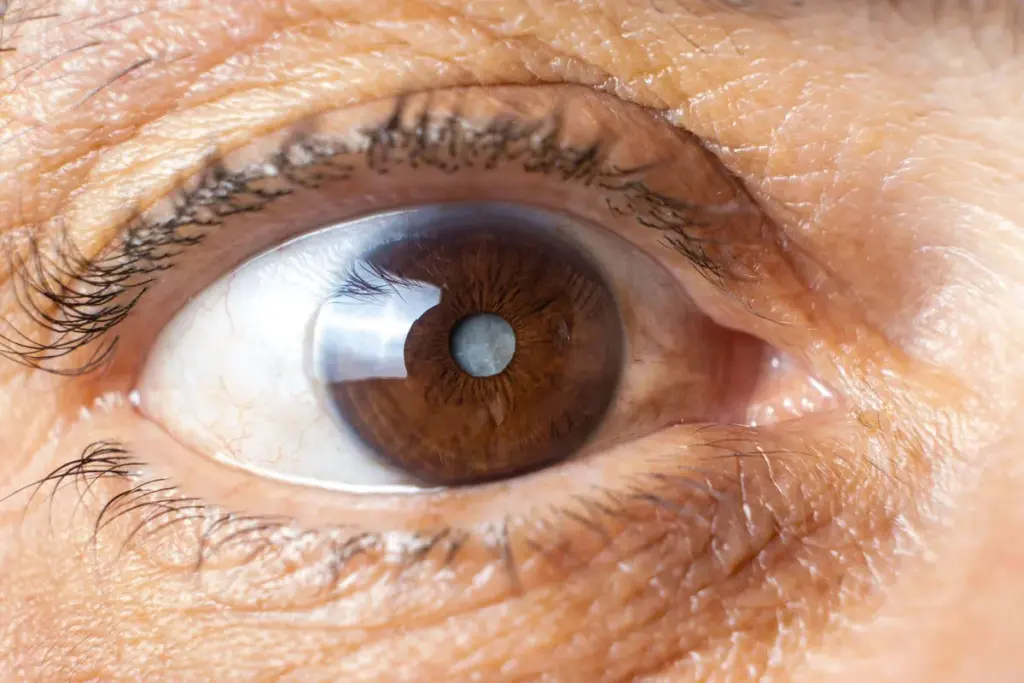
A cataract is a cloudy area in the lens of your eye. This lens helps focus light. As proteins in the lens break down, they form clumps. This clouding blocks light from reaching the retina.
This clouding, or cataract formation, makes vision blurry, hazy, or less vibrant. It makes simple tasks like driving, reading, and recognizing faces hard.
It’s important to understand cataract definition medical. It’s a condition that grows over time. Knowing its effects on vision helps you get medical help early.
Key Takeaways
- A cataract is a clouding of the lens in the eye.
- It affects vision by obscuring light passage.
- Cataracts develop gradually over time.
- Symptoms include blurry, hazy, or less vibrant vision.
- Early understanding can lead to timely medical intervention.
What Is a Cataract? Understanding the Medical Definition
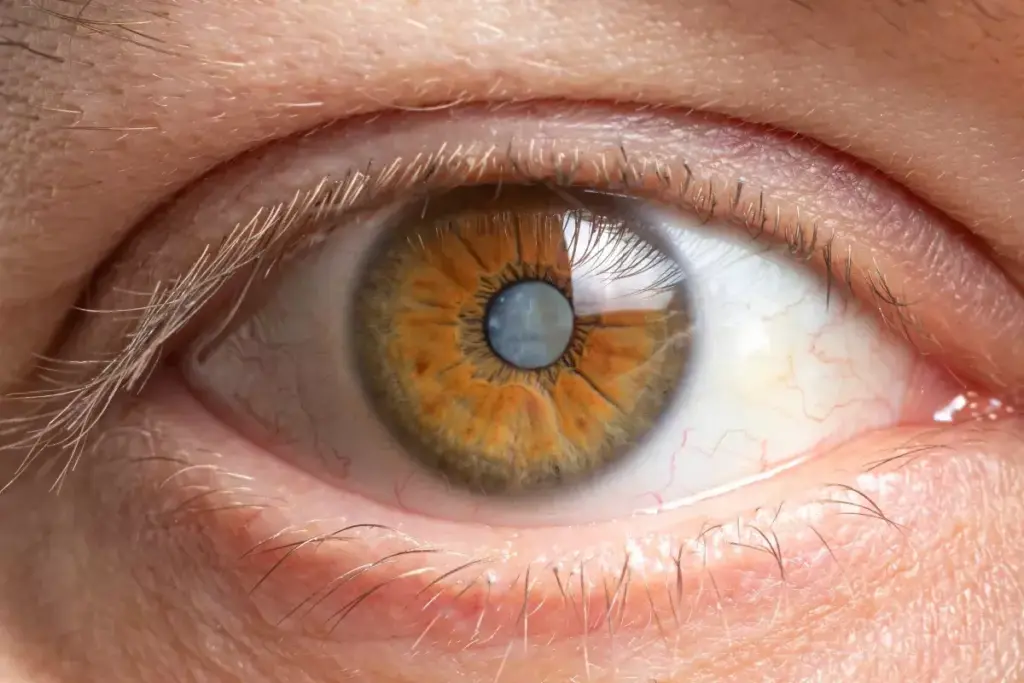
A cataract is when the eye’s lens gets cloudy, making it hard to see clearly. This happens when proteins in the lens break down and clump together. This leads to a decrease in how well you can see.
The Anatomy of a Cataract
A cataract forms when proteins in the lens of the eye change and clump together. This creates cloudy areas that mess with your vision. The lens is behind the iris and pupil and is key for focusing light on the retina.
As a cataract grows, it can really change how you see things. It can make it hard to read, drive, or even see faces clearly. It’s like trying to see through a foggy window.
How Cataracts Develop: Protein Breakdown in the Lens
Cataracts mainly happen as we get older. The proteins in the lens start to break down and clump. This starts off small but gets worse over time.
Other things can also cause cataracts, like diabetes, some medicines, and too much UV radiation. Knowing these can help prevent and catch cataracts early.
Getting regular eye checks and protecting your eyes from UV can slow cataracts. Sometimes, surgery is needed to fix the problem and get your vision back.
| Stage | Symptoms | Impact on Vision |
| Early | Minor clouding, slight vision blur | Mild impact, often unnoticed |
| Moderate | Noticeable vision impairment, glare | Significant impact, affecting daily activities |
| Advanced | Severe clouding, significant vision loss | Major impact, potentially disabling |
Cataract Symptoms and Their Effects on Your Vision

It’s key to know the signs of cataracts to keep your vision sharp. As cataracts grow, they can mess with your sight in many ways. Spotting these signs early can lead to quicker treatment.
Primary Visual Symptoms of Cataracts
The main signs of cataracts include:
- Blurred or hazy vision: Early cataracts can make things look fuzzy or cloudy. This makes reading or watching TV hard.
- Reduced color perception: Colors might seem faded or yellow. This changes how you see the world.
- Glare sensitivity: You might see halos or streaks around lights, mainly at night.
- Difficulty seeing in low light conditions: Cataracts can make it tough to see in dark places.
How Cataracts Affect Daily Activities
Cataracts can really mess with your daily life, like:
- Driving at night: Headlight glare can be a big problem, making driving at night risky.
- Reading and watching TV: Blurry vision can hurt your eyes and make these activities less fun.
- Outdoor activities: Sensitivity to glare can also ruin outdoor fun, mainly when it’s sunny.
Knowing how cataracts affect daily life helps see why getting checked is so important.
The Experience of Living with Cataracts
Cataracts can change your vision slowly. This change can be hard to notice at first but can greatly affect your life. As your eye’s lens gets cloudy, it can make everyday tasks harder.
Early Stage: Subtle Changes in Vision
In the early stages, vision changes might seem small. You might see things a bit blurry or need more light to read. These signs can be managed, but they show a bigger problem is coming.
Common early signs include:
- Faded colors
- Increased sensitivity to glare
- Frequent changes in eyeglass or contact lens prescriptions
Progressive Stage: Increasing Vision Impairment
As cataracts get worse, your vision will get worse too. Driving at night or reading small text will be harder. How fast cataracts grow can vary, but it can really affect your life if not treated.
The effects on daily activities can be significant, including:
- Difficulty with night driving due to glare
- Challenges in reading or performing tasks that require fine vision
- Need for brighter lighting for everyday activities
Cataract Prevalence and Who Is Affected
Cataracts are common, mainly among older people. By age 65, over 90% of people have some lens clouding. Knowing this can help catch and manage cataracts early.
Key statistics and risk factors include:
| Age Group | Prevalence of Cataracts |
| 40-49 years | 5% |
| 50-59 years | 20% |
| 60-69 years | 50% |
| 70+ years | 90% |
Living with cataracts means dealing with changes in vision. It’s important to understand the condition and its effects on your life.
Conclusion
Knowing about cataracts is key to dealing with the clouding of the lens in the eye. This affects millions of people worldwide. Cataracts happen when proteins in the lens break down, causing blurry vision and sensitivity to glare.
These symptoms make everyday tasks hard, like reading and driving. While cataracts often come with age, other factors can also cause them. Luckily, surgery is the only way to fix it, bringing back clear vision and confidence.
Understanding cataracts and their impact on the eye is the first step to dealing with them. With modern medicine and expert care, you can regain your glow and beauty. Embracing treatment can transform your life, improving your quality of life and overall well-being.
FAQ
What is a cataract?
A cataract is a clouding of the eye’s natural lens that reduces vision and can develop slowly over time.
What are the symptoms of cataracts?
Symptoms include blurry or cloudy vision, glare from lights, faded colors, difficulty reading, and trouble seeing at night.
How do cataracts develop?
Cataracts develop when proteins in the lens clump together, causing cloudiness that blocks or distorts light entering the eye.
Who is at risk for developing cataracts?
Risk factors include aging, diabetes, smoking, prolonged UV exposure, eye injuries, and long-term use of certain medications.
How do cataracts affect daily life?
Cataracts can make reading, driving, recognizing faces, and performing daily tasks more difficult due to blurred or dim vision.
What is cataract vision like?
Cataract vision appears cloudy, foggy, or dim, with increased glare, halos around lights, and difficulty seeing contrast or colors.
Are cataracts a normal part of aging?
Yes, cataracts commonly develop with age, though not everyone will experience significant vision loss.
Can cataracts be treated?
Yes, cataracts can be treated with surgery to remove the cloudy lens and replace it with an artificial lens for clear vision.
References
National Center for Biotechnology Information. Evidence-Based Medical Insight. Retrieved from https://pmc.ncbi.nlm.nih.gov/articles/PMC8465972/



 Departments
 Related Videos
 Our Doctors
 News
News