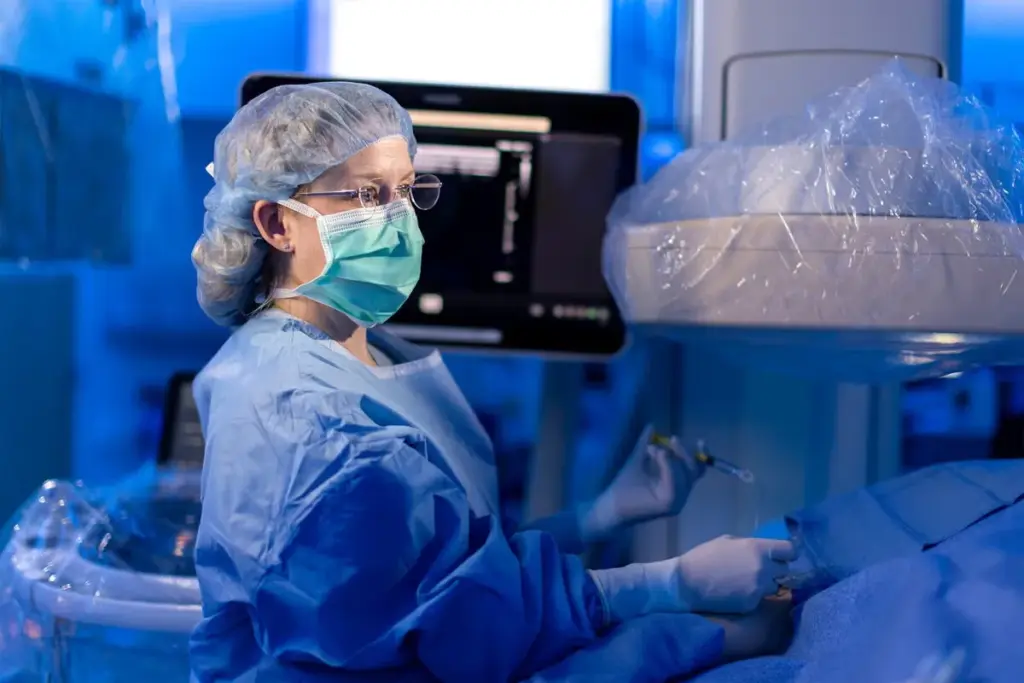
Modern medicine is changing fast, thanks to new interventional radiology procedures. Angioplasty is leading this change. It’s a small, non-invasive IR procedure that has changed how we treat heart diseases.
Looking into interventional radiology, we see angioplasty is the top procedure worldwide. It’s key in getting blood flowing again and saving lives.
The IR market is expected to hit $30.3 billion by 2025. This shows how important these procedures are in healthcare.
Key Takeaways
- Angioplasty is the most common IR procedure globally.
- It plays a vital role in managing cardiovascular diseases.
- The global interventional radiology market is valued at $30.3 billion in 2025.
- Minimally invasive procedures like angioplasty are changing modern medicine.
- These procedures are essential in restoring blood flow and saving lives.
Understanding Interventional Radiology
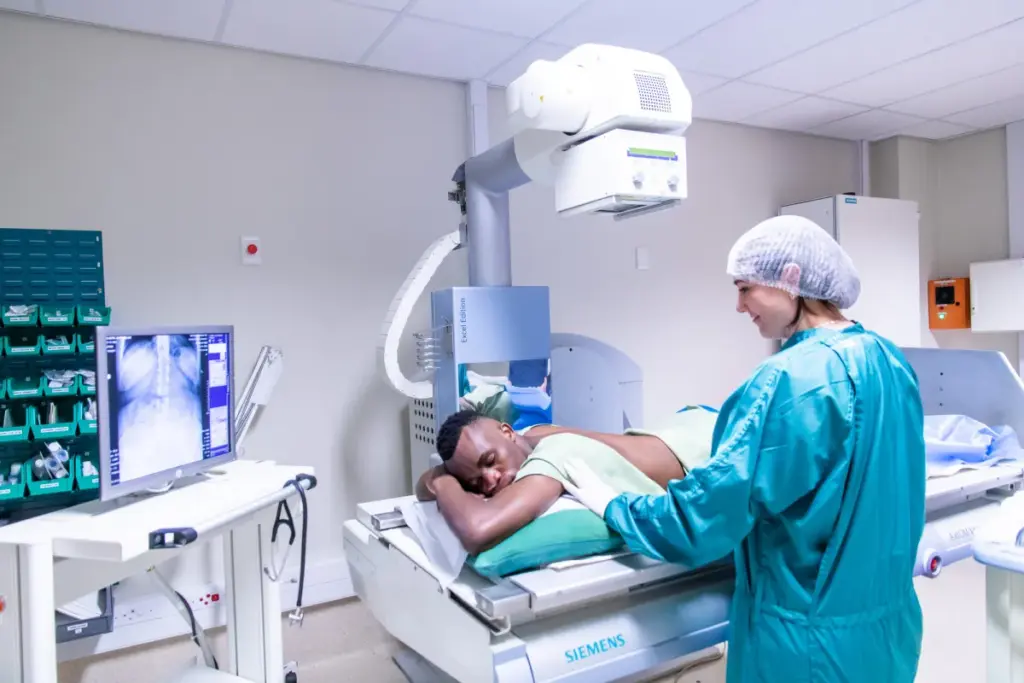
Interventional radiology (IR) has changed the medical world with its new ways of treating patients. It’s important to know what IR is, what it does, and how it has grown.
Definition and Scope of Interventional Radiology
IR is a medical field that uses special procedures to diagnose and treat diseases. It’s called “interventional” because it uses small, non-surgical methods to help patients. IR combines radiology and surgery, making it a unique way to care for patients.
IR covers a wide range of treatments for different health issues. From fixing blood vessels to treating other non-vascular problems, IR is key in today’s healthcare. As we learn more, we’ll see how IR has changed medical treatment.
History and Evolution of IR Procedures
The first IR procedures started in the 1960s with angiography. IR has grown a lot, thanks to new technology and techniques. Digital subtraction angiography was a big step forward.
IR procedures have gotten better over time, thanks to new imaging tech. Now, we use ultrasound, CT, and MRI to make IR safer and more precise. This has helped IR treat many health problems.
The Role of Imaging in Interventional Procedures
Imaging is key in IR, letting doctors see inside the body in real-time. This helps them guide procedures accurately. New imaging tech has made IR treatments safer and more effective.
Fluoroscopy, ultrasound, and CT scans are important in IR. They give clear images, helping doctors navigate and treat the body. As imaging tech gets better, IR will keep improving.
|
Imaging Modality |
Application in IR |
Benefits |
|---|---|---|
|
Fluoroscopy |
Real-time imaging during procedures |
Precise guidance, reduced complications |
|
Ultrasound |
Guidance for vascular access |
Non-invasive, reduced risk of infection |
|
CT Scans |
Detailed imaging for complex procedures |
High-resolution images, improved accuracy |
What is Interventional Radiology: Core Principles and Applications
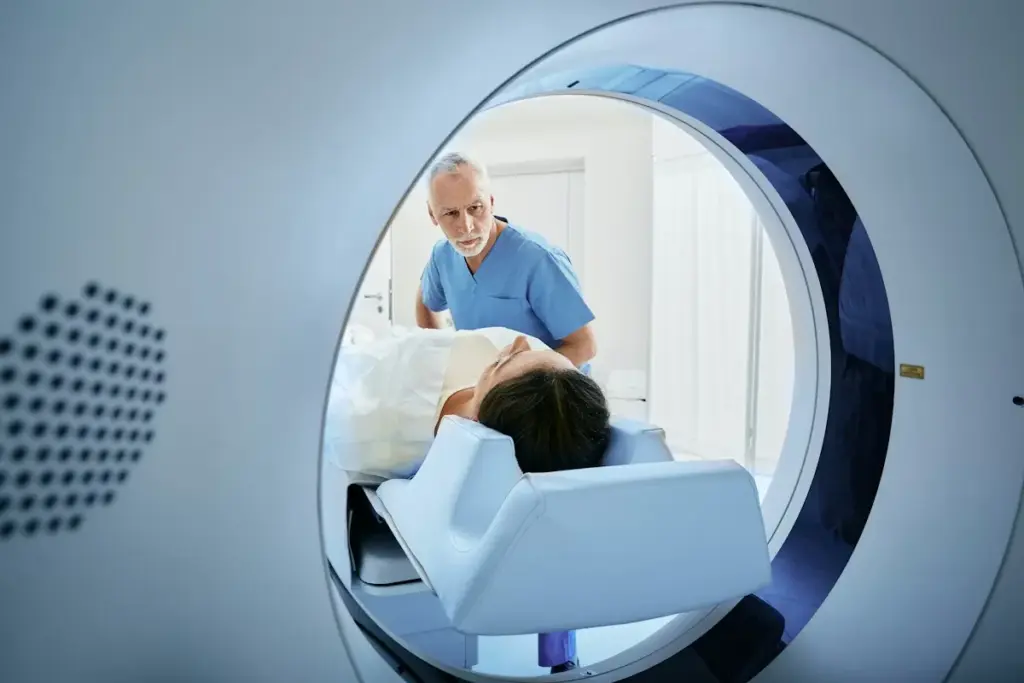
Interventional Radiology is a key part of modern medicine, offering many benefits over old-fashioned surgery. We’re seeing a big move towards less invasive methods. These methods cut down on recovery time and lower the chance of problems.
Minimally Invasive Approach
Interventional Radiology is all about being gentle. It uses small cuts instead of big surgeries. This way, doctors can reach and fix problems without causing too much harm.
This gentle approach means less pain and shorter stays in the hospital. For example, someone with a blood vessel issue might go home the same day. This is a big difference from the weeks or months needed for old-style surgeries.
Image-Guided Techniques
IR relies on advanced imaging to guide treatments. Tools like fluoroscopy, ultrasound, and MRI help doctors see exactly where they’re working. This makes sure the treatment is both precise and effective.
- Fluoroscopy gives a live X-ray view, helping guide tools and devices.
- Ultrasound uses sound waves to show what’s inside the body, great for biopsies and drainages.
- MRI-guided treatments offer clear images without harmful radiation.
Benefits Over Traditional Surgery
IR has many advantages over traditional surgery. Patients get:
- Reduced Recovery Time: Smaller cuts mean less damage and faster healing.
- Fewer Complications: IR’s gentle approach lowers the risk of infections and other issues.
- Less Pain: Smaller cuts mean less pain after, so less need for pain meds.
Understanding IR’s core principles shows its importance in today’s healthcare. As tech gets better, IR will play an even bigger role. It will offer more effective and less invasive treatments for people everywhere.
Angioplasty: The Most Common IR Procedure Worldwide
Angioplasty is the most common Interventional Radiology (IR) procedure worldwide. It has changed how we treat heart disease. It helps fix blockages in blood vessels.
Statistical Prevalence
Angioplasty makes up almost 24% of all IR procedures. This shows its big role in heart care. It’s a sign of its success and the need for less invasive treatments.
Key statistics:
- 24% of all IR procedures are angioplasty.
- High success rate in treating vascular blockages.
- Increasingly used for patients with atherosclerosis or heart attacks.
Primary Applications in Cardiovascular Disease
Angioplasty is used to fix blockages in blood vessels. It’s for those with atherosclerosis or heart attack survivors. It helps keep the heart safe and improves health.
“Angioplasty has become a critical tool in the management of cardiovascular disease, providing a minimally invasive solution with significant benefits for patients.”
Patient Outcomes and Success Rates
Angioplasty works well, cutting down on chest pain and heart problems. It’s faster to recover from than old surgeries. This makes it a good choice for patients and doctors.
Research shows angioplasty boosts both short and long-term health for heart disease patients.
How Angioplasty Works: Technical Aspects
Advances in imaging have made angioplasty more effective. This is key in interventional radiology (IR). The process is complex and detailed.
Procedural Steps and Techniques
Angioplasty involves several key steps:
- Accessing the affected artery through a small incision.
- Guiding a catheter to the site of the blockage using imaging guidance.
- Inflating a balloon to widen the artery.
- Placing a stent to keep the artery open.
Imaging guidance is vital in each step. It ensures precision and safety.
Equipment and Materials Used
The equipment used in angioplasty includes:
- Catheters and guidewires.
- Balloon angioplasty devices.
- Stents, including drug-eluting stents.
Drug-eluting stents release medication to prevent the artery from re-narrowing.
Imaging Guidance During Angioplasty
Imaging technologies like fluoroscopy and intravascular ultrasound (IVUS) are key. They give real-time feedback. This allows for precise placement of stents and balloons.
Understanding angioplasty’s technical aspects shows its complexity and importance. Advanced imaging has greatly improved outcomes. Angioplasty is now a vital part of cardiovascular care.
Medical Conditions Treated with Angioplasty
Cardiovascular diseases need precise and effective treatments. Angioplasty, a key procedure in interventional radiology (IR), has changed how we treat these conditions. Knowing what IR means in medical terms shows how important angioplasty is in healthcare today.
Atherosclerosis Management
Atherosclerosis is when plaque builds up in arteries, leading to heart disease. Angioplasty helps by widening narrowed or blocked arteries. This improves blood flow and lowers heart disease risk.
By pushing plaque against artery walls, angioplasty helps restore normal blood flow. This relieves symptoms like chest pain.
Acute Myocardial Infarction (Heart Attack) Treatment
Heart attacks need quick action. Angioplasty is a key treatment for acute myocardial infarction. It helps restore blood flow to the heart muscle.
When done quickly, angioplasty can greatly reduce heart damage. The procedure uses a balloon to open blocked arteries. Sometimes, a stent is placed to keep the artery open.
Peripheral Arterial Disease Interventions
Peripheral arterial disease (PAD) happens when arteries to the limbs get narrowed or blocked. Angioplasty treats PAD, easing leg pain during walking. It improves mobility and quality of life for those with PAD.
The procedure often includes stenting to keep the artery open long-term.
In conclusion, angioplasty is key in treating heart and artery problems. It’s effective in restoring blood flow and easing symptoms. As IR techniques and technology improve, angioplasty’s benefits will likely grow, helping patients more.
Patient Benefits and Outcomes of Angioplasty
Angioplasty is more than just a minimally invasive procedure. It greatly improves patient outcomes. As a key interventional radiology procedure, it has changed how we treat heart diseases.
Reduction in Chest Pain and Cardiac Complications
Angioplasty is great at reducing chest pain and heart problems. It helps the heart muscle get the blood it needs. This makes patients feel better and live better lives.
Recovery Time Compared to Traditional Surgery
Angioplasty is faster to recover from than old-school surgeries. Patients can get back to their lives sooner. This is a big plus for those who can’t take a long time off.
- Shorter hospital stays
- Faster return to normal activities
- Less post-operative pain
Long-term Effectiveness and Quality of Life Improvements
Angioplasty works well over time, too. It gives quick relief and keeps the heart healthy. This helps prevent future heart problems and makes life better for patients.
New tech in interventional radiology procedures makes angioplasty even better. Things like drug-coated stents make it safer and more effective.
In short, angioplasty is a big win for patients. It cuts down on pain and heart issues, and recovery is quick. As ir procedures get better, angioplasty will keep being a key treatment for heart problems.
Central Venous Access: Europe’s Leading IR Procedure
In Europe, central venous access is a top interventional radiology procedure. It makes up about 40% of all IR procedures each year. This shows how important it is in medical care.
Statistical Significance
Central venous access is very significant in Europe’s IR procedures. About 40% of all IR procedures involve central venous access. This highlights its key role in patient care.
These procedures are common because they are very effective. They allow for the direct delivery of life-saving treatments and medications into the bloodstream.
Types of Central Venous Access Devices
Central venous access devices are used to deliver fluids and medications directly. There are different types, each with its own use and benefits.
- Temporary Central Venous Catheters: Used for short-term access, often during emergencies or acute care situations.
- Tunneled Central Venous Catheters: Designed for long-term use, these catheters are surgically implanted under the skin.
- Implantable Ports: Completely implanted under the skin, these ports are used for long-term administration of medications and fluids.
Clinical Applications and Patient Benefits
Central venous access devices are vital in many clinical settings. They offer a reliable way to administer treatments that can’t be given through peripheral veins.
|
Clinical Application |
Patient Benefit |
|---|---|
|
Chemotherapy Administration |
Direct delivery of chemotherapy drugs, reducing the risk of extravasation. |
|
Long-term Antibiotic Therapy |
Safe and reliable administration of antibiotics over extended periods. |
|
Nutritional Support |
Effective delivery of parenteral nutrition to patients with gastrointestinal disorders. |
Understanding central venous access shows its importance in patient care. It delivers life-saving treatments. As interventional radiology grows, central venous access will likely stay a key part of medical practice.
Regional Variations in Common IR Procedures
Regional differences are key in what IR procedures are most common. The types of IR procedures vary a lot across different areas. This is because of different healthcare needs, tech levels, and what people prefer.
North American Procedural Trends
In North America, angioplasty and other heart treatments are top choices for IR. This is because heart disease is common here. Also, the area has great healthcare and skilled doctors, making IR popular.
Technological advancements like new stents and imaging help these treatments work better. There’s a big push for less invasive methods. This makes patients recover faster and do better.
Asian Market and Procedure Preferences
In Asia, the focus is on various IR procedures that fit local health issues. For example, liver disease is common in some places. So, treatments like TACE for liver cancer are used more.
The area’s healthcare is getting better, and more people know about less invasive treatments. This is leading to more use of advanced IR methods. It’s because of both local health needs and new tech.
Developing Regions: Accessibility and Common Procedures
In developing areas, what IR procedures are used depends on accessibility to healthcare, money, and doctor training. Despite these hurdles, there’s a growing interest in IR. This is because it’s less invasive and can save money.
Simple procedures like central venous access are becoming more common. They’re needed in emergencies and are easy to do. We’re working to make more IR procedures available in these places by training doctors and improving facilities.
Other Common Interventional Radiology Procedures
Interventional Radiology (IR) is more than just angioplasty and central venous access. It uses imaging to diagnose and treat many health issues. Let’s look at some key IR procedures used in hospitals today.
Embolization Procedures
Embolization blocks or reduces blood flow to certain areas or organs. It uses tiny particles or coils to do this. This method is used for uterine fibroids, liver tumors, and bleeding from injuries or tumors.
- Benefits: It’s less invasive, often avoids surgery, and can be very effective in stopping bleeding or tumor growth.
- Risks: It might cause post-embolization syndrome, infection, or accidentally block the wrong area.
Biopsy and Drainage Procedures
IR-guided biopsy uses imaging to get tissue samples for tests. Drainage removes fluid like abscesses or cysts. These are key for diagnosing and treating infections and cancers.
- Biopsy: It helps get precise tissue samples for diagnosing cancers and other diseases.
- Drainage: It relieves symptoms from fluid buildup and treats infections.
Ablation Techniques
Ablation destroys diseased tissue with heat, cold, or chemicals. Methods like radiofrequency ablation and cryoablation treat tumors in the liver, kidney, and more. It’s a good option for those who can’t have surgery.
- Advantages: It’s less invasive, saves healthy tissue, and can be done without staying in the hospital.
- Considerations: There’s a chance the tumor could come back, and choosing the right patient is important.
These IR procedures show how versatile and effective IR is in treating many health issues. Understanding their uses and benefits helps us see IR’s big role in today’s healthcare.
Technological Advancements in IR Procedures
Technology is changing IR procedures, making diagnosis and treatment better. Interventional Radiology is growing fast, thanks to new tech that improves results and patient care.
Drug-Coated Stents and Bioabsorbable Scaffolds
Drug-coated stents and bioabsorbable scaffolds are big steps forward in IR. They help treat heart diseases by stopping blockages and helping blood vessels heal. Stents release medicine to stop cell growth, and scaffolds support blood vessels before they dissolve.
Studies show these tools work well, cutting down on complications and keeping blood vessels open longer. As research goes on, we’ll see even better versions of these devices.
Imaging Innovations for Procedural Guidance
Imaging is key for guiding IR procedures. New imaging like high-resolution fluoroscopy and advanced ultrasound makes procedures safer and more precise. This lets doctors see detailed images in real-time, helping them place devices accurately.
Also, combining imaging with other data helps doctors understand patients better. This leads to more tailored treatment plans.
Robotics and Artificial Intelligence in IR
Robotics and AI are changing IR. Robots help with precise control during procedures. AI looks at lots of data to predict outcomes and improve treatment plans.
These advances are making care better and opening up new possibilities in IR. As tech keeps improving, we’ll see more cool uses of robotics and AI in IR.
The Global Interventional Radiology Market
The global IR market is valued at $30.3 billion in 2025. It’s growing fast, showing how important interventional radiology is in healthcare today. This growth comes from new medical tech and more demand for less invasive treatments.
Market Valuation and Growth Projections
The IR market is set to hit $49.4 billion by 2035, growing at 5.2% each year. This shows how hospitals worldwide are turning to IR procedures more. IR procedures are becoming more popular because they’re less invasive and patients recover faster.
A leading expert says, “The future of interventional radiology looks bright. New tech and more demand will keep it growing.”
“The use of new tech like drug-coated stents and bioabsorbable scaffolds is improving patient results and expanding what IR can do.”
Economic Impact and Healthcare Cost Reduction
The IR market’s impact goes beyond its value. It helps lower healthcare costs. IR procedures mean fewer big surgeries and shorter hospital stays. This shift to less invasive treatments is good for patients and saves money for healthcare systems worldwide.
What’s driving the market’s growth includes:
- More people getting chronic diseases
- New tech in IR equipment and methods
- More demand for treatments done outside the hospital
As the IR market grows, its role in healthcare becomes clearer. It’s improving patient care and cutting healthcare costs. So, interventional radiology will keep being a key part of healthcare.
Interventional Radiologists: Training and Expertise
To become interventional radiologists, one must go through a lot of training. This field is complex, needing a deep understanding of radiology and clinical practices.
Educational Background and Specialization
They start with a medical degree and then specialized training in radiology. This base is key for grasping IR principles.
Getting to be an interventional radiologist takes years of residency and sometimes more fellowship training in IR. This training gives them the skills for complex procedures.
Key Skills and Competencies
Interventional radiologists need technical skills, clinical knowledge, and the ability to work well under pressure. Key competencies include:
- Proficiency in using imaging technologies such as fluoroscopy and ultrasound
- Ability to interpret complex imaging data
- Technical skill in performing minimally invasive procedures
- Strong clinical judgment and decision-making capabilities
These skills are developed through intense training and practice. This ensures they can give top-notch care.
Collaborative Role in Healthcare
Interventional radiologists are key in healthcare teams. They work with other specialists to give full care to patients.
Their skills are vital for diagnosing and treating many conditions, like vascular diseases and cancers. By working with surgeons, oncologists, and others, they help create treatment plans that fit each patient’s needs.
|
Skill/Competency |
Description |
Importance in IR |
|---|---|---|
|
Imaging Technology Proficiency |
Ability to use and interpret imaging technologies |
High |
|
Technical Skill in Procedures |
Skill in performing minimally invasive procedures |
High |
|
Clinical Judgment |
Ability to make sound clinical decisions |
High |
Conclusion: The Future of Interventional Radiology
Interventional radiology (IR) is growing fast, thanks to new tech and more people needing less invasive treatments. This means IR procedures will get better and more people can use them. It’s a bright future for IR radiology.
IR procedures like angioplasty and central venous access are changing how we care for patients. They help patients recover faster and live better lives. More people want these treatments because they’re safer and work better.
As IR keeps getting better, we’ll see even more new ways to help patients. New imaging and devices will lead to more IR procedures. This growth shows how valuable IR is for healthcare.
Knowing what IR is and its role in medicine helps us see its huge promise. IR can make healthcare better and change how we treat patients. We’re excited to see what the future holds for IR.
FAQ
What is Interventional Radiology (IR)?
Interventional Radiology is a medical field. It uses small, guided procedures to diagnose and treat diseases.
What is the most common IR procedure?
Angioplasty is the most common IR procedure. It’s used to treat heart disease and accounts for 24% of all IR procedures.
What is angioplasty?
Angioplasty is a procedure to open blocked blood vessels. It’s used for heart and artery diseases.
How does angioplasty work?
Angioplasty uses a balloon to open blocked vessels. A stent is then placed to keep the vessel open. Imaging guides the procedure.
What are the benefits of angioplasty?
Angioplasty reduces chest pain and has shorter recovery times. It improves quality of life and is more effective than traditional surgery.
What is central venous access?
Central venous access is a procedure used in Europe. It’s for administering medications and treatments directly into a vein.
What are the different types of IR procedures?
IR procedures include angioplasty, embolization, and more. Each is designed to treat specific conditions with minimal invasion.
How has technology impacted IR procedures?
Technology has greatly improved IR procedures. Advancements like drug-coated stents and imaging innovations have made them safer and more precise.
What is the global IR market like?
The global IR market is growing. It was valued at $30.3 billion in 2025 and is expected to reach $49.4 billion by 2035.
What kind of training do interventional radiologists have?
Radiologists undergo extensive education. They study medicine, complete residency, and sometimes fellowship. This prepares them for complex procedures.
What is the role of interventional radiologists in healthcare?
Radiologists are key in healthcare teams. They provide expertise in minimally invasive procedures. They work with other specialists to care for patients.
National Center for Biotechnology Information. Evidence-Based Medical Insight. Retrieved from https://pmc.ncbi.nlm.nih.gov/articles/PMC6440898/[7