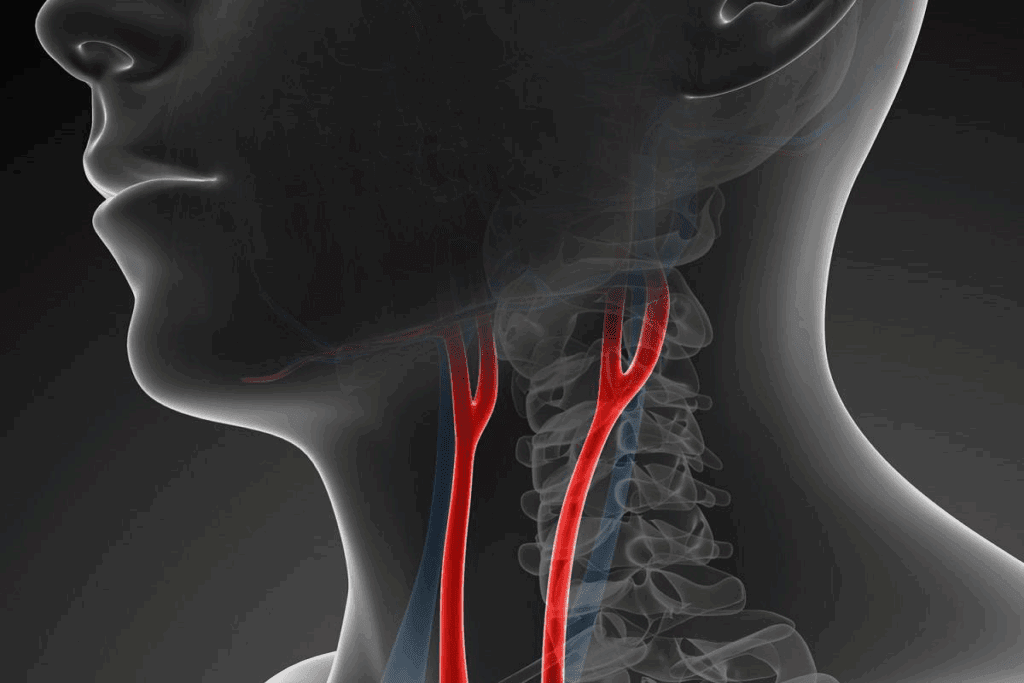
The carotid arteries are two vital blood vessels. They supply blood to the brain and head. Many strokes happen because of blockages or ruptures in these arteries. This shows how important they are for our health.what is the fatal artery in the neckWhat Is AMI in Medical Terms and How Is Acute Myocardial Infarction Diagnosed and Treated?
Carotid artery disease happens when fatty deposits, called plaques, block these blood vessels. This can lead to serious problems, like stroke. The carotid arteries are on both sides of the neck. They are key to keeping our brains healthy.
It’s vital to know about the dangers of carotid artery disease. This knowledge helps prevent problems and ensures quick medical help when needed.
Key Takeaways
- The carotid arteries are key for blood flow to the brain and head.
- Carotid artery disease can cause stroke if not treated.
- Fatty deposits in the carotid arteries can lead to serious health issues.
- Knowing about carotid artery disease is important for prevention and treatment.
- The carotid arteries are found on both sides of the neck.
The Anatomy of Neck Arteries
It’s important to know about the neck arteries to understand how the brain gets blood. The neck has a complex network of blood vessels. These vessels are key for bringing oxygen to the brain.
Major Blood Vessels in the Neck Region
The neck has several major blood vessels. The carotid arteries are very important. They carry blood to the brain.
Arterial vs. Venous Structures
Arteries and veins are different. Arteries, like the carotid arteries, send blood from the heart to the brain. Veins bring blood back to the heart.
Relationship to Other Neck Structures
The carotid arteries are near other neck structures. This includes the trachea, esophagus, and jugular veins. Knowing this is key for understanding neck surgeries or injuries.
Blood Supply Pathways to the Brain
The carotid arteries are vital for the brain’s blood supply. They start in the upper chest and go up to the skull. There, they split into the internal carotid artery and external carotid artery.
The internal carotid artery mainly supplies the brain. The external carotid artery has branches for the face and neck.
A medical expert said, “The carotid arteries are essential for the brain’s blood supply. Any problem with them can be serious.”
What is the Fatal Artery in the Neck?
Knowing about the carotid artery is key to understanding its importance. It’s a critical artery in the neck. The carotid artery system is a network of blood vessels. It’s vital for bringing oxygenated blood to the brain.
Defining the Carotid Artery System
The carotid artery system has two main arteries, one on each side of the neck. They deliver blood to the brain. The internal carotid artery mainly supplies blood to the brain. The external carotid artery goes to the face and neck.
Why It’s Considered “Fatal”
Damage to the carotid arteries can cause serious problems. This includes stroke, brain damage, and even death. This makes it a potentially “fatal” artery. Our understanding of its vulnerability has grown over time.
Historical Understanding of Carotid Vulnerability
Long ago, doctors knew the carotid arteries were at risk. They were exposed in the neck. Ancient physicians saw that injuries here could be deadly.
Modern Medical Perspective
Today, we see the carotid arteries as critical for brain blood supply. New medical tech has helped us understand and treat carotid artery disease. This includes surgery and endovascular procedures.
- The carotid artery system is a vital structure in the neck.
- Damage to the carotid arteries can have severe consequences.
- Modern medicine has improved the diagnosis and treatment of carotid artery conditions.
The Carotid Artery System: Structure and Function
The carotid artery system is key for blood flow. It includes the common, internal, and external carotid arteries. These arteries are vital for delivering oxygen to the brain, face, and neck.
Common Carotid Artery
The common carotid artery splits into the internal and external carotid arteries. It starts from the brachiocephalic trunk on the right and the aortic arch on the left. This artery is essential for blood flow to the head and neck.
Internal Carotid Artery
The internal carotid artery feeds the brain with blood. It’s a critical artery for the brain’s oxygen supply. It’s also part of the circle of Willis, which is vital for brain blood flow.
External Carotid Artery
The external carotid artery supplies blood to the face and neck. It branches into smaller arteries for the thyroid gland, tongue, and facial muscles. This artery is important for their health and function.
In summary, the carotid artery system is vital for blood circulation. Knowing about the common, internal, and external carotid arteries helps us understand their importance in our bodies.
Precise Location of the Carotid Arteries
The carotid arteries are on each side of the neck. They are key for blood flow to the brain. Knowing where they are is important for doctors and everyone else.
Anatomical Landmarks
The carotid arteries are in the neck, near other important parts. Certain landmarks help find their spot.
Left vs. Right Carotid Differences
The left and right carotid arteries start and go in different ways. The right common carotid artery comes from the brachiocephalic trunk. The left common carotid artery comes straight from the aortic arch. Knowing this helps understand carotid artery disease.
Relationship to Sternocleidomastoid Muscle
The carotid arteries are near the sternocleidomastoid muscle in the neck. They are in the carotid sheath, which is behind the muscle. This is important for exams and surgeries.
| Anatomical Structure | Relation to Carotid Artery |
| Sternocleidomastoid Muscle | The carotid arteries lie within the carotid sheath, posterolateral to this muscle. |
| Internal Jugular Vein | Lies within the same carotid sheath as the carotid arteries. |
| Vagus Nerve | Also contained within the carotid sheath, alongside the carotid arteries. |
How to Locate Your Own Carotid Pulse
Finding your carotid pulse is easy and useful. Put your index and second fingers on the neck, just below the jaw and next to the windpipe. Press gently until you feel the pulse. This is a common method used in emergencies to check blood flow.
The Critical Role of Carotid Arteries in Brain Function
The carotid arteries are vital for the brain. They make sure the brain gets the oxygen and nutrients it needs. These arteries are key for keeping our thinking and movement sharp.
Oxygen and Nutrient Supply
The carotid arteries carry oxygen-rich blood to the brain. This is essential for the brain to work right. The internal carotid artery is important because it brings blood straight to the brain.
Consequences of Interrupted Blood Flow
When blood flow through the carotid arteries stops, it can cause serious problems. This includes stroke and long-term brain damage. It shows how important these arteries are for brain health.
Immediate Effects of Carotid Occlusion
If a carotid artery gets blocked, blood flow to the brain stops. This can lead to an ischemic stroke. It can cause sudden loss of brain and body functions, depending on where it happens.
Long-term Neurological Impact
Long-term, blocked or narrowed carotid arteries can lead to lasting brain problems. These can be weakness or paralysis, trouble speaking, and memory loss. How bad these problems are depends on how long and how bad the blockage is.
Other Vital Structures in the Neck
There are more important blood vessels in the neck than just the carotid arteries. These vessels are key to keeping the brain and other head and neck tissues healthy.
Jugular Veins: The Companion Vessels
The jugular veins work alongside the carotid arteries in the neck. They carry deoxygenated blood from the head back to the heart. The internal jugular vein is very important. It collects blood from the brain, face, and neck.
Vertebral Arteries: The Secondary Brain Supply
The vertebral arteries are also very important in the neck. They start from the subclavian arteries and go up through the neck. These arteries help supply blood to the brain, focusing on the back part of the brain.
| Vessel | Function |
| Jugular Veins | Drain deoxygenated blood from the head |
| Vertebral Arteries | Supply blood to the brain’s posterior circulation |
| Carotid Arteries | Supply oxygenated blood to the brain |
Common Carotid Artery Disorders and Conditions
The carotid arteries are key for blood flow to the brain. They can face various disorders with serious effects.
Carotid artery disease is a major worry. It happens when plaque builds up, narrowing or blocking the arteries.
Carotid Artery Disease
This disease is a big risk for stroke. If the arteries narrow or block, blood flow to the brain can stop.
Atherosclerosis Development
Atherosclerosis is the main cause of carotid artery disease. It’s when plaque, made of fat and cholesterol, builds up in the arteries.
Risk Factors
Many factors can lead to carotid artery disease. High blood pressure, smoking, diabetes, and high cholesterol are among them.
Carotid Stenosis
Carotid stenosis is when the carotid arteries narrow. This is often due to atherosclerosis. It can reduce blood flow to the brain, raising stroke risk.
Carotid Dissection
Carotid dissection is a tear in the carotid artery wall. It lets blood into the wall, which can block or cause a stroke.
Knowing about these conditions and their causes is key. It helps prevent them and ensures timely medical care.
Trauma and Injuries to the Carotid Artery
Carotid artery trauma can happen in many ways, like accidents or physical attacks. These injuries are very serious and can greatly affect a person’s health.
Types of Traumatic Injuries
There are two main types of carotid artery injuries: blunt force trauma and penetrating injuries.
Blunt Force Trauma
Blunt force trauma happens when the neck is injured without a cut, often from car crashes, falls, or fights. This can damage the carotid artery, leading to serious problems like dissection or blockage.
Penetrating Injuries
Penetrating injuries, like stab or gunshot wounds, directly harm the carotid artery. These injuries are clear and need quick medical help to stop severe bleeding or other serious issues.
Emergency Response to Neck Trauma
Quick action is key in treating neck trauma. Fast assessment and treatment can greatly improve patient results.
The first steps in treating neck trauma include making sure the airway is clear, stopping bleeding, and checking how bad the injury is. Rapid response and effective communication among medical teams are very important.
| Emergency Response Steps | Description |
| Airway Management | Securing the airway to ensure adequate oxygenation. |
| Bleeding Control | Applying pressure or using hemostatic agents to control bleeding. |
| Injury Assessment | Evaluating the extent of the injury to guide further treatment. |
Diagnostic Methods for Carotid Artery Assessment
Diagnosing carotid artery disease needs a mix of clinical checks and imaging. It’s key to spot issues that could cause stroke or heart problems.
Non-Invasive Imaging Techniques
Non-invasive imaging is first choice for safety and accuracy. They show the artery’s shape and how it works without the dangers of invasive tests.
Ultrasound and Doppler Studies
Ultrasound and Doppler studies are top picks for checking artery blockages and plaque. They give live images and check blood flow, spotting issues.
CT and MRI Angiography
CT and MRI angiography give clear views of the arteries. They help see stenosis, plaque, and other problems. These are great for planning treatments.
Invasive Diagnostic Procedures
Sometimes, invasive tests are needed for detailed info. They’re riskier but vital for some patients.
Angiography is a key invasive test. It uses contrast to see the artery’s inside and find issues. Though riskier, it gives clear images for treatment plans.
Treatment Options for Carotid Artery Conditions
There are many ways to treat carotid artery conditions. Each method has its own benefits and risks. The right treatment depends on how severe the condition is, the patient’s health, and other factors.
Medical Management
Medical management is often the first step for carotid artery disease. It includes making lifestyle changes like diet and exercise. It also involves taking medicines to control blood pressure and cholesterol levels, and to prevent blood clots.
Surgical Interventions
Surgery is considered for those with severe carotid artery stenosis or symptoms. There are two main surgical options:
Carotid Endarterectomy
This surgery removes plaque from the carotid artery. It helps improve blood flow to the brain.
Bypass Procedures
In some cases, a bypass procedure is done. It reroutes blood flow around a blocked or narrowed carotid artery section.
Endovascular Procedures
Endovascular procedures, like angioplasty and stenting, are less invasive than surgery. They use a balloon to widen the artery and a stent to keep it open.
Treatment Options Comparison
| Treatment | Benefits | Risks |
| Medical Management | Non-invasive, reduces risk factors | May not address severe stenosis |
| Carotid Endarterectomy | Effective for severe stenosis | Surgical risks, recovery time |
| Endovascular Procedures | Minimally invasive, quick recovery | Risk of complications, restenosis |
“The choice of treatment for carotid artery disease should be made in consultation with a healthcare provider, taking into account the individual’s specific condition and health status.”
— American Heart Association
Conclusion
The carotid arteries are key to our health, bringing oxygen and nutrients to the brain. They are part of a complex system. This includes the common, internal, and external carotid arteries, each with its own role.
Knowing about the carotid arteries is vital for our health. Diseases like carotid artery disease and stenosis can be serious. If not treated, they can lead to severe health issues.
Understanding the carotid arteries is important for our well-being. It helps us prevent and treat problems. This summary shows why we need to keep learning about these vital blood vessels.
FAQ
What is the fatal artery in the neck?
The fatal artery in the neck is the carotid artery. It’s a key blood vessel that supplies blood to the brain and head.
What is the carotid artery system?
The carotid artery system includes the common carotid artery, internal carotid artery, and external carotid artery. Together, they supply blood to the brain and head.
Where are the carotid arteries located?
The carotid arteries are on either side of the neck. They run along the sternocleidomastoid muscle. You can feel them by finding the carotid pulse.
What is the role of the carotid arteries in maintaining brain function?
The carotid arteries are vital for supplying oxygen and nutrients to the brain. If blood flow is interrupted, it can lead to serious issues like stroke.
What are the common disorders and conditions affecting the carotid arteries?
Common issues include carotid artery disease, stenosis, and dissection. These can be caused by atherosclerosis, trauma, or other factors.
How are carotid artery conditions diagnosed?
Doctors use non-invasive imaging like ultrasound and MRI to diagnose carotid artery conditions. They also use invasive procedures like angiography.
What are the treatment options for carotid artery conditions?
Treatment options include medical management, surgery, and endovascular procedures. These help restore blood flow and prevent further damage.
What is carotid artery disease?
Carotid artery disease occurs when the carotid arteries narrow or become blocked. This can lead to stroke or other serious complications.
What is the importance of emergency response in managing neck trauma?
Emergency response is key in managing neck trauma. Quick treatment can prevent further damage and reduce serious complications.
What are the risks associated with carotid artery stenosis?
Carotid artery stenosis increases the risk of stroke and transient ischemic attack (TIA). Untreated, it can lead to serious complications.
How can I locate my own carotid pulse?
To find your carotid pulse, place your index and middle fingers on the side of your neck. Look just below the jawline and feel for the pulse.
What is the relationship between the carotid arteries and the brain?
The carotid arteries supply blood to the brain. They are critical for maintaining brain function, including oxygen and nutrient supply.
What are the vertebral arteries?
The vertebral arteries are a pair of arteries that supply blood to the brain. They are an important part of the blood supply to the head and neck.
What is carotid dissection?
Carotid dissection is when the carotid artery tears or becomes dissected. It can lead to stroke or other serious complications.
National Center for Biotechnology Information. Evidence-Based Medical Insight. Retrieved from https://pubmed.ncbi.nlm.nih.gov/39397761/