

Chickenpox is a contagious disease caused by the varicella-zoster virus (VZV). It has been a big health issue for a long time. The name “chickenpox” might come from “chiche-pois” in French or “gigan” in Old English.
At Liv Hospital, we use the latest research and focus on patients to learn about VZV. By studying the origin of chickenpox and how it spreads, we can find better ways to stop and treat it.
The varicella-zoster virus leads to chickenpox, usually the first time someone gets it, and shingles when it comes back. Knowing about varicella in adults and its effects on health is key to stopping the disease.
Key Takeaways
- The varicella-zoster virus is the cause of chickenpox and shingles.
- The origin of the name “chickenpox” is debated among historians.
- Chickenpox has been a significant health concern for centuries.
- Understanding the history and evolution of VZV is important for stopping the disease.
- Liv Hospital combines research with patient-centered care to address the impact of chickenpox.
Understanding Chickenpox: The Disease and Its Causative Agent

To understand chickenpox, we need to know about the varicella-zoster virus. This virus causes chickenpox and can lead to shingles later. It’s contagious and can spread through touch or when someone coughs or sneezes.
For more information, visit the Centers for Disease Control and Prevention (CDC). They have detailed resources on chickenpox, its symptoms, and how to prevent it.
Varicella Zoster Virus: A Member of the Herpesvirus Family
The varicella-zoster virus is a DNA virus in the herpesvirus family. It causes chickenpox and can reactivate to cause shingles. This virus spreads easily through touch or in the air when someone coughs or sneezes.
Clinical Manifestations and Symptoms
Chickenpox symptoms include fever, headache, and a rash. The rash starts on the belly, back, or face and spreads. Symptoms can range from mild to severe.
The rash goes through stages:
- Red spots appear
- They turn into blisters
- They crust over
- They heal
This process takes about 7 to 10 days. Keeping the rash clean is important to avoid infections.
Knowing the symptoms and how chickenpox progresses is key for treatment. While most people recover on their own, those with weak immune systems may face more serious issues.
| Symptom | Description |
| Fever | Elevated body temperature, often one of the first signs of chickenpox |
| Headache | A common accompanying symptom, often mild to moderate in severity |
| Rash | A characteristic blister-like rash that spreads across the body |
The Historical Origin of Chickenpox
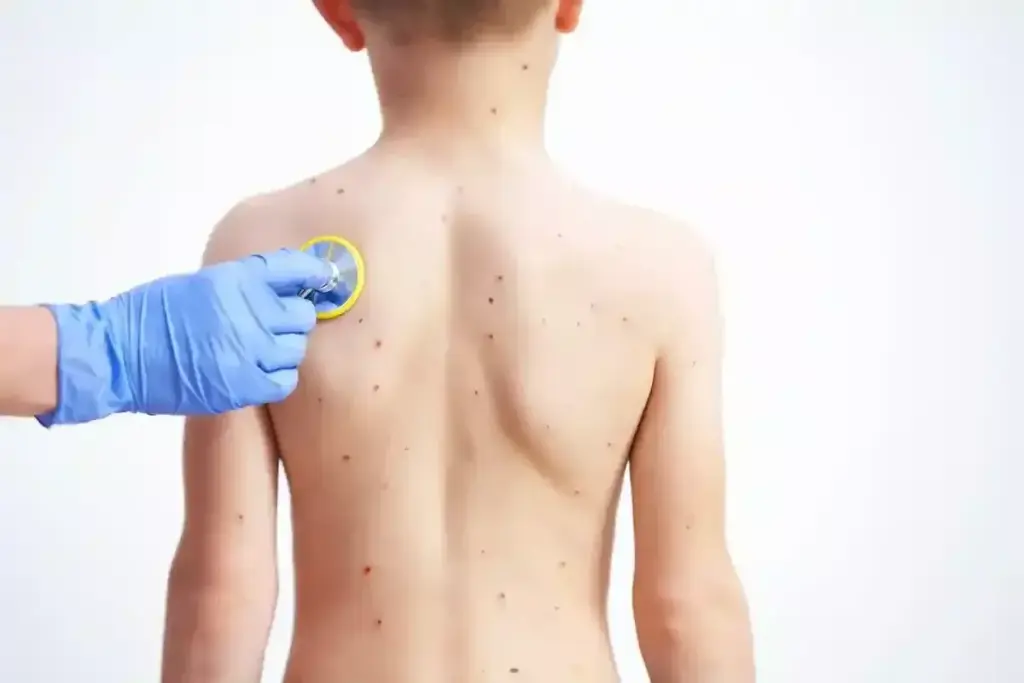
Learning about chickenpox’s history helps us understand how it spread and affected people. The story of chickenpox is long, tied to the varicella-zoster virus and its journey with humans for centuries.
Etymology: How Chickenpox Got Its Name
There are different ideas about where “chickenpox” comes from. Some think it might come from “chiche-pois,” a French term. Others believe it could be linked to “gican,” an Old English word for itching. Yet another theory is that “chicken” was used to mean a mild disease, unlike the serious smallpox.
Ancient Descriptions and Historical Records
Old medical texts describe diseases that look like chickenpox. But it’s hard to tell them apart from other rash diseases. By the 17th century, Europeans saw chickenpox as its own disease.
Distinguishing Chickenpox from Smallpox: William Heberden’s Contribution
William Heberden, an English doctor, was key in telling chickenpox apart from smallpox in 1767. His work helped doctors know chickenpox was a different illness. This made diagnosing and treating it more accurate.
| Year | Event | Contributor |
| 17th Century | Recognition of chickenpox as a distinct disease in Europe | Various medical practitioners |
| 1767 | Differentiation of chickenpox from smallpox | William Heberden |
Our understanding of chickenpox has grown a lot over time. From ancient times to being separated from smallpox, its history is key to knowing about it today.
The Chickenpox Pandemic: Transmission and Global Spread
It’s important to know how chickenpox spreads and moves around the world. This helps us make better health plans. Chickenpox is known as skoldkopper in Danish and Norwegian, and vesirokko in Finnish. It’s a big health issue everywhere.
Mechanisms of Transmission
Chickenpox is very contagious. It spreads through the air or by touching someone with a rash. The virus goes from person to person, making it spread fast in crowded places or where people are close.
The World Health Organization says knowing how it spreads is key to stopping outbreaks (WHO).
Evolutionary Timeline of the Virus
Studies show the varicella zoster virus started about 8,000 years ago. This timeline helps us see how the virus has changed and spread. The virus can hide and then come back as shingles, making it tricky to track.
Geographical Origins: European Roots
Research points to Europe as the virus’s starting point, not Africa. Knowing where it came from helps us see how it spread. Many things, like people moving and trade, have helped it spread.
In short, knowing how chickenpox spreads, its history, and where it started is key to fighting it worldwide. By understanding these things, we can make health plans that work better.
Conclusion
We’ve looked into where chickenpox comes from and how it spreads. We’ve also explored the history of the varicella zoster virus, which causes this contagious disease. Learning about the name “chickenpox” and its past descriptions helps us understand its history.
The varicella zoster virus, part of the herpesvirus family, is what causes chickenpox. By studying how it spreads and its history, we learn more about this common disease.
Our research shows chickenpox has roots in Europe, not Africa. Knowing its history and how it spreads is key to fighting it. This knowledge helps us find better ways to prevent and treat chickenpox.
Understanding chickenpox and its link to the varicella zoster virus is vital. By studying how it starts and spreads, we can help those affected. This way, we can lessen its impact on health worldwide.
FAQ
What is chickenpox?
Chickenpox, also known as varicella, is a highly infectious disease. It is caused by the varicella zoster virus, a member of the herpesvirus family.
Where did the name “chickenpox” originate from?
The name “chickenpox” has a debated origin. Some think it comes from the French “chiche-pois” or the Old English “gigan.”
How is chickenpox transmitted?
Chickenpox spreads through direct contact with the rash. It also spreads through the air when an infected person coughs or sneezes.
What are the symptoms of chickenpox?
Symptoms include a rash, fever, and headache. The rash starts as red spots, turns into blisters, and then crusts over.
How did William Heberden contribute to the understanding of chickenpox?
William Heberden was one of the first to tell chickenpox apart from smallpox. This was a big step in understanding the disease.
What is the varicella zoster virus?
The varicella zoster virus causes chickenpox and shingles. It’s a herpesvirus that stays dormant in the body, ready to reactivate.
Is chickenpox a global health concern?
Yes, chickenpox has been a big health issue for centuries. Knowing how it spreads helps with public health efforts.
Did chickenpox originate from chickens?
No, chickenpox didn’t come from chickens. The varicella zoster virus is a human virus, not related to chickens or animals.
What is the abbreviation for chickenpox?
In medical terms, chickenpox is often called “varicella.”
Is chickenpox also known by other names?
Yes, chickenpox is also known as varicella, cacar air, vesirokko, and skoldkopper, among others.
References
National Center for Biotechnology Information. Evidence-Based Medical Guidance. Retrieved from https://pmc.ncbi.nlm.nih.gov/articles/PMC349071/.



 Departments
 Related Videos
 Our Doctors
 News
News