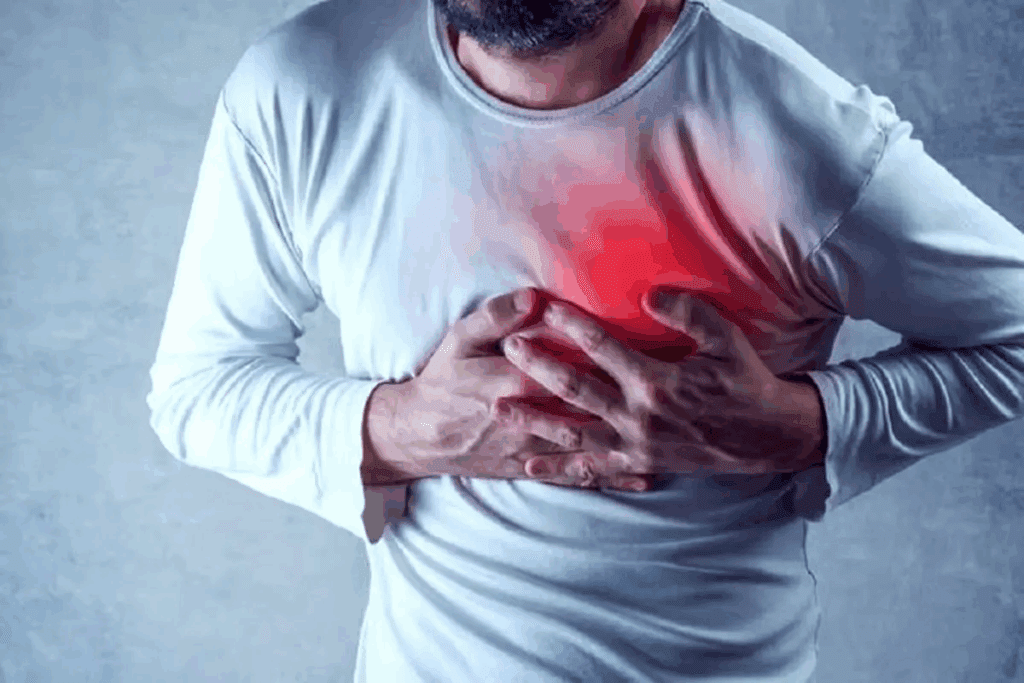
Heartburn is a common problem that affects millions every year. It causes a burning feeling in the chest, usually behind or underneath the breastbone. This feeling is often paired with a bitter or acidic taste in the mouth.
Heartburn happens when stomach acid moves up into the esophagus. This leads to a burning pain. Knowing where and how heartburn pain feels is key. It helps us tell it apart from serious heart problems.
Wondering “where do you feel heartburn?” This ultimate guide explains the 5 most common pain locations, from the chest to the throat, and what it means.
Key Takeaways
- Heartburn pain is typically felt behind or underneath the breastbone.
- The sensation is often accompanied by a bitter or acidic taste.
- Stomach acid flowing backward into the esophagus causes heartburn.
- Understanding heartburn pain characteristics helps distinguish it from cardiac conditions.
- Heartburn affects millions of people annually.
Understanding Heartburn: A Common Digestive Condition
Heartburn affects over 60 million Americans each month. It’s a burning pain in the chest caused by stomach acid flowing back into the esophagus. This condition is common and often comes back for many people.
Definition and Prevalence of Heartburn
Heartburn is a burning chest pain from stomach acid flowing back into the esophagus. This happens when the lower esophageal sphincter relaxes. Over 60 million Americans get heartburn at least once a month. It can really affect daily life and sleep.
- It’s a symptom of acid reflux, which can be triggered by diet and lifestyle.
- Heartburn can be occasional or chronic, with the latter possibly being a sign of a more serious condition like GERD.
- The sensation of heartburn is usually felt in the chest, but it can spread to the throat and other parts of the chest.
The Anatomy of Heartburn
To understand heartburn, knowing the anatomy is key. The esophagus is a muscular tube that carries food to the stomach. The lower esophageal sphincter (LES) is a ring-like muscle that separates the esophagus and stomach.
When the LES works right, it relaxes to let food into the stomach and then tightens to keep stomach acid out. But if the LES is weak or relaxes too much, stomach acid can flow back into the esophagus. This causes the burning sensation of heartburn.
The anatomy of heartburn also includes the stomach and its acidic contents. When stomach acid flows back into the esophagus, it irritates the lining. This leads to the burning pain we know as heartburn. Knowing this anatomy helps us understand why certain things can make heartburn worse.
Where Do You Feel Heartburn Pain? Pinpointing the Location
Heartburn pain usually shows up in a certain part of the chest. We’ll dive into this area in more detail. Knowing where heartburn pain is felt is key for diagnosing and treating it.
The Retrosternal Area: Primary Location of Heartburn Pain
The main spot for heartburn pain is behind or under the breastbone. It’s in the middle of the chest, in the retrosternal area. This is where most people feel the pain of heartburn.
The retrosternal area is important because it’s where the esophagus is. Heartburn happens when stomach acid goes back into the esophagus. This causes irritation and pain.
How Heartburn Pain Typically Manifests
Heartburn pain can feel different to everyone. It can be mild or very strong. Here are some common ways heartburn pain shows up:
- A burning feeling in the chest that usually happens after eating
- Pain that gets worse when lying down or bending over
- A feeling of warmth or heat in the chest
- Discomfort that may spread to the throat or arms, though this is rare
Even though heartburn pain usually feels like it’s coming from the retrosternal area, its strength can change. It might also come with other signs like a sour taste in the mouth or trouble swallowing.
The Sensation of Heartburn: What Does It Feel Like?
Heartburn’s burning feeling comes from stomach acid flowing back into the esophagus. This acid flow, called acid reflux, irritates the esophagus lining. It causes the burning feeling we know as heartburn.
Describing the Burning Sensation
Heartburn’s burning is like a tight, squeezing, or burning in the chest. It can feel uncomfortable and may spread up to the throat. The feeling can be strong enough to stop you from doing daily things and sleeping well. Many people confuse heartburn with other discomforts.
Intensity and Duration of Heartburn Pain
How bad heartburn pain feels can vary a lot. Some feel only mild discomfort, while others have severe pain. The pain’s length can also change, lasting from a few minutes to hours. What you eat, when you eat, and how you handle acid reflux can affect how bad and long heartburn pain lasts.
Knowing how heartburn feels, how bad it is, and how long it lasts is key to managing it. By understanding these aspects, people can better spot their symptoms. Then, they can find the right ways to ease their discomfort.
Heartburn vs. Heart Attack: Critical Differences in Pain Location
Many people get confused between heartburn and heart attack. Both can cause chest pain, but the pain is different in each case.
Localized Heartburn Pain
Heartburn pain usually stays in the chest and throat. It feels like a burning sensation after eating or when lying down. This pain is mostly in the retrosternal area and doesn’t spread to other parts of the body.
Radiating Heart Attack Pain
Heart attack pain, on the other hand, spreads to areas like the arms, shoulders, back, or jaw. This pain is often more intense and can come with symptoms like shortness of breath, dizziness, or nausea. The pain spreading is a key difference between heartburn and heart attack.
Why the Confusion?
It’s easy to mix up heartburn with heart attack because both involve chest pain. But the pain’s nature and where it goes are different. Heartburn is about digestive issues, while heart attack pain is related to heart problems. Knowing these differences is important for getting the right medical help.
| Characteristics | Heartburn | Heart Attack |
|---|---|---|
| Pain Location | Localized to chest and throat | Radiates to arms, shoulders, back, or jaw |
| Pain Description | Burning sensation | Severe, crushing, or squeezing |
| Triggers | Eating, lying down | Physical exertion, stress |
| Associated Symptoms | Sour taste, regurgitation | Shortness of breath, dizziness, nausea |
Understanding the differences between heartburn and heart attack helps you know what to do with your symptoms. If you’re not sure about your chest pain, always talk to a doctor.
Accompanying Symptoms of Heartburn
It’s important to know all the symptoms of heartburn to manage them well. Heartburn isn’t just a burning feeling in the chest. It often comes with other symptoms that can really affect your day.
Sour Taste and Regurgitation
A sour taste in your mouth and regurgitation of food are common symptoms. This happens when stomach acid goes back up into the esophagus and sometimes into your mouth. Regurgitation can be really annoying, even more so if it happens a lot or after meals.
A gastroenterology expert says, “Regurgitation is a key sign of gastroesophageal reflux disease (GERD), a condition where heartburn happens often.”
“The feeling of regurgitation can be quite distressing and is often associated with a sour or bitter taste.”
Bloating and Pressure
Bloating and feeling of pressure in your stomach are also symptoms of heartburn. These can be uncomfortable and may get worse during the day, after eating big or heavy meals. The discomfort from bloating can sometimes be mistaken for other stomach issues, making it important to look at all symptoms.
| Symptom | Description | Common Triggers |
|---|---|---|
| Bloating | A feeling of being uncomfortably full or swollen | Large meals, carbonated drinks |
| Abdominal Pressure | Discomfort or pressure in the abdominal area | Overeating, certain foods |
Difficulty Swallowing
Difficulty swallowing, or dysphagia, can also happen with heartburn. This can be scary and might mean a serious problem. If you have trouble swallowing that lasts, you should see a doctor.
These symptoms can be worrying and make it hard to do everyday things. Knowing all the symptoms of heartburn is the first step to managing them.
What Causes Heartburn Pain in the Chest?
Heartburn happens when stomach acid flows back into the esophagus. This causes discomfort and pain. It’s often due to a mix of factors involving the stomach, the lower esophageal sphincter (LES), and other parts.
The Role of Stomath Acid
Stomach acid is key for digesting food. But, when it hits the esophagus, it irritates and inflames it. This leads to the burning feeling of heartburn pain. The esophagus doesn’t have the stomach’s protective lining, making it more prone to acid damage.
The Lower Esophageal Sphincter and Its Function
The lower esophageal sphincter (LES) acts like a door between the esophagus and stomach. It lets food into the stomach but keeps acid out. If the LES weakens or relaxes too much, acid can flow back, causing heartburn pain.
Hiatal Hernia and Other Anatomical Factors
A hiatal hernia happens when stomach bulges into the chest. This can mess with the LES, raising acid reflux risk. Other issues with the esophagus or stomach shape or function can also lead to heartburn pain.
| Cause | Description | Effect |
|---|---|---|
| Stomath Acid | Irritates the esophagus | Burning sensation |
| LES Malfunction | Allows acid to flow back into the esophagus | Heartburn pain |
| Hiatal Hernia | Disrupts normal LES function | Increased risk of acid reflux |
Common Triggers That Worsen Heartburn Pain
Knowing what causes heartburn is key to controlling its symptoms. Heartburn can get worse due to what we eat, our lifestyle, and some health issues.
Dietary Triggers
Some foods and drinks can make heartburn symptoms worse. Here are some common ones:
- Citrus fruits and juices, which can irritate the esophagus.
- Tomato-based products, such as sauces and soups, that are acidic in nature.
- Fatty or fried foods, which can slow down digestion and put pressure on the lower esophageal sphincter.
- Chocolate, known to relax the lower esophageal sphincter, allowing stomach acid to flow back into the esophagus.
- Caffeine and carbonated drinks, which can also relax the lower esophageal sphincter and irritate the esophagus.
Lifestyle Factors
Our lifestyle choices also affect heartburn. Important factors include:
- Being overweight or obese, which increases pressure on the stomach.
- Pregnancy, as the growing fetus can put pressure on the stomach, causing acid reflux.
- Smoking, which can weaken the lower esophageal sphincter.
- Tight clothing, that can put pressure on the stomach.
- Lying down after eating, which can cause stomach acid to flow more easily into the esophagus.
Medical Conditions
Some health conditions can lead to heartburn. These include:
- Hiatal hernia, a condition where part of the stomach pushes up into the chest cavity.
- Gastroparesis, a condition that affects the stomach muscles, slowing down digestion.
- Scleroderma, a disease that can cause the esophagus to become rigid and less effective at moving food into the stomach.
By understanding and addressing these triggers, we can better manage heartburn symptoms.
When to Seek Medical Attention for Chest Pain
Chest pain can be caused by many things, some serious. It’s important to know when to get help.
Warning Signs That Indicate a Heart Attack
Chest pain with other symptoms might mean a heart attack. This is a big emergency. Look out for:
- Severe, crushing, or squeezing chest pain that may radiate to the arm, neck, or jaw
- Difficulty breathing or shortness of breath
- Lightheadedness or dizziness
- Nausea or vomiting
- Rapid or irregular heartbeat
If you see these signs, call emergency services right away.
Heartburn Symptoms That Require Medical Evaluation
Heartburn is usually not an emergency. But, some cases need a doctor. Watch for:
- Persistent or severe heartburn that doesn’t respond to over-the-counter medications
- Difficulty swallowing or pain when swallowing
- Regurgitation of food or sour liquid
- Chest pain that worsens when lying down or bending over
These signs might mean a serious issue like GERD. You should see a doctor.
Statistics on Emergency Room Visits for Chest Pain
Chest pain is a top reason for ER visits. The CDC says over 8 million people go to the ER each year for chest pain. Not all are heart attacks, but it shows how serious chest pain is.
Listen to your body and get help if you’re not sure. It’s safer to be cautious with chest pain.
Chronic Heartburn and GERD: When Pain Becomes Persistent
Heartburn is usually just a minor annoyance for many. But if it happens often, it might mean you have gastroesophageal reflux disease (GERD). We’ll look at the difference between occasional heartburn and GERD. We’ll also talk about what happens if acid reflux isn’t treated.
Distinguishing Occasional Heartburn from GERD
Occasional heartburn is common and often caused by certain foods or habits. But if heartburn happens a lot, it could be GERD. The main difference is how often and how bad the symptoms are. Occasional heartburn might happen once a week. But GERD symptoms can happen more than twice a week and get worse.
GERD happens when stomach acid flows back up into the esophagus. This causes heartburn, regurgitation, and trouble swallowing. It can really hurt and make everyday life hard. Knowing the difference between occasional heartburn and GERD is key to managing it right.
Long-term Complications of Untreated Acid Reflux
If GERD isn’t treated, it can cause serious problems. One big risk is esophagitis, which is inflammation of the esophagus. It can lead to ulcers and bleeding. Also, acid reflux can cause scarring and narrowing of the esophagus, making it hard to swallow.
Another serious issue is Barrett’s esophagus. It’s when the esophagus lining changes, raising the risk of esophageal cancer. Regular check-ups and treatment can lower these risks. If you have ongoing heartburn, see a doctor to figure out the best treatment.
Treatment Options for Heartburn Pain
Heartburn pain can be treated in many ways. You can use over-the-counter medicines or make lifestyle changes. The best treatment depends on how often and how bad the symptoms are.
Over-the-Counter Medications
For mild heartburn, over-the-counter (OTC) medicines are a good start. Antacids and H2 blockers are common choices. Antacids work by neutralizing stomach acid. H2 blockers cut down on acid production.
Common OTC Medications:
- Tums, Rolaids (antacids)
- Zantac, Pepcid (H2 blockers)
Prescription Treatments
If OTC medicines don’t work, you might need prescription drugs. Proton pump inhibitors (PPIs) are stronger and better for severe heartburn. Sometimes, drugs that help the lower esophageal sphincter are prescribed too.
| Medication Type | Examples | Use |
|---|---|---|
| Proton Pump Inhibitors (PPIs) | Omeprazole, Lansoprazole | Reduce stomach acid production |
| H2 Blockers | Ranitidine, Famotidine | Reduce acid production |
Lifestyle Modifications
Making lifestyle changes is key to managing heartburn. You can avoid foods that trigger heartburn, eat smaller meals, and not lie down after eating. Losing weight and quitting smoking can also help.
By using these treatments together, you can control heartburn pain and live better.
Conclusion: Managing and Preventing Heartburn Pain
We’ve looked into heartburn, a common issue that bothers many. Knowing where heartburn hurts and its symptoms is key to handling it well.
To tackle heartburn, we need to take several steps. Changing our lifestyle, like keeping a healthy weight and avoiding certain foods, helps a lot. Eating smaller meals and skipping citrus fruits can also ease heartburn.
Medicine is another important tool against heartburn. It’s wise to talk to a doctor to find the right treatment for you. By understanding heartburn and acting early, we can avoid serious problems and live better.
Being aware of heartburn signs and preventing it can greatly improve our daily lives. We stress the need for a full plan to fight heartburn. This includes making lifestyle changes, adjusting our diet, and using medicine when needed.
FAQ
Where is heartburn pain typically felt?
Heartburn pain is usually felt behind or underneath the breastbone. This is in the center of the chest, known as the retrosternal area.
What causes the sensation of heartburn?
Heartburn happens when stomach acid flows back into the esophagus. This irritates its lining and causes a burning feeling.
How can I distinguish between heartburn and a heart attack?
Heartburn pain is mostly in the chest and throat. Heart attack pain can spread to arms, back, or jaw. If unsure, get medical help.
What are common triggers that worsen heartburn pain?
Common triggers include citrus products, fatty or fried foods. Being overweight or pregnant can also worsen it.
Can heartburn be a sign of a more serious condition?
Yes, chronic heartburn can lead to GERD. This is a serious condition that needs medical attention to avoid long-term problems.
What are the treatment options for heartburn pain?
Treatment options include over-the-counter and prescription medications. Lifestyle changes like diet and weight management are also helpful.
When should I seek medical attention for chest pain?
Seek medical help for severe chest pain, trouble breathing, or if symptoms get worse or last long.
Can lifestyle modifications help manage heartburn?
Yes, avoiding trigger foods, losing weight, and elevating your bed can help manage heartburn symptoms.
What is the difference between occasional heartburn and GERD?
Occasional heartburn can be managed with lifestyle changes and over-the-counter meds. GERD is a chronic condition needing ongoing medical care.
How can I prevent heartburn pain?
Prevent heartburn by avoiding trigger foods, keeping a healthy weight, and making lifestyle changes to reduce acid reflux risk.
References:
National Center for Biotechnology Information. Evidence-Based Medical Guidance. Retrieved from https://www.ncbi.nlm.nih.gov/pmc/articles/PMC3093002/