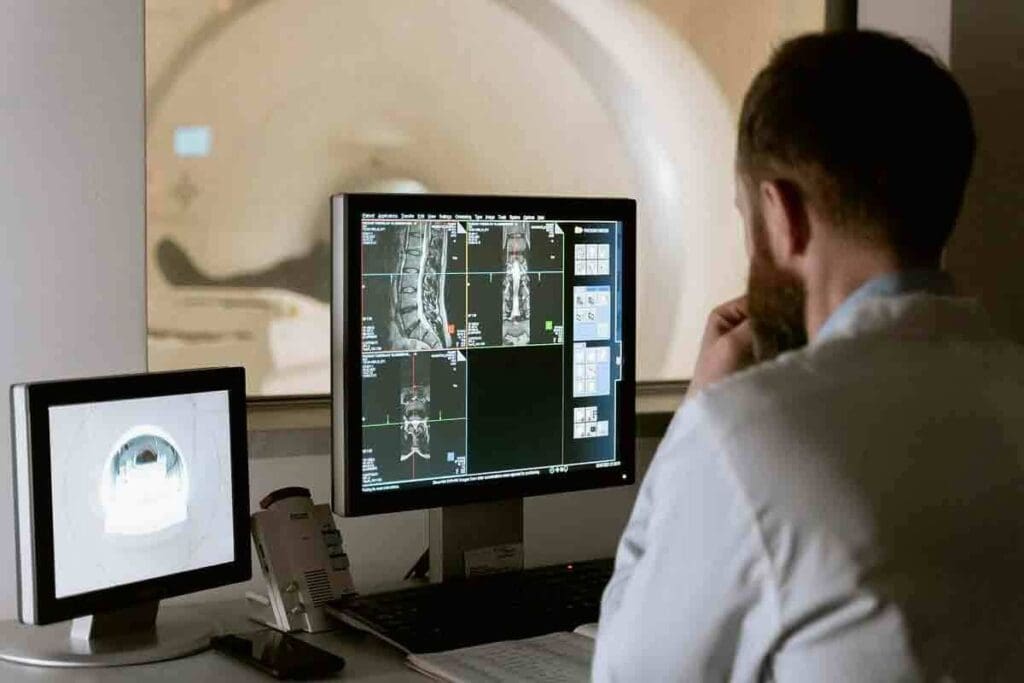
Medical imaging is key in today’s diagnosis. It’s important to know about radiation exposure from X-rays and CT scans. At Liv Hospital, we focus on clear, patient-focused care. We aim to give you top-notch imaging with the least radiation.
In the U.S., we naturally get about 3 mSv of radiation each year. Knowing the x ray radiation dose from medical tests helps you choose your care wisely. We compare common tests to show you how much radiation they use.
Key Takeaways
- Understanding radiation exposure from medical imaging is key for patients and doctors.
- The average natural radiation dose in the U.S. is about 3 mSv.
- Using low-dose tech and strict safety rules cuts down radiation during tests.
- Comparing radiation doses from different tests helps you make better choices.
- Liv Hospital is dedicated to clear, patient-focused care in imaging.
Understanding Medical Radiation Exposure
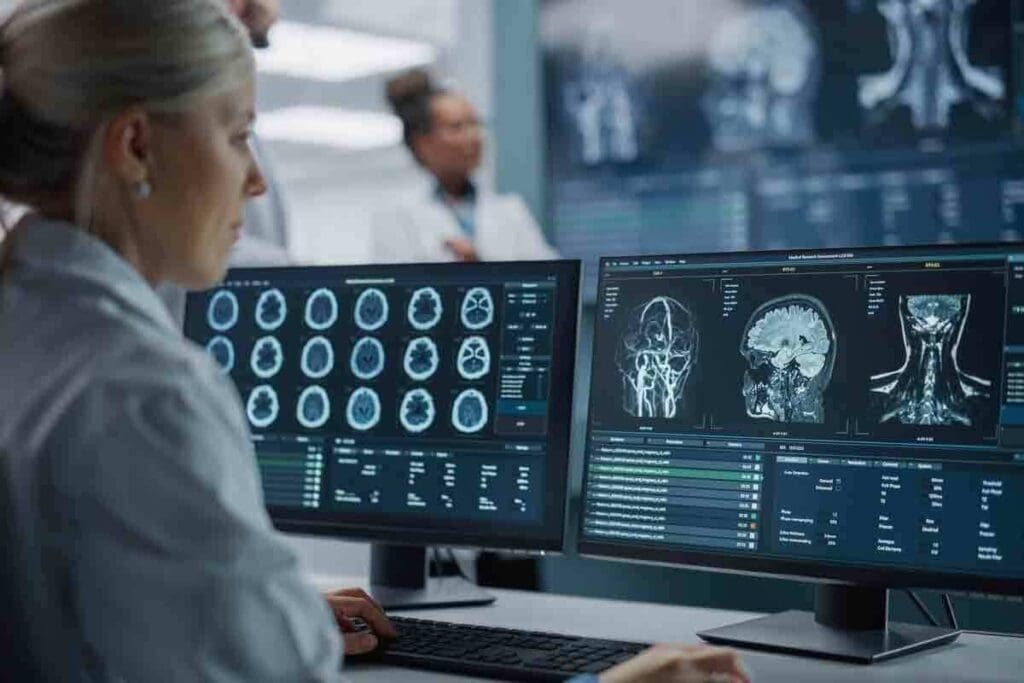
Medical imaging is key in diagnosing and treating health issues. It uses X-rays to see inside the body. This helps doctors find fractures, infections, and more.
We use X-rays, CT scans, and others to see inside the body. Each has its own use and benefits. But, they all involve radiation, which can raise cancer and health risks.
The Role of Radiation in Medical Imaging
Radiation helps create detailed images of the body’s inside. X-rays and gamma rays are the main types used. X-rays are in X-rays, CT scans, and fluoroscopy. Gamma rays are in nuclear medicine.
“The benefits of medical imaging are undeniable, but it’s essential to balance these benefits against the risks of radiation exposure.”
Balancing Diagnostic Benefits and Radiation Risks
It’s important to weigh the good of medical imaging against radiation risks. Doctors must decide if imaging is needed, considering the risks, mainly for those needing many scans.
The table below shows the radiation doses for common scans. It helps understand the risks:
| Imaging Procedure | Typical Radiation Dose (mSv) |
| Chest X-ray | 0.1 |
| CT Scan (Head) | 2 |
| CT Scan (Abdomen and Pelvis) | 7.7 |
| Mammography | 0.4 |
Knowing about medical radiation is key for patients and doctors. Being aware of the benefits and risks helps us make better choices about imaging.
What is a Millisievert? Explaining X Ray Radiation Dose Units
In medical imaging, the millisievert (mSv) is the standard unit for measuring radiation exposure. It’s key to compare imaging procedures and make smart healthcare choices.
Defining the Millisievert (mSv)
The millisievert (mSv) is a unit for whole-body radiation dose. It shows the biological effect of radiation, helping us compare medical imaging. One millisievert is one-thousandth of a sievert (Sv), the SI unit for dose equivalent.
In simple terms, the millisievert measures body radiation absorption. It adjusts for radiation type and biological effect. This makes it vital for assessing medical radiation exposure.
How Radiation Dose is Measured and Calculated
Measuring radiation dose involves several factors. It’s based on the imaging type, energy, and exposure time. For X-rays, the dose area product (DAP) is used, then converted to millisieverts.
For CT scans, algorithms calculate the dose. They consider the scanning protocol, patient size, and scanned area. This ensures accurate and minimized radiation doses.
Comparing Millisieverts to Other Radiation Units
The millisievert is the standard for whole-body dose, but other units exist. The gray (Gy) measures absorbed dose, and the sievert (Sv) is for larger doses. Knowing these relationships helps us understand radiation exposure better.
For example, a chest X-ray has about 0.1 mSv, while a CT scan of the abdomen and pelvis has around 10 mSv. Comparing these helps us see the relative radiation from different imaging procedures.
Natural Background Radiation: Your Daily Exposure
We are always exposed to natural background radiation from different sources. This is a normal part of our lives. Knowing about it helps us understand medical radiation better.
Sources of Background Radiation
Natural background radiation comes from space and the earth. Cosmic radiation is stronger at higher altitudes. Radon gas is a big source indoors, more so in areas with certain rocks.
Average Annual Background Exposure
In the United States, people get about 3 mSv of radiation each year. This amount changes based on where you live, how high you are, and the local geology.
This yearly dose is like getting many chest X-rays, depending on your situation.
Regional Variations in Background Radiation
Background radiation levels change a lot from place to place. Places higher up get more cosmic radiation. Areas with certain soil or rock, like uranium, have more radon.
For example, people near granite areas might get more radon. This makes their total background radiation dose higher.
Comprehensive X Ray Radiation Dose Chart
Our X Ray Radiation Dose Chart compares doses from common X-rays, CT scans, and other imaging. It’s a valuable tool for patients and healthcare providers. It helps them understand and compare radiation exposure from different medical imaging techniques.
Common X-Ray Procedures and Their Radiation Doses
X-ray procedures are key in medical imaging. The doses vary by the type of exam and body part imaged.
- Chest X-ray: 0.1 mSv
- Lumbar Spine X-ray: 1.5 mSv
- Extremity X-rays (hand, foot): 0.001-0.01 mSv
- Dental X-ray: 0.005 mSv
CT Scan Radiation Exposure Levels
CT scans give detailed images of the body. They usually have higher doses than X-rays.
- Head CT: 2 mSv
- Chest CT: 7 mSv
- Abdominal and Pelvic CT: 7.7 mSv
- Coronary Angiogram CT: 7-16 mSv
Other Imaging Modalities and Their Radiation Doses
Other imaging modalities have different doses.
| Imaging Modality | Typical Radiation Dose (mSv) |
| Mammography | 0.21 |
| Fluoroscopy (e.g., barium swallow) | 1-10 |
| PET/CT | 5-25 |
Knowing the radiation doses for different imaging is key. It helps patients and healthcare providers make informed choices. By comparing doses, they can better understand the benefits and risks of various imaging options.
Chest X-Ray Radiation: What Patients Should Know
When you get a chest X-ray, you might think about the radiation and how it could affect your health. Knowing about your medical tests can make you feel less worried. It also helps you make smarter choices about your health care.
Standard Chest X-Ray Dose
A chest X-ray gives you about 0.1 millisieverts (mSv) of radiation. This is like 10 days of the natural background radiation we all get every day. This shows that the X-ray dose is quite small.
Comparing Chest X-Ray to Daily Background Radiation
Background radiation is all around us, from cosmic rays and radon in the air. On average, people in the U.S. get about 3.0 mSv of background radiation each year. So, a chest X-ray’s 0.1 mSv is like 12 days of background radiation. As one expert said,
“The radiation from a chest X-ray is minimal compared to the background radiation we encounter daily.”
Factors Affecting Chest X-Ray Radiation Exposure
Many things can change how much radiation you get from a chest X-ray. These include the X-ray machine type, your body size, and the tech’s protocol. Modern digital X-ray systems aim to use less radiation while keeping image quality high. Techs also adjust settings for each patient to use the least amount of radiation needed.
Understanding these factors and the typical dose of chest X-rays helps patients see the safety steps taken during imaging tests.
Extremity X-Rays: Lowest Radiation Procedures
Extremity X-rays are known for their low radiation doses. This makes them a safer choice for patients. Many people worry about radiation when they get medical images. Extremity X-rays, like hand, foot, and dental X-rays, use very little radiation but give important information.
Hand and Foot X-Ray Radiation Doses
Hand and foot X-rays use very little radiation. They expose patients to less than 0.001 mSv, which is like less than 3 hours of background radiation. For comparison, a standard chest X-ray has a dose of about 0.1 mSv, which is much higher.
“The radiation dose from a hand or foot X-ray is so low that it’s considered negligible,” says a radiologist with over 10 years of experience. “This makes extremity X-rays an excellent diagnostic tool for injuries or conditions affecting the hands and feet.”
Dental X-Ray Radiation Exposure
Dental X-rays also use low levels of radiation. The dose from a typical dental X-ray is around 0.005 mSv. Modern dental X-ray technology has improved to reduce radiation while keeping image quality high.
Why Extremity Imaging Requires Less Radiation
Extremity imaging needs less radiation for a few reasons. First, the areas being imaged are less dense than other parts of the body. This means less radiation is needed for a clear image. Second, extremity X-rays use special equipment to reduce radiation exposure.
Understanding the low radiation doses in extremity X-rays helps patients feel more confident in their diagnostic procedures. Hand, foot, and dental X-rays all involve minimal radiation. This makes them safe and effective for diagnosing.
CT Scan Radiation: Higher Doses for Enhanced Imaging
CT scans are a key tool for doctors to see inside the body. They use more radiation than X-rays to get detailed images. This is important for making accurate diagnoses and treatment plans.
Why CT Scans Use More Radiation Than X-Rays
CT scans need more radiation because they take pictures from many angles. This helps create a clear view of the body’s inside. The X-ray source and detectors move around the patient, leading to a higher dose of radiation.
Abdominal and Pelvic CT Scan Radiation (7.7 mSv)
An abdominal and pelvic CT scan gives off about 7.7 millisieverts (mSv) of radiation. This is like 2.6 years of natural background radiation. It’s because these scans need to see many organs and structures in the belly and pelvic area.
Head, Chest, and Other CT Scan Radiation Doses
The amount of radiation from a CT scan depends on where it’s taken. For example, a head CT scan has a lower dose than an abdominal CT scan. Here are some doses for different scans:
- Head CT scan: about 2 mSv
- Chest CT scan: around 7 mSv
- Abdominal and pelvic CT scan: approximately 7.7 mSv
Knowing these doses helps both patients and doctors decide when to use CT scans. It’s all about making the right choice for health.
Specialized Imaging Procedures and Their Radiation Levels
It’s important to know about the radiation from specialized imaging tests. These tests help doctors make accurate diagnoses but use different amounts of radiation.
Mammography Radiation Dose (0.21 mSv)
Mammograms are key for finding breast cancer early. They use a low dose of radiation, about 0.21 millisieverts (mSv). This is like 7-8 weeks of natural background radiation.
Patients might worry about radiation, but mammograms are very helpful. They help find cancer early, which is very important.
Thanks to new technology, mammograms use less radiation. Digital mammography and 3D mammography give better images with less radiation.
Lumbar Spine X-Ray Exposure (1.5 mSv)
Lumbar spine X-rays help diagnose lower back pain. They use about 1.5 mSv of radiation. This is more than a chest X-ray but is considered low.
We use these X-rays to check for things like fractures and scoliosis. The dose can change based on the views and equipment used.
Modern X-ray machines aim to use less radiation. They also give clear images for doctors to see.
Coronary Angiogram Radiation (7 mSv)
Coronary angiograms involve more radiation, about 7 mSv. They are used to see the heart’s arteries for blockages or other heart problems.
Even though it uses more radiation, angiograms are very useful. They help doctors see the heart’s arteries clearly. This helps decide on treatments like angioplasty or stenting.
To lower risks, doctors use special techniques. These include pulsed fluoroscopy and careful collimation to reduce radiation.
In summary, different imaging tests use different amounts of radiation. Knowing this helps everyone make better choices. We keep working on new imaging tech to use less radiation and keep getting accurate results.
Factors Affecting Radiation Exposure in Medical Imaging
Medical imaging uses radiation, and many things can change how much exposure a patient gets. Knowing these factors helps doctors get good images while keeping doses low.
Patient Size and Body Composition
How big a patient is and their body type matter a lot. Bigger patients need more radiation to see through their bodies. This means they get a higher dose.
The American College of Radiology says it’s key to adjust the dose for each patient’s size. This helps avoid too much radiation.
The density of the body part being scanned also plays a part. For example, the pelvis or abdomen need more radiation than the chest because they are denser.
Equipment Type and Age
The age and type of imaging equipment matter a lot too. Newer CT scanners and X-ray machines have features that cut down on radiation. “Newer equipment can significantly reduce radiation exposure without compromising image quality,” a study in the Journal of the American College of Radiology found.
Older machines might not have these features, leading to higher doses. Keeping equipment up to date is important for less radiation.
Technologist Skill and Protocol Selection
The skill of the person running the equipment and the protocols they use also matter. Skilled technologists can get good images with less radiation. “Proper training and adherence to established protocols are key to minimizing radiation exposure,” the Society of Nuclear Medicine and Molecular Imaging says.
Choosing the right imaging protocol is also critical. It should match the patient’s needs and the question being asked. This way, the dose is just right, without too much radiation.
Radiation Dose Reduction Techniques in Modern Imaging
We are always looking for ways to lower radiation doses in medical imaging. This is important for both quality images and patient safety. Using radiation dose reduction techniques helps us achieve this goal.
ALARA Principle: As Low As Reasonably Achievable
The ALARA principle is key in keeping radiation exposure low. It means we aim to use the least amount of radiation needed for good images. We follow this by choosing the right imaging method for each patient and adjusting settings.
Here are the main steps to follow the ALARA principle:
- Careful patient preparation and positioning
- Optimizing imaging protocols for specific patient needs
- Regular maintenance and quality control of imaging equipment
- Continuous training for technologists on dose optimization techniques
Dose Optimization Technologies
New imaging technologies help lower radiation doses without losing image quality. Some examples include:
- Automated exposure control systems
- Iterative reconstruction algorithms
- Tube current modulation
These technologies help ensure patients get the least radiation needed for their scans.
Alternative Imaging Options with Lower or No Radiation
There are imaging options that use less or no radiation. For instance:
- Ultrasound for certain diagnostic purposes
- Magnetic Resonance Imaging (MRI) for soft tissue evaluation
Using these alternatives and dose reduction techniques helps lower patient radiation exposure. This way, we can keep diagnostic accuracy high while protecting patients.
As medical imaging evolves, we focus on balancing benefits and safety. By using the ALARA principle, dose optimization, and alternative imaging, we ensure patients get top care with less radiation.
Cumulative Radiation Exposure: Tracking Your Medical Imaging History
Patients who have had many imaging tests need to know about cumulative radiation exposure. Medical imaging is key for diagnosis and treatment. But, the total radiation from these tests is a big worry. We’ll look at why it’s important to track this and how to manage your radiation history.
Why Cumulative Dose Matters
Cumulative radiation exposure is the total radiation from all your imaging tests over time. This total dose is key because it can raise the risk of health problems like cancer. It’s vital to understand and track this exposure to reduce risks and get the most from medical imaging.
For those who have had many tests, like CT scans, the risk is higher. By tracking your dose, you can make better health choices and talk about other options with your doctor.
Tools for Tracking Personal Radiation Exposure
There are many ways to track your radiation exposure. Some doctors use electronic health records (EHRs) to track doses. Patients can also keep their own records by asking for dose info from imaging centers.
- Radiation dose tracking apps and online platforms
- Personal health records maintained by patients
- EHRs with integrated radiation tracking features
Using these tools, patients can stay updated on their radiation exposure. They can then talk about any worries with their healthcare team.
Communicating with Healthcare Providers About Radiation Concerns
Talking openly with your healthcare team is important for managing radiation risks. You should ask about the radiation from your tests. Talking about other options, like ultrasound or MRI, can also lower your radiation dose.
To get ready for these talks, you can:
- Keep a record of your imaging tests
- Ask about the radiation dose for each test
- Ask about other imaging choices
By being active in your care, you can work with your team. This way, you can enjoy the benefits of imaging while keeping risks low.
Conclusion: Making Informed Decisions About Medical Imaging
Understanding radiation exposure is key in the complex world of medical imaging. By comparing different imaging procedures, like chest X-rays and CT scans, we can see their benefits and risks. This helps us make better choices for our health.
Our X-ray radiation dose chart is a helpful tool for both patients and healthcare providers. It shows how factors like patient size and equipment type affect radiation. This way, we can reduce risks and get the most from our tests.
Knowing about medical imaging and radiation helps us make smart choices about our care. We can weigh the need for accurate diagnoses against the risks of radiation. This leads to better health outcomes for everyone.
Using ALARA and dose optimization technologies helps lower radiation exposure without losing image quality. It’s important to keep talking about radiation with our doctors and keep track of our imaging history. This ensures we get the best care possible.
FAQ
What is a millisievert (mSv) and how is it used to measure radiation dose?
A millisievert (mSv) is a way to measure radiation dose. It shows how much radiation the body absorbs during tests like X-rays and CT scans.
How much radiation is in a chest X-ray?
A chest X-ray has about 0.1 mSv of radiation. This is like 10 days of natural background radiation.
How does the radiation dose from a CT scan compare to a chest X-ray?
CT scans use more radiation than X-rays. For example, an abdominal CT scan has about 7.7 mSv. That’s much more than a chest X-ray.
What factors affect radiation exposure during medical imaging?
Several things can change how much radiation you get. These include your size and body type, the age and type of imaging equipment, and the skill of the technologist.
How can radiation exposure be minimized during medical imaging?
We follow the ALARA principle, which means using the least amount of radiation needed. We also use new technologies and look for imaging options with less or no radiation.
Why is it important to track cumulative radiation exposure?
Tracking radiation exposure helps us see the total amount a patient has gotten. This helps us make better choices for future tests and lower risks.
How can patients communicate with healthcare providers about radiation concerns?
Patients should talk to their healthcare providers about radiation worries. We encourage asking about the benefits and risks of radiation and sharing past imaging experiences.
What is the average annual background radiation exposure?
The average annual background radiation is about 2.4 mSv. But it can change based on where you live and how high you are.
How do extremity X-rays compare to other X-ray procedures in terms of radiation dose?
Extremity X-rays, like hand and foot X-rays, use less radiation. They need less to get good images.
What are some examples of specialized imaging procedures and their associated radiation doses?
Examples include mammography (0.21 mSv), lumbar spine X-ray (1.5 mSv), and coronary angiogram (7 mSv). The dose varies with the procedure and equipment.
Reference
- Gargani, L., Guzzetti, E., & Klinke, T. (2015). The risk of cumulative radiation exposure in chest imaging and the benefits of dose reduction strategies. Journal of Thoracic Imaging, 30(2), 81-88. PMC4392040. https://pmc.ncbi.nlm.nih.gov/articles/PMC4392040/